Marrakech in summer, the heat the guidebooks skip (and how I hold up)
Through the seasons
In summer, Marrakech hit 45.6°C in August 2025. Days cross the 40°C mark almost every day in July and August. And yet, this season is not the low season travellers picture: hotels run at 90% occupancy, riads slash their rates, the medina lives on a different clock.
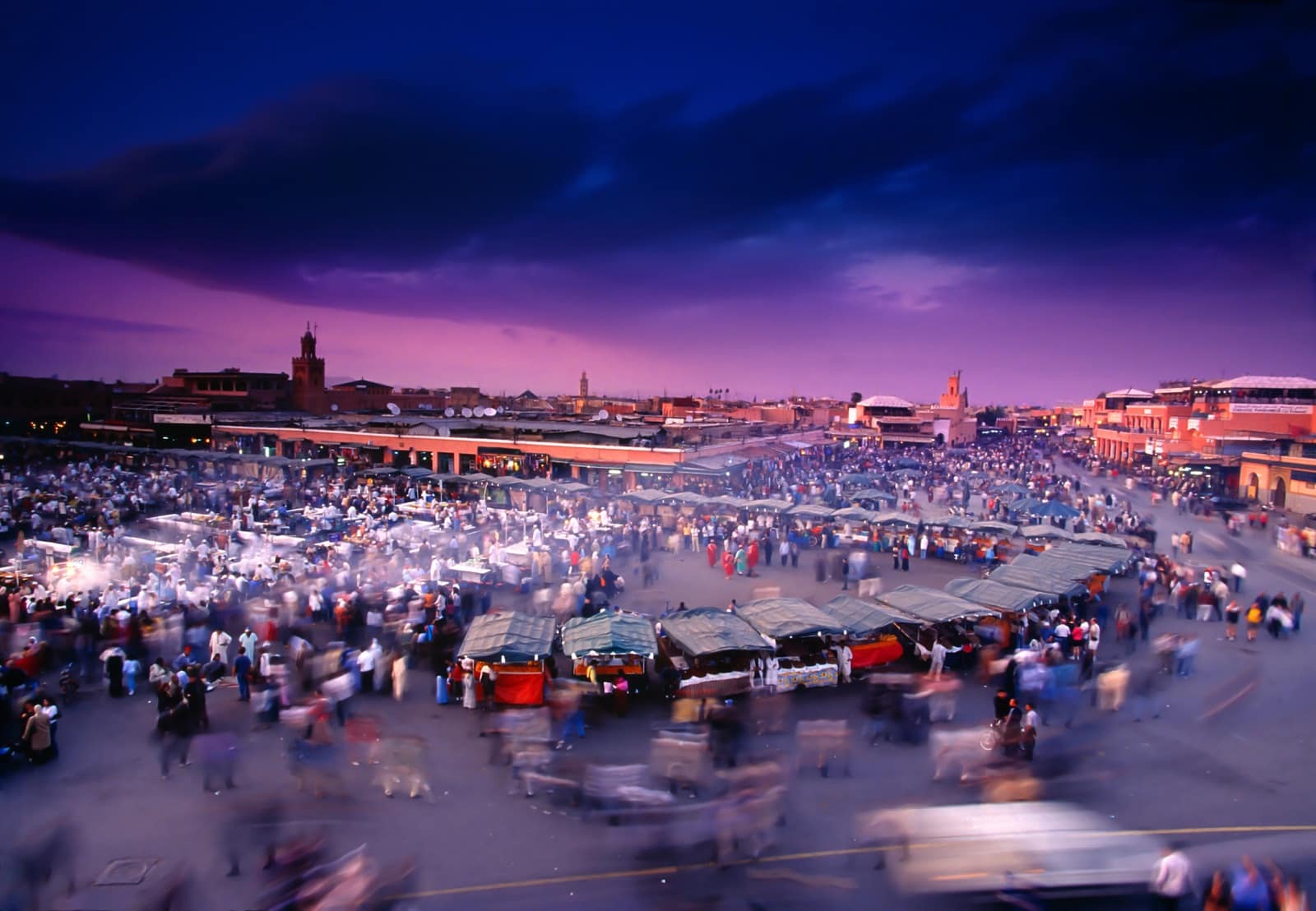
An August afternoon in 2025, two-thirty on a rooftop terrace in Sidi Ghanem. The phone thermometer reads 45°C in the sun, 41 in the shade. There is no-one outside any more. The medina, five kilometres away, is the same that day: emptied, cooked, at a standstill. Then at seven in the evening, it starts breathing again. Marrakchis come down to the terraces, the souks light up again, the day picks up until midnight. That is the real rhythm of the town in July-August, the one the English-language guidebooks rarely describe: the day split in two, morning and evening worked, afternoon on pause. I have spent summers in Marrakech for several years. Here is what I do, where I go, what I no longer do.
What the numbers say, and what they do not say
The heat, first. Marrakech runs in July-August around 36 to 37°C at the peak of the day, 20°C at first light. The 40°C mark falls almost every day. The heatwave peaks are the event to know: the Direction générale de la météorologie recorded 45.6°C in August 2025 in town, and Marrakech’s absolute record stands at 46.9°C on 26 June 2012. The late June 2025 wave, a heat dome pushed by the chergui wind from the east, broke several records in the north of the country. When the DGM issues an orange alert, I stick to it: outings from 6am to 10am and back after 7pm, no Agafay trip in the middle of the day, no Atlas trek without a dawn start.
The crowd paradox. What is interesting is that despite the heat, summer is not the low season most European travellers picture. The Marrakech tourist occupancy rate ran around 90% in August 2025 per Le Matin. The January-July 2025 cumulative figure passes 2.7 million tourists, up 13% on 2024. The origin just shifts: the Marrakchis absent those months (June-July is wedding season, summer is the coastal getaway) are replaced by Moroccans living abroad who come back to the bled in numbers from late July on and by European family groups who stay in the Palmeraie or in hotel chains.
A two-speed season on prices. Medina riads slash their rates by 35 to 50% compared to Easter, the absolute peak season. This is the real value window for anyone coming for the medina, riad life, cool patios. Palaces and international chains drop less, around 15 to 25%. Fine dining and premium spa treatments do not shift. In practice, I sleep in a fine medina riad in summer at half price, and the medina is quieter in the morning and evening: two upsides that offset the afternoon heat.
My rhythm, hour by hour
The principle: two active windows (dawn and evening), a long shaded slack in between.
| Slot | What I do | Walkable |
|---|---|---|
| 6.30am - 8.30am | Empty medina, craftsmen setting up, cool dawn at 22-26°C | ★★★ |
| 9am - 11am | Gardens (Majorelle, Secret) and monuments (Bahia at 9am on opening) | ★★☆ |
| 11am - 1pm | Indoor museum (Dar Si Saïd, YSL, MACAAL) or lunch on a shaded rooftop | ★☆☆ |
| 1pm - 5pm | Back to the riad, siesta, pool, writing. Nothing outdoors | ☆☆☆ |
| 5pm - 7pm | Hammam (counter-intuitive but useful, see refuges), massage or reading at the patio | ★☆☆ |
| 7pm - 11pm | Souks in the cool, terraces, open-air dinner, Jemaa el-Fna | ★★★ |
Morning. Six-thirty on a rooftop terrace or on the ramparts: the grazing light makes the ochres photogenic and the air is still at 22°C. The souks are closed but the medina lends itself to walking, to dawn photos, to carriage doors. Like everyone, I aim for the 8am opening at Majorelle - the difference is that I book the day before for the first slot, before the queue. Entry costs 150 dirhams (£12) as of July 2026.
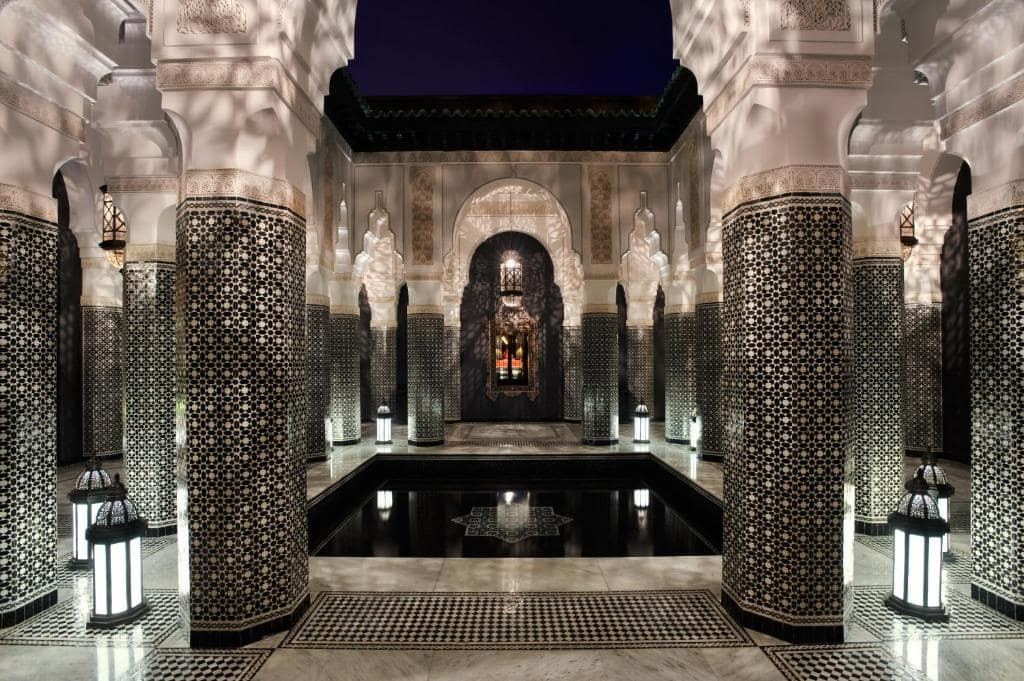
The slack. At midday I head in. The medina bowl climbs to 38-40°C, the air stalls, the alleys cook. I drink a tea on a shaded riad rooftop, I scout on maps, I sort photos. If I need to be outside, I go for a museum with modest air conditioning (YSL, MACAAL) rather than try the Bahia at two in the afternoon. A riad with a patio and a basin becomes a place in itself in my stay, not just accommodation.
Evening. At seven, the town breathes again. Marrakchis come down to the terraces, Jemaa el-Fna wakes up, the souks reopen their evening stalls. That is when the town gives itself up. I put three hours of walking into it, light camera, no rush.
My four cool refuges inside the walls
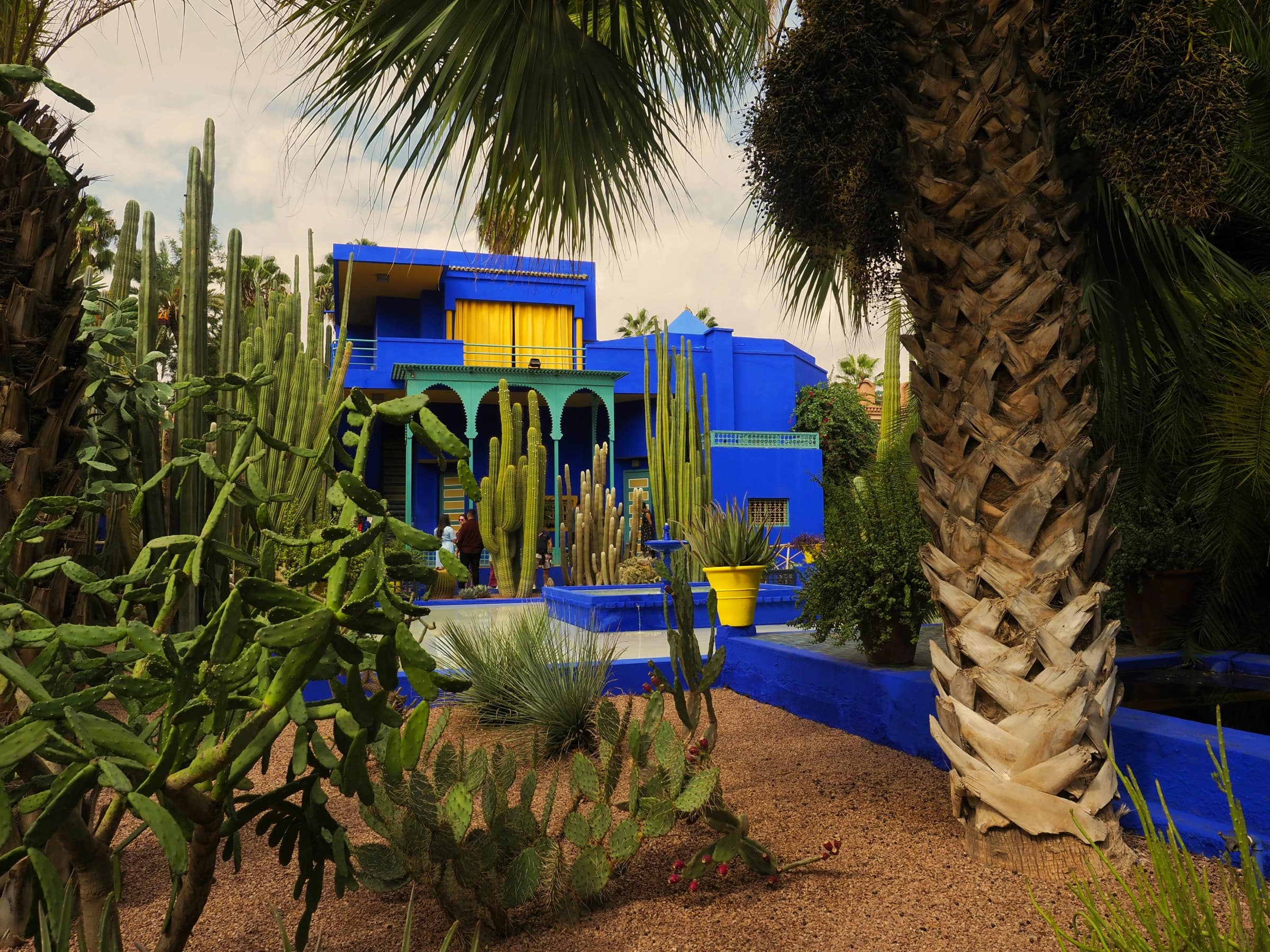
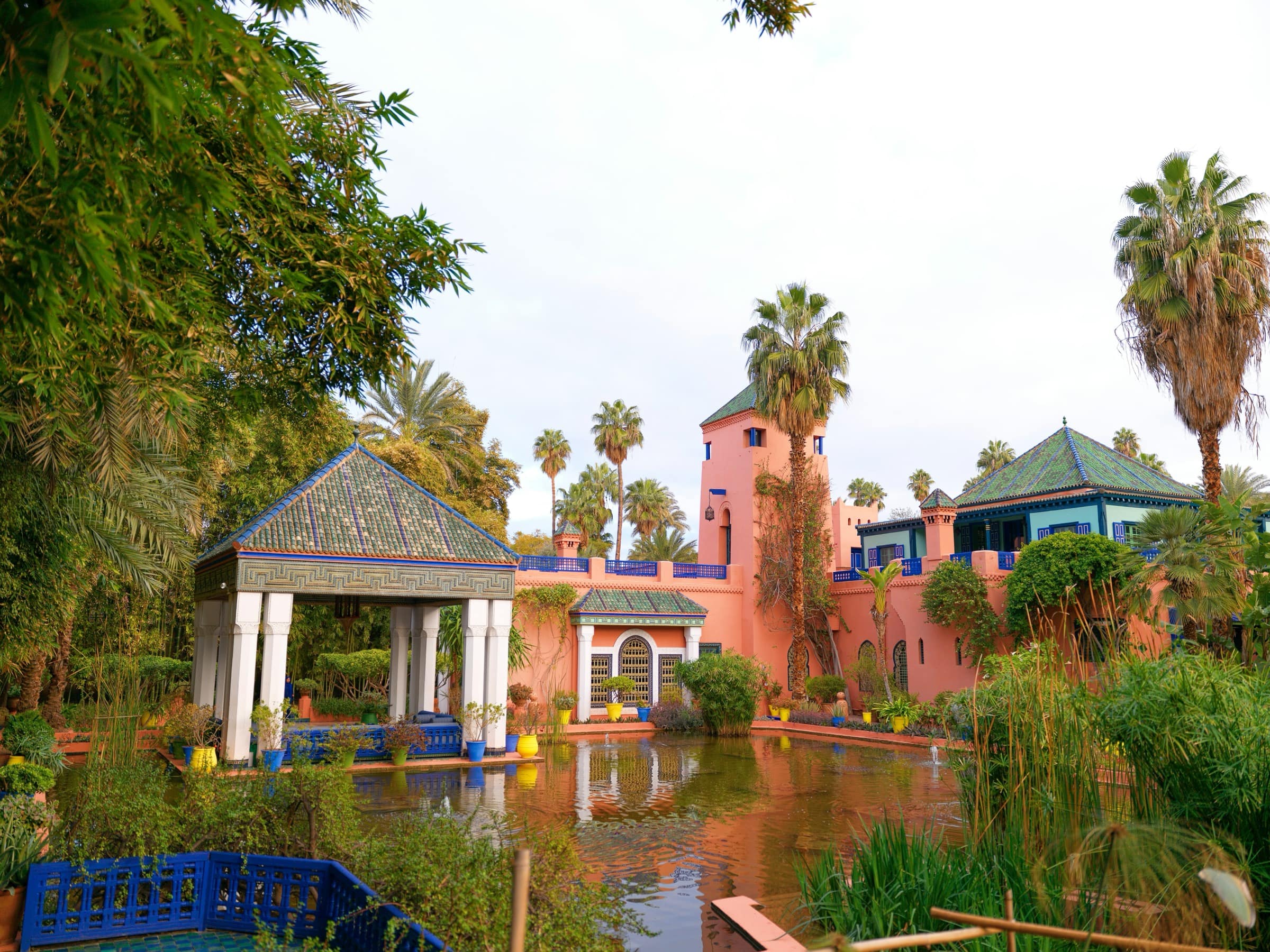
The Jardin Majorelle, at opening. One hour at 8am, before the entry queue forms, before the visitors saturate the paths. The shade of bamboo and cactus, the Majorelle cobalt on the basins, the Berber museum indoors and air-conditioned if you want to stretch the visit - it is the first cool refuge I recommend for a week-long stay. 150 dirhams (£12) entry only, 300 (£24) in the combined format with the Yves Saint Laurent museum, as of July 2026.
The Jardin Secret, late morning. Two walled gardens and a fountain system that cools the air by evaporation. Less busy than Majorelle, more intimate, right in the middle of the souks between Ben Youssef and Mouassine. One hour does the job. The café terrace offers a fine view onto the ramparts.
The day pool pass in an estate or a palace. Three formats to know. Beldi Country Club on the route du Barrage, around 25 minutes by car: access alone around 200 dirhams (£16), package with lunch at 390 dirhams (£31). Old-riad format spread over several hectares, several pools, rose garden, shops. Es Saadi Palace in Hivernage: day-pass from 600 dirhams (£48) with lunch included, access to pools and spa. White Sands on the route de l’Ourika: between 600 and 800 dirhams (£48 to £64) a day depending on the day and format, festive mood by a large pool. On these three addresses, a day saves the summer.
The neighbourhood hammam, counter-intuitive but effective. Going into the hot room of a neighbourhood hammam on an August afternoon looks absurd. It is in fact the best thermal acclimatisation system: the steam takes the body to its maximum temperature, you sweat, you rinse with warm then cold water and come out with a restored heat-tolerance capacity. Two possible formats: neighbourhood hammam around 40-70 dirhams (£3 to £6) for entry alone, or tourist package with gommage + black soap from £12 to £16 at hammam Mouassine. One hour does the job and the afternoon that follows becomes bearable. I do it twice a week in summer.
Out of town: my three getaways
Three destinations that make a summer day breathable, each on a different axis.
The Ourika valley, 45 minutes to 1h 30m south. Setti Fatma, at the top of the valley, runs between 25 and 30°C when Marrakech is grinding at 45. The river is fresh, the riverside cafés serve tagines, the waterfalls are an hour’s walk away. Ourika is the family day trip that Marrakchis know inside out: rammed on Saturday and Sunday, breathable midweek. I set out early.
Oukaïmeden, 1h 30m south, at 2,620 metres. Ski station in winter, open in summer for hiking. The temperature runs between 18 and 25°C, you meet shepherds, a few hikers, the orientation table pointing at Toubkal. One or two altitude restaurants open year-round. This is my real cool break when the town has spent three days above 43°C in a row.
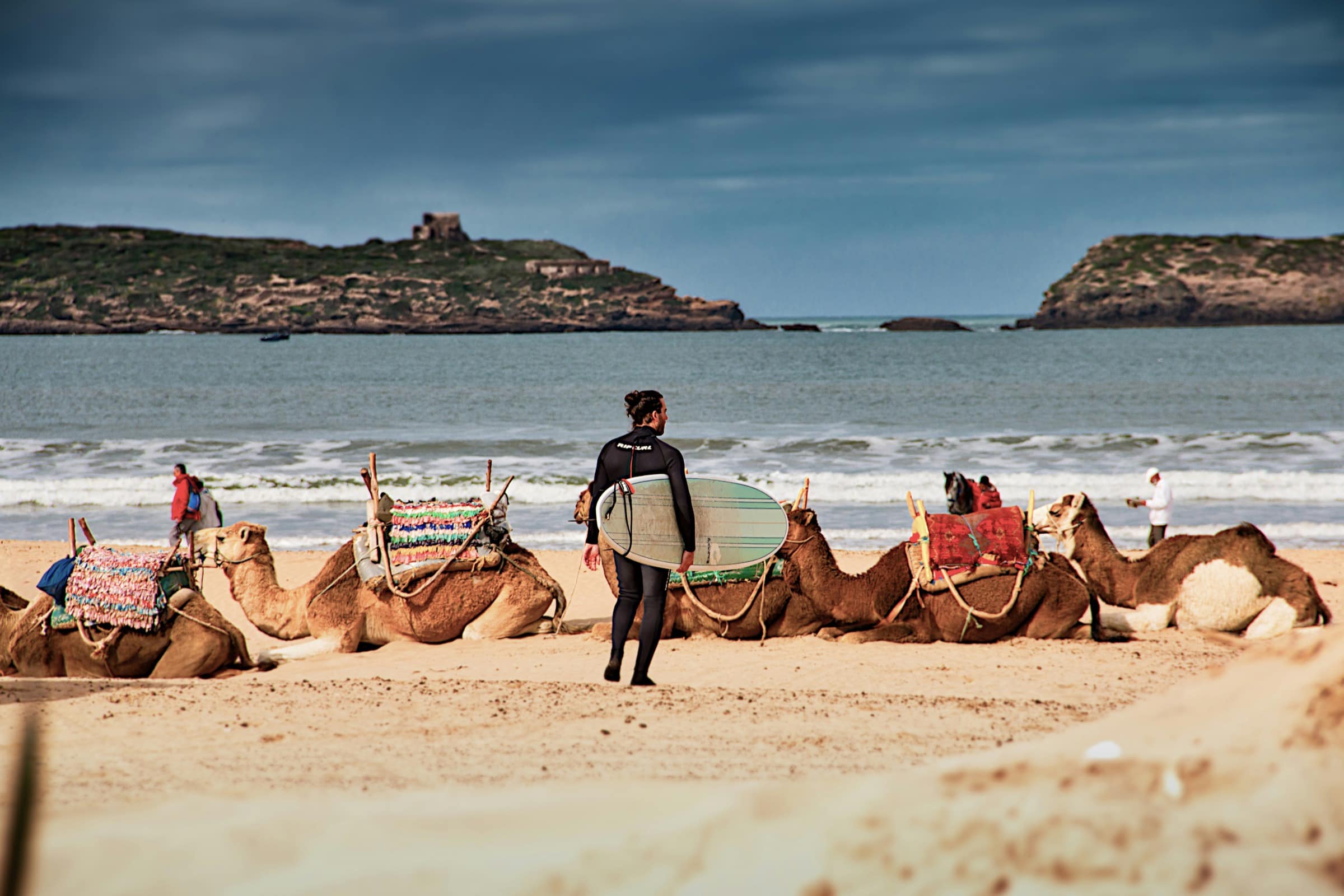
Essaouira, 2h 30m on the Atlantic coast. The trade winds coming up from the ocean keep the town between 23 and 26°C during the day, almost all year. The medina walks at any time, the beach is windy (the water stays at 18°C, I never swim there for long), the ramparts and the port photograph in a clean light. Two days and a night in Essaouira put you back on your feet when Marrakech has been hard.
What the heat changes on prices (and what it does not)
What drops. Medina riads, honestly: 35 to 50% off Easter on standard double rooms, not to be missed if you are looking for the medina for its own sake. Flights also drop, particularly on mid-July to mid-August slots from France and Spain. Some group excursions to Agafay and Ourika cut prices 20-30%.
What stays put. Premium services (signature palace spa, fine dining, in-villa chef) do not shift. Palaces drop their room rates around 15-25%, less than riads, because their business and group clientele stays captive.
What climbs. Essaouira. The Atlantic coast doubles its price in July-August, occupied by Moroccan coastal-getaway families and by tourists fleeing inland heat. For a night in Essaouira in summer, you have to book several weeks ahead.
Four signals that must stop me
Emergency services are reachable on 141 (Moroccan SAMU) or directly at Ibn Tofail hospital in Guéliz and at Al Andalous clinic for private care. The Ministry of Health publishes its heatwave recommendations every summer. They are picked up in the Moroccan press.
To take it further
- To pick the season of your stay with clear eyes: Best time to visit Marrakech.
- For the hammam and spa formats to favour in summer (air-conditioned, orange garden, fresh products): Wellness in Marrakech.
- For Majorelle at opening (tickets, summer hours, photo rules): our Jardin Majorelle listing.