Skip to content
A camel caravan on the Erg Chebbi dunes, at sunset.
THE DEEP SOUTH · SAHARA

Merzouga desert

~560 km · 3 days · from £47
Distance560 km
Travel time8 to 10h a day
Duration3 days (2 nights)
Price£47

The real Sahara out of Marrakech, the postcard one: the Erg Chebbi dunes, close to 150 metres high, a bivouac night in the middle of the sand, camel at sunset then sunrise, and a starry sky as you no longer see near towns. The exact opposite of Agafay, which is a stone desert at 45 minutes: here, real dunes - but at 560 kilometres, so eight to ten hours of road a day. Hence the golden rule: three days minimum, never two, or you spend the entire trip in the car. The road is not wasted for that - it crosses Aït Ben Haddou, the Dadès and Todra gorges, the Rose valley. Reservation: summer crushes (over 40°C, burning tents), winter freezes at night, and the camel ride is short and bumpy. Come in autumn or spring, bring cash, and pick a camp that cares for its animals.

Merzouga is a small village set on the edge of Morocco’s most famous sand desert, the Erg Chebbi, in the far south-east, nearly on the Algerian border. Here, and not in the Agafay stone desert close to Marrakech, is where you find the real great golden dunes: a sea of sand close to 150 metres high, shifting from pink to orange to gold across the day. The price you pay is the distance - around 560 kilometres and long hours by road from Marrakech - which imposes a three-day circuit at the least. But the way, via the High Atlas, Aït Ben Haddou and the southern gorges, is a journey in itself, and the starry night at the foot of the dunes is one of those you do not forget.

Many travellers extend the experience by pushing on to Fes after Merzouga rather than heading back to Marrakech: one of Morocco’s great itineraries. The format and the solid offers in both directions are detailed in our Marrakech - Merzouga - Fes circuit.

On your own or on a tour?

On your own
By car: ~560 km via Ouarzazate and the Dadès valley, 8 to 10h. To do over at least three days driving yourself.
By bus: CTM/Supratours serve Merzouga from Marrakech, but the trip is very long and rigid.
The organised circuit stays the simplest format for a 3-day round trip.
On a guided tour
The driver-guide swallows the long distances: you enjoy the landscape without driving 10 hours a day.
Bivouac night in the dunes, camel and stopover hotel booked and strung together.
The stages (Aït Ben Haddou, Todra, Dadès) are set with no logistics to handle.

What to expect

About half a day. Times are indicative.

Day 1

Marrakech → Dadès valley

Tizi n'Tichka pass (2,260 m), Aït Ben Haddou (UNESCO ksar), Ouarzazate, Rose valley. Night at Boumalne or Kelaat M'Gouna. ~6h of road.

Day 2

Dadès → Merzouga

Dadès and Todra gorges, Tinghir, fossil workshop at Erfoud, then Erg Chebbi. Camel at sunset and bivouac night in the dunes, dinner and Berber music.

Day 3 · dawn

Sunrise on the dunes

The big moment: the sand catching fire at first light, before breakfast at camp.

Day 3

Back to Marrakech

The longest stage: 8 to 9h of road to get back. Expect a tiring day.

What you see there
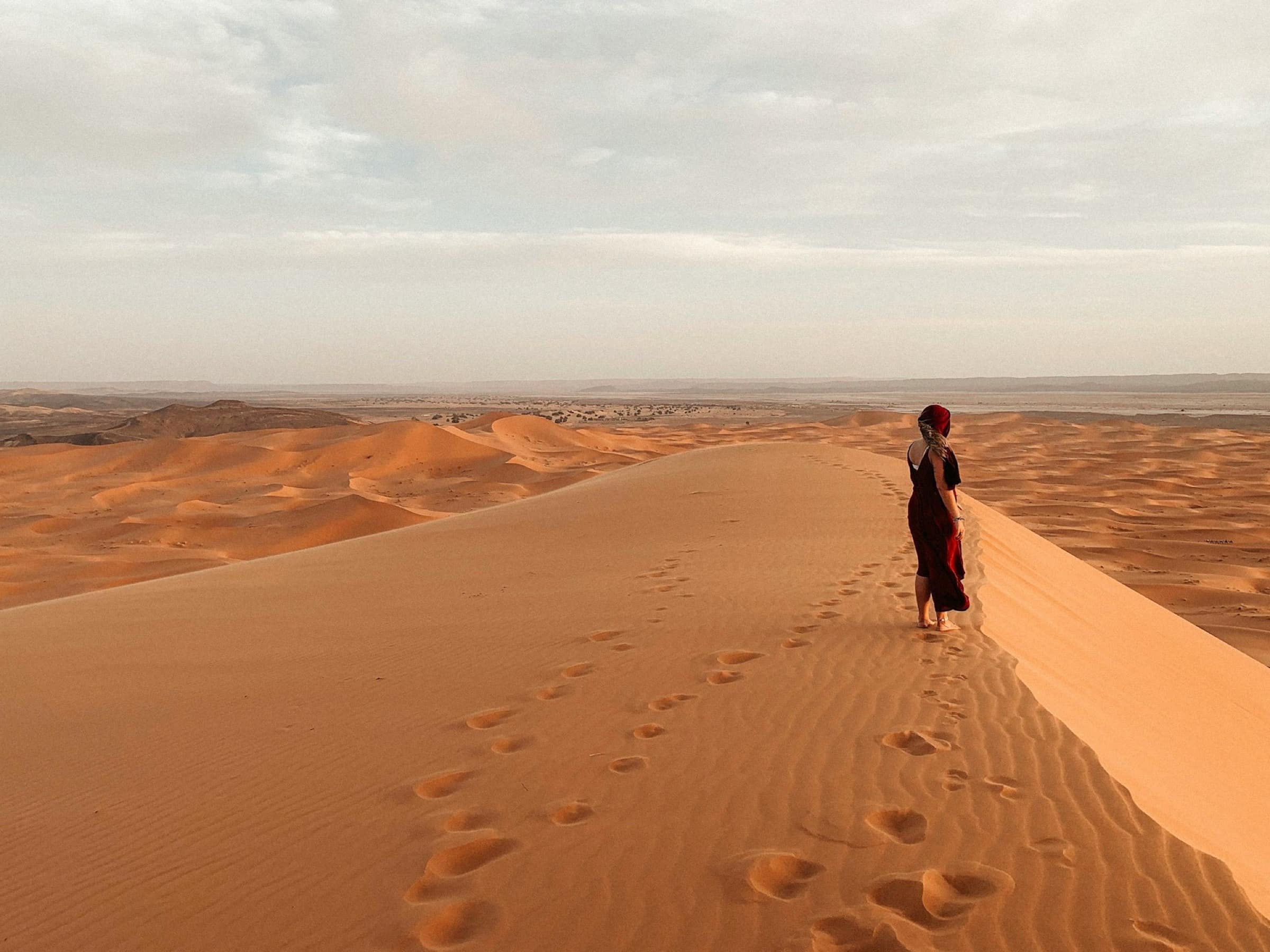
The Erg Chebbi dunes as far as the eye can see, in the early light.
Up to ~150 m

The Erg Chebbi dunes

A stretch of real sand dunes, some thirty kilometres long, climbing to close to 150 metres and shifting colour from pink to gold with the hour. This is the real sand Sahara, the great dunes you picture.
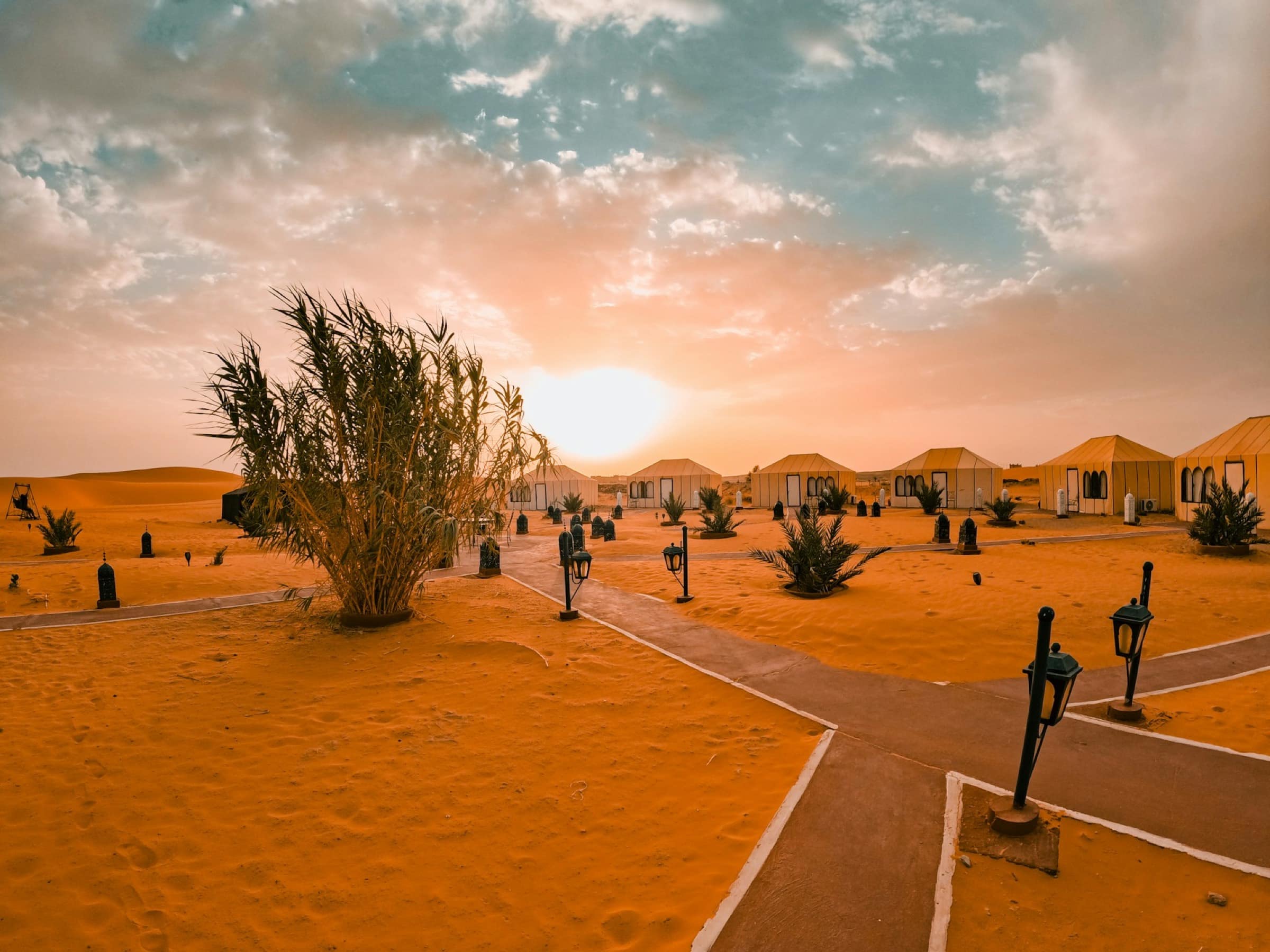
A camp in the Erg Chebbi dunes, at sunset.
Under the stars

The bivouac night

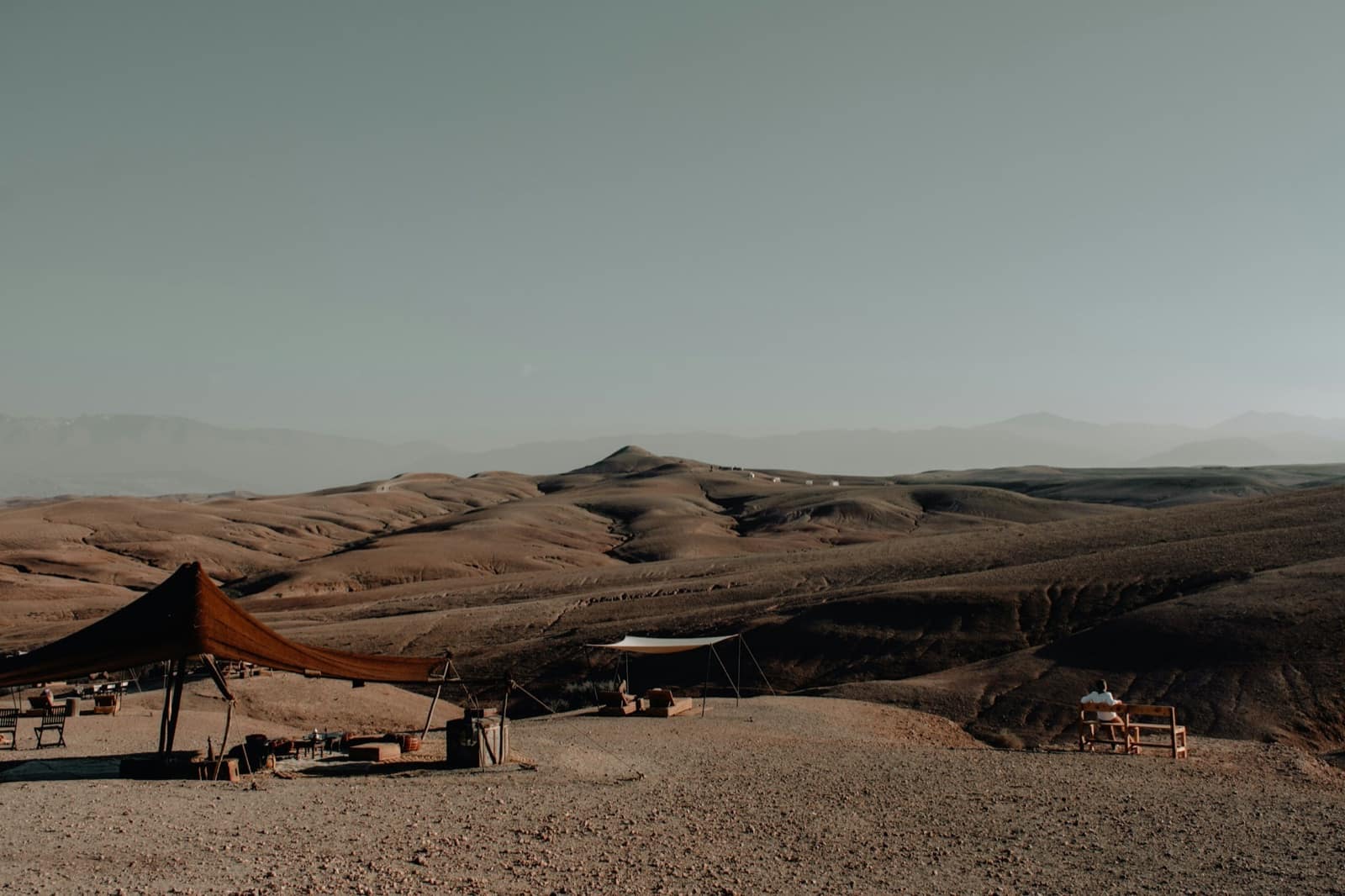
A night in a Berber tent in the middle of the dunes, dinner around the fire, musicians and, most of all, a sky studded with stars, far from any town light. Two levels: standard camp or luxury tent with bathroom.
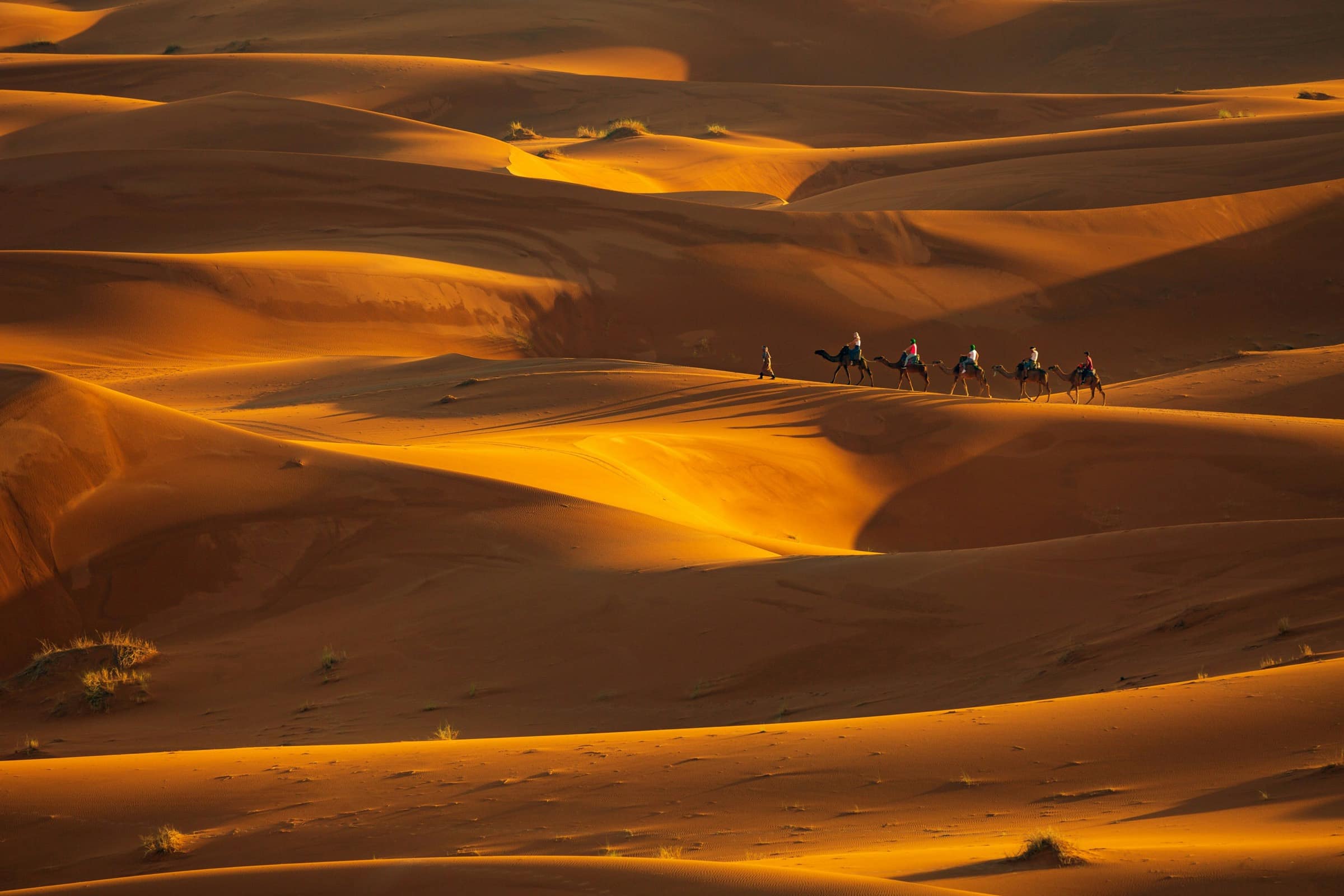
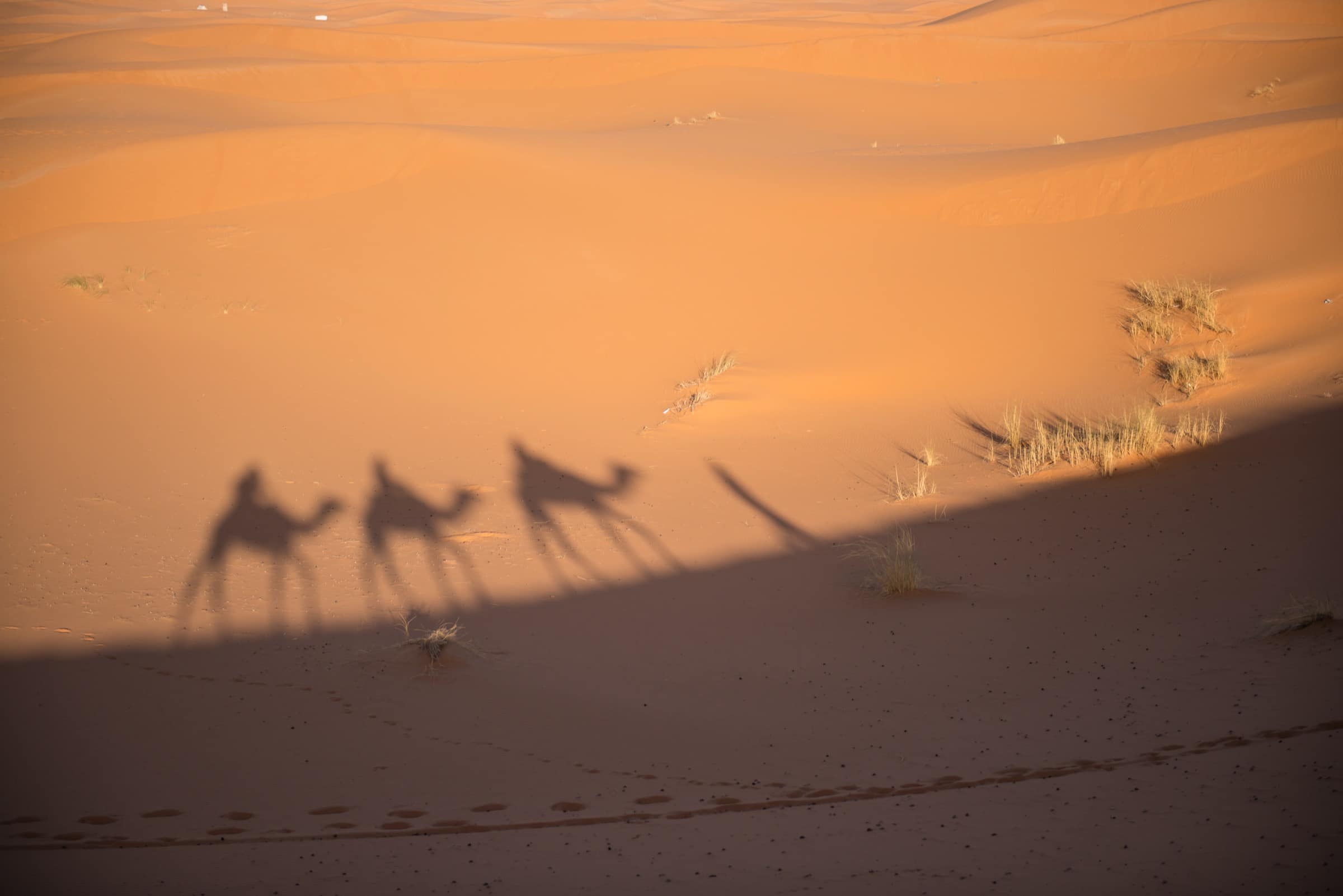
Camel caravan on the dunes, at nightfall.
Honestly

Camel at sunset and sunrise

The camel ride to camp is short (often 20 to 50 min) and bumpier than you might imagine. The moment stays fine, at sunset and sunrise. Pick a camp that owns and cares for its own animals.
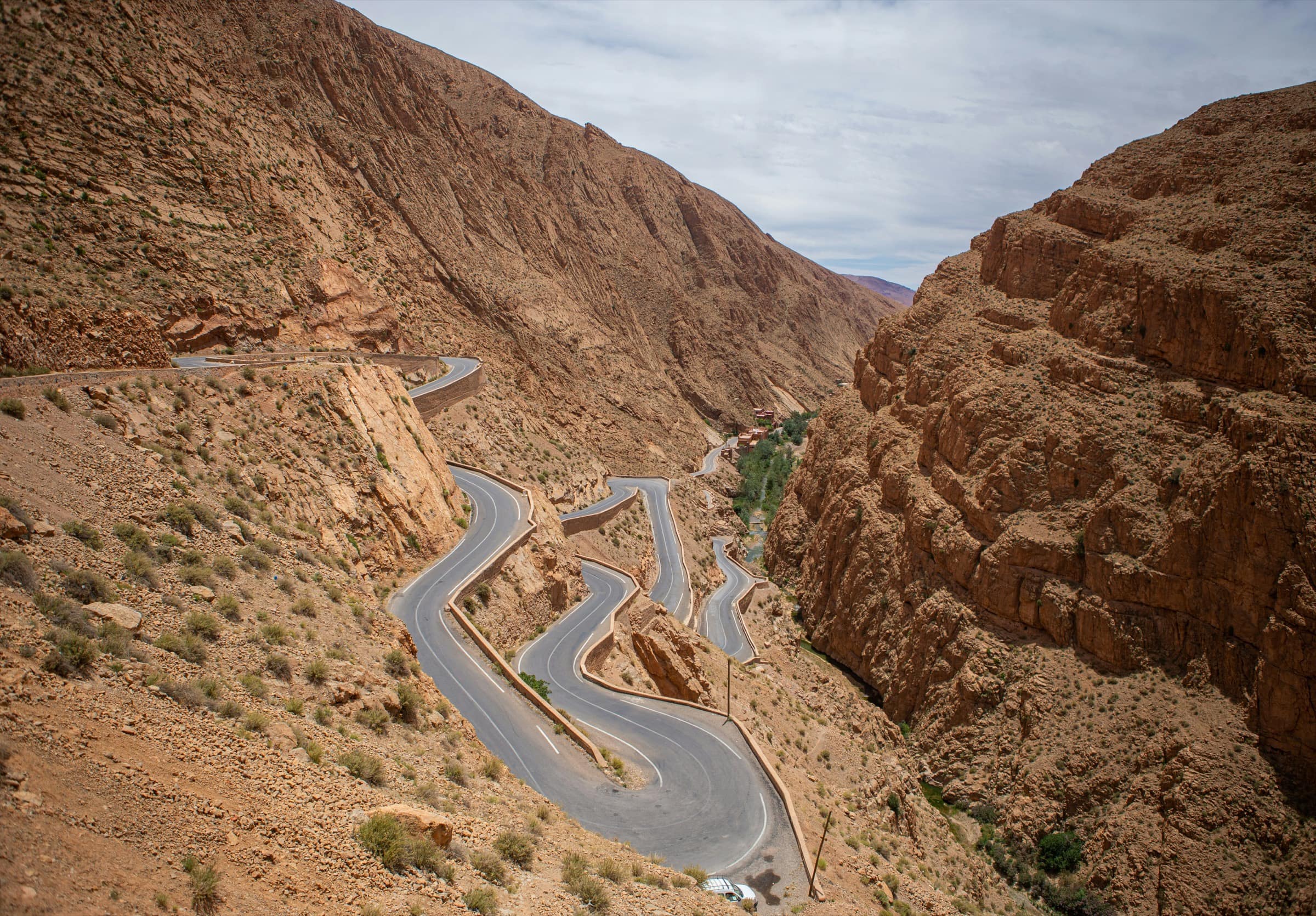
The Dadès gorges switchback road.
The journey

The road and its stages

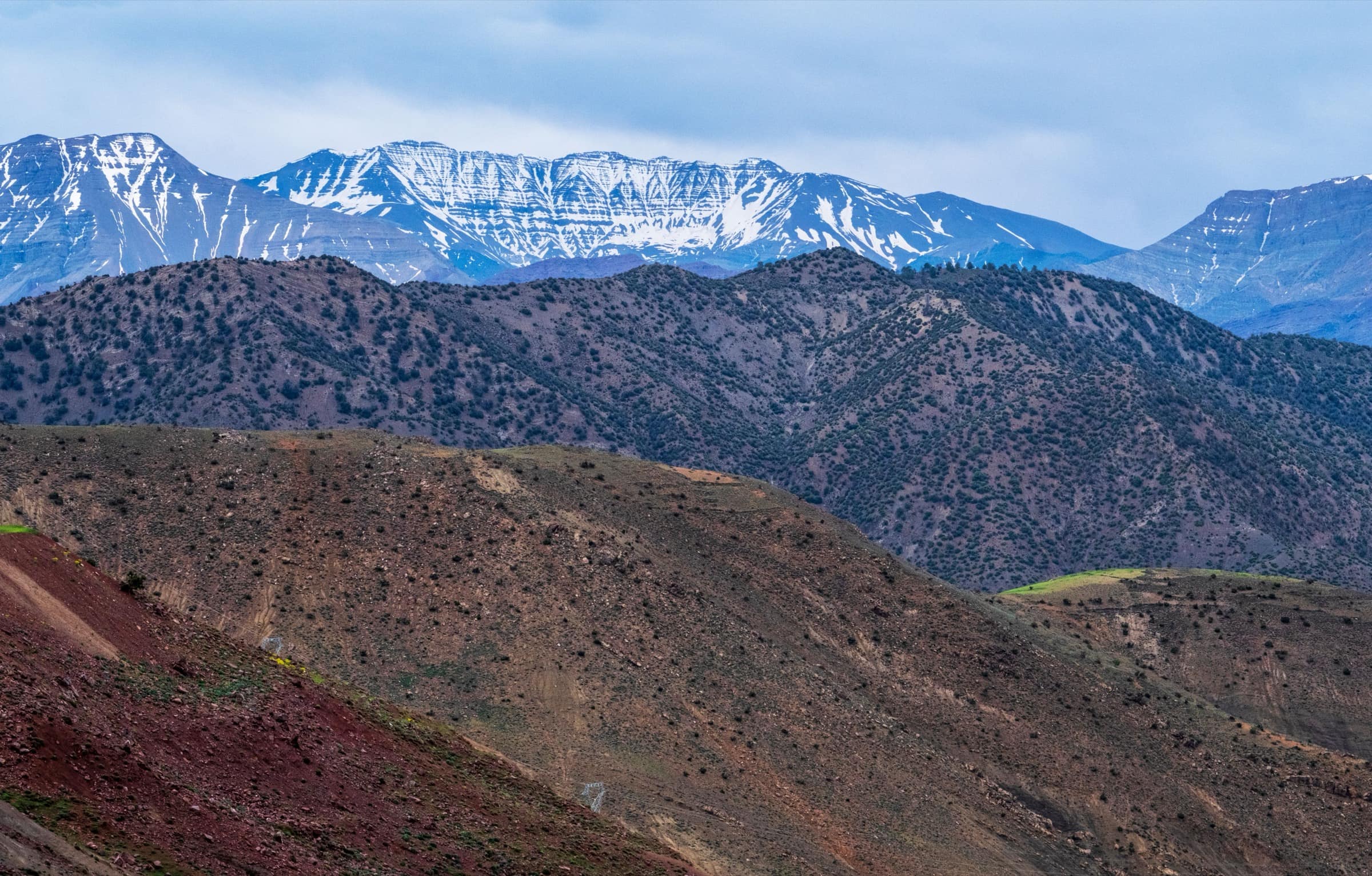
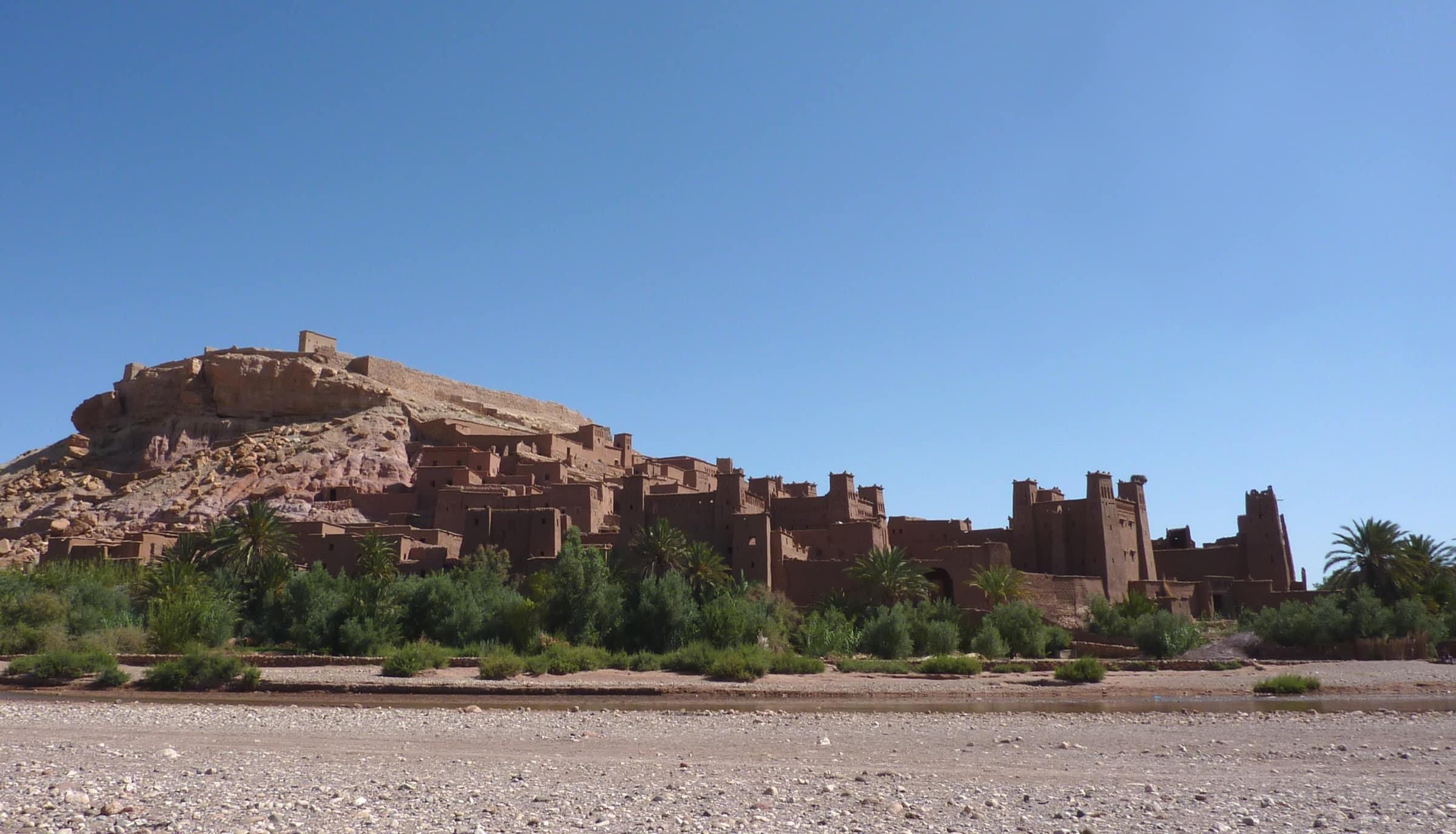
Distance is part of the experience: you cross the High Atlas, follow the Dadès and Todra gorges, cross the Rose valley and the palm groves. Aït Ben Haddou, on the way, deserves a visit on its own.

What is included

Included
Return transfer and transport in an air-conditioned vehicle, driver-guide
1 night in a hotel or kasbah + 1 night in a bivouac in the dunes
Camel, dinners and breakfasts (half-board)
Not included
Lunches (~£8-£10 per meal) and drinks
Team tips (reckon ~£15-£40 per person over the circuit)
Local guide at Aït Ben Haddou, entries and options (luxury tent, quad, sandboard)

Good to know

The real Sahara, but farMerzouga is real sand dunes (Erg Chebbi), unlike Agafay, a stone plateau 45 minutes from Marrakech. The trade-off is the distance: around 560 kilometres, eight to ten hours of road a day. The sand desert is earned. Anyone just wanting a quick night under canvas picks Agafay, knowing it is not the sand Sahara.
Three days, not twoThe two-day version strings more than a thousand round-trip kilometres for very little time on site: exhausting and frustrating. Three days is the reasonable minimum. Four is even better, to breathe and push to other valleys.
Summer heat, winter night coldJune to August, temperatures often top 40°C and the standard, non-air-conditioned tents get hard: skip it. In winter, dune nights drop close to 0°C - the heated tent (luxury format) then earns its keep.
Bring cashNo reliable ATM in the desert: withdraw before setting out. You will need cash for lunches, drinks, options and the team tips, expected at the end of the circuit.
Standard or luxury campsErg Chebbi camps range from the plain Berber tent (shared facilities) to the luxury camp (private tent with hot shower, heating). Standard camps, many, can sit close to each other and lively. Luxury mostly buys space and comfort.
Best seasonOctober-November and March-April are ideal: warm but bearable days, cool nights for the fire and the stars. Skip summer. In spring, the chergui wind can raise sandstorms and cut visibility: part of the desert, but worth knowing.

Book your day trip

We do not sell the tickets: booking goes through GetYourGuide. The price is the same as direct, a small commission comes back to this guide.
Frequently asked questions

Are there real sand dunes at Merzouga?
Yes: the Erg Chebbi is a real sand desert, a stretch of golden dunes some thirty kilometres long climbing to close to 150 metres. This is the postcard Sahara. Not to be mixed up with the Agafay desert, close to Marrakech, a stone plateau with no dunes.
How long is the drive to Merzouga?
It is far: around 560 kilometres, or eight to ten hours of road a day, including a very long return on the last day. Distance is Merzouga's real downside - but it crosses fine stages (Aït Ben Haddou, the Dadès and Todra gorges), which makes it less heavy.
Merzouga in 2 or 3 days?
Three days minimum. In two days, you string more than a thousand kilometres for barely an evening on site: exhausting and you enjoy nothing. Three days allow a bivouac night and the road stages. Four days is even more comfortable.
What is the best season for Merzouga?
Autumn (October-November) and spring (March-April): warm but bearable days and cool nights, perfect for the fire and the stars. Skip summer, when heat often tops 40°C. In winter, nights drop close to 0°C. In spring, the chergui wind can raise sandstorms.
What is not included in the circuit?
Generally, lunches (~£8-£10 per meal), drinks, team tips (~£15-£40 per person over the circuit) and options like luxury tent, quad or kasbah guide. Bring cash: no reliable ATM in the desert.
Is the desert night worth the drive?
For many, yes: sleeping at the foot of the great dunes, under a starry sky of rare purity, with sunrise on the sand, is a marking experience Agafay cannot offer. Depends on your tolerance for the road: if the long hours put you off, nearby Agafay will be more reasonable, accepting that it is not the sand Sahara.

Photo credits

  • Une caravane de dromadaires sur les dunes de l'Erg Chebbi, au coucher du soleil - © Johannes K Becker · CC BY-SA 3.0 · Wikimedia Commons · source
  • Le ksar d'Aït Ben Haddou au petit matin - © Adrian Farwell · CC BY 3.0 · Wikimedia Commons · source
Book online
from £47 / person
See availability →

↑ ↓ to navigate · Enter to open · Esc to close