Marrakech - Merzouga - Fes circuit
The great southern Morocco circuit, the one that links the two imperial cities through the Erg Chebbi dunes: three days to cross the High Atlas at the Tichka pass, stop at the Aït Ben Haddou ksar, follow the Dadès and Todra gorges, sleep at the foot of the dunes, then cross the Middle Atlas and its cedars to Fes. The 'one-way' format gives the trip its density: arrive in Marrakech, leave from Fes (or the reverse), no re-crossing the same valleys. Honest trade-off: you need a multi-city ticket, booked in the right direction, and the days are long on the road (8 to 10h a day, 1,135 km total). What you gain: 550 kilometres of road less and one hotel night skipped compared with a classic round trip. Two reservations: summer (June to early September) crushes the dunes at 45 to 50°C, and the two-day format - offered by some operators - strings more than 1,500 kilometres for barely a night on site. Pick a well-rated operator with hotel transfer included, come in autumn or spring, and check the direction before buying your return ticket.
On the map, the circuit draws a long diagonal from south-west to north-east: 1,135 kilometres climbing to the Tichka pass, dropping onto Ouarzazate, running kasbah to kasbah down the Dadès, up the Todra fault, running aground in the Erg Chebbi dunes, then back north via Errachidia, Midelt and the Middle Atlas to Fes. The landscape changes worlds at every stage - mountain, kasbah, gorge, dune, cedar, medina - through to the third evening, when you fall into the alleys of Morocco’s oldest imperial city. Three days is little, but that is what gives the trip its density: the format only holds because arrival and departure sit on two different airports. A multi-city flight ticket to book in the right direction - against 550 kilometres of road and one hotel night saved on a round trip that would go back through the same valleys.
Two variants of the same circuit
The above itinerary runs equally from Fes to Marrakech - the reverse direction is offered by two of the six panel offers, one of which with Fes airport pick-up, useful to string straight from the plane. The experience stays equivalent, save for the order: Marrakech at trip’s end rather than start, with the long stage (Fes → Merzouga) placed on D1 instead of D3.
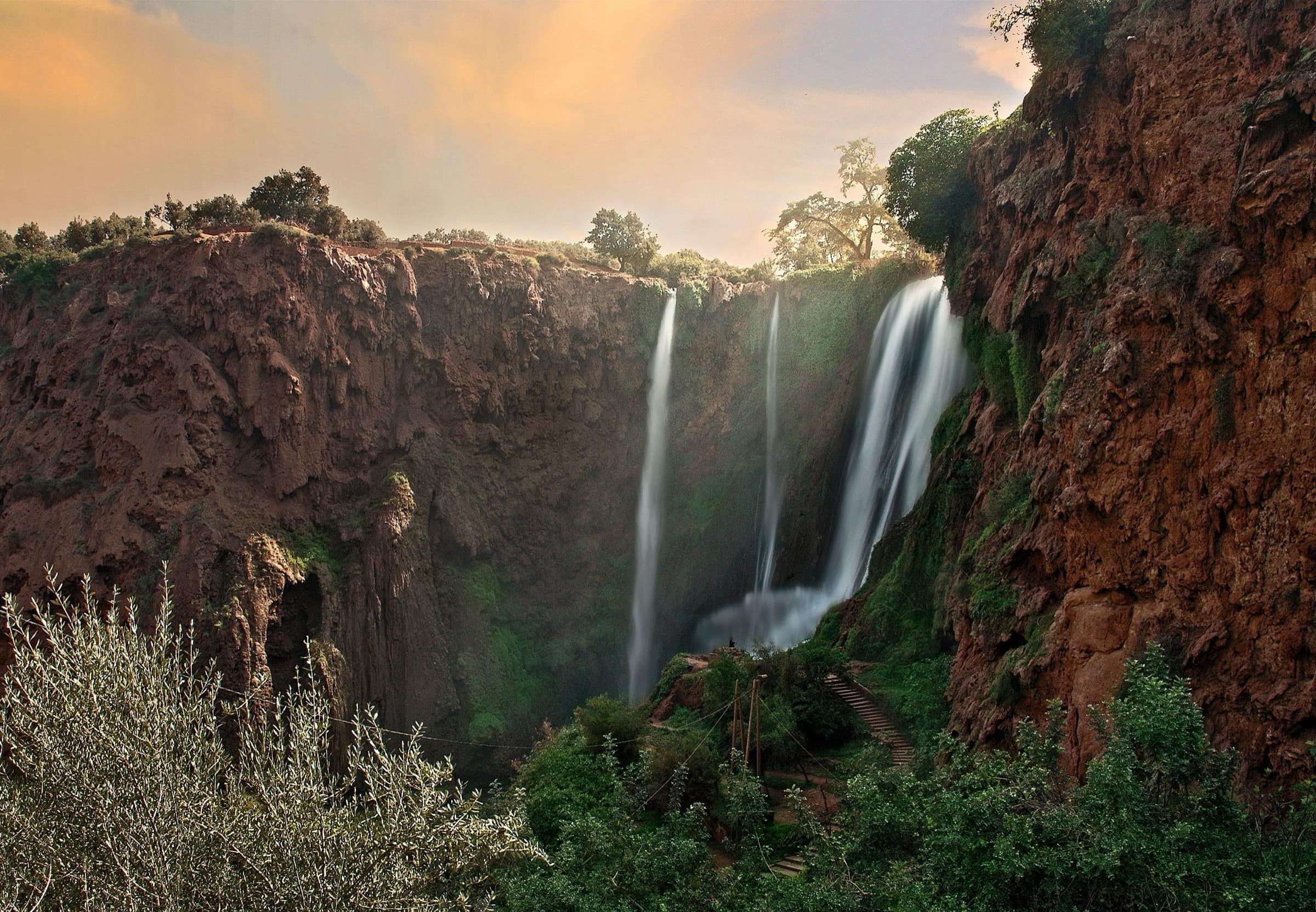
For those set on returning to their starting point, a five-day loop variant exists: Marrakech → Merzouga on the classic route, then back via Beni Mellal and the Ouzoud waterfalls, which adds around 160 kilometres and a full driving day on D4. This format does not run through GetYourGuide - it books through a direct Moroccan operator or the bespoke circuit described at the end of the listing. Consistent if you want to combine desert and waterfalls without going through the same valleys twice, but you pay an extra day of road for a site (Ouzoud) that earns its day without necessarily justifying stretching a desert circuit.
The bespoke version: 8-day private 4×4 circuit with Desert-Maroc.com
Another format, apart from the GetYourGuide panel: the eight-day, seven-night circuit stretches the format in both directions. It is offered on Desert-Maroc.com, a site published by our group. The itinerary opens with two days of free time in Marrakech, closes with two days in Fes, and sets five days of road at an eased pace in the middle: a real rest day at Merzouga around a guesthouse with a pool, a stop at the Gnawa village of Khamlia, and two stages rarely included by group circuits - the Kasbah of Télouet, the former Glaoui stronghold on the Tichka road, and the Lezzarine Sources museum at Tinejdad, which documents qanats and traditional southern irrigation.
The format is 100% private: 4x4 with a bilingual driver-guide throughout, riads in the Marrakech and Fes medinas at start and end, bivouac camp at the Erg Chebbi, guesthouse with a pool at Merzouga. The rate steps with the group: £955/person for two, £710 for four, £618 for six. The quote goes through direct contact - bespoke, not a catalogue rate to book online.
For whom? A couple, a family or a small group of two to six people who want the full Morocco week in a single package, with the two medinas, the desert, two less-visited sites, a rest day in the middle, and no shared minibus. For whom not? The independent traveller who plans their own stages and slots three desert days into an independent stay: the six GetYourGuide group offers (air-conditioned van, £52 to £139 for three days) suit better, at seven to twelve times less per day. Two reservations to state honestly: no public verified-reviews platform on Desert-Maroc.com, and the Fes return flight logistics stay for the traveller to arrange.
On your own or on a tour?
What to expect
About half a day. Times are indicative.
Marrakech → Dadès valley
Early departure from Marrakech, climb up the Tizi n'Tichka pass (2,260 m), Aït Ben Haddou (UNESCO ksar, lunch break + visit), Ouarzazate, Rose valley, evening arrival at Boumalne Dadès or Kelaat M'Gouna. ~6h of road, 380 km.
Dadès → Merzouga
Dadès and Todra gorges, Tinghir, possible fossil stop at Erfoud, Erg Chebbi late afternoon. Camel at sunset, bivouac in the dunes, dinner around the fire, Berber musicians. ~5-6h of road, 280 km.
Sunrise on the dunes
The big moment: the sand catching fire at first light. Breakfast at the camp, then back to the vehicle.
Merzouga → Fes
The longest stage: Rissani (souk Tuesday, Thursday, Sunday), Errachidia, Midelt (lunch), Tizi n'Talghemt pass (1,900 m, possible snow in winter), crossing of the Middle Atlas and its cedars, evening arrival in Fes. 7-8h of road, 470 km.
What you see there
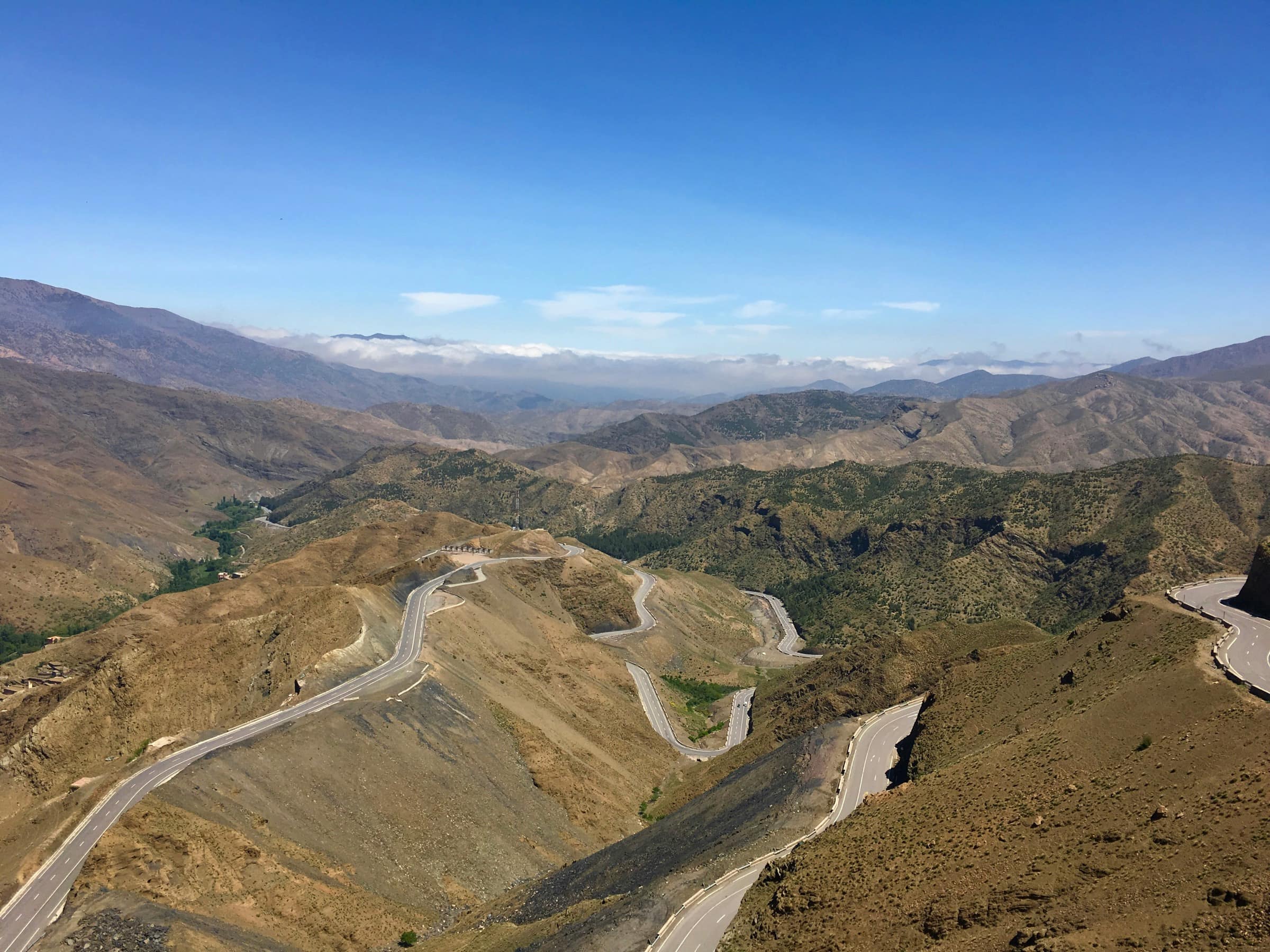
The Tizi n'Tichka pass
The trip's first shift: 3h 30m to 4h of tight bends from Marrakech to cross the High Atlas and drop onto the pre-Saharan side. The N9 climbs to 2,260 m, offers a shelf panorama over the snow-capped ridges through to April, and gets a standard operator photo stop at the top. It is also, officially, Morocco's most lethal road - tight hairpins, heavy goods vehicles, frequent winter fog - which explains why a professional driver beats an auto-drive on this section.
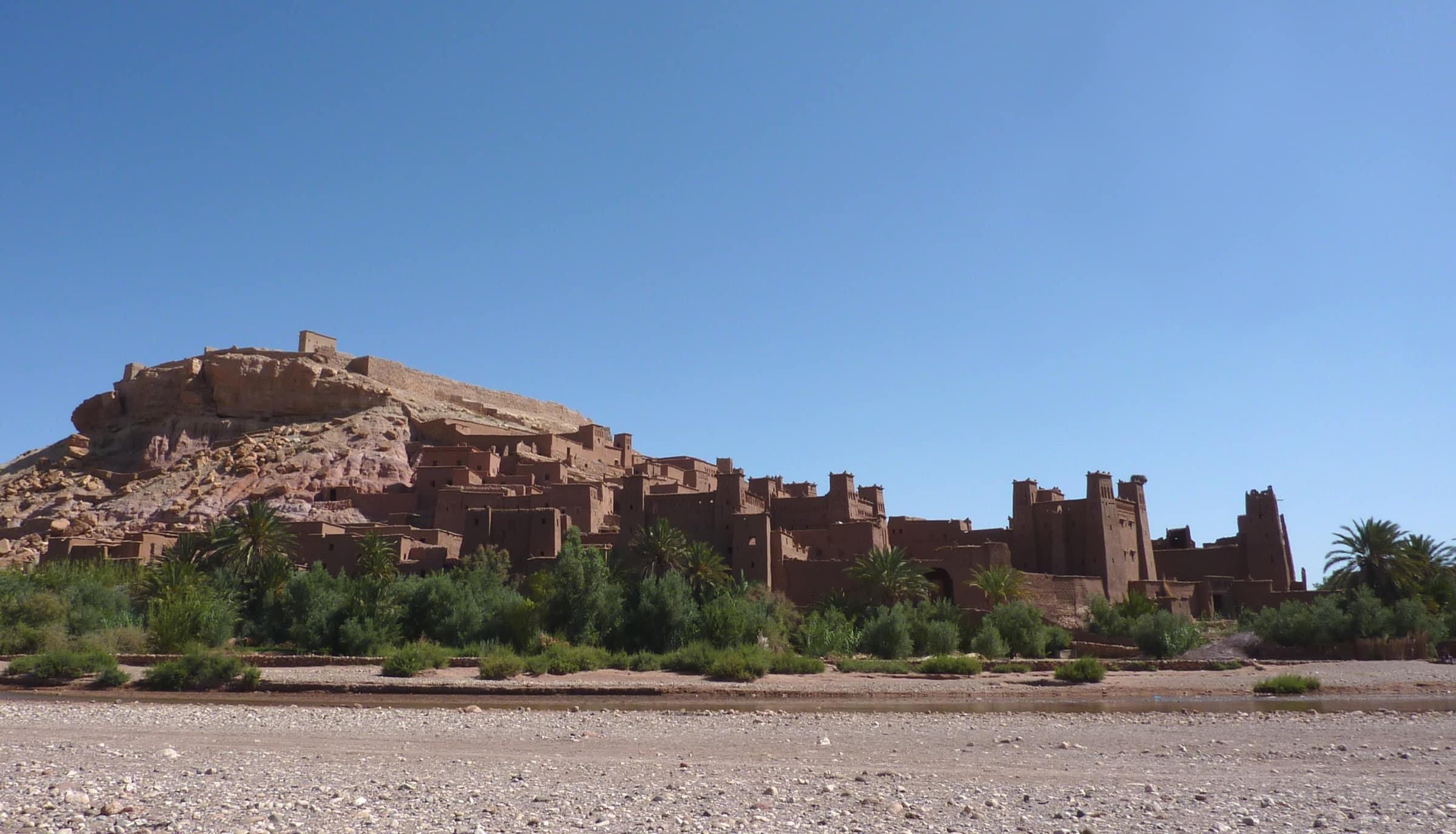
Aït Ben Haddou
Morocco's most-filmed earth ksar, UNESCO-listed in 1987: Lawrence of Arabia, Gladiator, Game of Thrones, and Gladiator II in 2024 all shot here. Worth noting: the set from the latest Gladiator was not dismantled after filming, and some restored walls visible today are Hollywood additions, not 17th-century earth. Basic access free. Reckon 10 to 20 dirhams for the restored kasbahs and 100 to 200 dirhams/h for a guide at the bridge, cash.
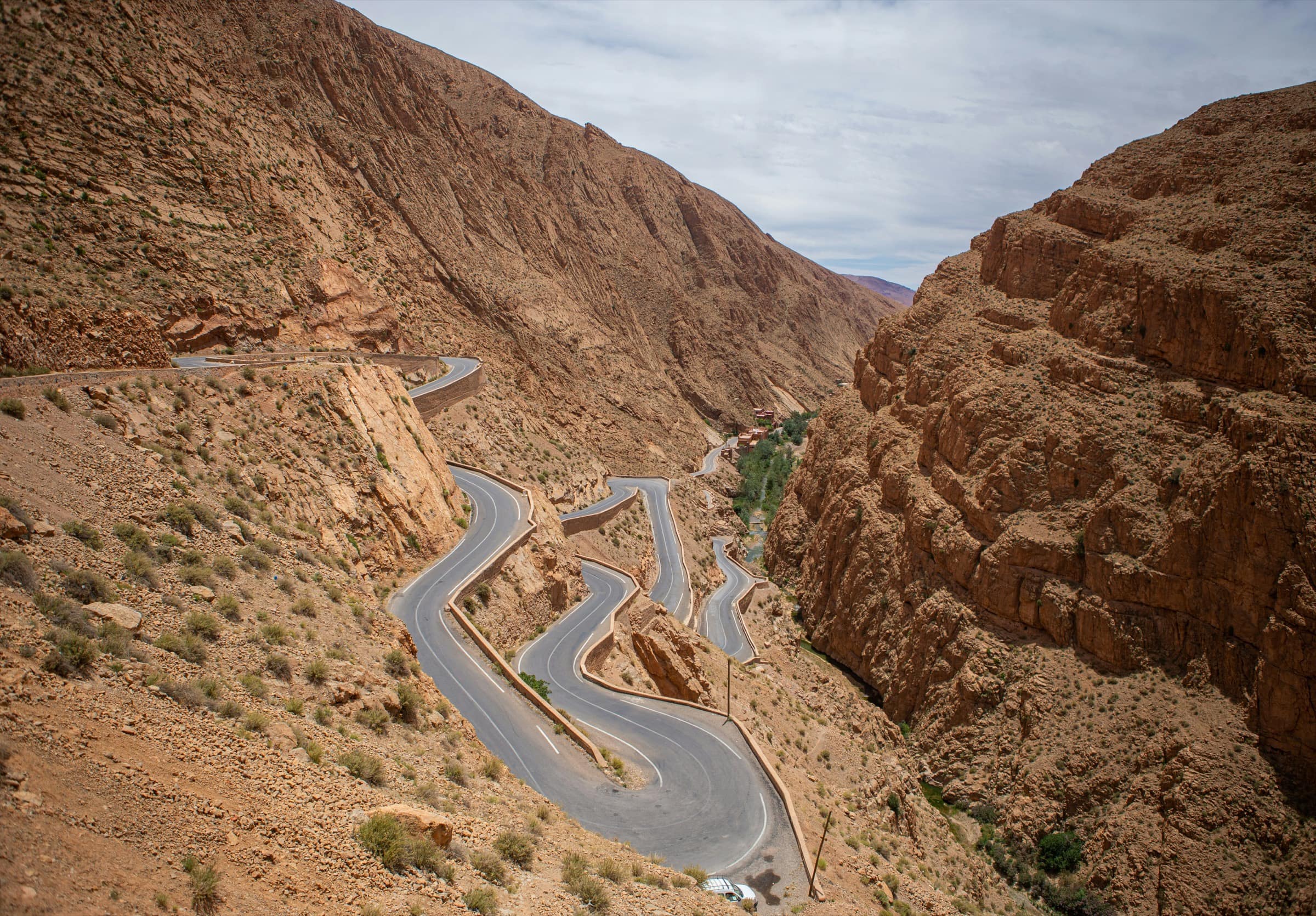
The Dadès and Todra gorges
The two red cuts of the eastern High Atlas: the Dadès unrolls its tight switchbacks under sandstone cliffs, the Todra plunges into a corridor 400 metres high where the road and the wadi share the floor. You drive both; you walk the second.
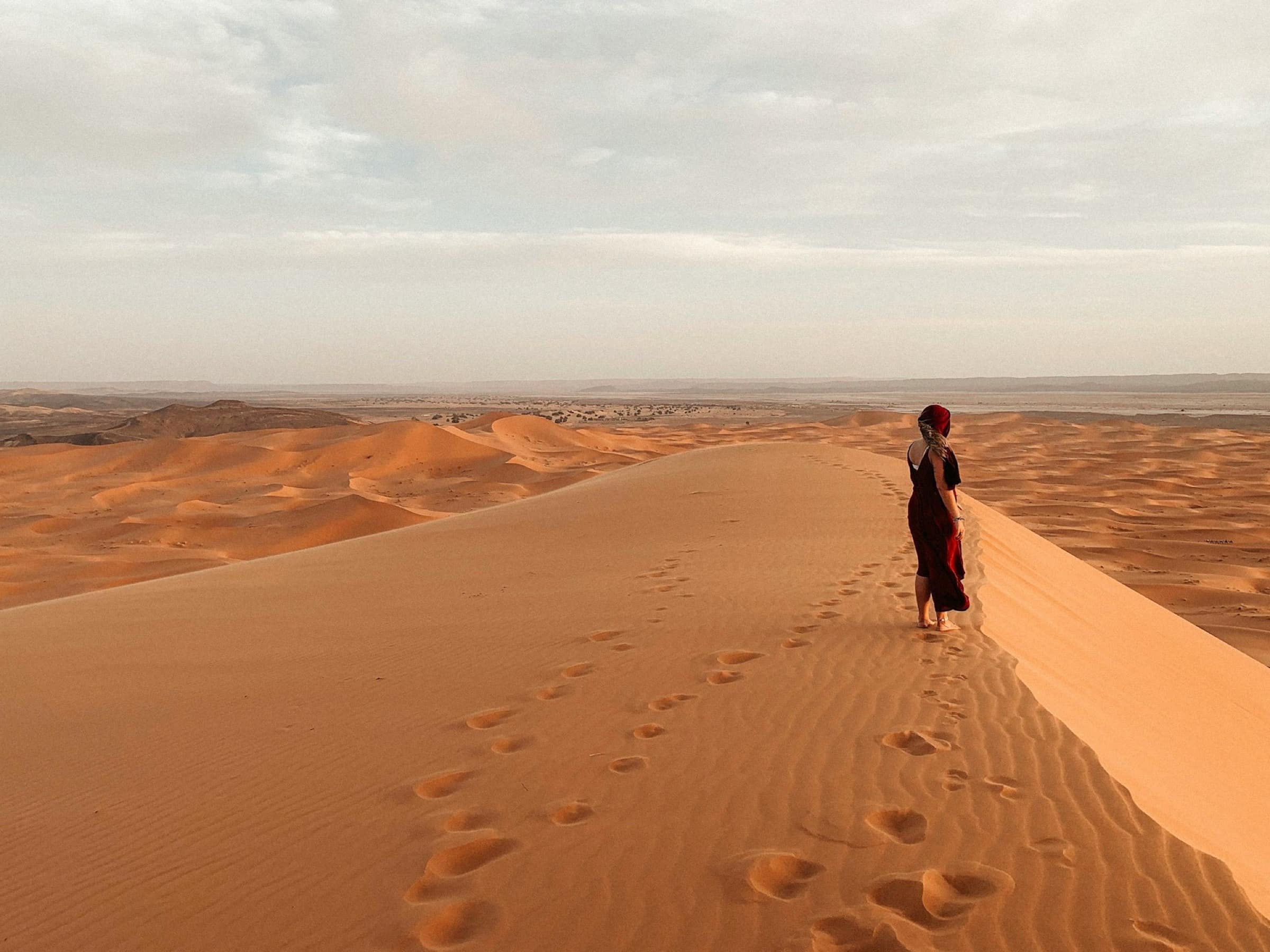
The Erg Chebbi dunes
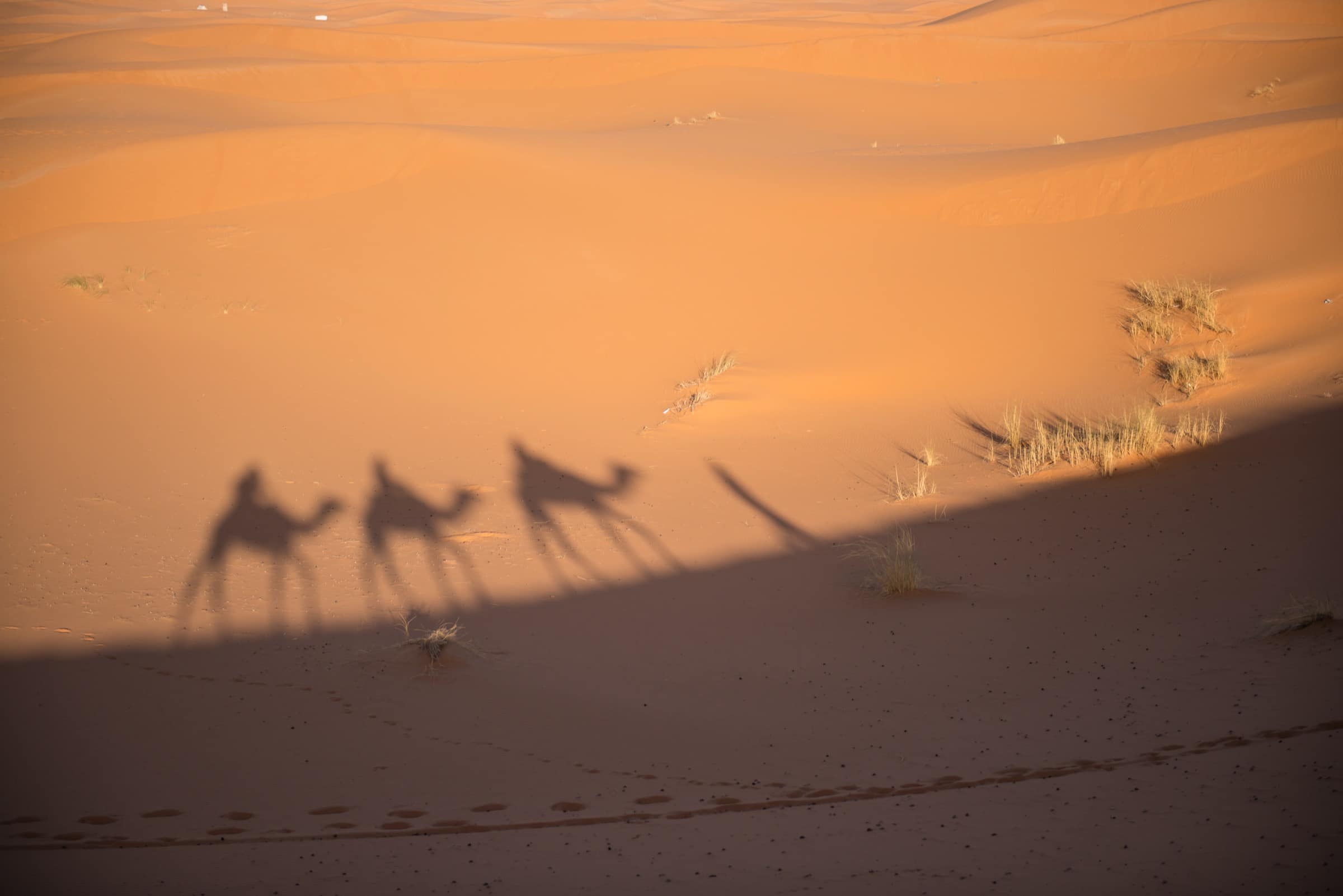
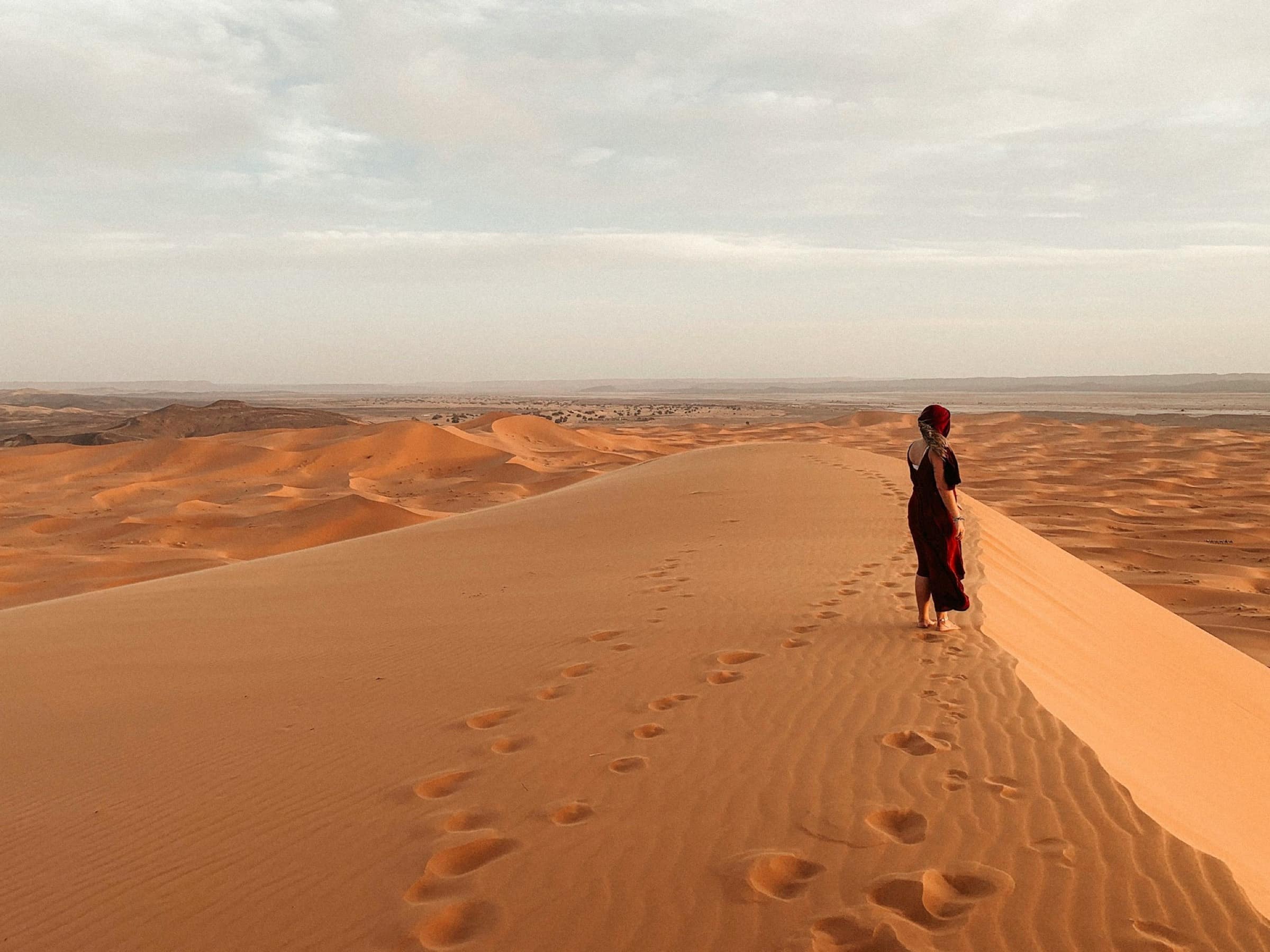
The sand desert out of Marrakech: a thirty-kilometre stretch of dunes, close to 150 metres high, shifting from pink to gold across the day. The circuit's prize: sunset camel, campfire, sky studded with stars far from any light, sunrise on the sand.
What is included
Good to know
Book your day trip
We do not sell the tickets: booking goes through GetYourGuide. The price is the same as direct, a small commission comes back to this guide.