Skip to content
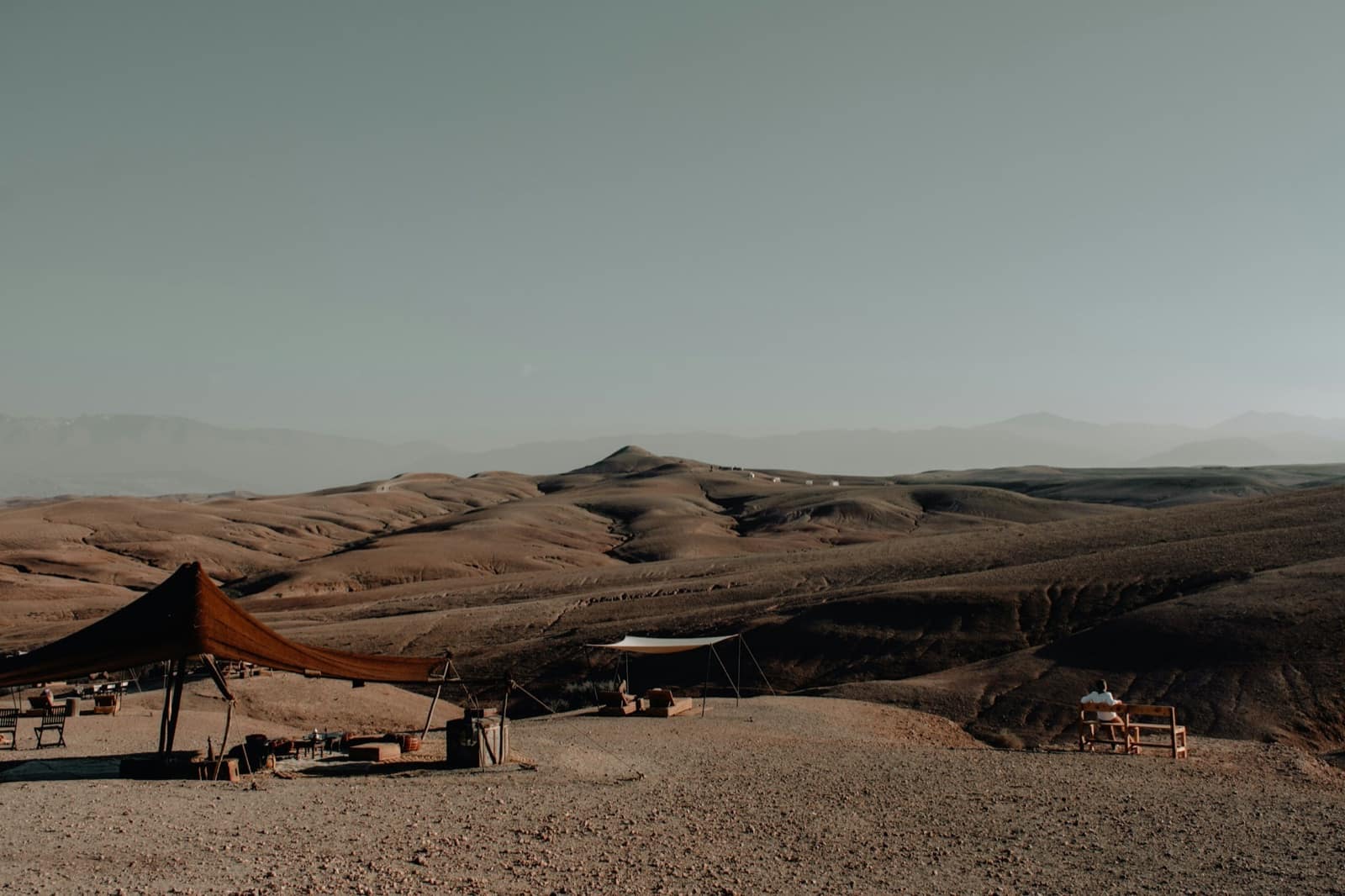
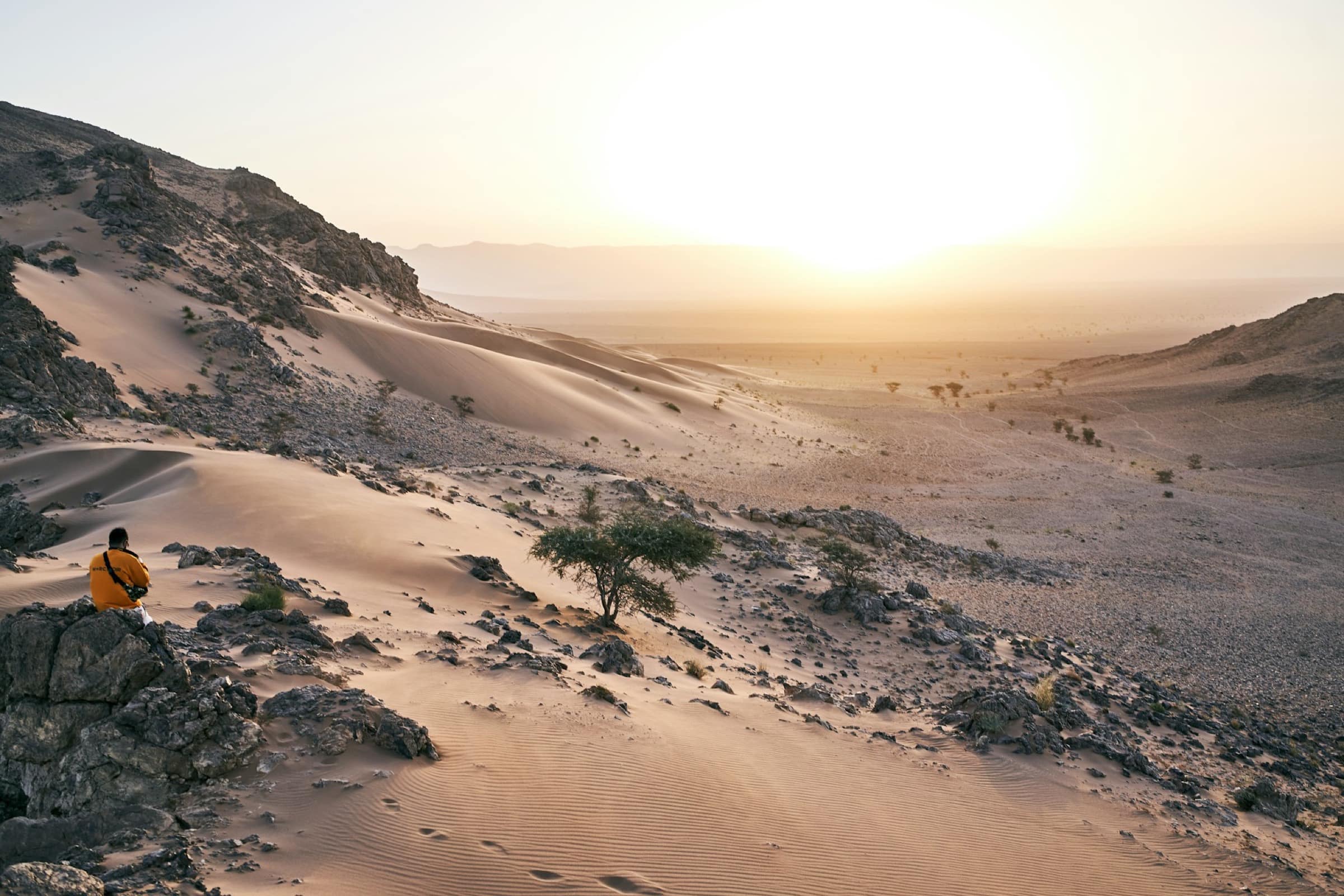
The Zagora desert at sunset, between sand and stone.
THE DEEP SOUTH · DRAA VALLEY

Zagora desert

~350 km · 2 days · from £49
Distance350 km
Travel time6 to 7h each way
Duration2 days (1 night)
Price£49

The quickest way to sleep in the desert from Marrakech - but let us be clear. Zagora is two days and one night, against three for Merzouga: you cross the High Atlas via the Tizi n'Tichka, follow Aït Ben Haddou and Ouarzazate, then the fine Draa valley, its palm groves and its earth kasbahs, to the edge of the Sahara. The bivouac, the sunset camel, the fire and the stars are all real. But Zagora's dunes (Tinfou, Erg Lehoudi) are modest, some thirty metres - far from the great Erg Chebbi dunes at Merzouga or the Erg Chigaga, further south. Zagora is a first taste of the desert, reachable and affordable, not the postcard great erg. Pick it if you have few days. For real great dunes, count three days to Merzouga.

Zagora is an oasis town in southern Morocco, on the Draa river, long seen as one of the gates of the Sahara - here starts the famous ‘Timbuktu, 52 days’ sign that recalls the length of the caravan trip on camel. From Marrakech, you reach it on a long day of road, via the Tizi n’Tichka pass, Aït Ben Haddou and the fine Draa valley with its palm groves. It is the desert closest to reach for a bivouac night - provided you know its dunes are modest: Zagora is a taste of the deep South, not yet the great sand erg you find further out, at Merzouga.

Zagora is the short format for a taste of the deep South. To push further and loop through to Fes, aim for Merzouga - see our Marrakech - Merzouga - Fes circuit.

On your own or on a tour?

On your own
By car: ~350 km via Ouarzazate and the Draa valley, 6 to 7h. Doable solo over 2-3 days.
CTM/Supratours bus to Zagora (long), then a camp booked on site.
The organised circuit stays simplest for stringing road, bivouac and camel.
On a guided tour
The driver-guide swallows the long hours of mountain and valley road.
Bivouac, camel and dinner booked and strung, no logistics.
The stages - Aït Ben Haddou, Draa valley, kasbahs - are set into the timing.

What to expect

About half a day. Times are indicative.

Day 1 · morning

Marrakech → Ouarzazate

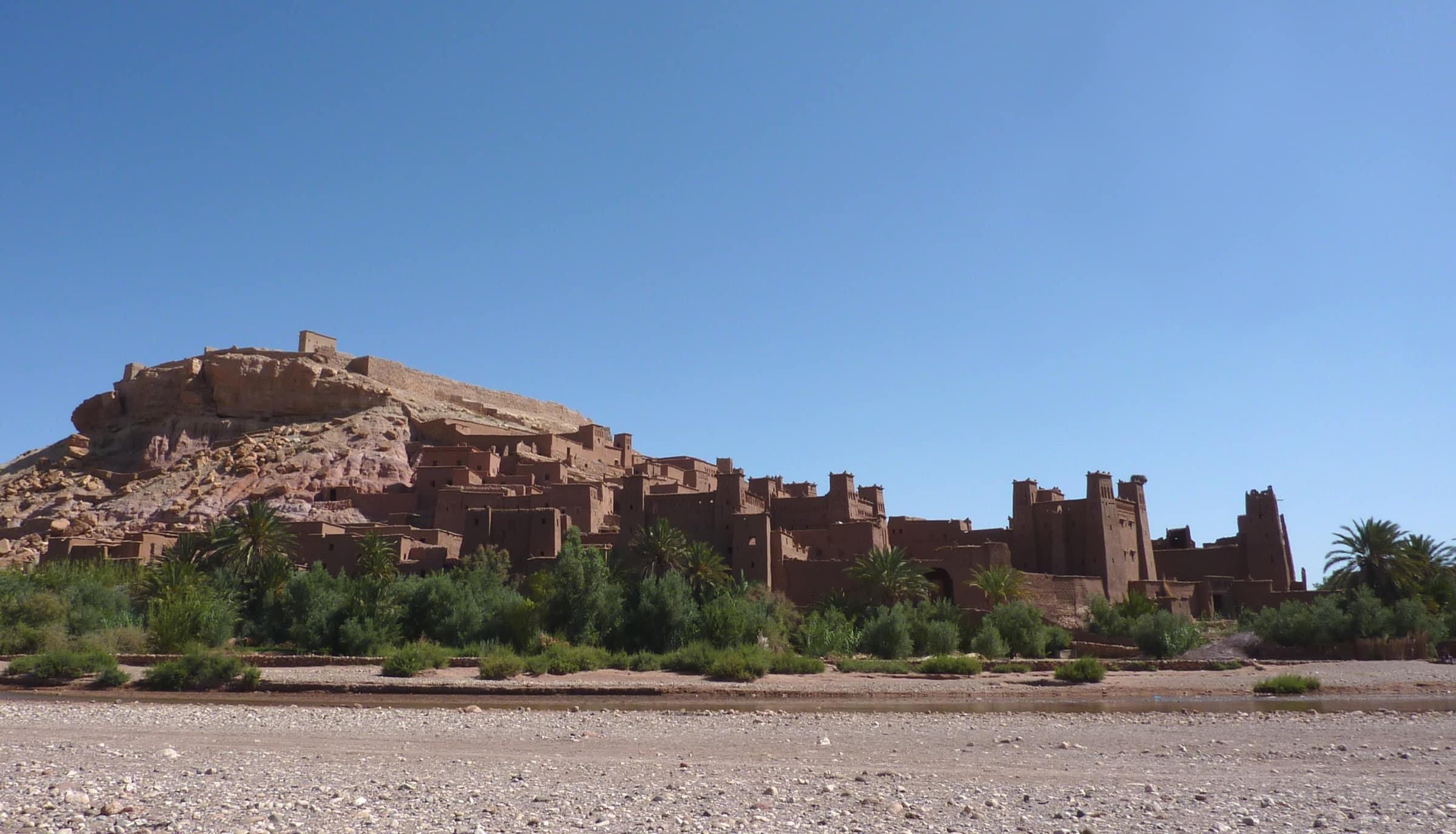
Tizi n'Tichka pass (2,260 m), stop at Aït Ben Haddou (UNESCO ksar), then Ouarzazate. Lunch on your own.

Day 1

The Draa valley → Zagora

Down via Agdz into the Draa valley: palm groves and earth kasbahs, through to Zagora.

Day 1 · evening

Camel & bivouac

Camel ride at sunset to the camp, dinner and Berber music around the fire, night in a tent.

Day 2 · dawn

Sunrise

Waking at the camp, at the foot of the dunes, and breakfast in morning light.

Day 2

Back to Marrakech

Return by the same axis, often with the Taourirt kasbah at Ouarzazate. Back in the evening.

What you see there
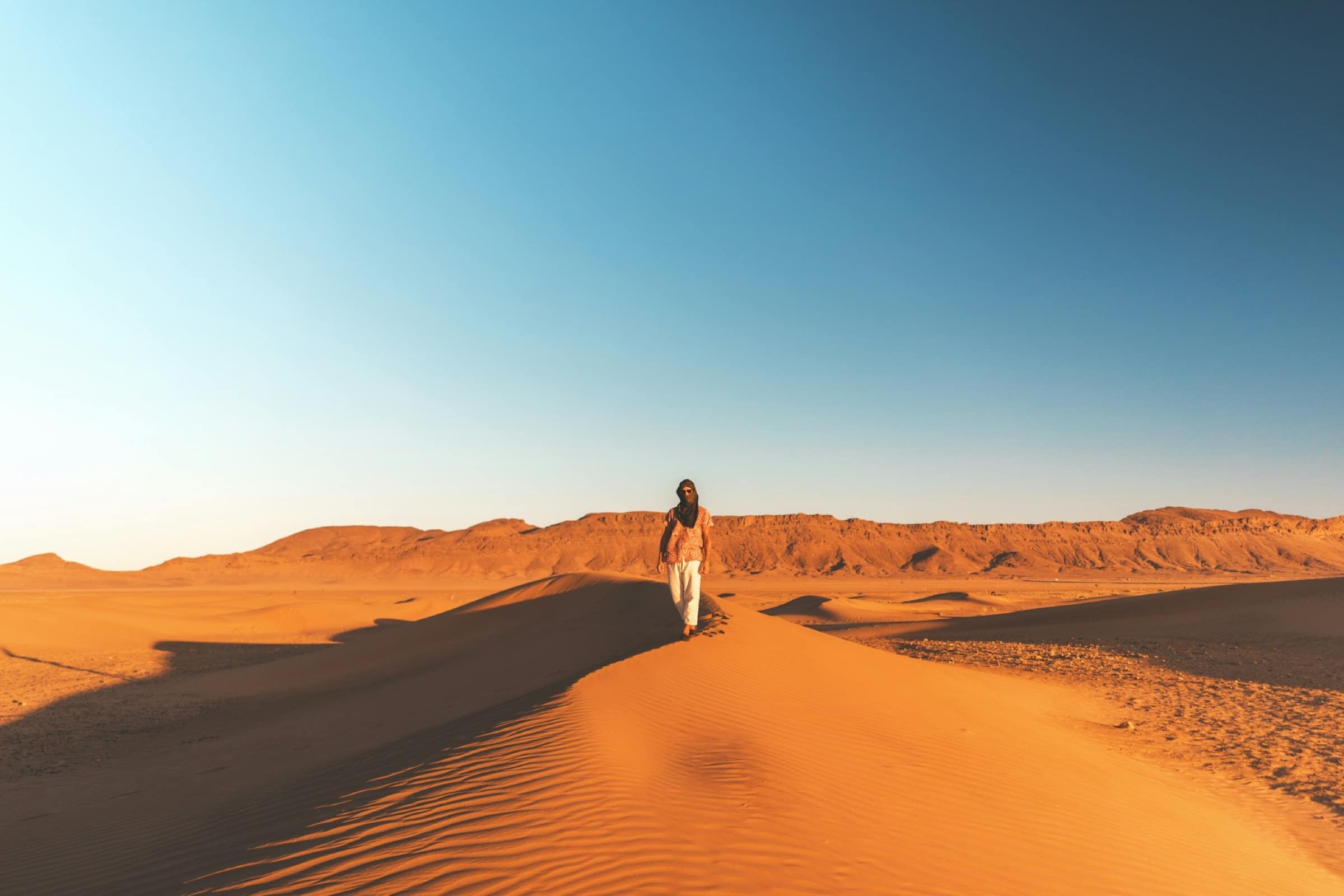
Zagora dunes, low, on the edge of the stone desert.
Modest, ~30 m

The Zagora dunes

The bivouac runs in modest dunes - Tinfou, Erg Lehoudi - some thirty metres high. Real Saharan sand, but on a modest scale: fine at sunset, no match for Merzouga's great dunes. Worth knowing before setting out.
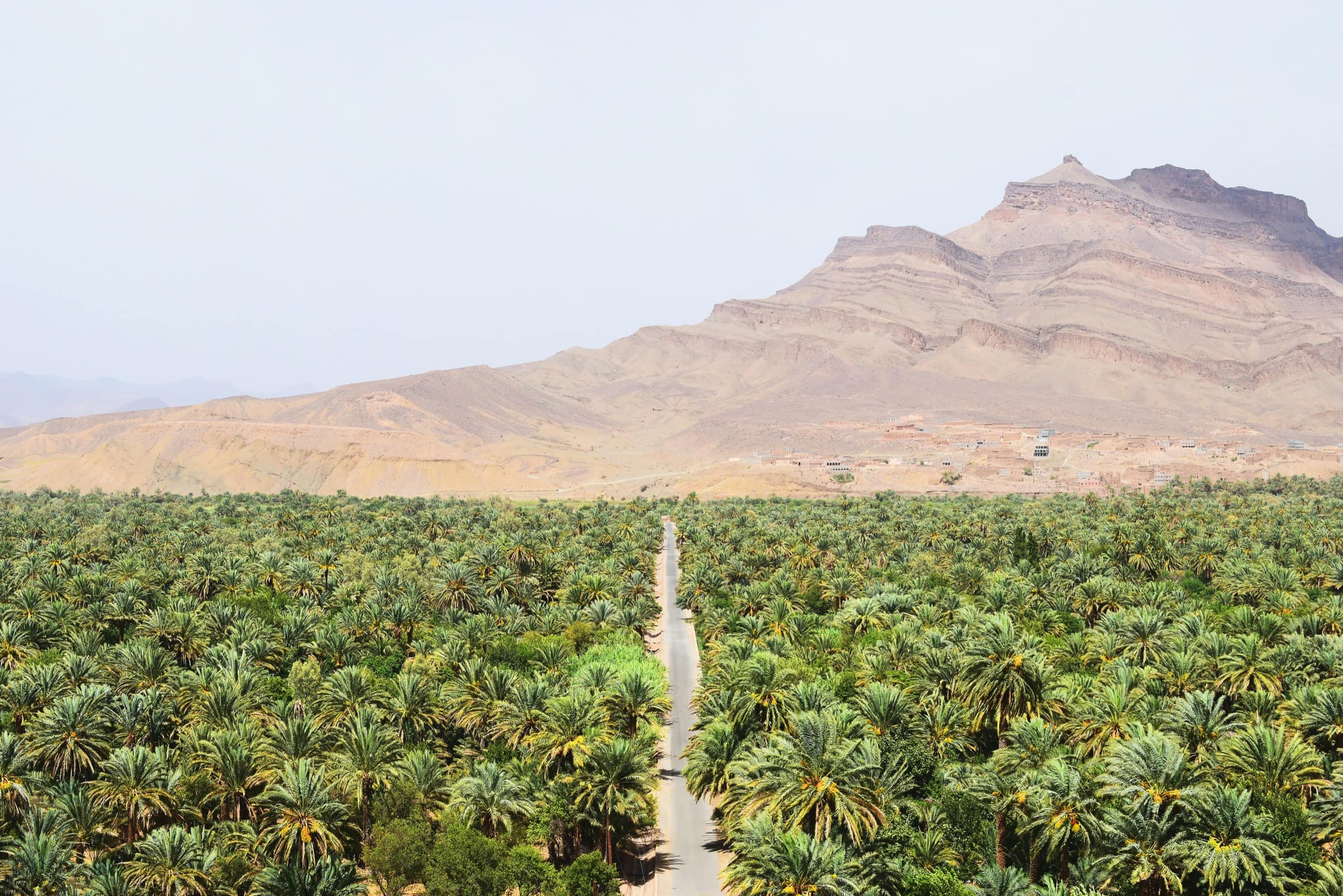
The Draa palm grove, at the foot of the mountains, near Agdz.
The longest oasis

The Draa valley

The real prize of the trip: past Agdz, the road follows the Draa palm grove, Morocco's longest oasis, dotted with ksour and earth kasbahs. An end-of-the-world landscape, between desert and palms.
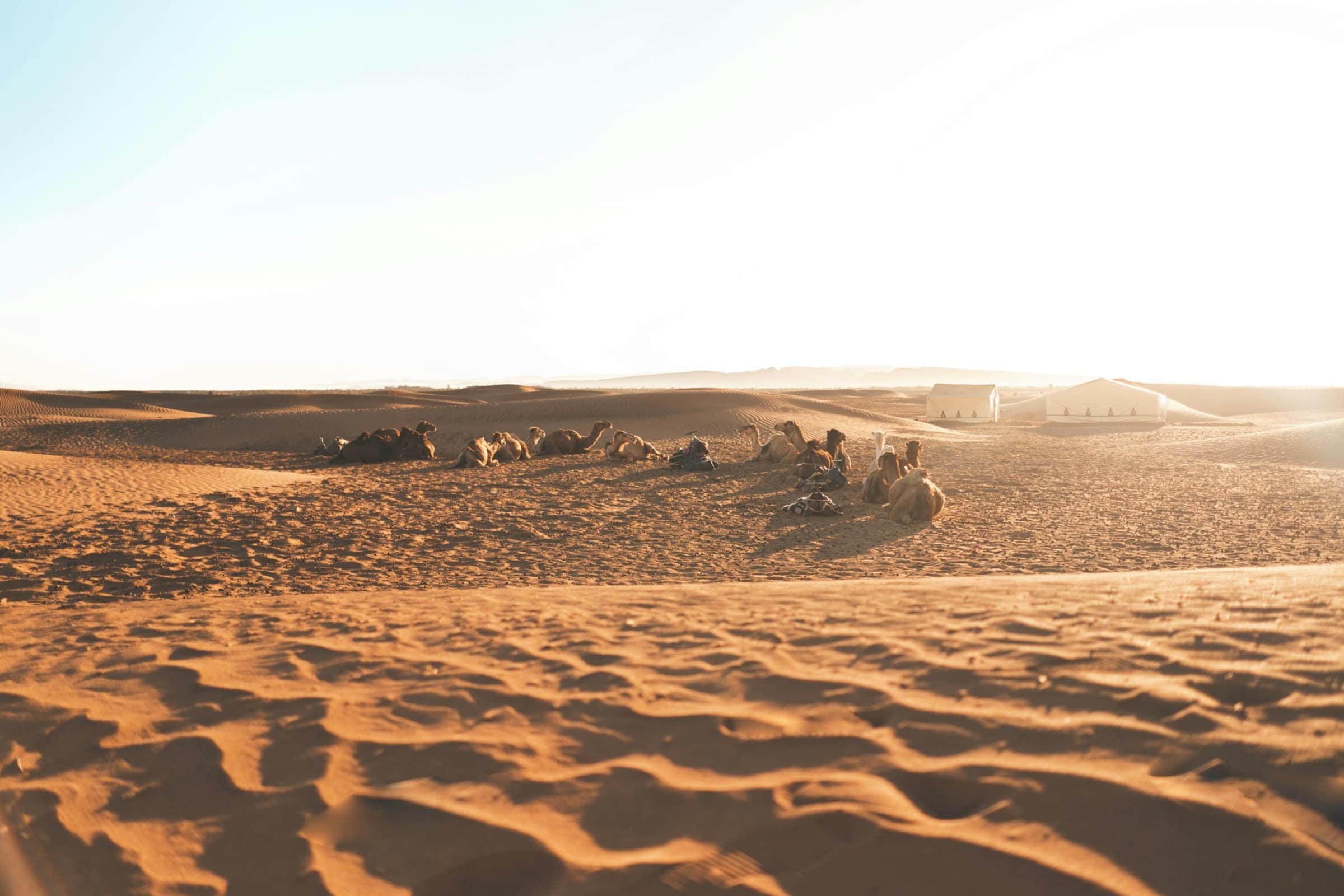
Camels and bivouac tents, in the Zagora dunes.
Under the stars

The bivouac night

Berber tent, dinner around the fire, drums and a starry sky away from towns. From the standard camp with shared facilities to the luxury tent with private bathroom.
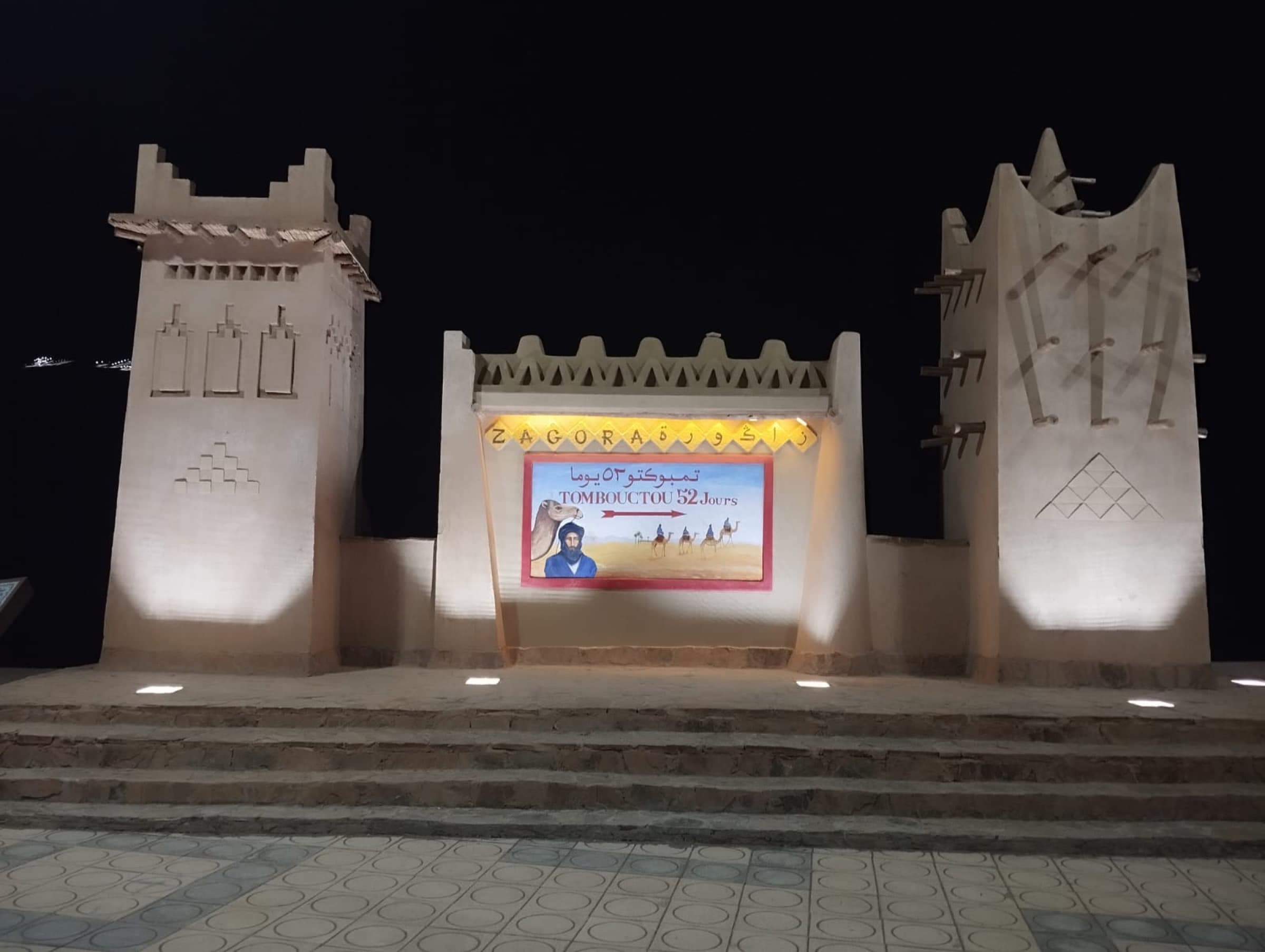
The 'Timbuktu 52 days' monument, at Zagora.
Gate of the Sahara

Zagora and 'Timbuktu 52 days'

The oasis town keeps the famous 'Timbuktu 52 days' sign, the length of the caravan trip on camel. Around it, pisé kasbahs, the Amazrou potters' quarter and, further south, the green pottery of Tamegroute.

What is included

Included
Return transfer and transport in an air-conditioned vehicle, driver-guide
1 night in a bivouac (Berber tent), camel at sunset and sunrise
Dinner and breakfast at the camp
Not included
Lunches (~£8-£13 per meal) and drinks
Aït Ben Haddou kasbah guide (~£2-£3) and tips
Options: luxury tent, quad, sandboard

Good to know

Small dunes, not the great SaharaThe Zagora circuit dunes (Tinfou, Erg Lehoudi) are some thirty metres: a taste, not the vast. The real great sand erg is Erg Chebbi at Merzouga (up to 150 m, 3 days) or Erg Chigaga south of M'Hamid (by 4x4, 3 to 4 days). Do not go to Zagora hoping for the vast sand you picture.
Zagora, Merzouga or Agafay?Three deserts, three formats: Agafay (stone desert, 45 min away, an evening or a night), Zagora (small sand dunes and Draa valley, 2 days), Merzouga (the great dunes, but 3 days and 560 km). Zagora is the right compromise when short on time but wanting real sand and the Draa oasis.
Still a lot of roadZagora is closer than Merzouga, but it still runs 6 to 7h of road each way, and the second day is mostly the return. You see a lot in little time: better booked with less than four days in Marrakech.
The shop stopsAs on every southern road, expect 'argan cooperative', carpet or fossil stops. Warm welcome, but shops: nothing forces you to buy.
Summer heat, winter night coldThe Draa valley can hit 45°C in summer: skip June to August. The best seasons run October to April, with cool bivouac nights - bring a warm layer.
The camel, short and bumpyThe camel ride is short and bumpier than you might imagine, and part sometimes runs along the road before entering the sand. The moment stays fine at sunset. Pick a camp that cares for its animals.

Book your day trip

We do not sell the tickets: booking goes through GetYourGuide. The price is the same as direct, a small commission comes back to this guide.
Frequently asked questions

Zagora or Merzouga, which desert to pick?
Question of time and expectations. Zagora runs in 2 days and costs less, but its dunes are modest (some thirty metres). Merzouga calls for 3 days and 560 km of road, but delivers the real great Erg Chebbi dunes (up to 150 m), the postcard ones. Zagora if you are short on time and want a taste of desert and Draa valley. Merzouga if the Sahara has to be the trip's high point.
Are there real sand dunes at Zagora?
Yes, but small. The bivouac runs in modest sand dunes (Tinfou, Erg Lehoudi), around 30 metres. A real sand desert, on a modest scale. The great ergs are Erg Chebbi (Merzouga) and Erg Chigaga, the latter beyond M'Hamid, only reachable by 4x4 over 3 to 4 days.
How long is the drive to Zagora?
Around 350 kilometres, or 6 to 7h each way, via Ouarzazate and the Draa valley. Shorter than Merzouga, but still long, and the second day is mostly the return. The reward is the landscape: the Tizi n'Tichka pass, Aït Ben Haddou and the Draa palm grove.
What is the best season for Zagora?
October to April. The Draa valley is a desert climate that can hit 45°C in summer: skip June to August. In winter, days are mild but bivouac nights are cold, bring warm layers.
What is not included in the circuit?
Generally, lunches (~£8-£13 per meal), drinks, the Aït Ben Haddou kasbah guide (~£2-£3), tips and options (luxury tent, quad, sandboard). Bring cash: no reliable ATM once in the desert.
Are two days enough for Zagora?
Yes, the standard format works well for a taste of desert: a bivouac night, camel at sunset and sunrise and fine stages on the road. But it is fast and there is a lot of driving. If you really want time in the Sahara, better aim for Merzouga on three days.

Photo credits

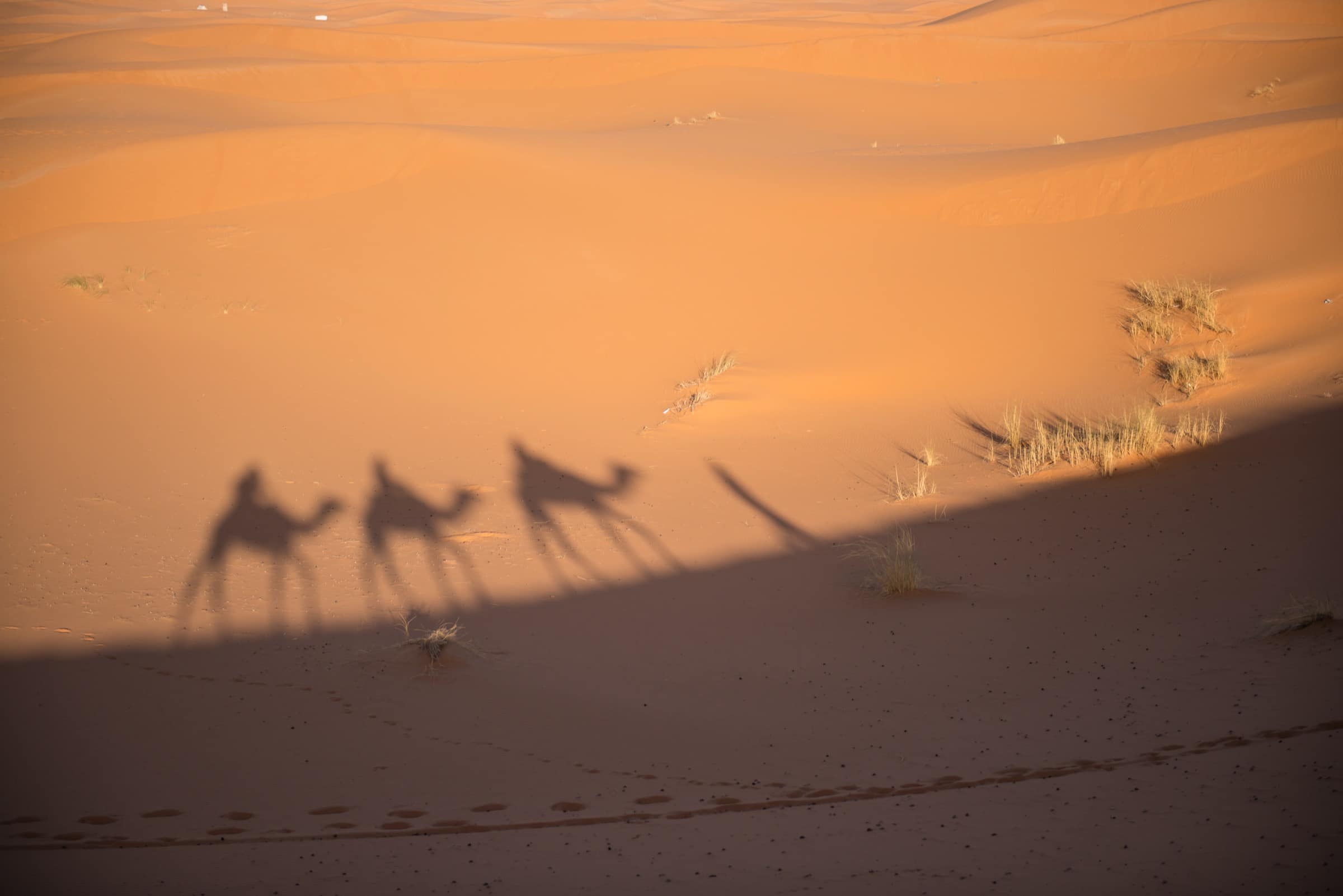
  • Une caravane de dromadaires sur les dunes de l'Erg Chebbi, au coucher du soleil - © Johannes K Becker · CC BY-SA 3.0 · Wikimedia Commons · source
  • Le ksar d'Aït Ben Haddou au petit matin - © Adrian Farwell · CC BY 3.0 · Wikimedia Commons · source
Book online
from £49 / person
See availability →

↑ ↓ to navigate · Enter to open · Esc to close