Street food in Marrakech, district by district
The numbered stalls pull the tourist in. Marrakchis eat three streets further. We separate the show from the neighbourhood diner, document the itemised anatomy of the rip-off (inflated bills, 'free' salads billed, mechoui weight puffed up) and name the Marrakchi canteens on rue Ibn Aïcha. Eight addresses checked in July 2026.
Eating on the street in Marrakech starts with reading the price map. Orange juice is officially posted at 4 MAD on Jemaa el-Fna. A msemen runs 3 to 5 MAD on rue Bab Doukkala at first light, a bowl of harira costs 5 to 10 MAD at a Marrakchi diner. Between the numbered square stall and the souk stall, the same meat can go from single to triple depending on the welcome. This guide separates the show from the neighbourhood diner, documents the anatomy of the rip-off on Jemaa el-Fna with numbers and names the Marrakchi canteens on rue Ibn Aïcha, where locals eat. Eight reference points checked in July 2026.
The itemised anatomy of the rip-off
Five patterns come back in 2024-2026 reviews, each documented.
The menu is posted but the bill climbs. Bread, olives, sides, service, live music charged as extras with no prior notice. One publicly reported 2025 case: bill calculated at 110 MAD by the customer, claimed at 200 MAD by the stall.
The ‘free’ salads that turn into a bill. The trap-stall ritual: five to seven small plates of raw vegetables land before the skewers, presented as gifts. On the bill, everything is priced in. December 2024 case: 1,075 MAD claimed from seven people (three of them children) for modest skewers and a cold fish, topped with ‘free salads’.
Mechoui Alley: the weight and the cut. 260 MAD/kg announced in 2025 against 180 MAD/kg historically, a 44% rise in three years. Nearly 40% of the weight served is inedible per critical reviews (bones, fat, skin). Tourists receive ‘the poorer cuts’ where Marrakchis pick their own.
The extreme press case. June 2019, since picked up in the travel press: 5,000 MAD claimed from eight tourists on Jemaa el-Fna, brought down to 3,000 MAD after a protest filmed on social media. The negotiation proves the inflation is deliberate.
The 4 MAD orange juice that turns into a bill to take away. Official listed price 4 MAD/glass. Documented rip-off: plastic cup billed as an extra if taken away, pre-pressed juice diluted with water, ‘in-dialect’ price not understood that triples the bill. Move: ask for the juice pressed in front of you, refuse the plastic cup.
The evening scene: Jemaa el-Fna without falling for the trap
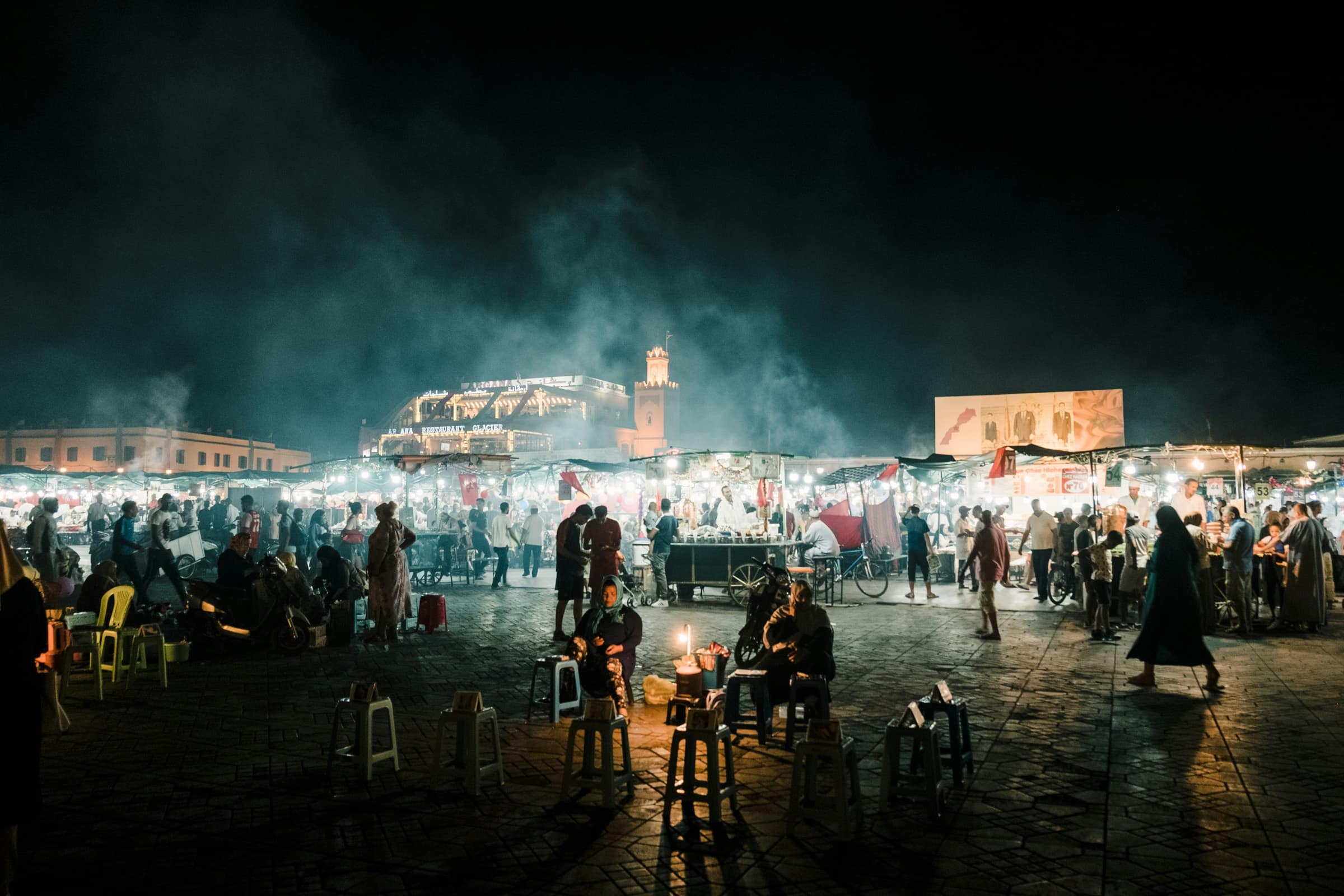
The square runs on a hundred numbered stalls, all roughly identical on paper: skewers, fried fish, harira, snails, sheep’s head, tanjia. Since 2020, Marrakchi footfall has been falling. The rare locals seen are often Moroccans from other cities, not Marrakech residents. The rule that protects: do not sit down at a stall for dinner. A bowl of babbouche at 5-10 MAD from a mobile cart, an orange juice pressed in front of you at 4 MAD, a bowl of harira at 5-10 MAD all work well. The costly format is the sit-down table with a multilingual tout.
Two stalls used to come back in the notes: stall 1 - Chez Aicha (the only female chef on the square, often cited as reliable, price ~75 MAD/person) and stall 14 - Krita (fried fish, running since 1966). Recent 2024-2026 reviews name them less often. We do not recommend them by name in the address book until we have revisited them. Stall 100 and stall 19 (FRITA) are explicitly flagged to avoid in recent reviews.
Useful window: between 10pm and midnight, when the touts get less pushy. Pay in small notes. Refuse anything not explicitly ordered.
Where the Marrakchis eat: rue Ibn Aïcha
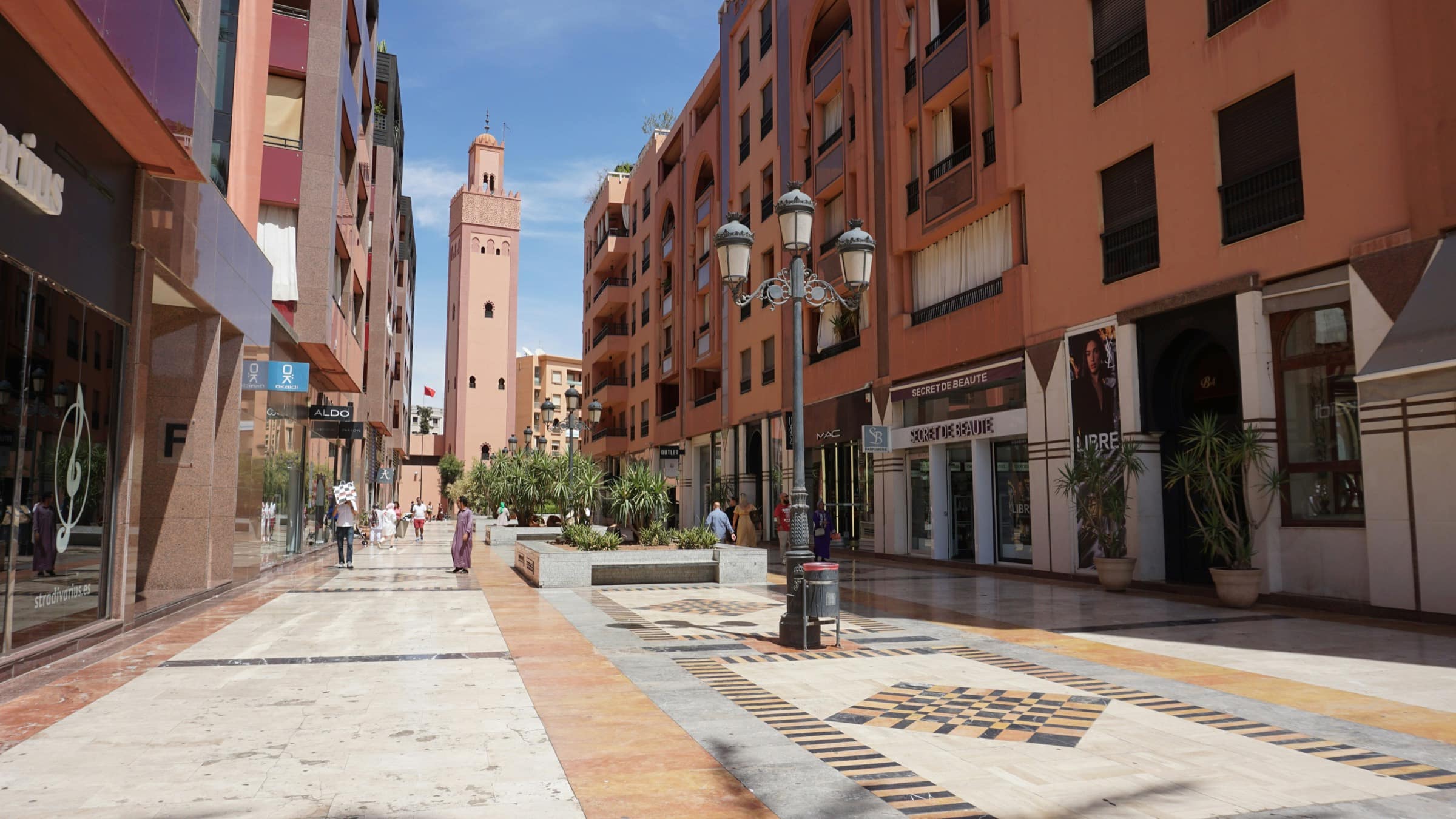
In Guéliz, rue Ibn Aïcha lines up three Marrakchi canteens over a hundred metres that have been running since the 1970s: Chez Bejgueni (n°21, since 1973, open 10am-1am, pavement service, grills and tagines), Chez Ouazzani (right next door, valued for Friday couscous and weekend tanjia) and Chez Lamine Guéliz (n°29, opposite Montecristo, the annex of the Souk Ablouh house). The budget is the Marrakchi budget: 100 to 150 MAD per person for a full meal, quality meat, full plates, pavement-terrace service. Few tourists find their way. Locals come at any hour, including late into the night. No website, no booking, cash only.
Three useful notes: Chez Lamine Guéliz offers tanjia but not consistently (check on ordering). The real tanjia slot stays the mother house at Souk Ablouh. Chez Ouazzani does a Friday couscous to plan for mentally (service starts around 12.30pm, stock is gone before 3pm). Chez Bejgueni keeps the widest card and the latest service: it is the canteen for after the show or the night out.
Around the medina: Bab Doukkala and Mellah
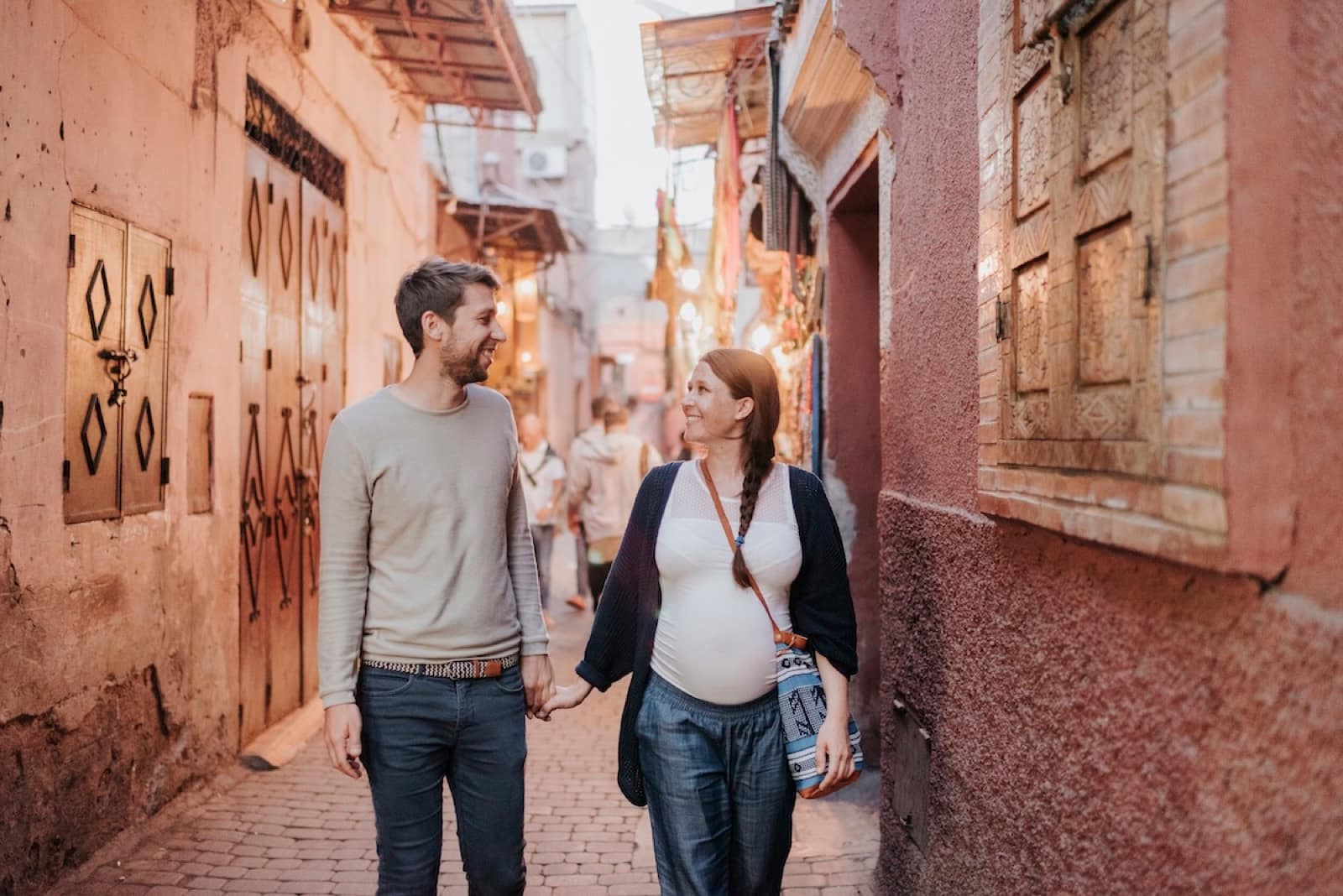
Rue Bab Doukkala, at the north-west exit of the medina, is a mixed morning-evening popular strip. In the morning, several women set out their tables between 8 and 10am: msemen at 3-5 MAD, baghrir at 3-5 MAD, sfenj at 2-5 MAD. Tea is taken separately in a popular neighbourhood café. In the evening, the same street shifts to grills: skewers at 5-15 MAD apiece, harira, sheep’s head at some stalls. No sign to name, the scene is the district and its turnover. It is also the logical exit if you want to escape the roar of Jemaa el-Fna without leaving the walls.
The Mellah, the former Jewish quarter south-east of the medina, keeps an off-centre popular scene: loubias (slow-cooked white beans) at specialist sellers in the late morning, grilled sheep’s head in the evening at stalls in the area. Few tourists come to eat here. The Marrakchi format holds. Exact addresses shift from year to year. We prefer to point to the district rather than name a stall that will have changed hands.
Mechoui and tanjia: the moves that matter
Mechoui (whole lamb in a buried oven) and tanjia (terracotta jar, cooked in the ashes of the hammam oven) are the two identity dishes of Marrakech. The first is eaten at Souk Ablouh (Mechoui Alley) at lunch only, 11am to 2.30pm, lamb by the weight around 260 MAD/kg in 2025. The move that cuts the rip-off: pick the cut yourself (ktef for shoulder, fkhd for leg), refuse cuts dominated by fat and bone, weighed in front of you.
Chez Lamine Hadj Mustapha, at the end of the same alley, has offered the tanjia reference since 1965: sealed jar, cooked 6 to 8 hrs in the ashes of the neighbouring hammam oven, 140-160 MAD/kg. Mechoui is sold in the room next door at 200 MAD/kg, noticeably cheaper than in the street. The setting is spartan (plastic chairs, shared tables), a popular sit-down canteen, not a street stall. Meal for two under 150 MAD in total. Cash only, confirmed in 2025.
One point to know: two Chez Lamine exist. Souk Ablouh in the medina, 2 minutes from Jemaa el-Fna, is the mother house and the tanjia reference address. Rue Ibn Aïcha in Guéliz (n°29) is an annex mostly geared to grills. Tanjia is possible but less consistent. Do not mix them up.
Street breakfast
Breakfast in the riad is comfort. Breakfast in the street is another thing. The window is short: 8-10am, before the sellers fold up their tables. Rue Bab Doukkala, described above, concentrates several. Derb Dabachi, inside the medina, serves others, with an sfenj slant (the Moroccan doughnut, 2-5 MAD apiece).
For the vivid version of that breakfast - the street scene at Bab Doukkala on a Sunday morning, the seller folding up her table on a pavement corner, the tea fetched from the café next door - our note A Sunday morning at Bab Doukkala picks up this guide’s reference points with a first-hand piece.
The move: order by the piece, eat standing or walking. Tea is taken separately, in a popular neighbourhood café - never served by the msemen seller. A little honey or fresh cheese in the hot msemen coming off the plate is the Moroccan street breakfast. Harira, tied in mind to breaking the fast during Ramadan, is really a daily dish found at any hour in the canteens above, 5 to 10 MAD a bowl.
What we set aside, and why
The street food listicles copied from one blog to another regularly cite Chez Zeina, Chez Madame Fadma or Monsieur Fromage: impossible to confirm. Those names appear only in a single recent source, never found on TripAdvisor or Google Maps. We do not name them in our address book.
The dinner-show on Jemaa el-Fna (Le Salama, Nouba, Dar Essalam in the dinner-show format) is not street food. It is a sit-down format with belly dance and staging, covered in our dinner-show & fantasia activity sheet. Two different formats.
Breakfast in the riad is a hotel ritual, not a street one. It often earns its price. It does not belong in a street food guide.
In practice: cash, timings, prices
Cash universal. No address in this guide takes a card in 2025. Bring notes of 20-50 MAD. Small change runs short on 200 MAD notes.
Timings to respect. Mechoui 11am-2.30pm. Msemen/baghrir/sfenj 8-10am. Marrakchi canteens midday-1am. Jemaa el-Fna 6pm-1am, peak 8pm-midnight. Friday = Friday couscous everywhere, including at Ouazzani. Stock often runs out before 3pm.
Ramadan. During the fasting month (late February - late March 2026), the canteens close during the day and reopen at the ftour, around 6.30pm. Prices stay stable but the crowd is intense in the first hour. Harira, served everywhere at the break, stays at 5-10 MAD a bowl.
Negotiating prices. At the Jemaa el-Fna stalls, ask for the price repeated in dirhams (not in euros or in dialect), request an itemised bill before it comes, refuse any extra not ordered. At the Marrakchi canteens (Bejgueni, Ouazzani, Lamine), prices are posted at the counter or announced by the server. No negotiation, but no surprises either.
The address book
8 addressesJemaa el-Fna, the numbered stalls
€Atmosphere earns the trip, bill rarely. Menus posted but unannounced extras (bread, olives, service, music): one bill went from 110 to 200 MAD (2025 review). A bowl of babbouche at 5-10 MAD from a mobile cart works better than a sit-down dinner.
Mechoui Alley (Souk Ablouh)
€€Derb Semmarine, opposite the olive souk
Lamb roasted in the ground oven, sold by weight: 260 MAD/kg announced in 2025 (240 MAD/kg in 2024). 40% of the weight served is inedible per 2024-2025 reviews (bones, fat, skin). Pick the cut yourself ('ktef' = shoulder, 'fkhd' = leg), weighed in front of you.
Chez Lamine Hadj Mustapha (Souk Ablouh)
€€Derb Semmarine
The tanjia reference since 1965: sealed jar cooked in the hammam ashes for 6-8 hrs, 140-160 MAD/kg. Mechoui at 200 MAD/kg in the room next door. Popular canteen format, plastic chairs, shared tables. Meal for two under 150 MAD.
Chez Lamine Guéliz
€€29 rue Ibn Aïcha
The Guéliz annex of the Souk Ablouh house, 29 rue Ibn Aïcha, across from Montecristo. Similar canteen format, mostly grills. Note: tanjia is less consistent here than in the medina. Check on ordering.
Chez Bejgueni
€€21 rue Ibn Aïcha
Historic Marrakchi canteen since 1973 (21 rue Ibn Aïcha), open 10am-1am, service on the pavement. Grills (skewers, kefta, lamb heart, liver), tagines. A local crowd first, who come at any hour. Meal ~100-150 MAD per person.
Chez Ouazzani
€€Rue Ibn Aïcha
Canteen next to Bejgueni on rue Ibn Aïcha, valued for its grills and its Friday couscous. Tanjia at the weekend. Full plates, ~100-120 MAD per person for a starter + meat meal. A local crowd first.
Snack Al Bahriya
€€75 boulevard Moulay Rachid
Fish from Essaouira (~180 km) at the counter, 75 boulevard Moulay Rachid: fried whiting, grilled sardines, stuffed squid. 100-200 MAD per person. Toilet and area cleanliness flagged in 2023-2025 reviews. Pick at the counter, avoid quiet days.
Rue Bab Doukkala (morning)
€North-west exit of the medina, street practice rather than an address: several women set out their msemen tables (3-5 MAD) and baghrir between 8 and 10am. Tea from the popular café next door. No fixed address: the scene is the district.