The Koutoubia
You see the minaret from everywhere: it is the fixed point you use to find your way in the medina. The interior is closed to non-Muslim visitors. Everything is played out outdoors, at the foot of the tower and in the gardens, especially as the light fades.
History & context
When the Almohads took Marrakech from the Almoravids in 1147, Caliph Abd al-Mu’min laid down a first mosque on the site of the old kasbah. Poorly aligned with Mecca, it was rebuilt a few years later. It is the second mosque that survives, and its minaret was completed under Yaqub al-Mansour, at the end of the 12th century.
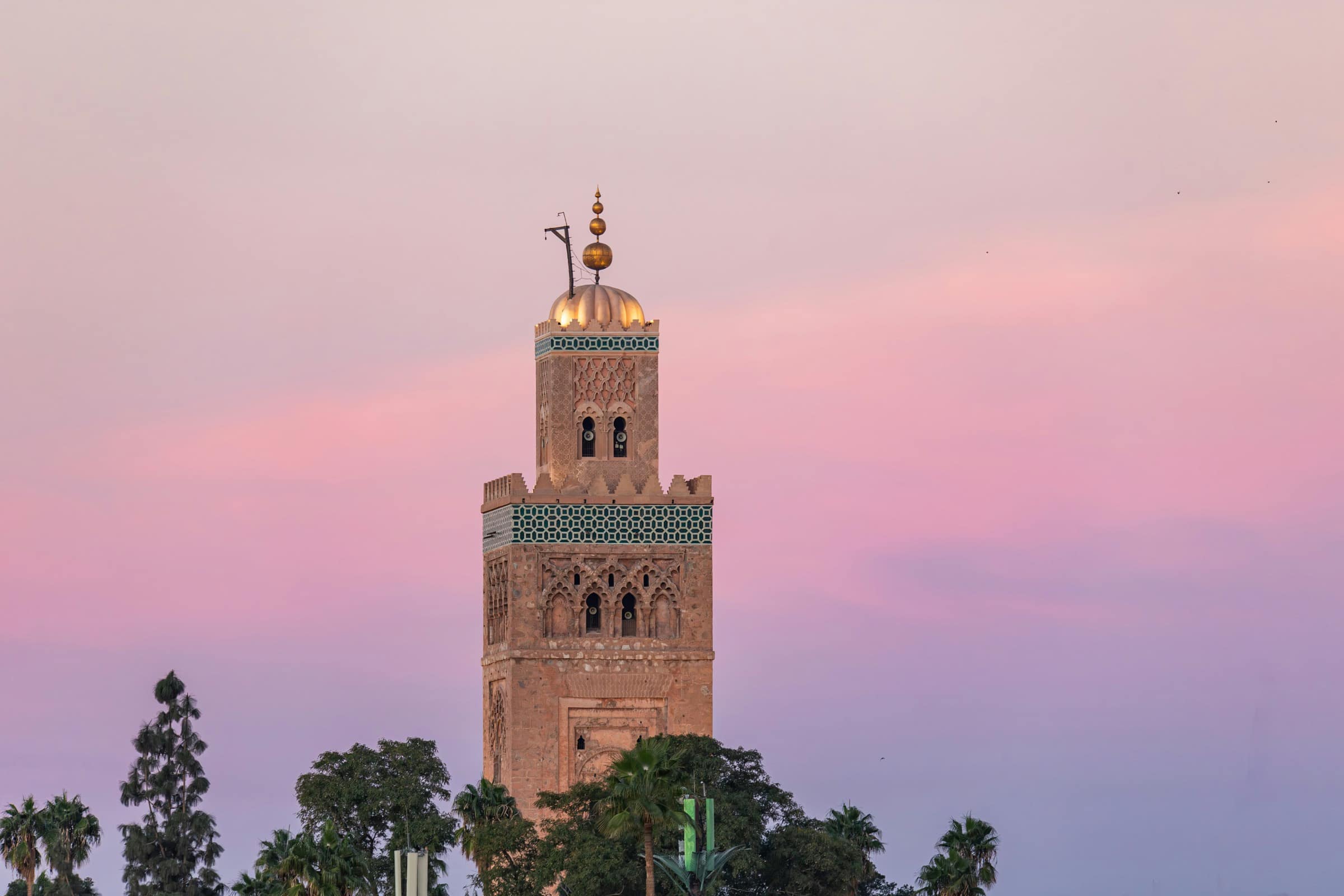
The tower rises to about seventy-seven metres. No zellige, no faience: Almohad sobriety keeps to carved stone, geometric motifs and interlaced arches, topped with three (some say four) gilded copper spheres. The same workshop gave us the Giralda in Seville and the unfinished Hassan Tower in Rabat. The three Almohad sisters.
The name comes from the booksellers - kutubiyyin - whose stalls once surrounded the mosque. The book market vanished long ago. The minaret remains the tallest and most watched point in the medina.
You don’t visit the Koutoubia. You learn to find your bearings by it.
What to see - the highlights
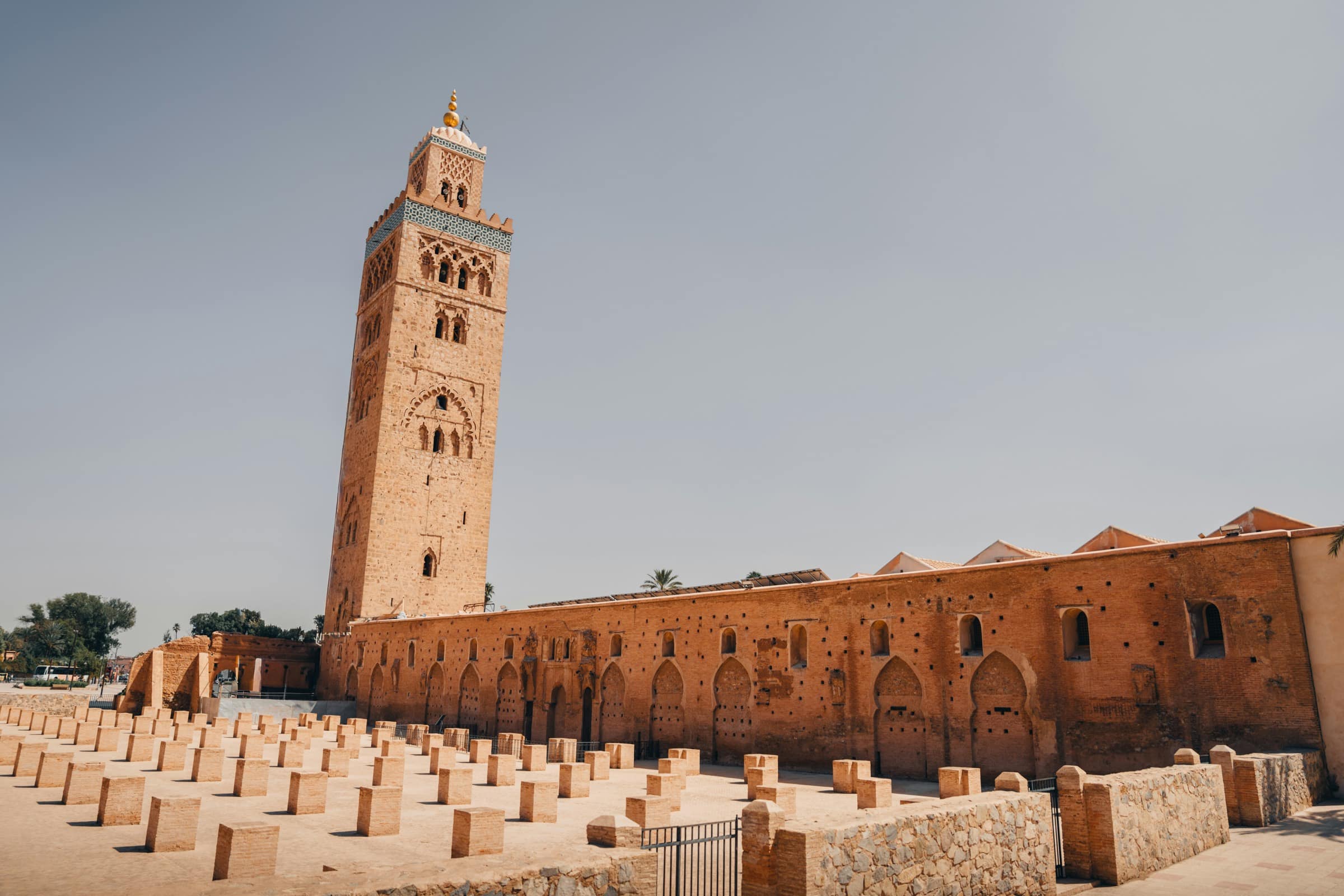
Remains of the first mosque
At the foot of the minaret, the aligned stone bases trace the outline of the first Koutoubia - misaligned with Mecca, then abandoned.
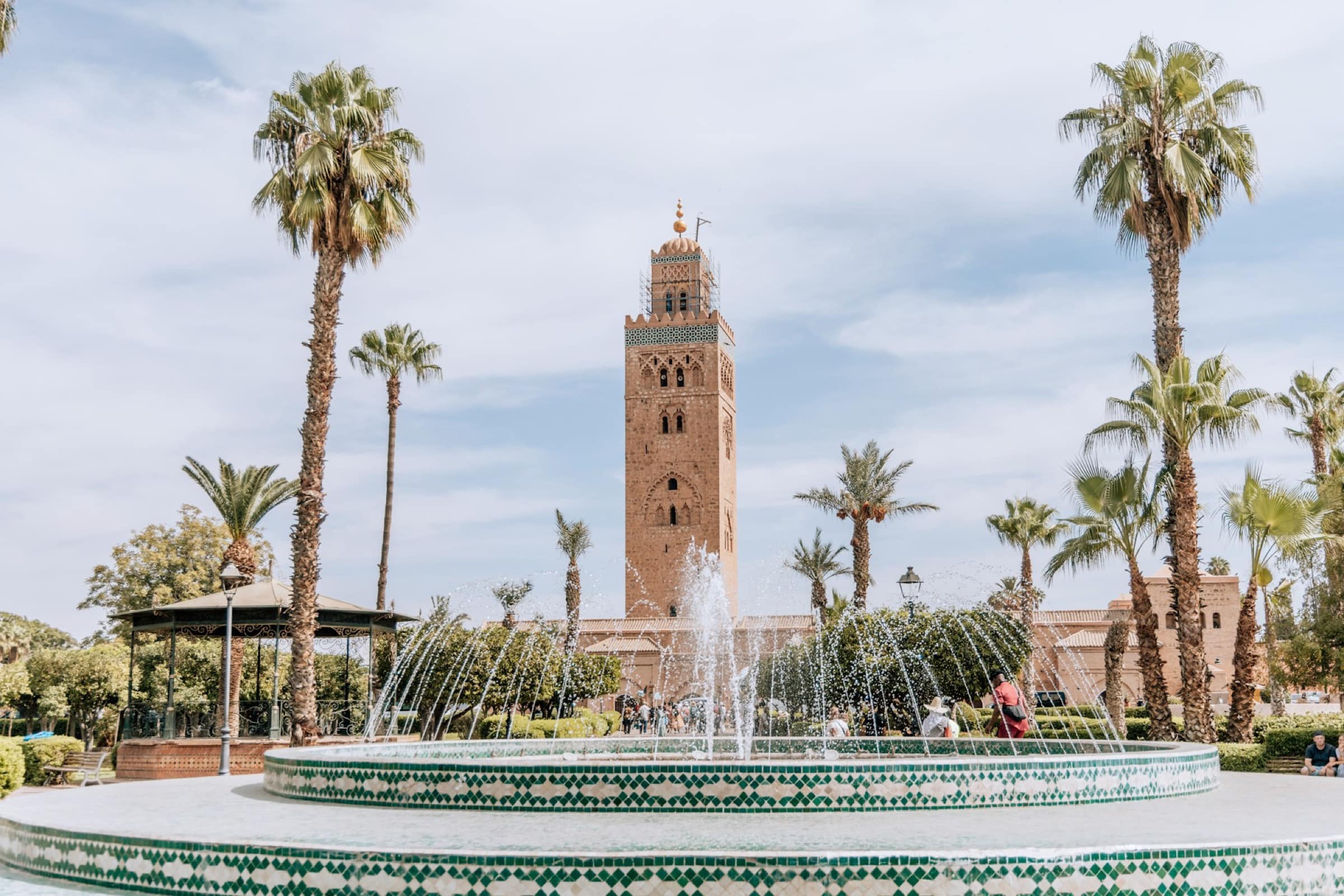
The Koutoubia gardens
Palm-lined and orange-tree alleys at the foot of the tower: a breath of quiet two minutes from Jemaa el-Fna.
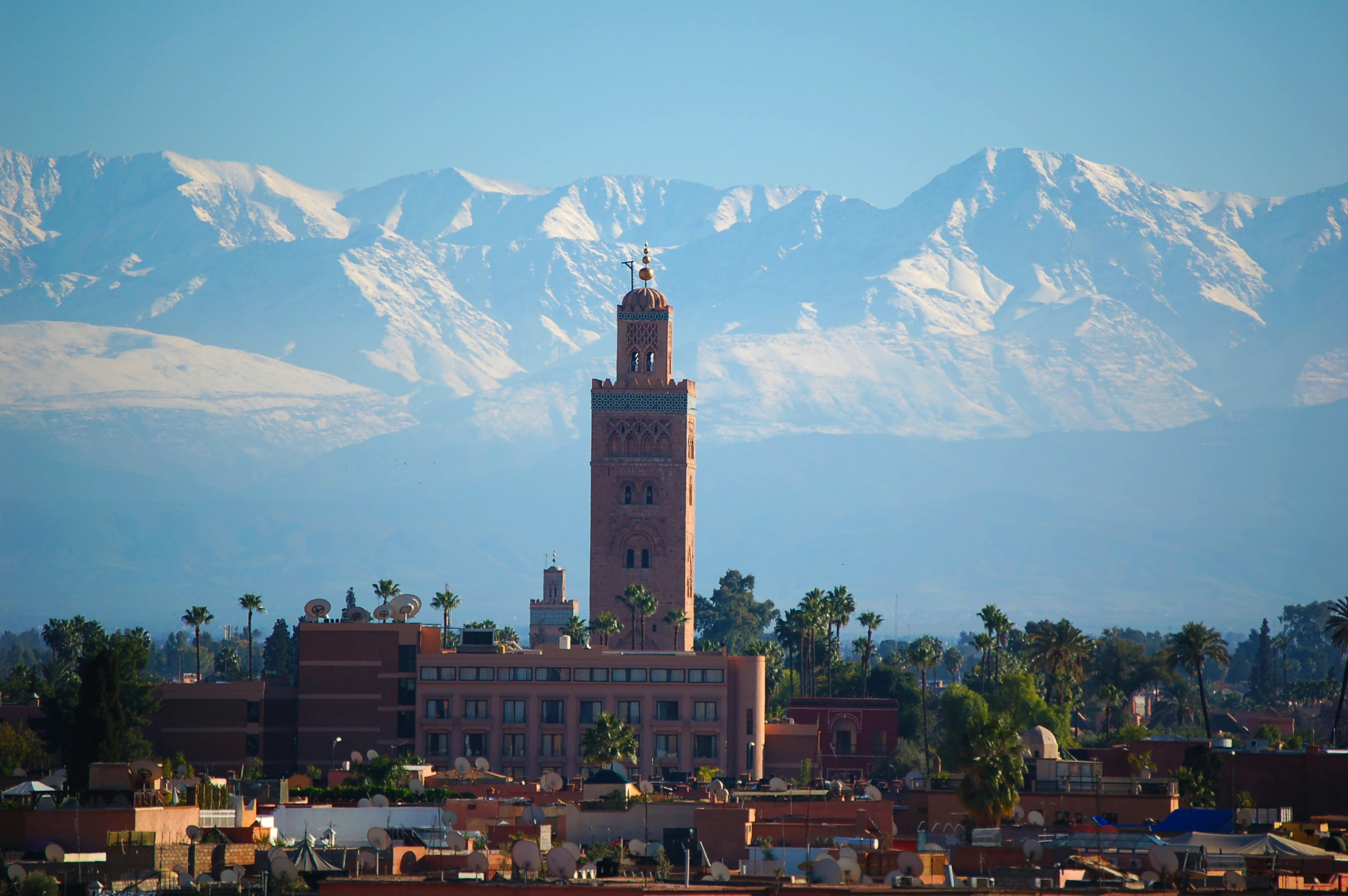
The minaret and the Atlas
From nearby rooftops, the tower rises above the roofs, the snow-capped Atlas behind it in winter.
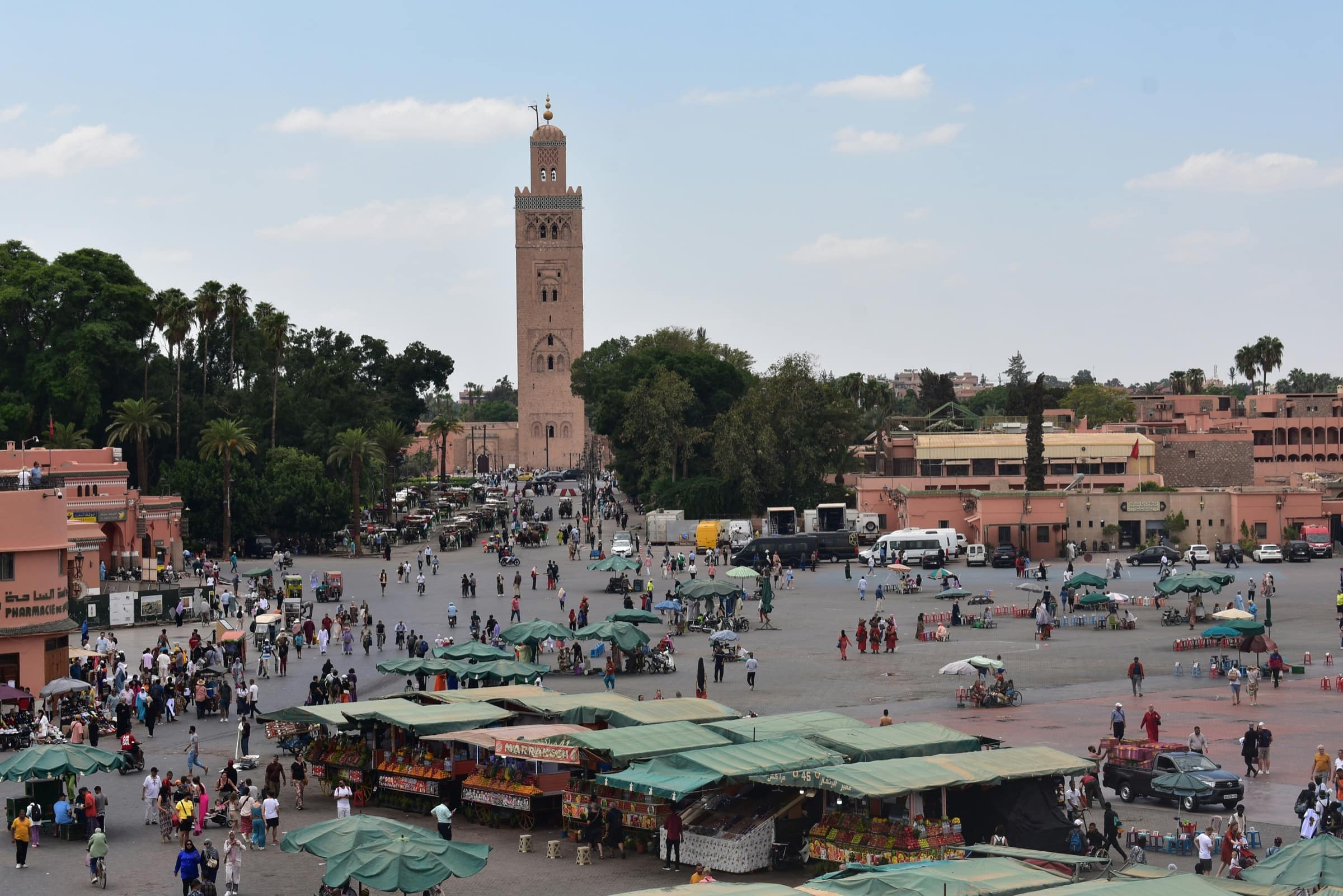
The minaret from Jemaa el-Fna
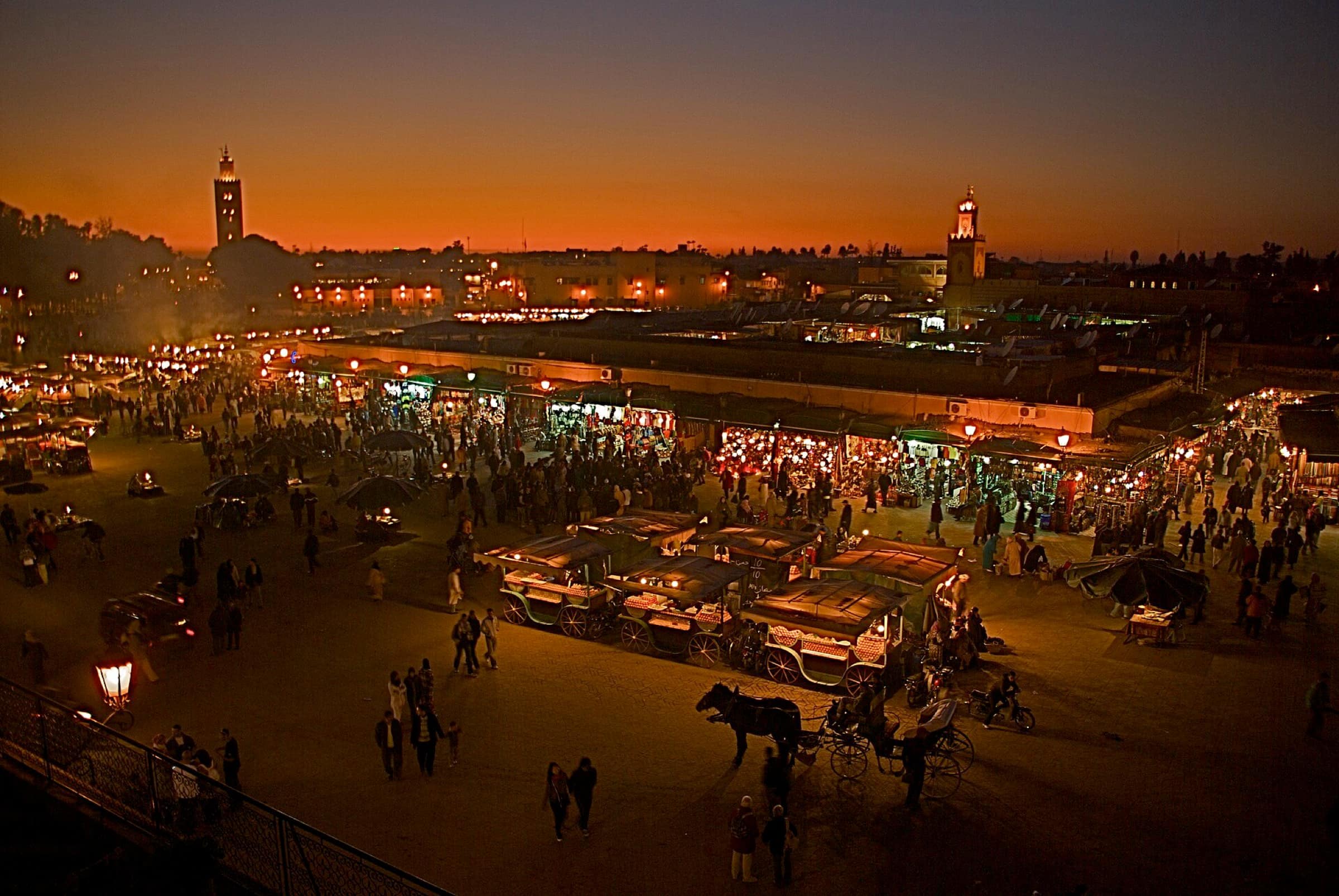
From the square and its stalls, the silhouette watches over the coming and going: your bearing as soon as you leave the souks.
Gallery
The best photo spots
Where to point the camera, and when the light is at its best.
The minaret against a clear sky
Step back on the gardens side to frame the whole tower, with no wires or traffic in the foreground.
The minaret above the terraces
From a rooftop over the square, the tower dominates a sea of roofs, the Atlas sometimes snow-capped in the distance.
Orange trees and minaret
Play on the water channels and the palms in the foreground for depth.
La mosquée Koutoubia
The 12<sup>th</sup>-century Almohad minaret: seventy-seven metres of ochre stone above the medina. You cannot go inside, but the gardens at its foot and the evening light are worth the walk.
Tickets & guided tours
Book ahead - useful during peak hours, when the queue can top thirty minutes.
Booking via GetYourGuide, our ticket partner. Indicative prices ; we may earn a commission, at no extra cost to you.
Visitor tips
Late afternoon for the light on the stone, or early morning for quiet. The call to sunset prayer, heard from the gardens, remains a moment apart.
Trying to enter during prayer times: the interior is reserved for the faithful, and you would get in the way.
- You cannot go inside. Everything is seen from the outside, free of charge.
- Cover up near an active place of worship. Photograph the monument, not the faithful.
- Many guided walking tours of the medina start here and continue through the souks and Jemaa el-Fna.
Location & access
At the south-west corner of the medina, between Jemaa el-Fna square (five minutes on foot) and Avenue Mohammed V running towards Guéliz. Gardens and esplanade open all day. No ticket office.