 © Donar Reiskoffer · CC BY 3.0 · Wikimedia Commons
 The Marrakech Museum (Dar Menebhi)
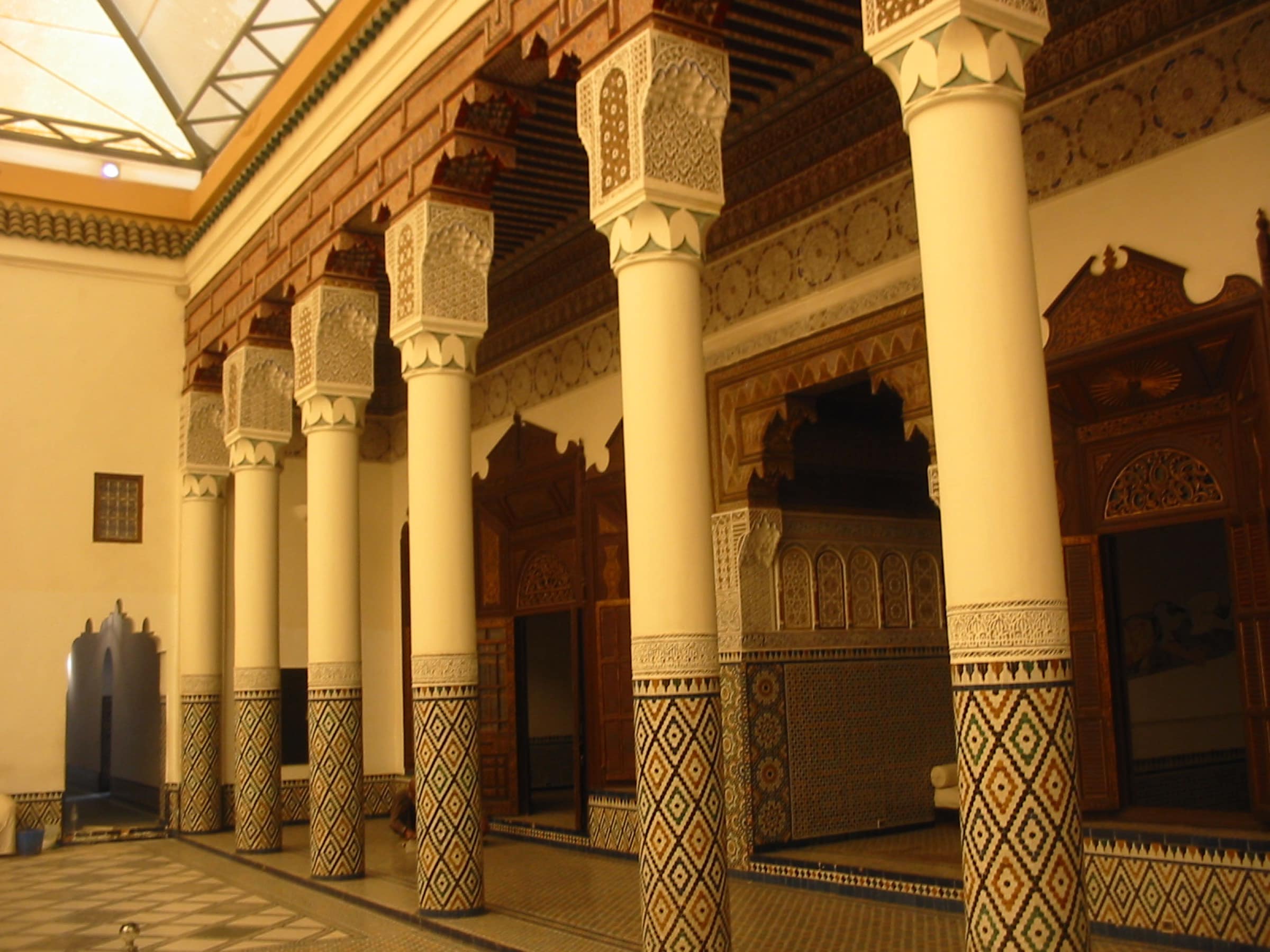
You come as much for the palace as for the collections: Dar Menebhi, a late 19<sup>th</sup>-century minister's house, is worth the visit mainly for its monumental patio, its giant chandelier and its painted ceilings. The pieces on show (weapons, ceramics, carpets) are uneven; temporary exhibitions often raise the bar. Minutes from the Ben Youssef Madrasa.
History & context
The Marrakech Museum sits in the Dar Menebhi palace, on Place Ben Youssef, in the north of the medina. The house was built at the end of the 19th century for Mehdi Menebhi, Minister of Defence under Sultan Moulay Abdelaziz.
Left to decay and then bought by the Omar-Benjelloun Foundation, the palace was restored and has held the museum since 1997. You enter through a monumental patio, now covered, dominated by a great metal chandelier, between columns of zellige and painted ceilings.
The rooms show Moroccan art and crafts - ceramics, weapons, carpets, coins, manuscripts - while a temporary exhibition room and the house’s former hammam round out the visit. For many, it is the palace, more than the collections, that holds the eye.
A palace visited first for its walls: the patio, the chandelier and the ceilings are worth more than the cases.
What to see - the highlights
The patio and the great hall
The palace centrepiece: a covered patio, columns dressed in zellige, a monumental metal chandelier and painted ceilings.
The collections
Moroccan art and crafts: ceramics, antique weapons, carpets, coins, manuscripts and everyday objects.
The historic hammam
The house's former hammam, preserved, which you walk through during the visit.
Temporary exhibitions
A dedicated room hosts art exhibitions, often the liveliest part of the museum.
When to go
Quiet patio before the tour groups arrive from the neighbouring madrasa.
The busiest time, driven by the combined ticket with the madrasa.
Indoor museum: the visit does not depend on the weather.
Visitor tips
At opening, for the patio in the quiet.
The middle of the day, the busiest time.
- The museum is next door to the Ben Youssef Madrasa: you can easily do both in the same morning.
- The palace is worth the look even if the collections leave you cold: look up at the ceiling and the chandelier.
- Check the current temporary exhibition, often more interesting than the permanent collection.
Location & access
In the north of the medina, on Place Ben Youssef, next door to the Ben Youssef Madrasa and a few minutes from Maison de la Photographie. On foot only from Jemaa el-Fna, about fifteen minutes through the souks.