Souk el-Attarine
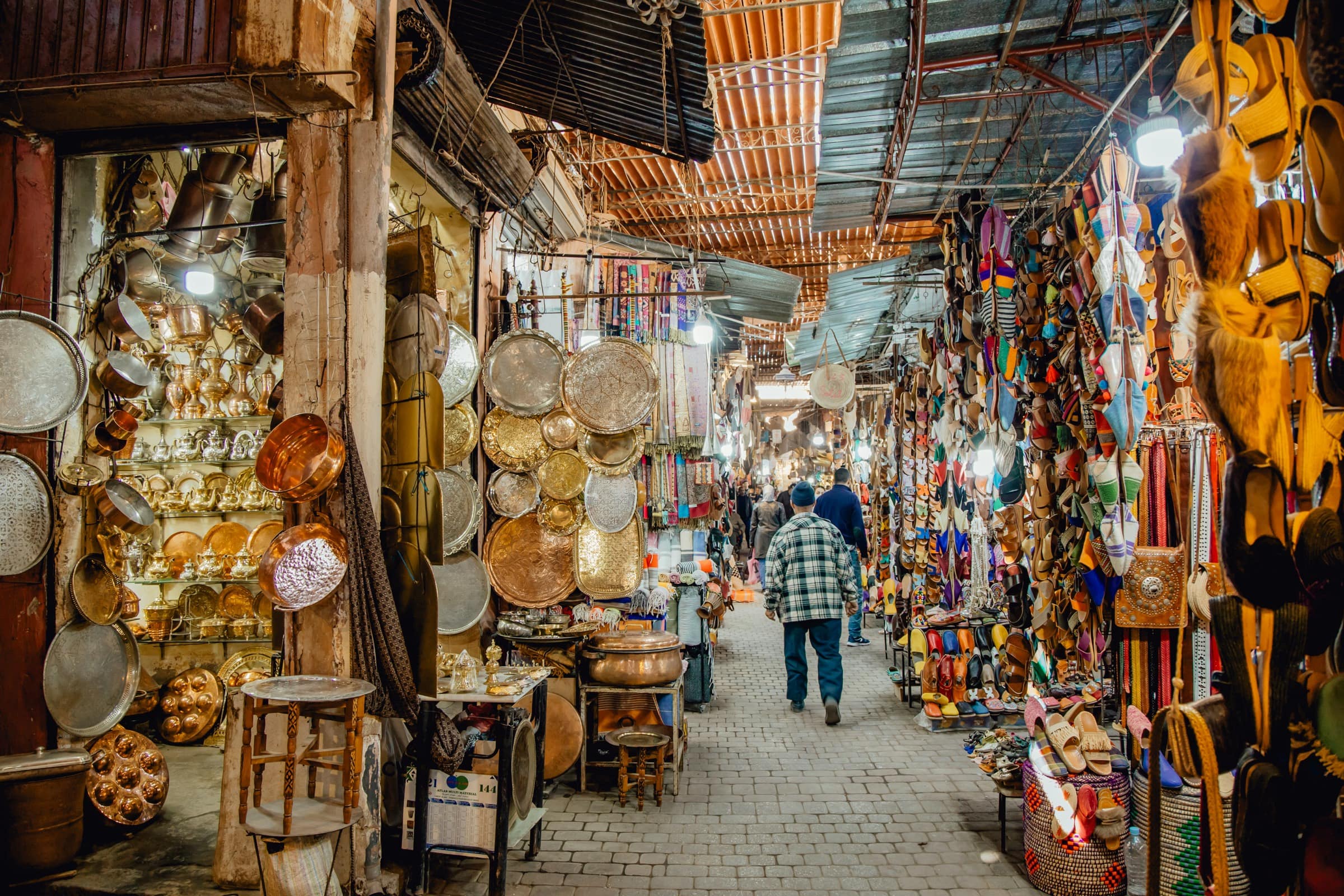
Once the perfumers' souk (its name comes from *attar*, the trader in aromatic goods), el-Attarine is now the copper souk: brass and copper trays, teapots, lanterns and dishes, chiselled and shining from floor to ceiling. A few spice and scent stalls remain. The 'precious' counterpart to the neighbouring blacksmiths' souk, and one of the rare truly useful buys - a teapot, a tray - as long as you bargain and tell the hand-chiselled from the mass-pressed.
History & context
Souk el-Attarine owes its name to the attar, the perfumer and trader in aromatic goods. It was historically the souk of perfumes, oils and spices. Its vocation shifted over time, and it is now best known as the copper and brass souk - the coppersmiths’. In the shops, the metal is hammered, engraved and polished by hand to become trays, teapots, sugar bowls, dishes and lanterns, which stack up and shine from floor to ceiling.
It is the refined counterpart to the neighbouring Souk Haddadine, where iron is beaten. Here, copper is chiselled. The piece that earns its price shows in the work - a hand engraving, a heavy well-finished metal - against the mass-pressed pieces sold in series to passers-by.
A few spice and scent stalls still recall the place’s first vocation. A tray or a tea service are among the rare truly useful souk souvenirs once you are back home.
Chiselled copper shining from floor to ceiling: the refined counterpart to the blacksmiths’ souk.
What to see - the highlights
Trays and teapots
The full tea service - engraved trays, teapots, sugar bowls - in brass and copper, from the simplest to the most worked.
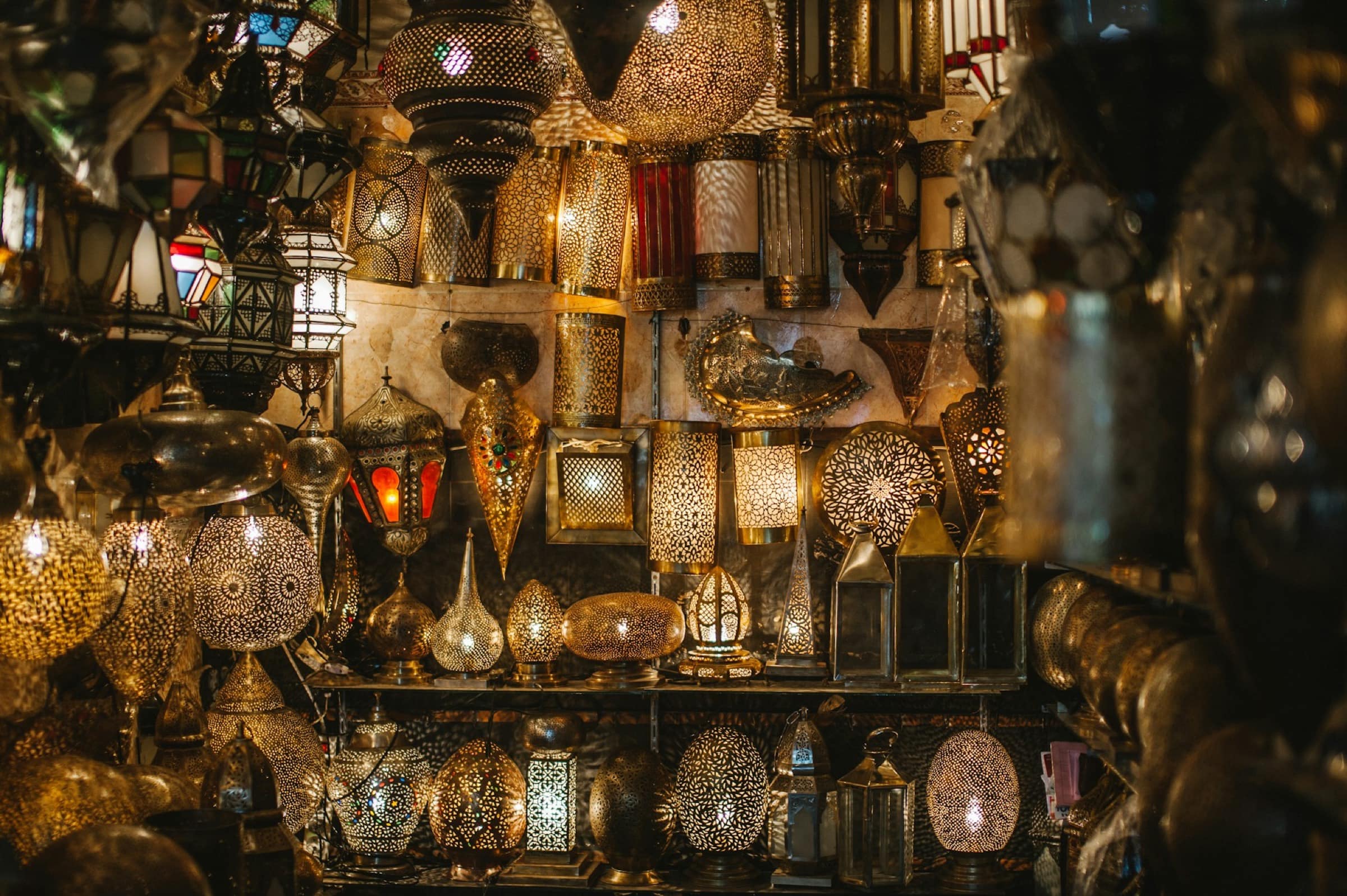
Brass lanterns
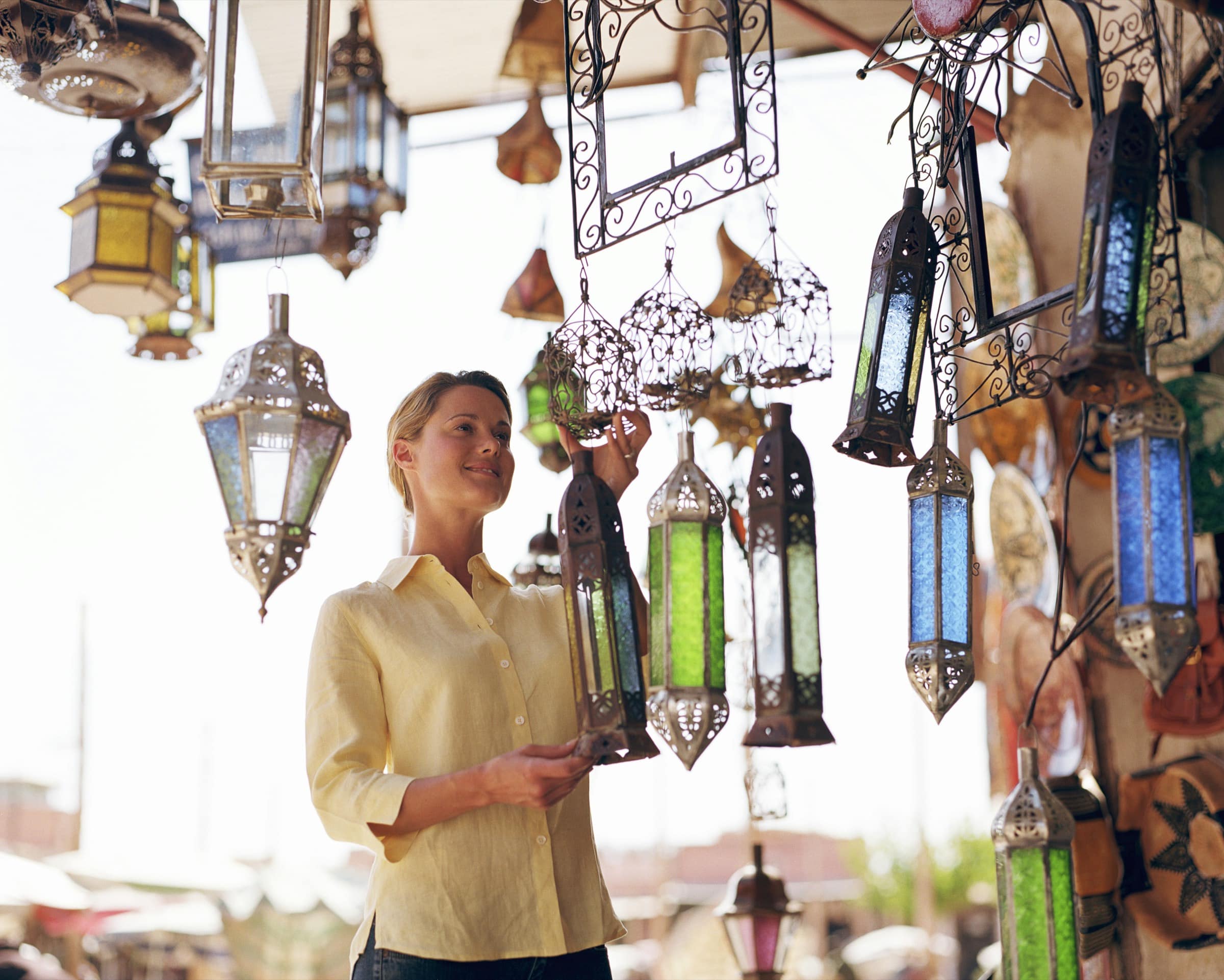
Openwork lanterns and tea-lights that throw their patterns on the walls once lit.
Metal at work
Hammering, engraving and polishing by hand, visible in the shops. Hand chisel work signs the piece against mass-pressed metal.
The last perfumers
The name comes from *attar*, the perfumer. A few stalls of spices, oils and scents recall the souk's first vocation.
When to go
Light makes the metal shine and the makers work.
Some workshops have closed.
Covered souk.
Visitor tips
During the day, to see the metal worked and to compare.
Confusing hand chisel work with mass-pressed metal.
- A teapot or a tray is a genuinely useful buy. Aim for hand chisel work, which lasts longer.
- Brass also bargains by weight. A heavy, well-finished piece earns its price.
- Right next to Souk Haddadine (iron). Combine to compare copper and ironwork.
Location & access
In the north of the souks, towards Ben Youssef and Souk Haddadine, past Place Rahba Kedima. On foot only. Ask for 'Attarine'.