Photographing Marrakech: where, when, with what and what you are not allowed to do
Practical tips
Marrakech photographs very well during two windows of the day, and almost never in between. The medina has its places closed to the lens, its places that cost a negotiation and those that refuse the photo for good reasons. Drone rules are legally complex and customs-risky.
An April morning in 2026, six forty on a rooftop terrace in Kennaria. The grazing light bites into the tadelakt of the awning opposite and redraws the diagonals of the medina. Thirty minutes later, it has already migrated flush with the tiles. The shadow flattens, the ochres turn fluorescent. That is the real question when you come to photograph Marrakech: which window do I catch, which window do I let go. This notebook says where I go, at what time, what I bring, what I have finally stopped doing and what the law and the ethics ban before you even get it wrong.
Two windows of light, a day in the life
Marrakech does not photograph at midday. The light crushes the contrast, clips the ochres into fluorescent yellow and drains the medina of its relief. Only two windows give the grazing light you are after: dawn and sundown. Here is the day at a glance.
| Slot | What we do | Photo yield |
|---|---|---|
| 6.30am - 8.30am | Dawn in the medina: rooftops, alleys, craftsmen setting up | ★★★ |
| 9am - 11am | Gardens and monuments: Majorelle, Bahia, Ménara | ★★☆ |
| 11am - 3pm | Slack window: scouting, indoor museum, lunch in the shade | ★☆☆ |
| 4pm - 6pm | Back into the souks: jewellers, spices, dyers | ★★☆ |
| 6pm - 9pm | Sundown then night: Jemaa, lit Koutoubia, ramparts | ★★★ |
| Friday 1pm | Souks at half speed around midday prayer | ★☆☆ |
Slot by slot, in three blocks.
First window, dawn. The medina is empty, the souks still closed. Riad rooftops, shaded alleys, carriage doors, craftsmen setting up their shopfront. The grazing light redraws the diagonals and pulls the textures out of the tadelakt, the zellige, the cedar of the storefronts. That is the window that decides your pictures.
Between the two windows. In the morning, Majorelle on opening at 8am ideally (watch the queue in peak season), Bahia at 9am, Ménara if quiet and the wind holds (the basin becomes a mirror). Koutoubia from the gardens, never on the royal enclosure side. At midday, I head in: crushing light, hard contrast, almost useless outdoors. Scouting, sorting SD cards, indoor museum visit (Dar Si Saïd, MACAAL, YSL museum between 10am and 6pm), lunch on a rooftop in the shade. Back into the souks between 4pm and 6pm: jewellers, spices (Rahba Kedima square), dyers (Sebbaghine souk). The light filtered by the reed trellis gives the most legible textures.
Second window, sundown and night. Jemaa el-Fna at sunset and after dark. Sound-and-smell walk, smoke from the stalls, gnawa silhouettes. Tripod welcome from a rooftop terrace (Café de France, Le Grand Balcon), ask the table. Then the night: lit Koutoubia (mind not to aim at the royal enclosure nearby), ramparts (Bab Doukkala, Bab Agnaou). Digital noise real from 6,400 ISO up. Go for a recent body, otherwise live with the grain. Finally, on Friday, most souks run at half speed around midday prayer (1pm): push the souk stroll to Saturday, or to Friday 4pm to 6pm.
Out of town: my three photo day trips
Agafay desert, 40 to 50 minutes south-west (Amizmiz road). This is not a sand desert, nor a Saharan desert. Agafay is a reg, a stone desert, with ochre and grey plateau terraces. Best light: sunset, when long shadows draw the relief. Luxury camps often sell the sunrise, but morning light is less graphic here than on dunes. Watch out for afternoon wind, which loads up dust.
Ourika valley, 1 to 1h 30m south. Stepped villages, waterfalls (Setti Fatma), cultivated terraces. Softer light upstream, from Setti Fatma on. Avoid Saturday and Sunday: the valley is the Marrakchi picnic ground, traffic gets thick, riverbanks packed.
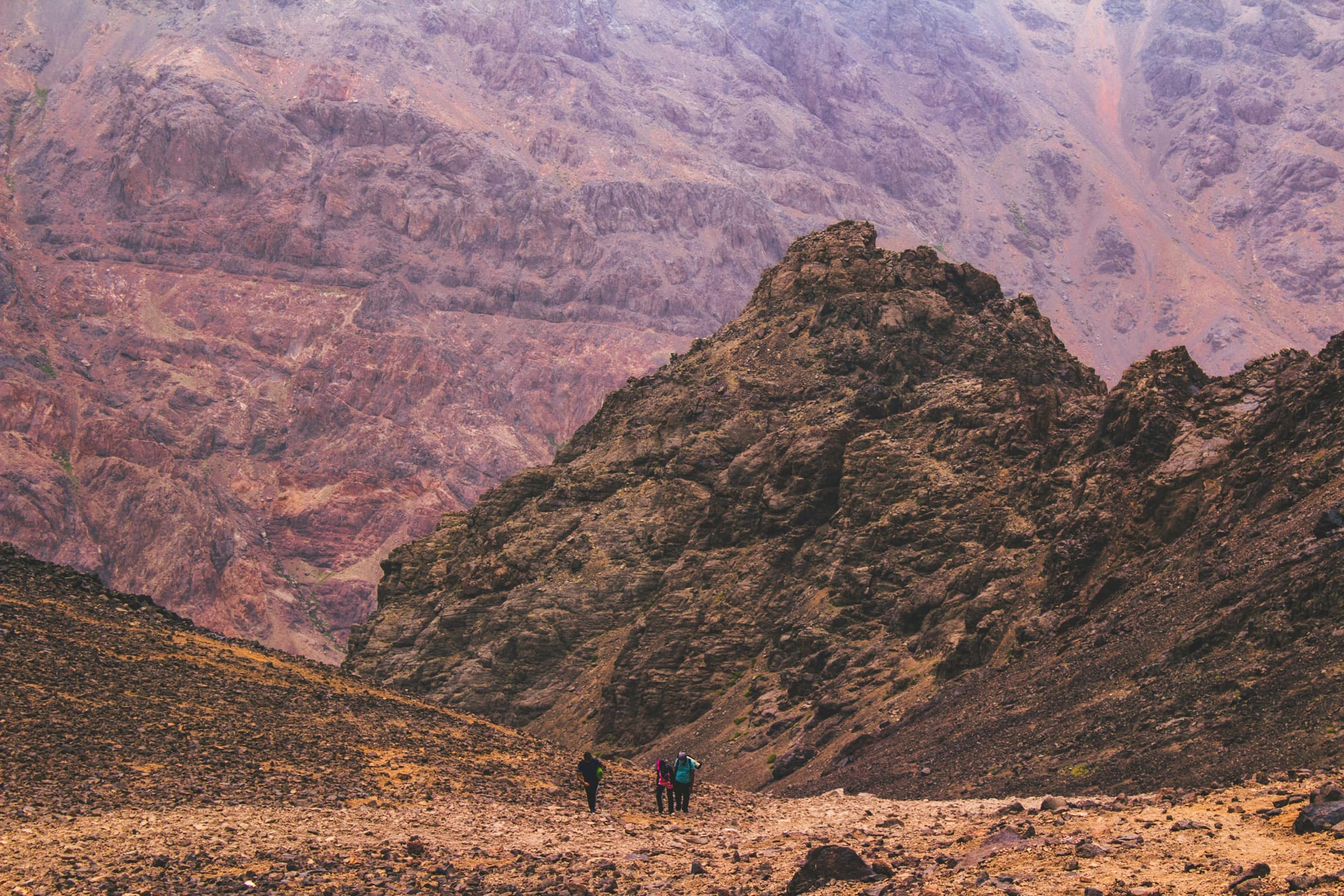
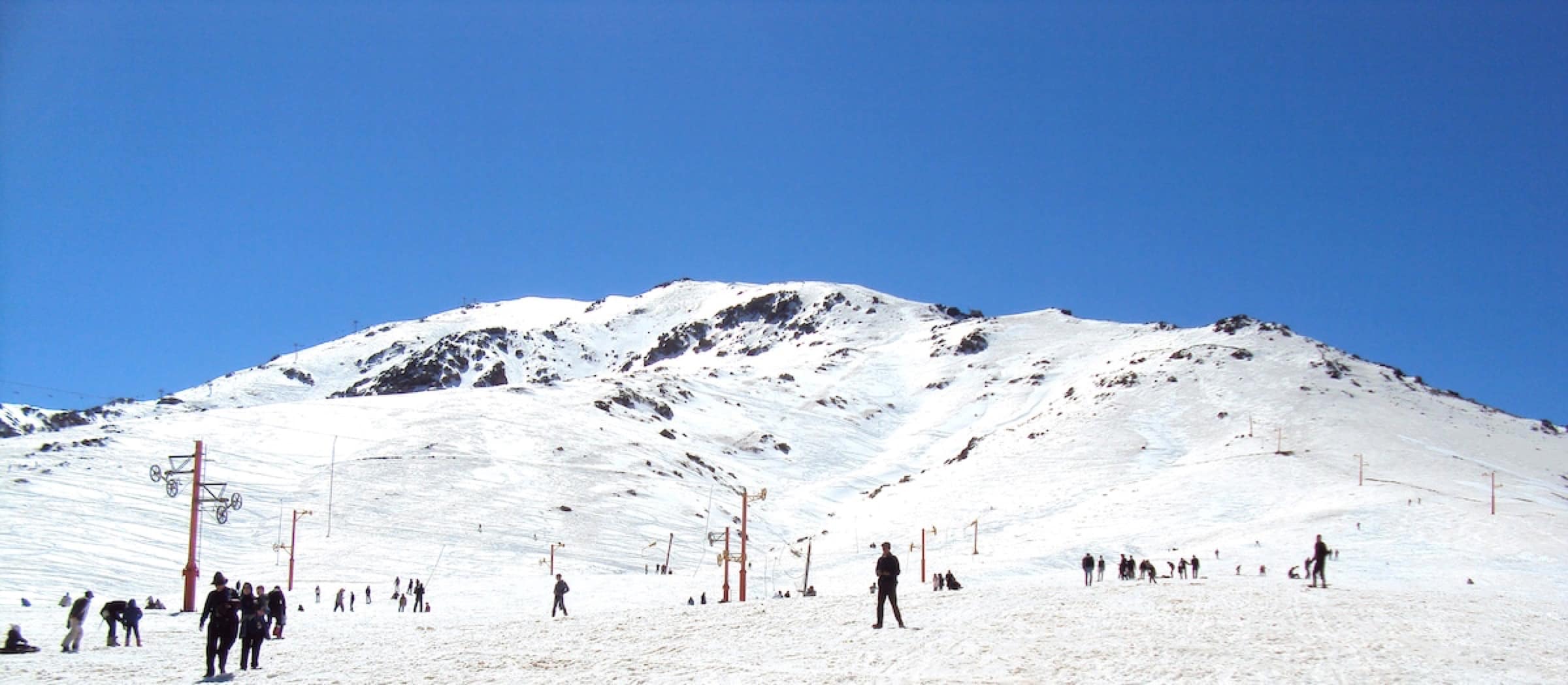
Oukaïmeden, 1h 30m south, at 2,620 m. Off-season ski station, orientation table pointing at the summits of the Toubkal massif: it is the best vantage point reachable by car for photographing Toubkal without walking. I correct here what I said myself in 2021: from Asni village (1h 30m, not 1 hour, another correction), you only see the High Atlas foothills, not the Toubkal summit itself, blocked by the intermediate ridges. The frontal line of sight onto the summit only opens at Oukaïmeden or higher up, on foot.
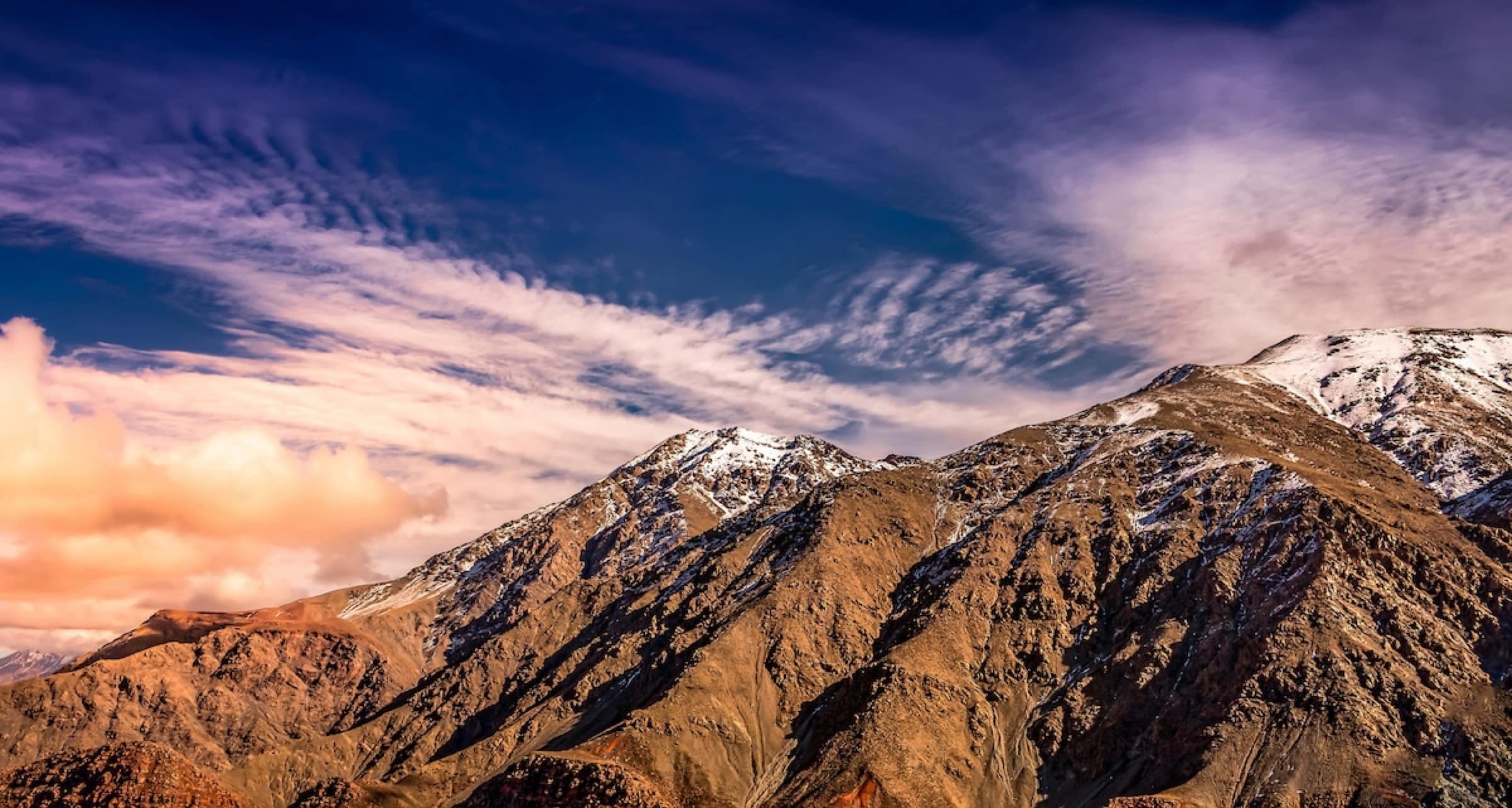
A word on the Al Haouz earthquake. On 8 September 2023, the Asni valley and its surroundings were hit hard. Reconstruction is well advanced in Al Haouz province: around 90% of homes rehabilitated or rebuilt per the government reconstruction programme updates in Q3 2025 (close to 24,000 units). The Asni-Imlil and Asni-Ourika axes are operational, day trips resumed from 2024 on. I photograph with judgement: not the rehousing camps, not people in distress, not damaged inhabited houses without explicit consent. Landscapes, craftsmen reopening, local guides who testify willingly, yes.
What I bring, what I have finally left behind
Two bodies. A first mirrorless or DSLR, my working body. A second discreet body (expert compact or recent phone). The second serves in the medina, when pulling out a DSLR scares off the craftsman setting up his shopfront or draws ten touts in thirty seconds. It also serves for scouting: I walk down an alley, I note what I want to come back to shoot at the light moment.
Three focals, no more. A 35 mm or 24-70 for the medina, where you always work up close. An 85 mm or 70-200 for craftsman portraits without intrusion, at three or four metres, taken during the conversation. A 16-35 mm if I plan a lot of riad or palace patios (Bahia, El Badi). I left the 100-400 at home on the first trip: I never needed it.
Cards and batteries. High-speed SD cards in reserve: findable at the photo shops in Guéliz and Sidi Ghanem, but 20 to 40% pricier than in Europe and limited range, bring what you need from home. Standard European plug, no adapter needed for a 220 V device. Two batteries per body minimum, one charging on mains while the other works.
Bag, tripod, dust. Bag with rear or tight-side opening, discreet strap, no visible Peak Design or Lowepro logo: a visibly photo bag draws more attention than it earns. I use a plain messenger bag with an insert. Ultra-light tripod useful at the Ménara at sundown when the basin becomes a mirror and on the rooftop terraces, almost unusable in the medina. Against the fine dust of Agafay and the Atlas, microfibre cloth, blower brush, zipped bags: I lost two mount seals for lack of care.
What I have left at home. The heavy tripod, too bulky for what it brings. The systematic polarising filter, because Marrakech is already contrasty and it darkens the shadows further without helping the skies much. The external flash, never used on site: ambient light does the job or you skip. And the makeshift mains charger: I stick to the maker’s own charger.
Ethics in the medina: three traps that took me time to figure out
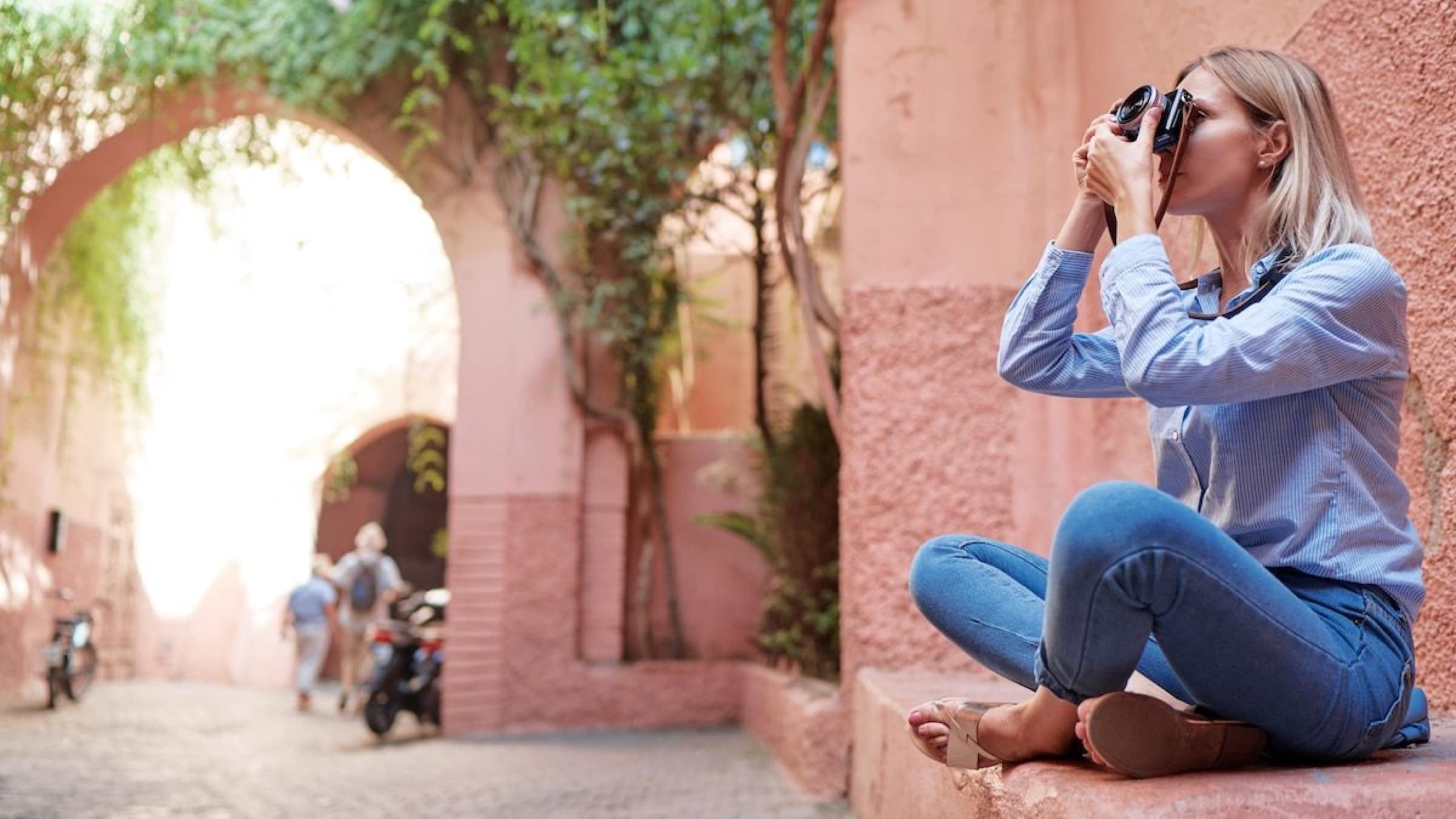
The portrait, in the medina, is judged every time. A craftsman I photograph while we talk: I ask, in darija if I can, “mumkin?” means “may I?”, I show the photo on the back of the camera, I thank. It is not a transaction, it is a conversation, sometimes a tea if I am offered one. A passer-by who crosses my frame without noticing: if the face is identifiable and the subject clearly not consenting, I hold off. I re-frame, I go for a silhouette, or I skip. A photo of a person taken unnoticed is not justified by “it looked nice”.
Three traps took me time to figure out, and I now avoid them systematically.
The first is the child who poses for ten dirhams. A child follows you down an alley, strikes a pose, holds out a hand. A man offers you “good pose, ten dirhams”. I finally understood that paying a child to pose installs a survival mode that keeps them out of school and sets the price for the whole alley, for every visitor who follows. Paying an adult for a stolen shot encourages the staging of precarity. Not paying is not toughness. It is long-term respect.
The second is Jemaa el-Fna, and it splits. For street performers - gnawa musicians, henna, storytellers - the photo is negotiated up front, never after. Rough figures in July 2026: 10 to 20 dirhams (£1) for a solo musician, 20 to 50 dirhams (£2 to £4) for a group. Pulling the camera out without asking exposes you to demands of 100 to 500 dirhams (£8 to £40) after the fact, with pressure. For snake charmers and monkey handlers on the other hand, the rule changes: I do not photograph and I do not pay. The magots of the square (Macaca sylvanus) are a species classed as Endangered by the IUCN and included in CITES appendix I since 2016 (in force 2017). The young ones used on Jemaa el-Fna are taken from the Middle Atlas cedar forests, around Ifrane. Photographing and paying feeds the trafficking. The snakes, often cobras with filed fangs or stitched mouths, fall under the same considerations of mistreatment. I laid out this file at greater length (CITES sources, alternatives, SPANA calèches) in my notebook Animal ethics on Jemaa el-Fna.
The third is the Bab Debbagh tanneries. As you approach the tanneries, a “student volunteer guide” takes you in hand. On the way out, he asks for 100 to 300 dirhams (£8 to £24). You did not ask for anything, and you can no longer refuse without a scene. The rule: refuse from the first word, say “la choukran, khouya” (no thanks, brother) and do not engage. If you really want to visit the tanneries as a photographer, arrange a proper licensed guide, booked ahead at the guides’ bureau. Tanner portraits generally take a few dirhams, negotiated on the moment, as anywhere else in the medina.
Two simple rules close the case. You pay the craftsman who poses consciously, the street artist who agreed up front, the licensed guide. You do not pay the child who poses, the passer-by photographed without notice, the wild-animal exhibitor. For women in the medina, no portrait without explicit consent. Also skip hammam scenes, mosque interiors and cemeteries.
Bans and restrictions: where the camera hits a wall
Mosques. Interior strictly off-limits to non-Muslims since the Lyautey policy (protectorate, 1912). Sole national exception: the Hassan II mosque in Casablanca, open to paid visits outside prayer times. In Marrakech, the Koutoubia only photographs from outside (gardens, clearing from Jemaa el-Fna square), the interior is closed. Mind the distinction with the Ben Youssef Medersa: it is a Qur’anic school, restored between 2018 and 2022, open to non-Muslims. The neighbouring mosque of the same name is not.
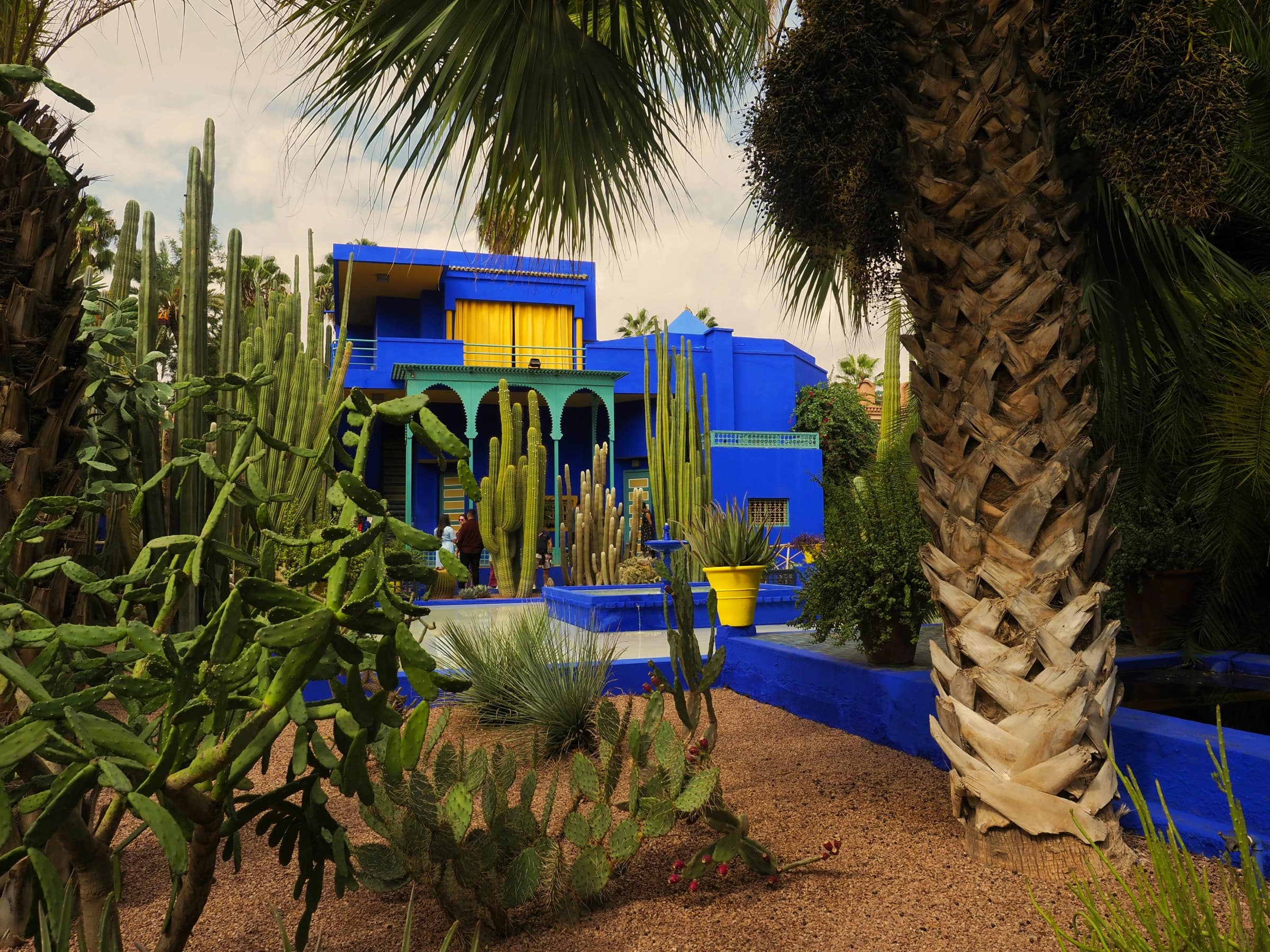
Jardin Majorelle. Access allowed for personal photography. Professional tripods and bulky photo gear banned without prior authorisation, to request from the Jardin Majorelle Foundation. Opens 8am, last entry 6pm. 2025 prices: 150 dirhams (£12) garden only, 300 dirhams (£24) combined garden + Berber Museum + YSL museum. 30-minute slots, online booking nearly mandatory in peak season. Reckon the 8am - 9am pass for the light and the crowds. Past 10am, the entry queue gets serious.
Musée Yves Saint Laurent Marrakech. Photography banned in the permanent exhibition rooms (museographic constraints and textile conservation). Photo tolerated at the entrance wall/logo. Open every day except Wednesday, 10am to 6pm, online tickets only.
Ben Youssef Medersa, Palais de la Bahia, Saadian Tombs, El Badi Palace. Photography allowed. Avoid tripods at busy hours (morning from 10am for the Bahia, afternoon for the Medersa). The Bahia at 9am on opening gives the best light/emptiness ratio.
Royal palaces and official residences. Strict ban, discreet but real military presence. Do not photograph from a rooftop that overlooks the royal enclosure.
Useful note for captions. Marrakech’s visible monuments are almost never Almoravid: the Koutoubia and the ramparts are Almohad (12th century), the Saadian Tombs, El Badi Palace and the Mouassine fountain are Saadian (16th century), the Bahia Palace is Alaouite (late 19th century). The major exception is the Almoravid Qoubba, the only Almoravid structure still visible in town. An accurate caption beats a good-looking one.
Commercial shooting and distribution. For any portrait published commercially (publishing, advertising, monetised platform), a signed model release is required. Standard practice in publishing, worth knowing so you do not get stuck at publication.
Drone in Marrakech: the rule is simple, the sanction is real
In Morocco, importing and using a civilian drone requires prior authorisation issued by the Ministry of Foreign Trade, the ANRT (National Telecoms Regulatory Agency) and the Ministry of the Interior. It is not a declaration, it is an authorisation. Without it, drones are seized at customs on arrival, including at Marrakech-Menara airport. You do not get the device back.
The exception route exists for audiovisual production, via a permit from the Centre Cinématographique Marocain (CCM) and coordination with the Wilaya. Law n° 18-23 on the film industry came into force on 1 September 2025. It keeps current authorisations valid and clarifies the procedures.
For an individual trip or an amateur photographer, the rule fits on one line: you do not take a drone. The fine for an unauthorised flight starts at 10,000 dirhams (£800), with confiscation, and can be criminally qualified depending on the overflown area. Sensitive zones (airports, royal, military, border sites) are off-limits even with authorisation.
The aerial medina footage you see on social media is almost all authorised production, or old travellings pre-dating the current rules. Do not serve as a counter-productive example to someone else.
Editing on site: my method
For anyone posting as they go, here is my method: import to laptop or tablet at midday, quick sort in X (keep), F (dump), P (rework at home). White balance correction (Marrakchi ochres over-saturate easily, I drop a third of a stop for web output), export to JPEG 2,048 px for web, NEF/RAW for the archive.
The Guéliz terraces (Grand Café de la Poste, Kilim, a few riads) hold WiFi and compressed RAW upload. In the medina, count on Moroccan 4G: 5G is not deployed yet as of July 2026 but 4G holds the upload of one or two shots at a time.
To take it further: the listings to read next
This notebook gave you the frame. For the operational detail of a place or a day trip, the following listings take over.
- For the Jardin Majorelle (tickets, hours, current photo rules): our Majorelle listing.
- For Jemaa el-Fna square (UNESCO context, artists, day rhythm): our Jemaa el-Fna listing.
- For the Palais de la Bahia (recommended route, hours, prices): our Bahia listing.
- For the Oukaïmeden day trip (Toubkal vantage point and Ourika valley loop): our Oukaïmeden listing.
- For Agafay at sunset (bivouacs and alternatives with no marketing): our Agafay desert listing.