Argan oil in Marrakech: buying it right
Argan oil is the cosmetic keepsake of Marrakech - and one of the most tampered with. Diluted, cut or sold at gold's price in fake cooperatives, it has to be earned. The kicker: it does not even grow here. Spotting the real, knowing where to buy and at what price is learned in five minutes.
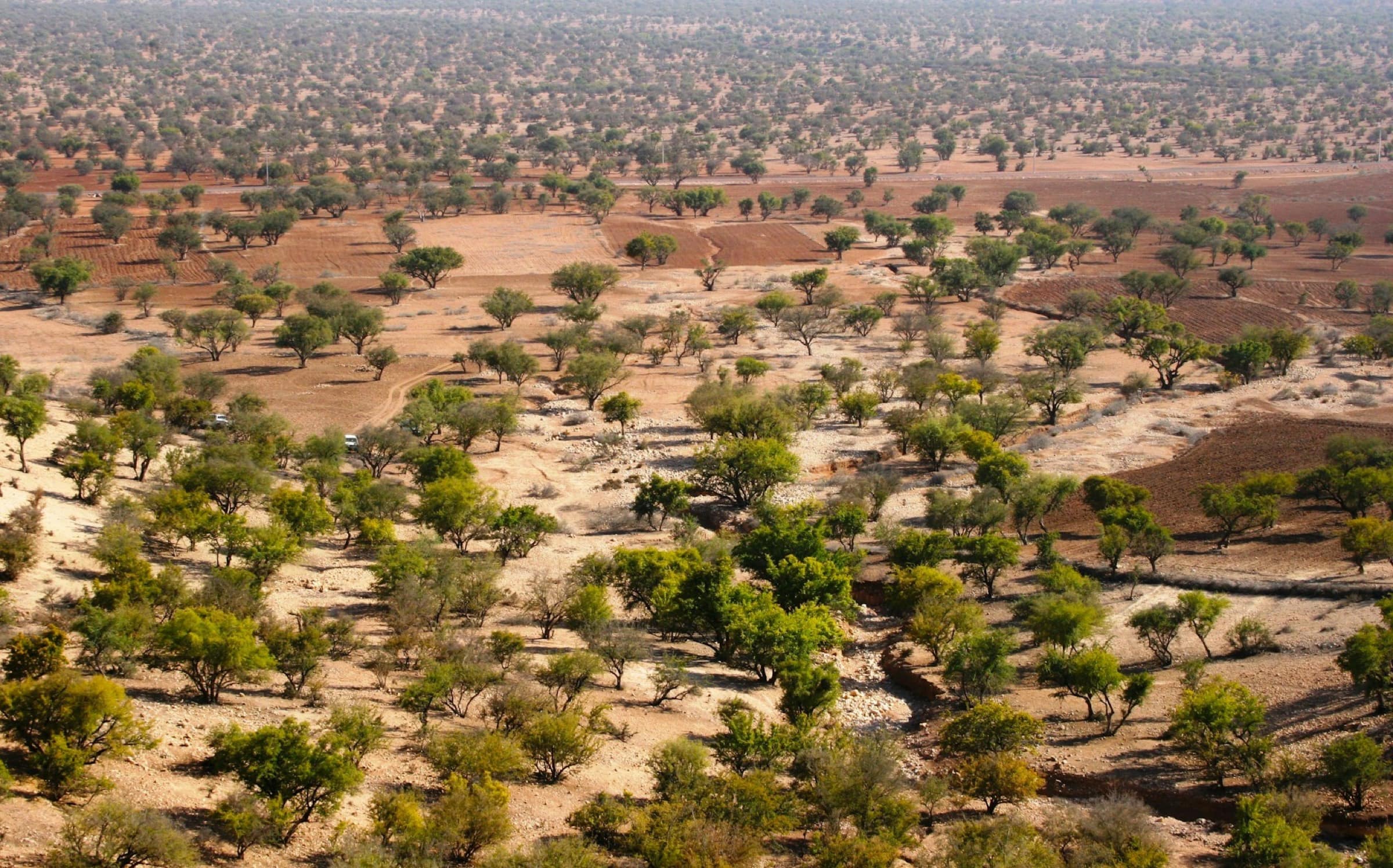
The argan tree does not grow in Marrakech. You have to head south towards Agadir, three hours on the road, to see the first of these knotty trees planted in the stones. What the medina sells is therefore argan oil brought in from elsewhere - sometimes pure, often cut and nearly always at a stiff price. Demand far outstrips what the tree can give, and argan is among the most falsified products in the country. Telling a real oil from an imitation takes five minutes once you know what to look at.
Argan comes from the Souss, not from Marrakech
The argan tree (Argania spinosa) is native to south-west Morocco. Its forest, the arganeraie, stretches mostly between Agadir and Essaouira, in the Souss plain - it is a UNESCO biosphere reserve, and the know-how tied to it has sat on the intangible cultural heritage list since 2014.
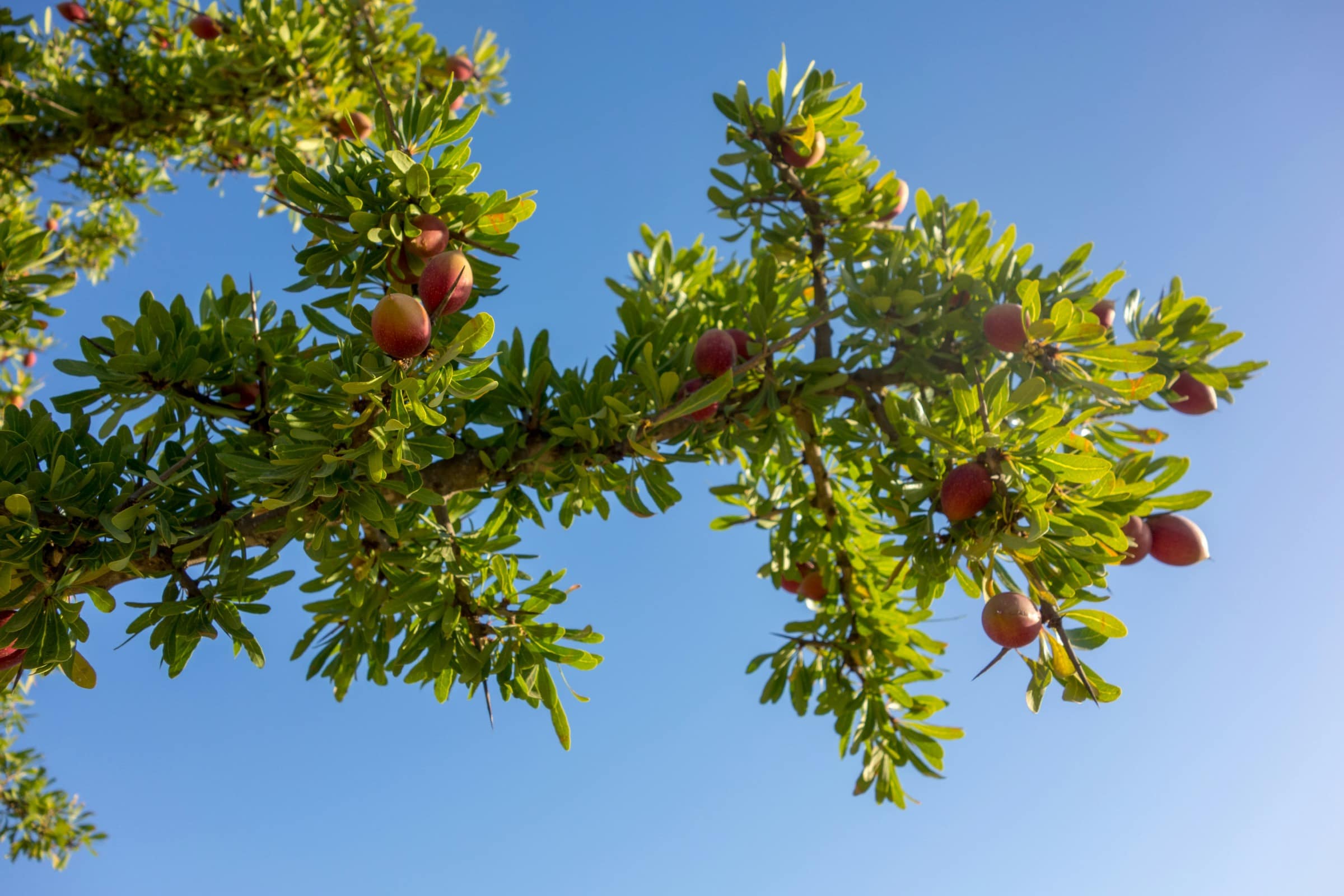
The oil comes from the hands of women cracking the nuts one by one, in women’s cooperatives born from 1996 that today support thousands of rural families. In Marrakech, then, all that happens is the selling - which does not stop you finding good oil, but forces you to look at where it comes from.
Two oils: cosmetic and culinary
Same fruit, two products, depending on whether the kernels are roasted. The cosmetic starts from raw kernels: light, with a subtle smell, it is used on skin, hair and nails. The culinary comes from roasted kernels: darker, with an outright hazelnut taste, it dresses salads, vegetables and tagines. Amlou, finally, is the indulgent version - a spread of argan, almonds and honey, which travels home too. Know what you are after before buying: the two share neither colour, smell nor use.
Spotting real argan oil
Uncork the bottle before paying and trust three senses. The nose: a pure care oil barely smells, the culinary smells of roasted hazelnut. A strong artificial smell gives away an oxidised or mixed oil. The eye: the cosmetic runs light amber, a little cloudy, with a slight deposit at the bottom, a sign it is not over-filtered. A pale and perfectly clear oil has often been cut. The finger: the real one soaks in without leaving a greasy film.
Also look at the label: a single ingredient should sit there, Argania Spinosa Kernel Oil, no fragrance or preservative. No composition or origin listed? Put the bottle back. One last suspicious-seller move: shake the bottle. A pure oil only makes a few bubbles. If it foams, it is probably cut - a hint, not a proof, but which has saved many a purchase.
The labels that count
Beyond the three senses, three markers on the label, not to mix up. The PGI ‘Argane’ (protected geographical indication, Morocco’s first, in 2010) is the most specific: the name ‘Argane’ is legally kept for producers of the origin area, between Essaouira, Agadir and Tiznit, with traceability controlled by NORMACERT. It guarantees origin, not the growing method. The ONSSA approval, issued by the Moroccan health authority, is the legal floor: an alimentary oil sold in the rules carries an approval number and a batch number, whose absence on a bottle is a bad sign. It guarantees health safety, not the taste. Finally, an organic certification (often Ecocert) attests the growing method and comes with the body’s logo and a traceable number. Three different guarantees: a serious seller knows which one they hold.
Where to buy your argan oil in Marrakech (and where to be wary)
That is where most disappointments happen. To avoid: the medina tourist herbalists and the street vendors, where the oil is often cut. And the ‘cooperatives’ a tout drags you towards. Because ‘cooperative’ is a legal status, not a sales pitch: a real structure is registered (local registry, cooperation development office) and can give you its number. Second trap, less known: the demonstration of women cracking the nut on a stone is often a set - the oil on the shelf is machine-pressed. Seeing hands at work does not therefore prove the origin of the bottle. To favour: a shop or a cooperative that shows composition, origin, label and batch number, and lets you smell and compare without pressure. Best is to buy on the Essaouira side if your road passes through: the argan tree does not grow in the Marrakech Atlas, so no shop here, however pretty, is a production site.
On the trips to Ourika or on a combo Atlas and Agafay, the ‘argan cooperative’ stop is nearly systematic - often an offshoot of a cooperative like Tiguemine, on the waterfalls road. It is informative to see the cracking, but keep a cool head: it is first a sales point, prices are often puffed (sometimes two to three times an Essaouira souk), with à la carte markups, and it is not the origin of the oil. You look, you do not have to buy. To place argan among the other purchases, see our souks shopping guide.
How much it costs
A pure oil, cosmetic or culinary, runs around 800 dirhams per litre, so about £68 (checked at a cooperative near Essaouira, 2024). But it is the small 30 or 50 ml bottle you actually slip into the suitcase: for pure certified 50 ml, reckon on a realistic floor of 250 to 350 dirhams (£21 to £30). Below that - a ‘50 ml’ shown at 50 or 100 dirhams - be wary: a cut-price oil is nearly always cut, mediocre or fake. Beware of the opposite excess too, the 700-dirham batches on excursion stops. Better a small bottle of real oil than a big one of doubtful oil.