Bab Agnaou
There is no interior. What matters is the façade. The only Marrakech gate designed as a work of art rather than as a defensive structure. A ten-minute pause on the way to the Saadian Tombs, best at sunset, when the sandstone turns blue-grey.
History & context
Bab Agnaou dates from the end of the 12th century, under the Almohad caliph Yaqub al-Mansour. At that time, the Almohads laid out a royal Kasbah south of the medina and opened new gates through its walls. Bab Agnaou is its monumental entrance: a prestige gate, inside the walls, and not a defensive gate like the neighbouring Bab er-Robb.
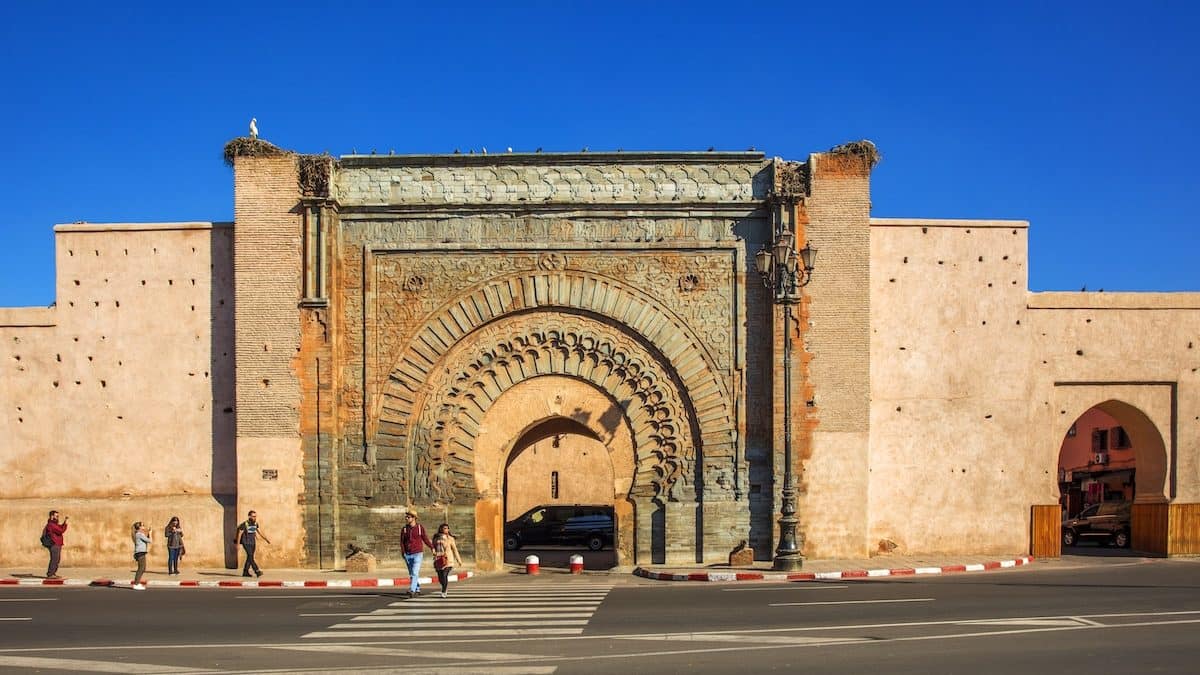
Everything here is decoration. A large horseshoe arch, framed by concentric carved bands, a Quranic Kufic inscription frieze, shells and floral arabesques cut into the sandstone from Guéliz. The towers that would have flanked it originally have disappeared, which sharpens its look of ornamental portal rather than of military work.
The name keeps its riddle. ‘Agnaou’ has been read as ‘the mute’, as a ‘ram without horns’ or tied to peoples from the south of the kingdom. The theories all hold, and none settles the matter. The gate keeps its riddle along with its stone.
The other gates defended the city. This one represented it.
What to see - the highlights
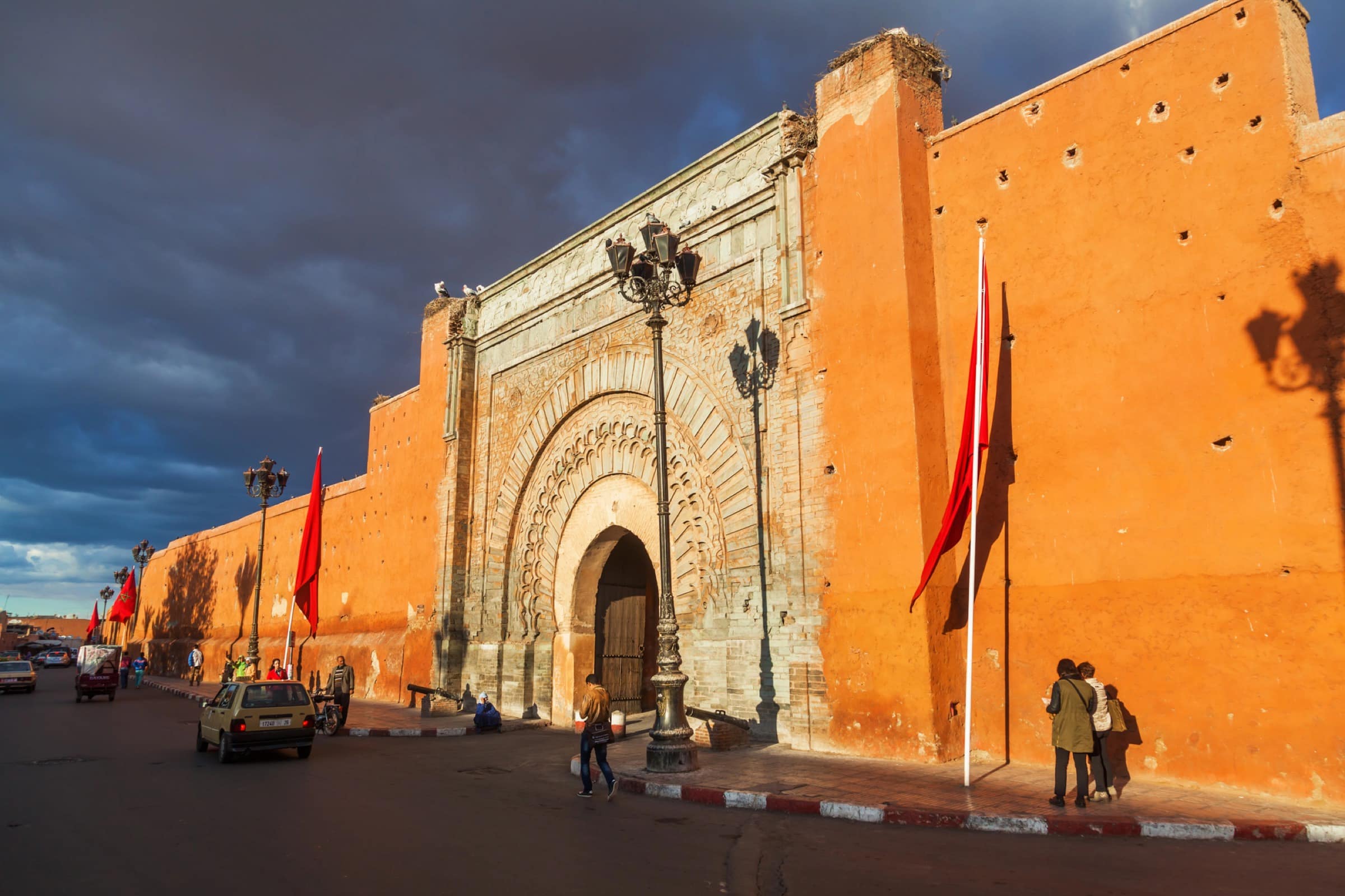
The sandstone at sunset
As the day ends, the stone quarried near Guéliz shifts from ochre to blue-grey and the light picks out the relief of the carvings.
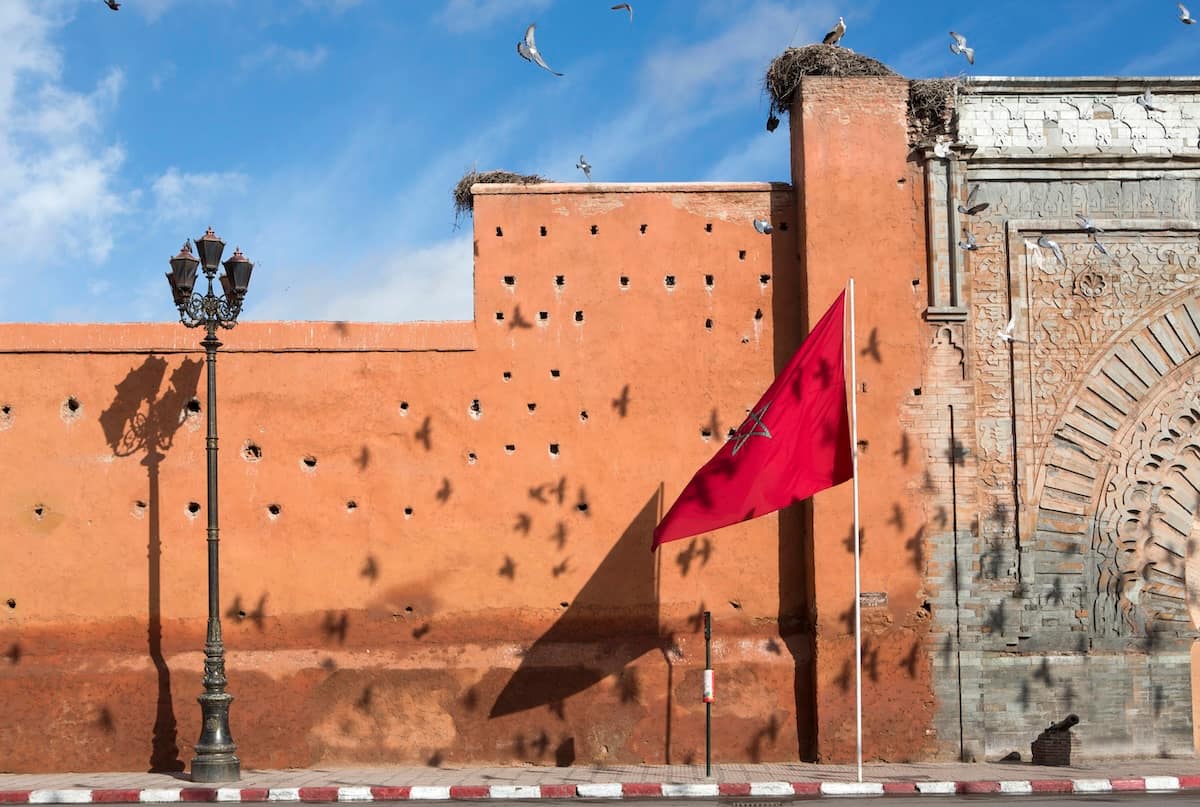
The gate in the walls
Set into the pisé wall, topped with storks' nests. The only state gate in the enclosure.
Gallery
The best photo spots
Where to point the camera, and when the light is at its best.
The whole set of arches
Step back a few metres to frame the whole composition, with no traffic in the foreground.
The frieze and the shells
Frame tight on the calligraphy and the spandrels. Raking light reveals the relief.
Visitor tips
Sunset, when the sandstone changes shade. The gate sits on the way to the Saadian Tombs. You stop by as you pass.
Expecting a long visit. There is no interior. It is the façade you look at. Ten to fifteen minutes are enough.
- No ticket. You view the gate freely from outside.
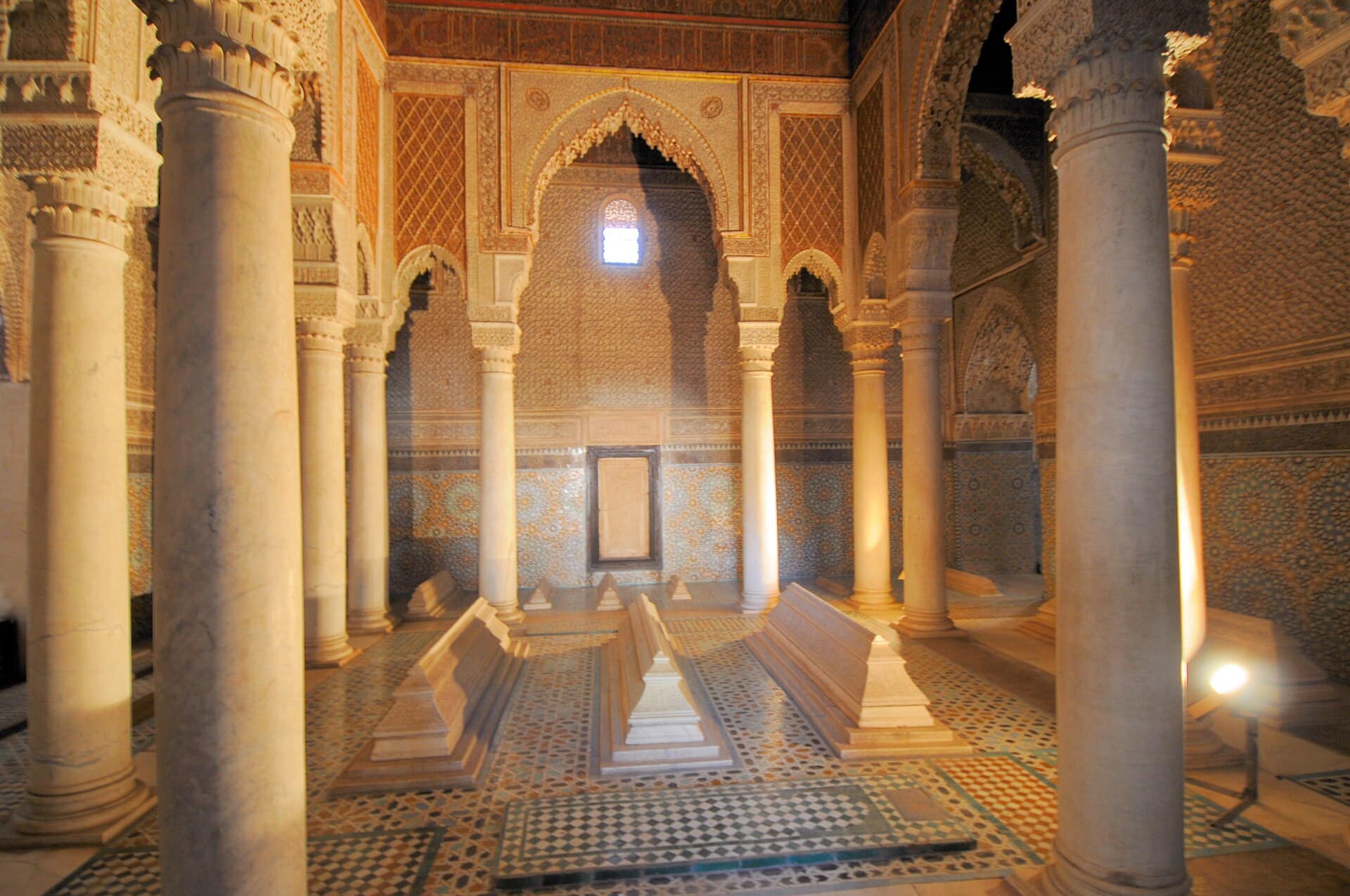
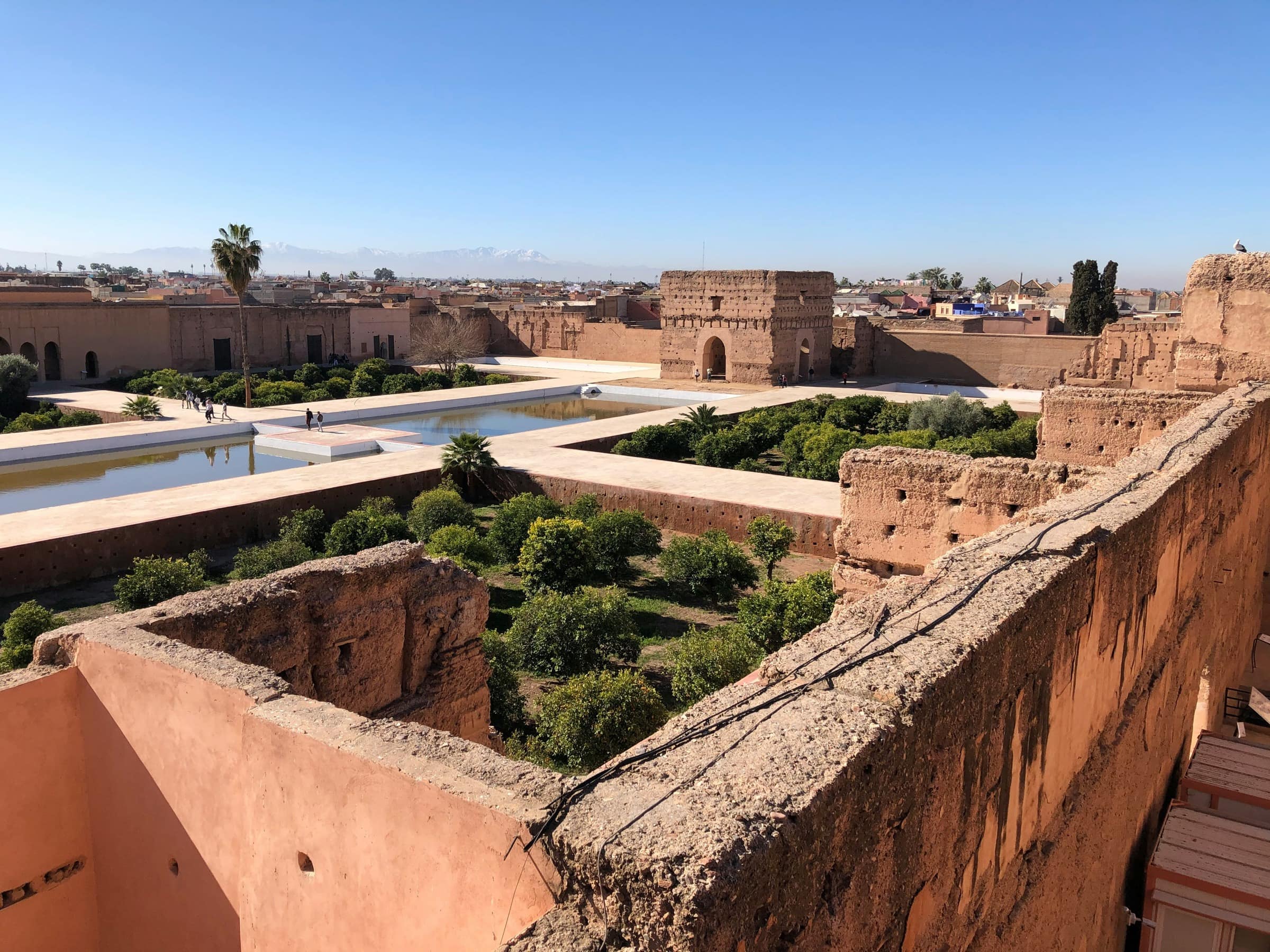
- Slot it into the Bab Agnaou - Saadian Tombs - El Badi loop, all minutes apart.
- Step back to frame the whole. The gate reveals itself from a distance, not up close.
Location & access
In the south of the medina, at the entrance to the Kasbah district, near the Kasbah mosque. You arrive by walking down Rue Bab Agnaou from Jemaa el-Fna, in about ten minutes. The Saadian Tombs are just behind the mosque.