El Badi Palace
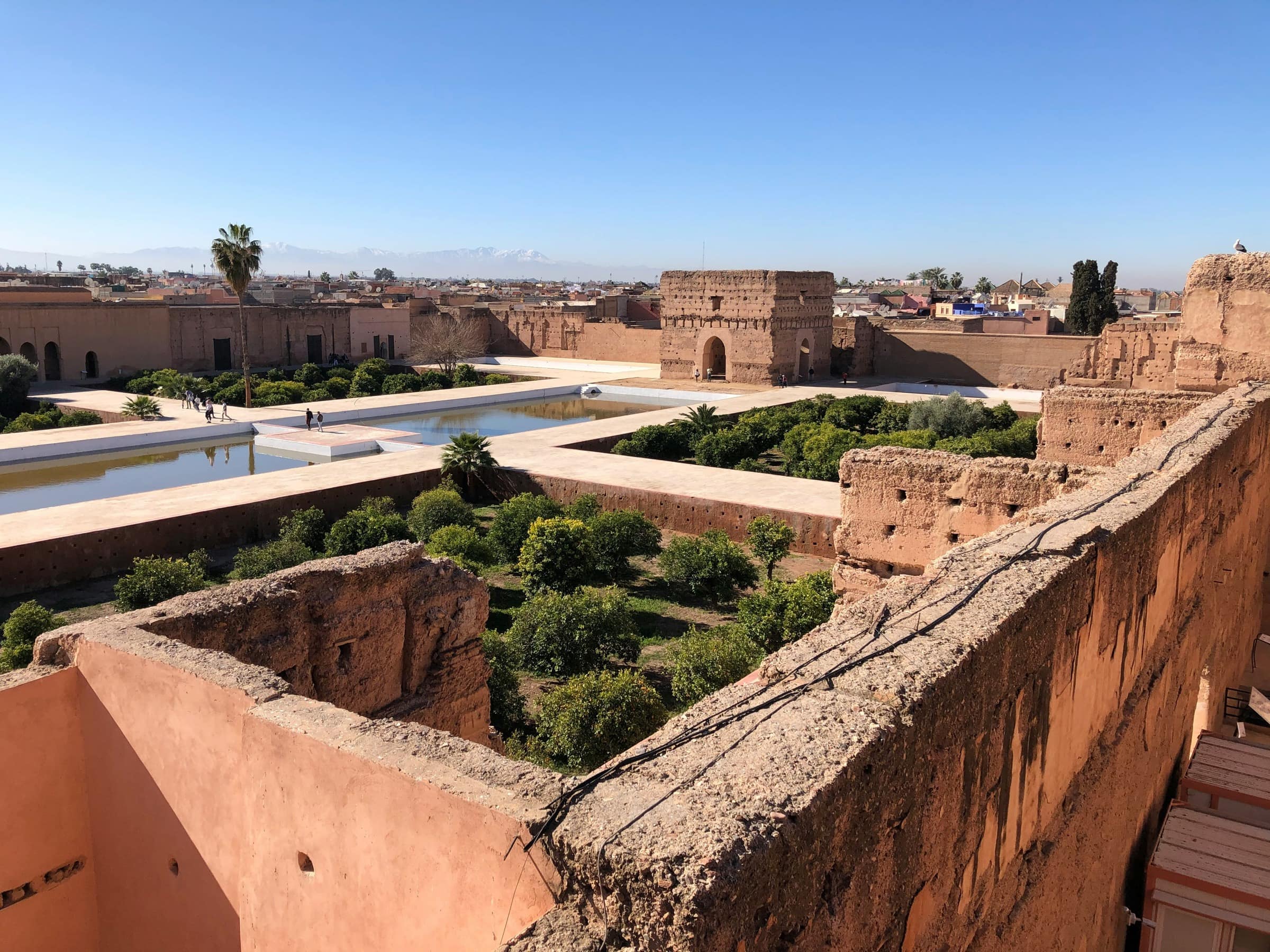
A state palace stripped to its walls. Moulay Ismail took the marble and the gold to Meknes. What remains is the scale, the great pool, the storks and, from the terraces, one of the widest views over the medina and the Atlas.
History & context
El Badi Palace - ‘the incomparable’ - was born of a victory. In 1578, the Saadian sultan Ahmed al-Mansour crushed the Portuguese at the Battle of the Three Kings. The prisoners’ ransom part-funded the site he launched the same year. It took some fifteen years to complete this state palace, designed to receive and to impress.
The sultan brought in the best: marble from Italy, gold from Sudan, onyx, cedar from the Atlas. A court of one hundred and thirty-five metres by one hundred and ten, a pool ninety metres long, pavilions at the four corners. At his death, in 1603, El Badi was one of Morocco’s most lavish palaces.
The lavishness did not last. A century later, the Alaouite sultan Moulay Ismail had the palace stripped to reuse its materials at Meknes, his new capital. All that remains are the pisé walls, too massive to be carried off. That is the carcass you visit: vast, bare, occupied by the storks.
Almost nothing remains of the palace. That is what makes it striking.
What to see - the highlights
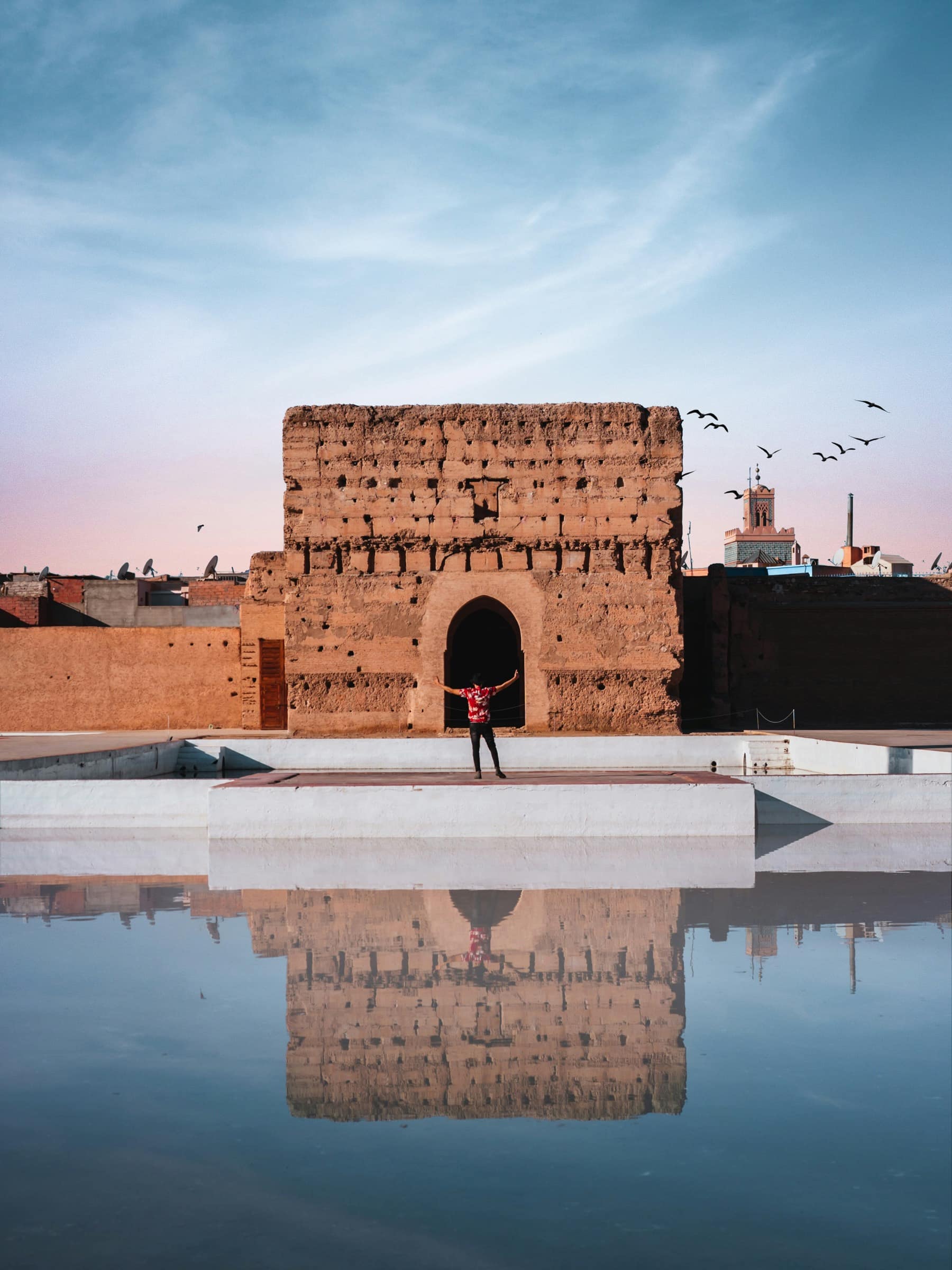
The great court and its pool
One hundred and thirty-five metres by one hundred and ten, a central pool and orange gardens below. The Saadian scale, intact.
The panoramic terraces
Go up on the ramparts for the view over the roofs of the medina, the Koutoubia and the Atlas, sometimes snow-capped.
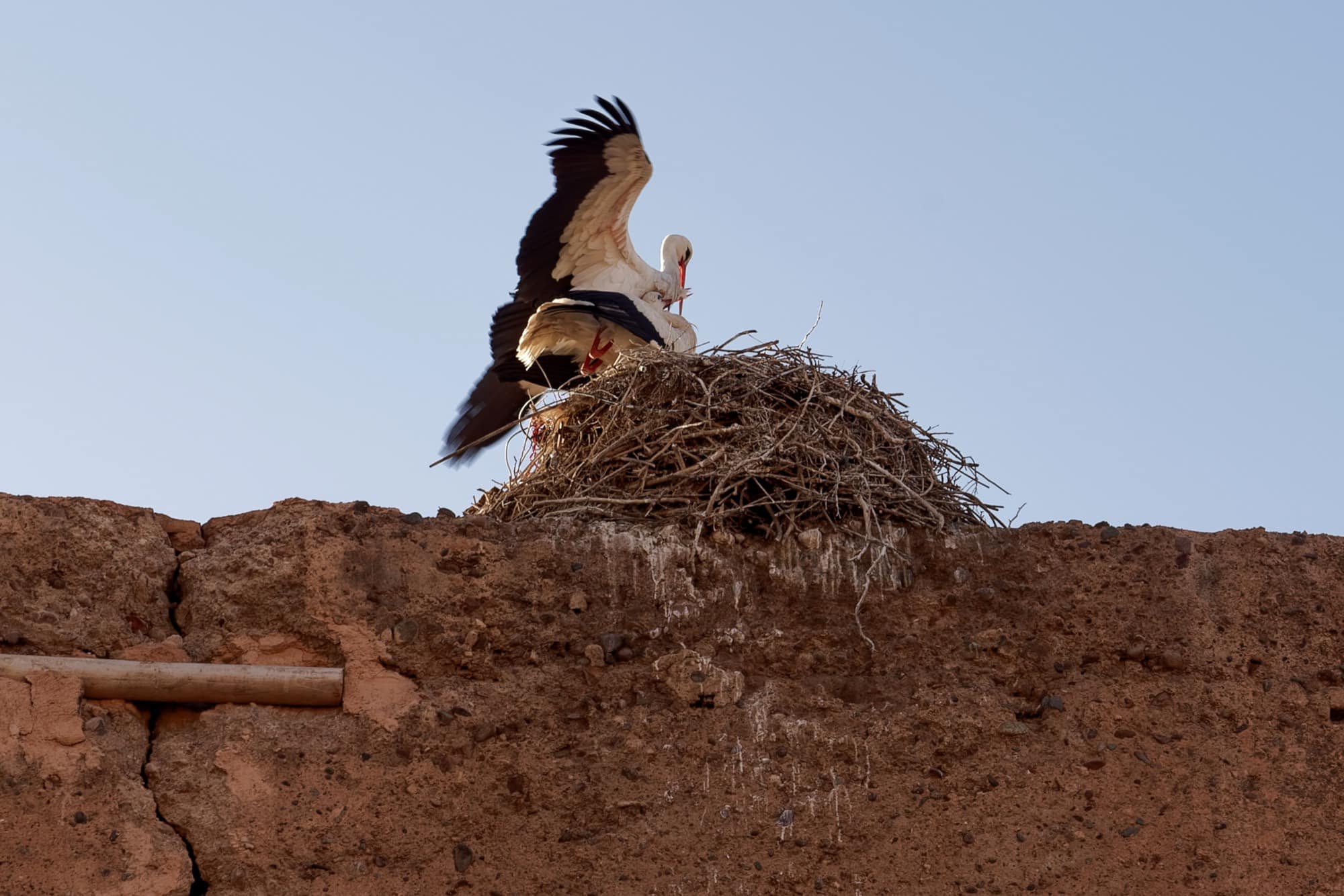
The storks
A colony nests high on the walls. You see them at eye level from the terraces, with the characteristic clatter of beaks.
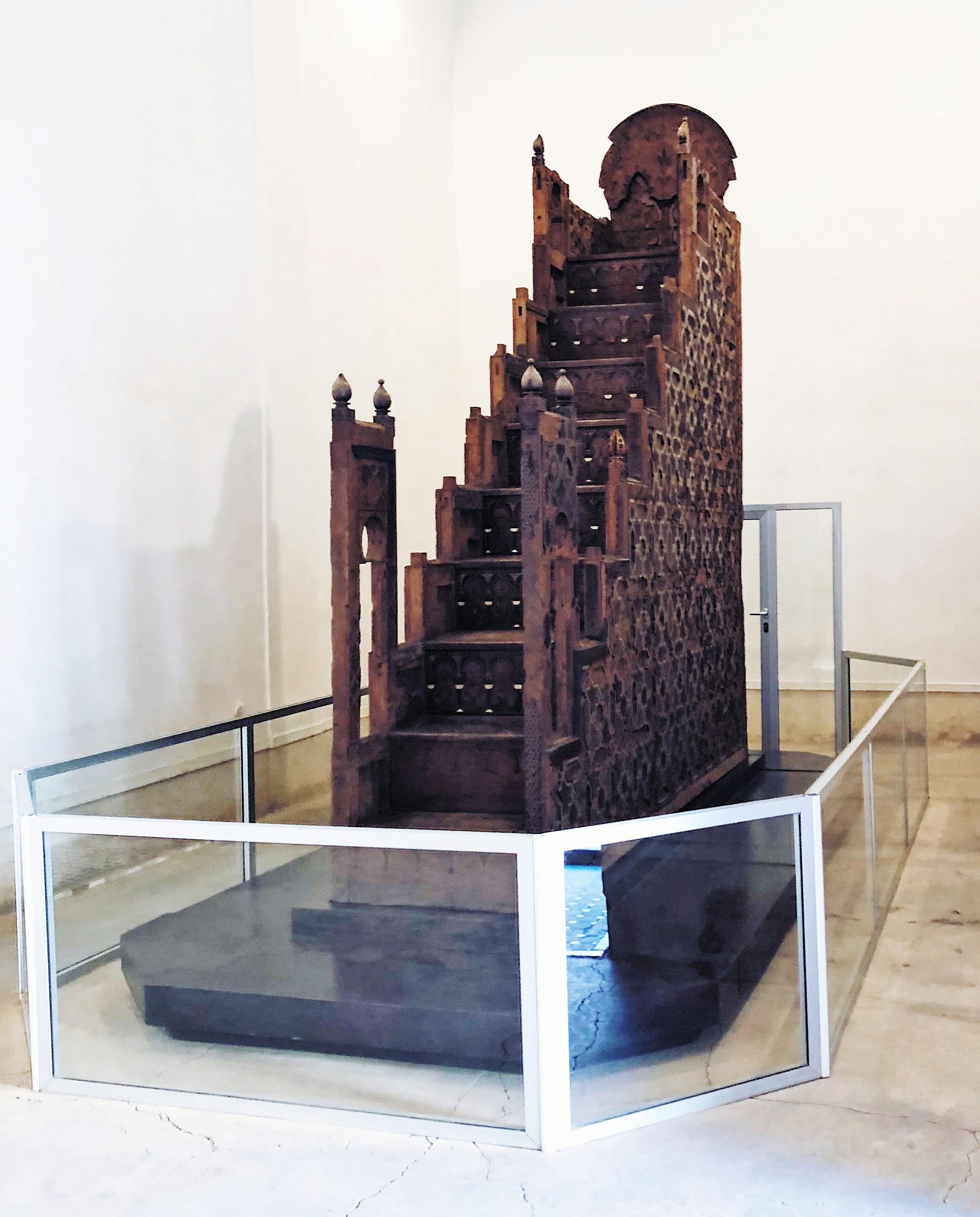
The Koutoubia minbar
The 12<sup>th</sup>-century inlaid cedar pulpit, long in the great mosque, now shown in a dedicated room.
Gallery
The best photo spots
Where to point the camera, and when the light is at its best.
The court at sunset
From the ramparts, frame the great court and the pool when the light stretches the shadows of the pisé.
The reflection of the walls
Crouch low to the water to catch the symmetry of the walls and their reflection.
The storks' nests
Telephoto up to the nests. Wait for a take-off or the clatter of beaks.
Tickets & guided tours
Book ahead - useful during peak hours, when the queue can top thirty minutes.
Booking via GetYourGuide, our ticket partner. Indicative prices ; we may earn a commission, at no extra cost to you.
Visitor tips
Early morning or late afternoon: soft light, smaller crowd, more bearable heat. Sunset from the terraces is the high point.
The 11am-3pm window in summer: little shade in the enclosure, and the stone throws back the heat.
- Reckon on one to two hours. The stairs up to the terraces are worth climbing for the view.
- Hat, water and closed shoes. The floor is uneven and shade is rare.
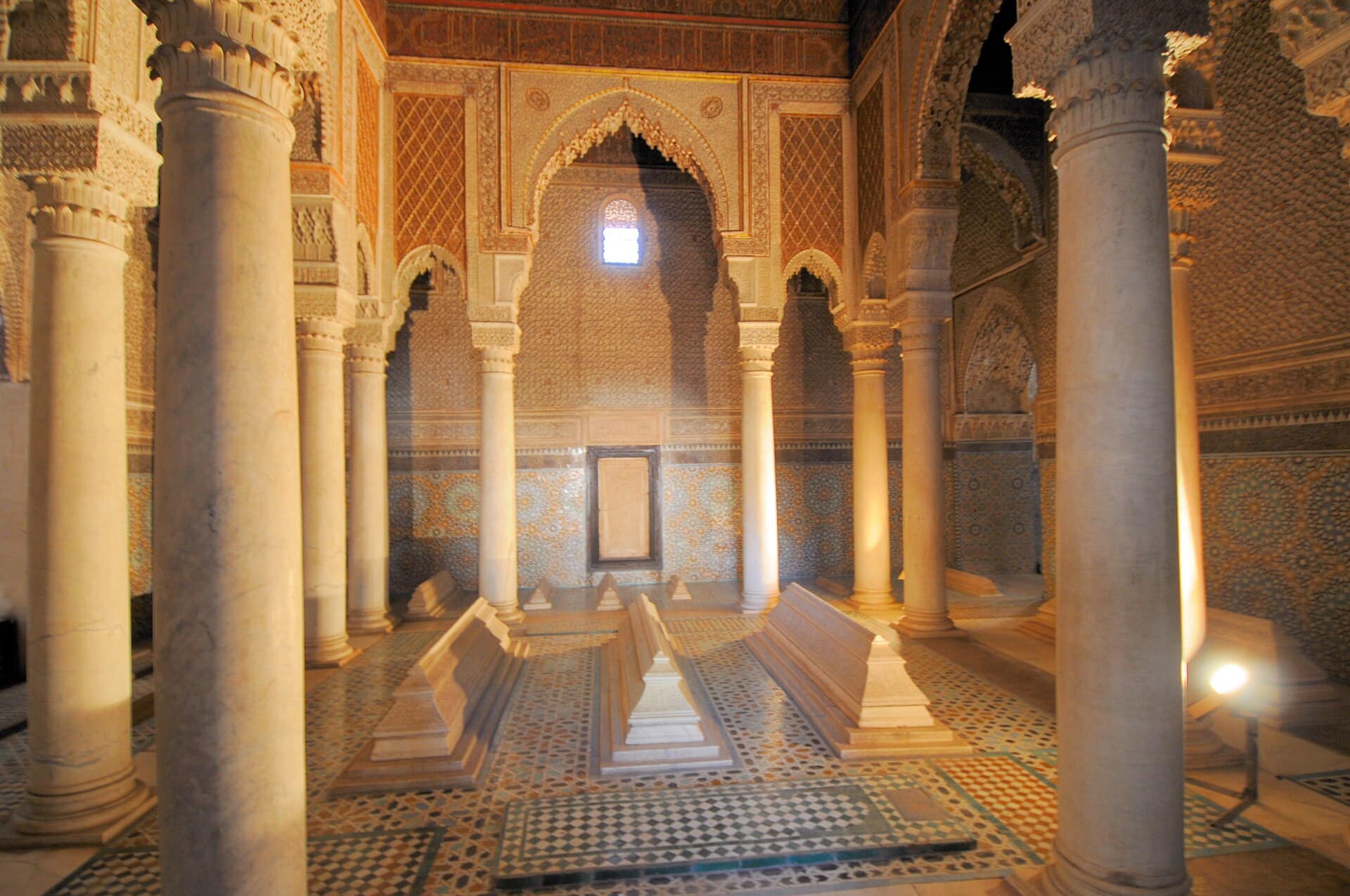
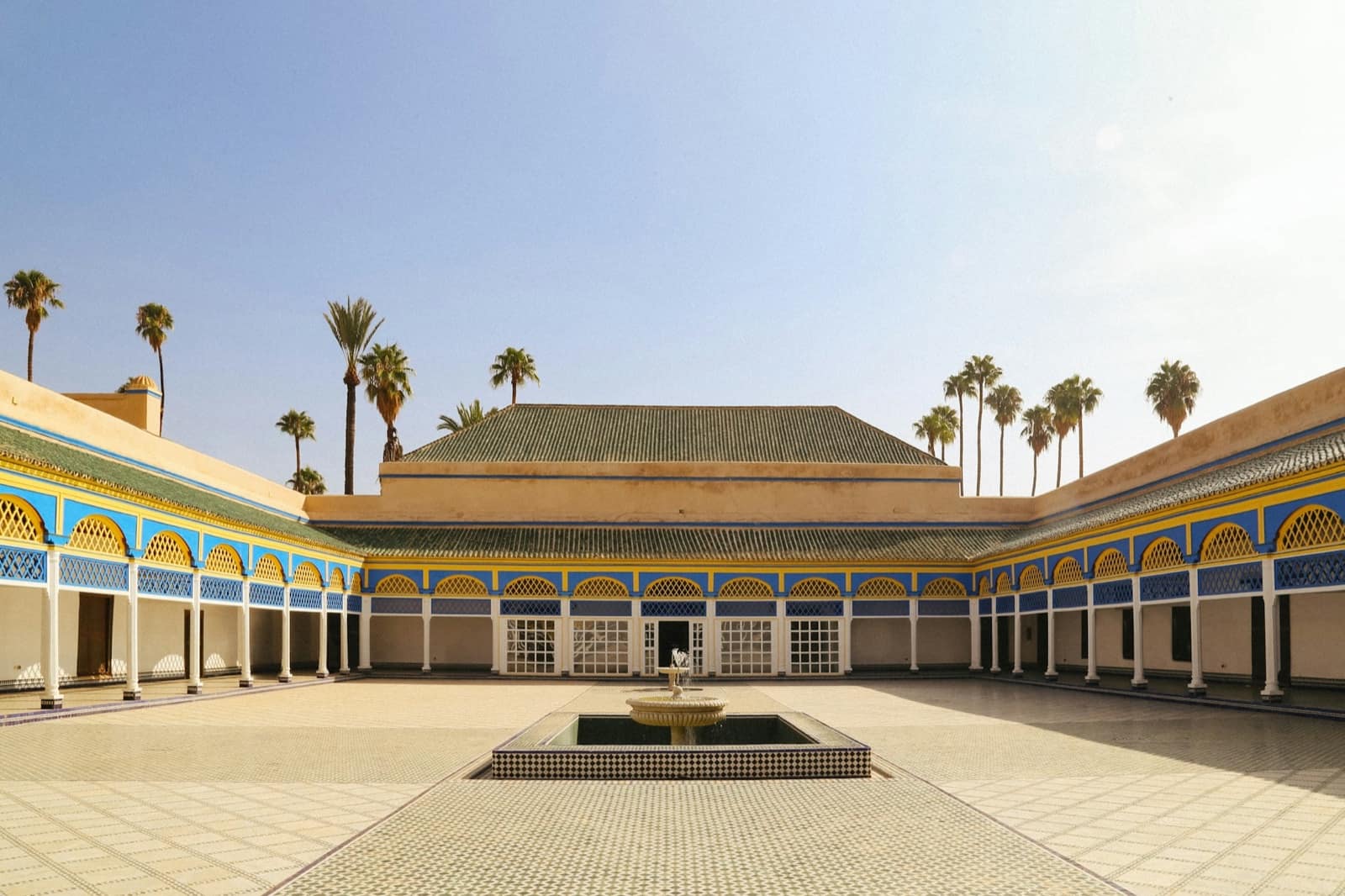
- The district groups El Badi, the Saadian Tombs and the Bahia Palace. Half a day covers all three.
Location & access
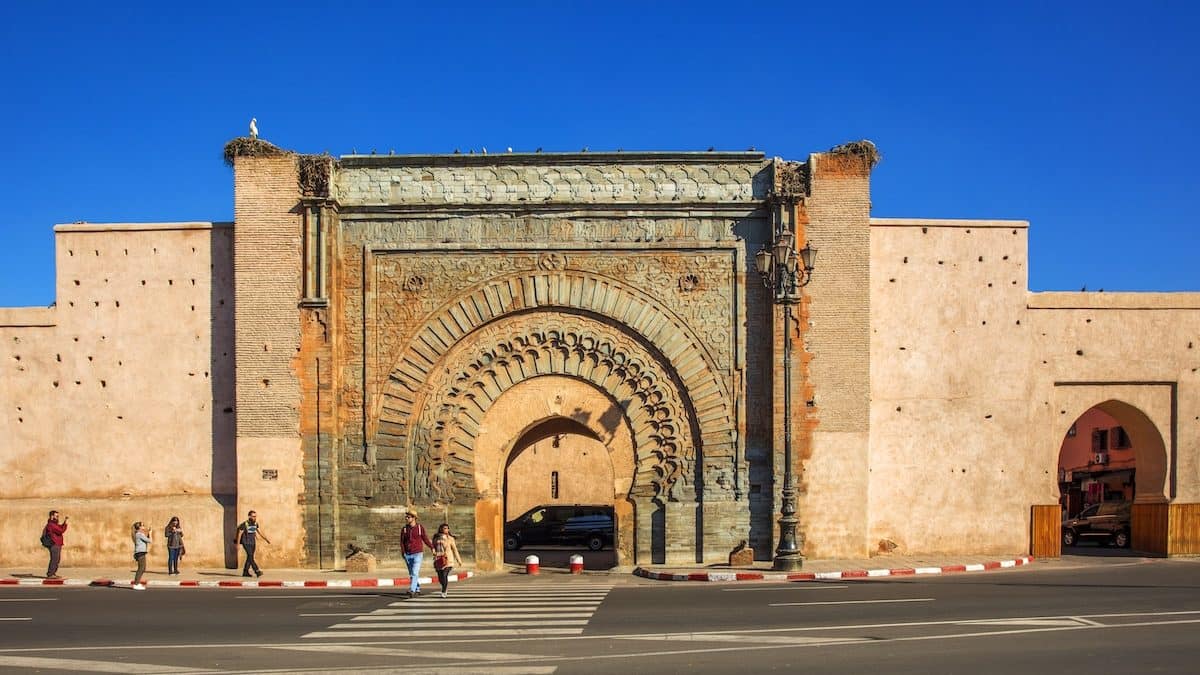
In the south of the medina, in the Kasbah district, near the Mellah. Reckon on ten to fifteen minutes on foot from Jemaa el-Fna via Rue Riad Zitoun el Jedid. The Saadian Tombs and the Bahia Palace are minutes away.