The Museum of the Moroccan Art of Living
A 19<sup>th</sup>-century riad devoted to the Moroccan arts of living: six rooms on tea, dress, architecture, the table. More educational than spectacular - a useful frame for traditions you meet all over town without always making sense of them. Short, central, and £3.
History & context
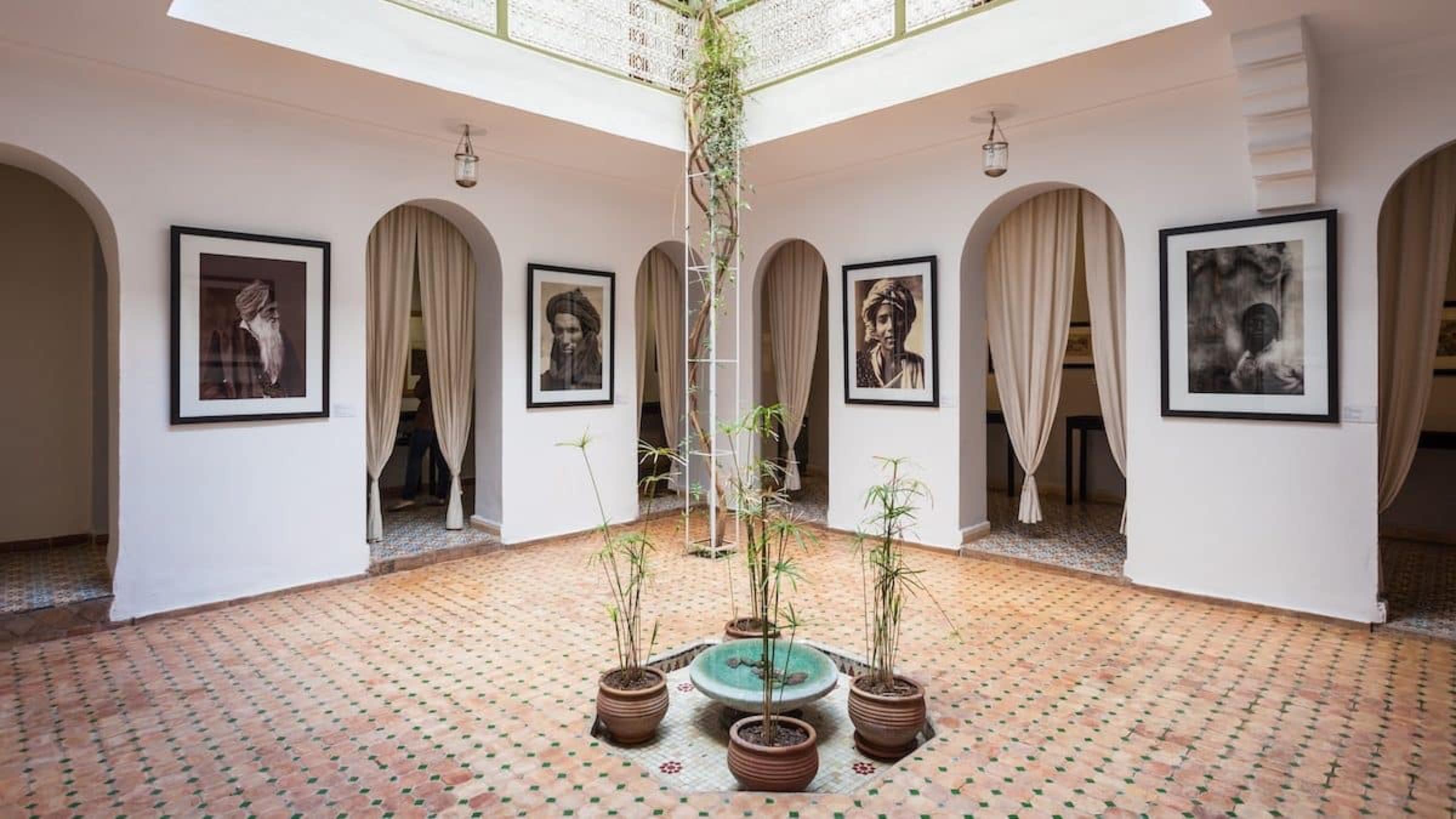
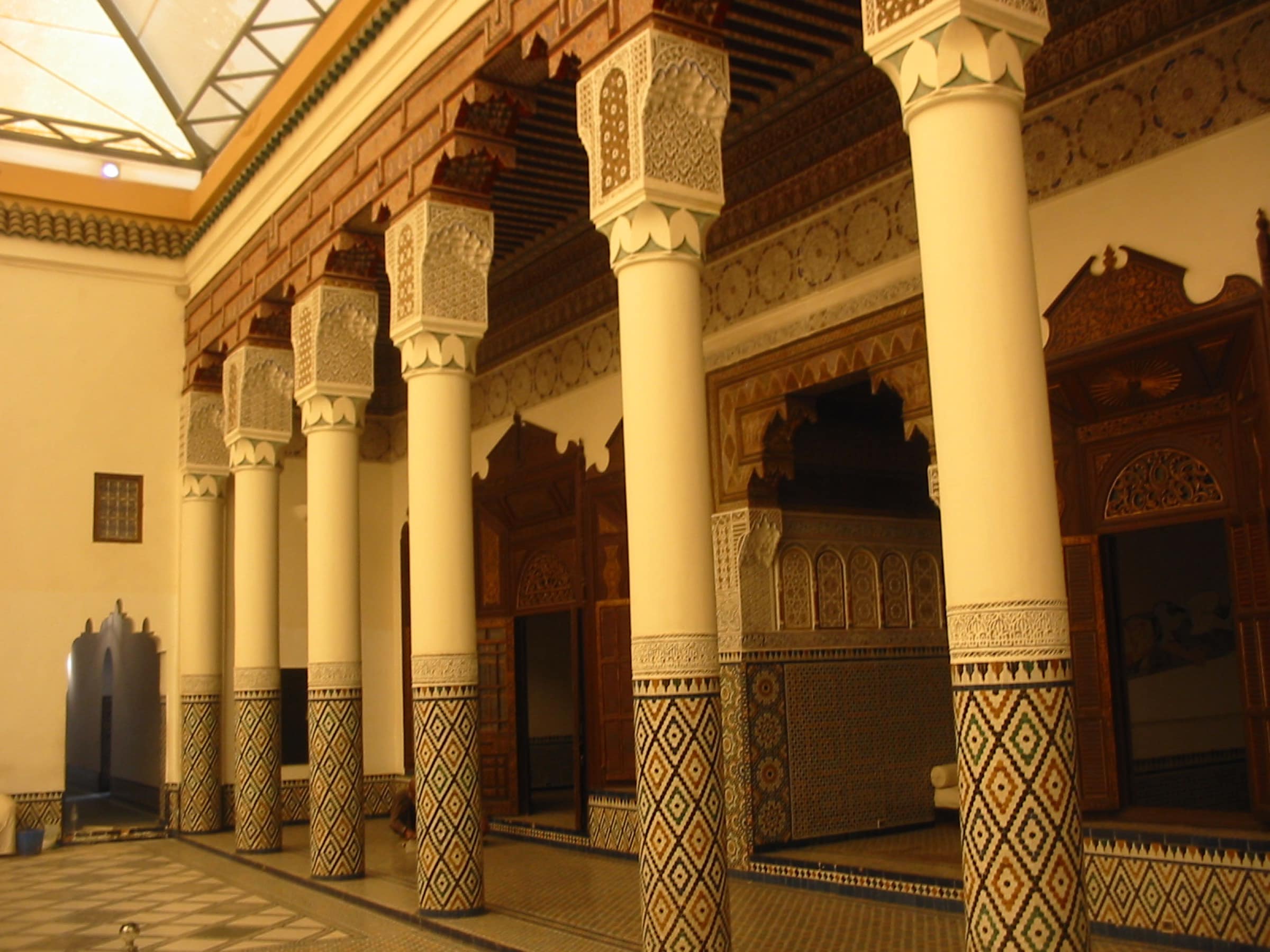
The Museum of the Moroccan Art of Living occupies a late 19th-century riad, formerly the house of a medina notable, restored in 2006. It opened in 2010, the country’s first museum devoted to the Moroccan arts of living.
Six rooms lay out everyday practices: the mint tea ceremony, dress, architecture, the decorative arts, gastronomy. Beyond the collection, the museum runs temporary exhibitions, concerts, workshops and heritage classes.
It is a short educational visit: less a museum of rare objects than a frame for traditions you meet all over town.
A way to grasp, once, what everyone does without explaining: the tea, the dress, the house.
What to see - the highlights
Six themed rooms
The mint tea ceremony, dress, architecture, the decorative arts, gastronomy: a route through everyday practices.
A 19<sup>th</sup>-century riad
The former house of a medina notable, restored: the setting is part of the visit.
Traditions in context
A way to make sense of the rites and know-how you meet in town without always grasping their meaning.
Exhibitions and workshops
Beyond the collection: temporary exhibitions, concerts, workshops and heritage classes for children.
When to go
A short pause inside the medina, between two visits.
Without reading the notes, the rooms lose most of their interest.
Indoor visit, independent of the weather.
Visitor tips
During the day, as a pause inside the medina.
Skipping the notes: the whole point is in the context they give.
- A small educational museum: 30 to 45 minutes, useful for decoding the practices you meet around town.
- The entrance is in a derb of Diour Saboun: follow the signs.
- Check the programme: exhibitions, concerts and workshops run through the year.
Location & access
In the medina, Diour Saboun district, north of Jemaa el-Fna. On foot only; the entrance is in a derb, signposted.