 © C messier · CC BY-SA 4.0 · Wikimedia Commons
 Dar Si Said Museum
A fine 19<sup>th</sup>-century palace turned into the national Weaving and Carpet Museum: painted cedar ceilings, zellige, and a collection of carpets and weavings from across Morocco. Less busy than the Bahia next door, more thematic too - you come for the carpets and the architecture, not for a quick lap.
History & context
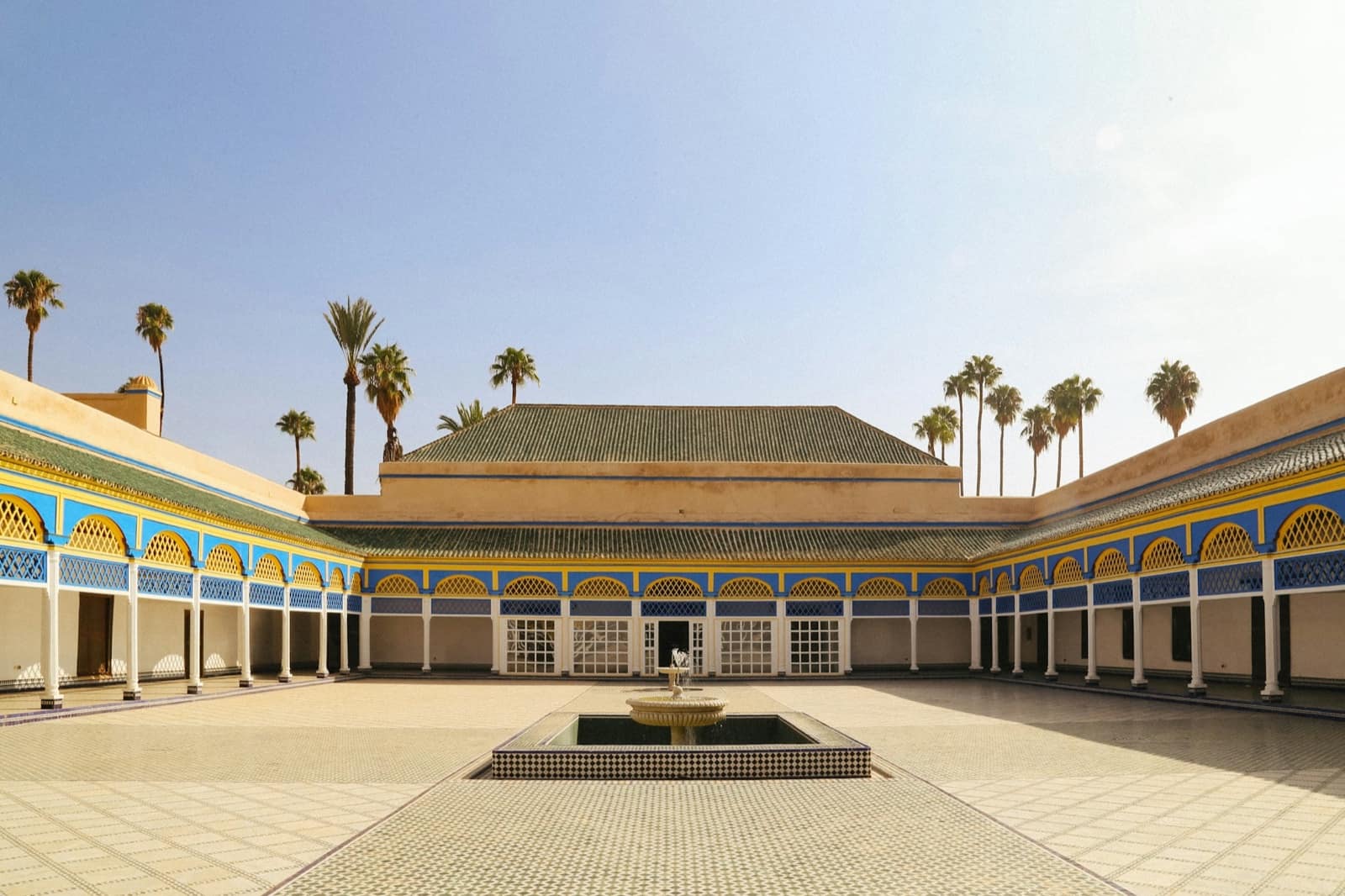
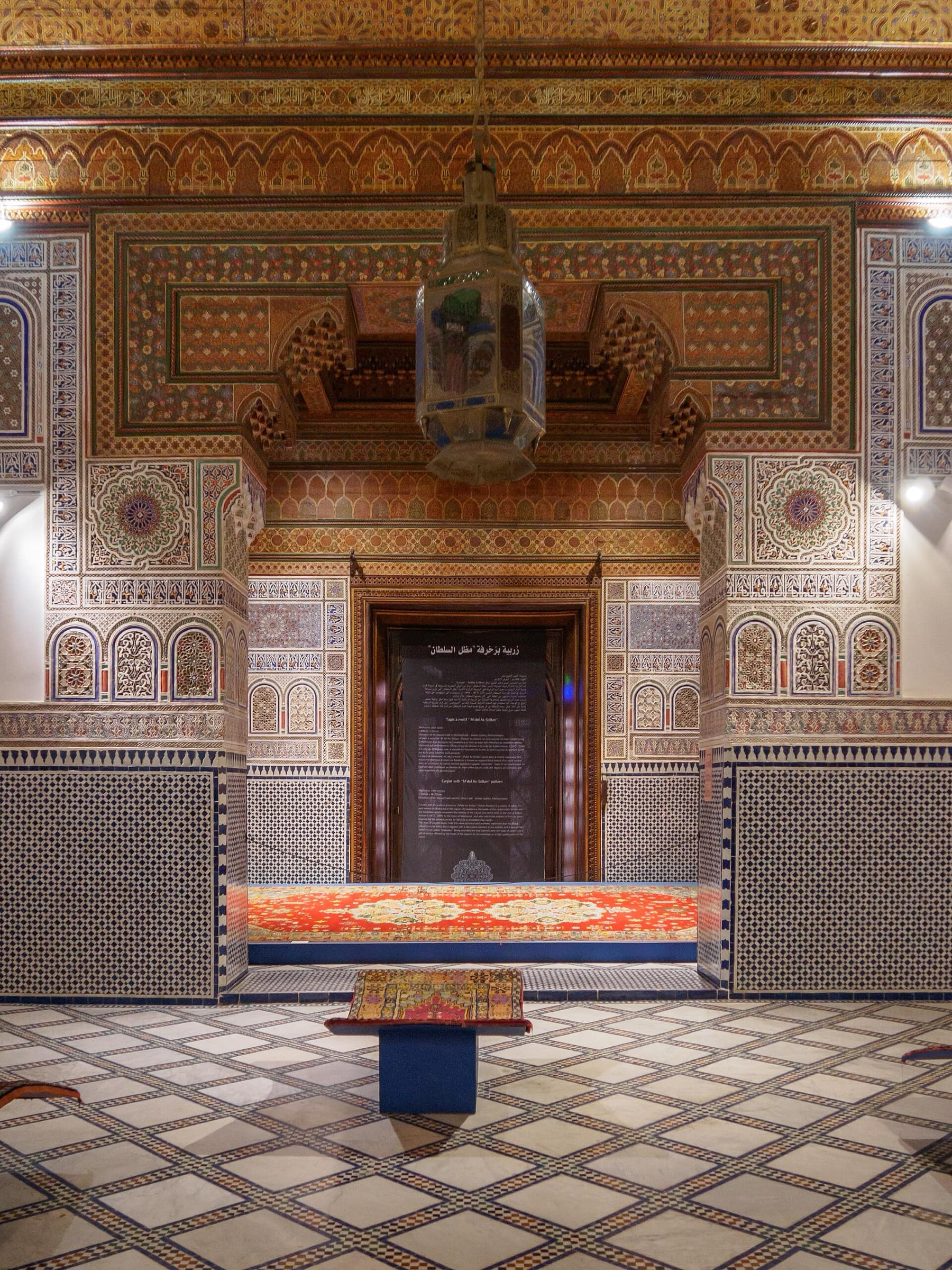
Dar Si Said is a palace from the second half of the 19th century, built for Si Said Ben Moussa, Minister of War under Sultan Moulay Abdelaziz and brother of the grand vizier Ba Ahmed, builder of the neighbouring Bahia. The house unfolds around a planted patio, between state rooms, painted cedar ceilings and chiselled stucco.
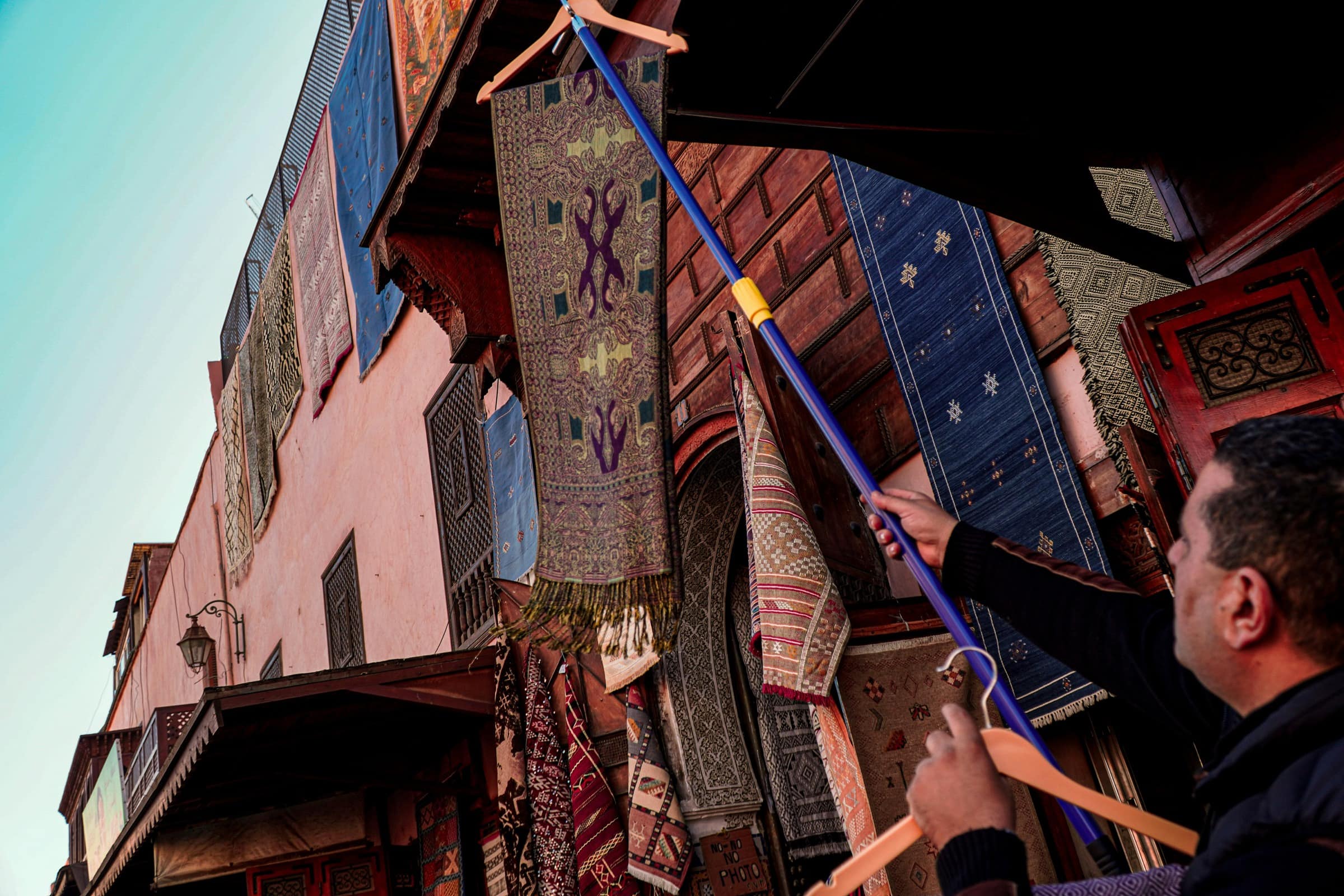
The palace now holds the national Weaving and Carpet Museum. The collection covers the whole country: urban and rural carpets, hanbel, handira, akhnif, costumes and Berber weavings from the High Atlas, the Souss and the Saharan margins.
Less visited than the Bahia close by, Dar Si Said is visited for two things at once: the architecture of a late 19th-century palace, and a documented look into Morocco’s textile know-how.
You come in for the carpets, you stay for the ceilings.
What to see - the highlights
The state rooms
Painted cedar ceilings, chiselled stucco and zellige: the architecture of a late 19<sup>th</sup>-century minister's palace.
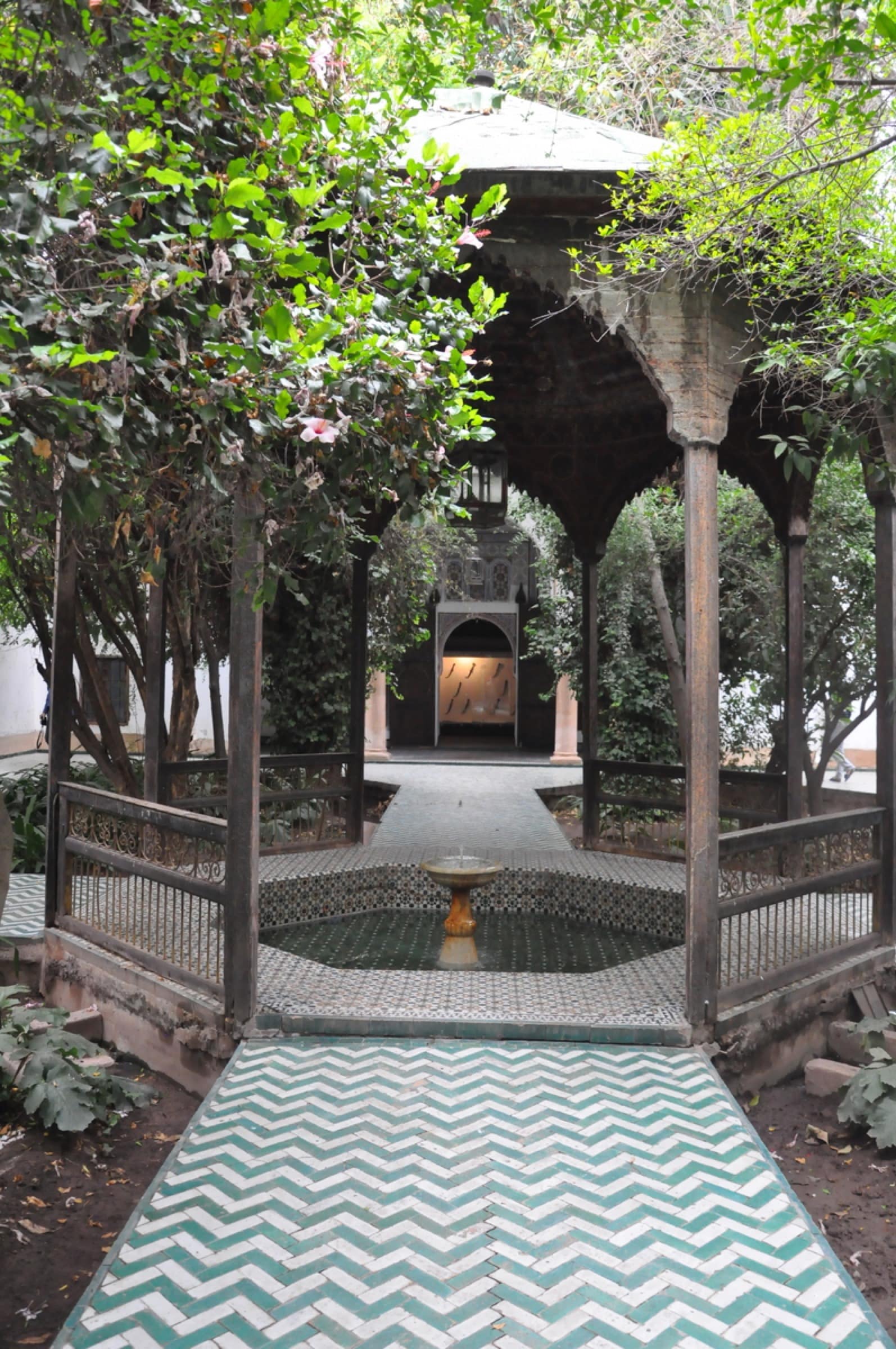
The courtyard-garden
The planted patio and its kiosk, around a central basin: the palace's breathing room between two galleries.
The carpet collection
Urban and rural carpets, hanbel, handira, akhnif, costumes and Berber weavings from the High Atlas, the Souss and the Sahara.
A national museum
Now the national Weaving and Carpet Museum: a documented reading of the country's textile know-how.
When to go
Soft light in the patio and empty rooms.
The museum is closed that day.
Indoor visit; the patio is pleasant in spring.
Visitor tips
In the morning, at opening (10am).
Sunday (closed).
- Closed Sunday; free on Friday for nationals and residents in Morocco.
- Combine with the Bahia Palace and the Maison Tiskiwin, all three in the same area.
- Take time over the ceilings and the stucco: the architecture is worth as much as the carpets.
Location & access
In the south-east of the medina, in the Bahia district, a few alleys from the palace and the Maison Tiskiwin. On foot; the entrance is at the end of a derb, signposted.