The Mellah
The Jewish quarter of Marrakech, long left off the tours, is finding its colour again. There is no single monument here. The draw is the atmosphere: spices piled at the covered market, ironmongers hammering on Place des Ferblantiers, a synagogue still in use.
History & context
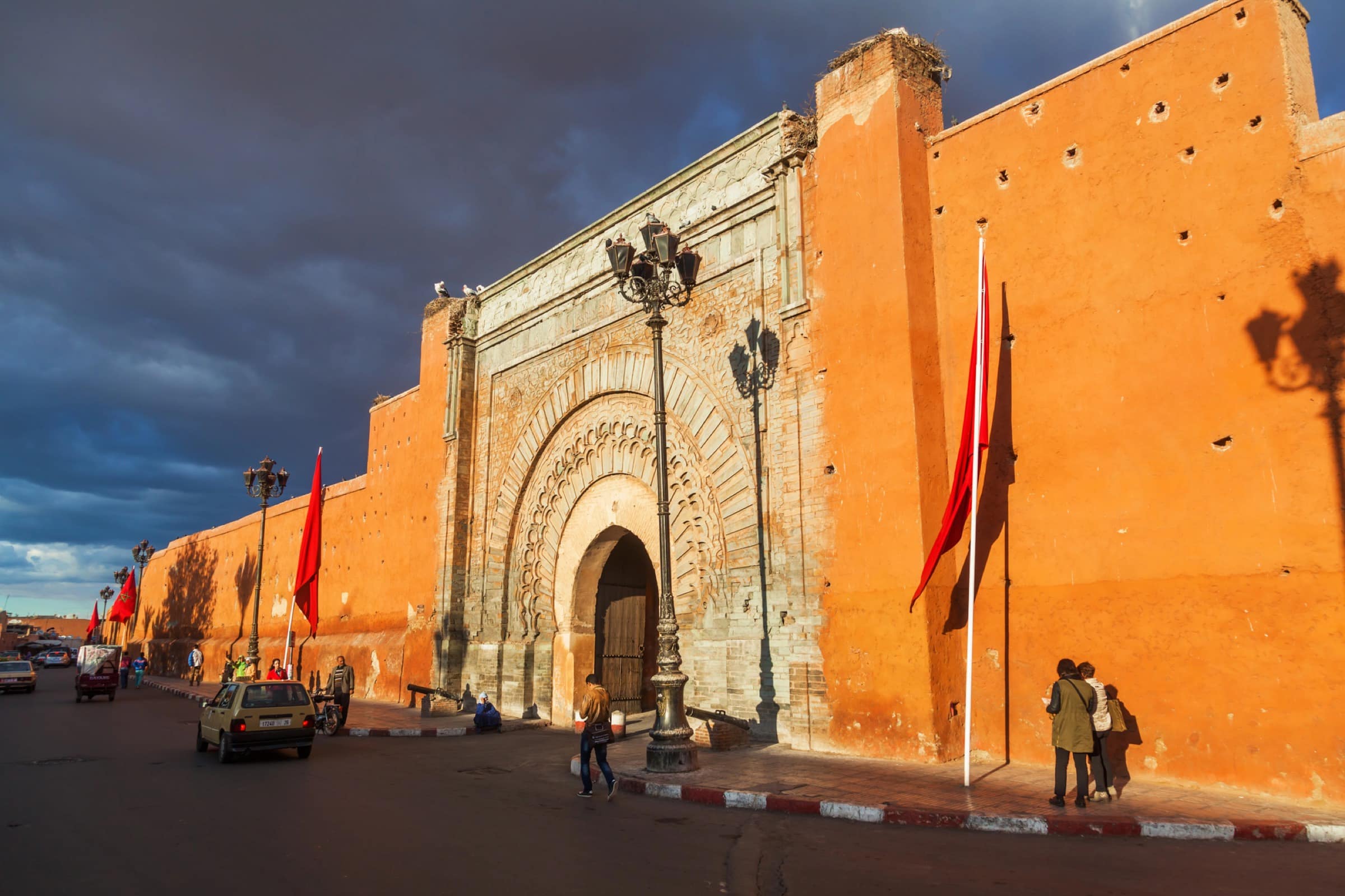
Founded in 1558, the Mellah was Morocco’s first Jewish quarter - a walled space, adjoining the palace, both protected and kept apart.
The word mellah is said to come from the salt that was worked here. For centuries, the community lived from the trade in spices, jewellery and metal - trades the district still carries the trace of: covered market, ironmongers’ stalls, jewellers’ workshops.
Largely emptied of its inhabitants in the 20th century, the Mellah declined for a long time before being restored and its alleys renamed. You now visit a working synagogue, a cemetery and a neighbourhood life the tourist souks have lost.
Highlights
A neighbourhood is not visited in one go: here are the stops in the order of a walk.
Place des Ferblantiers
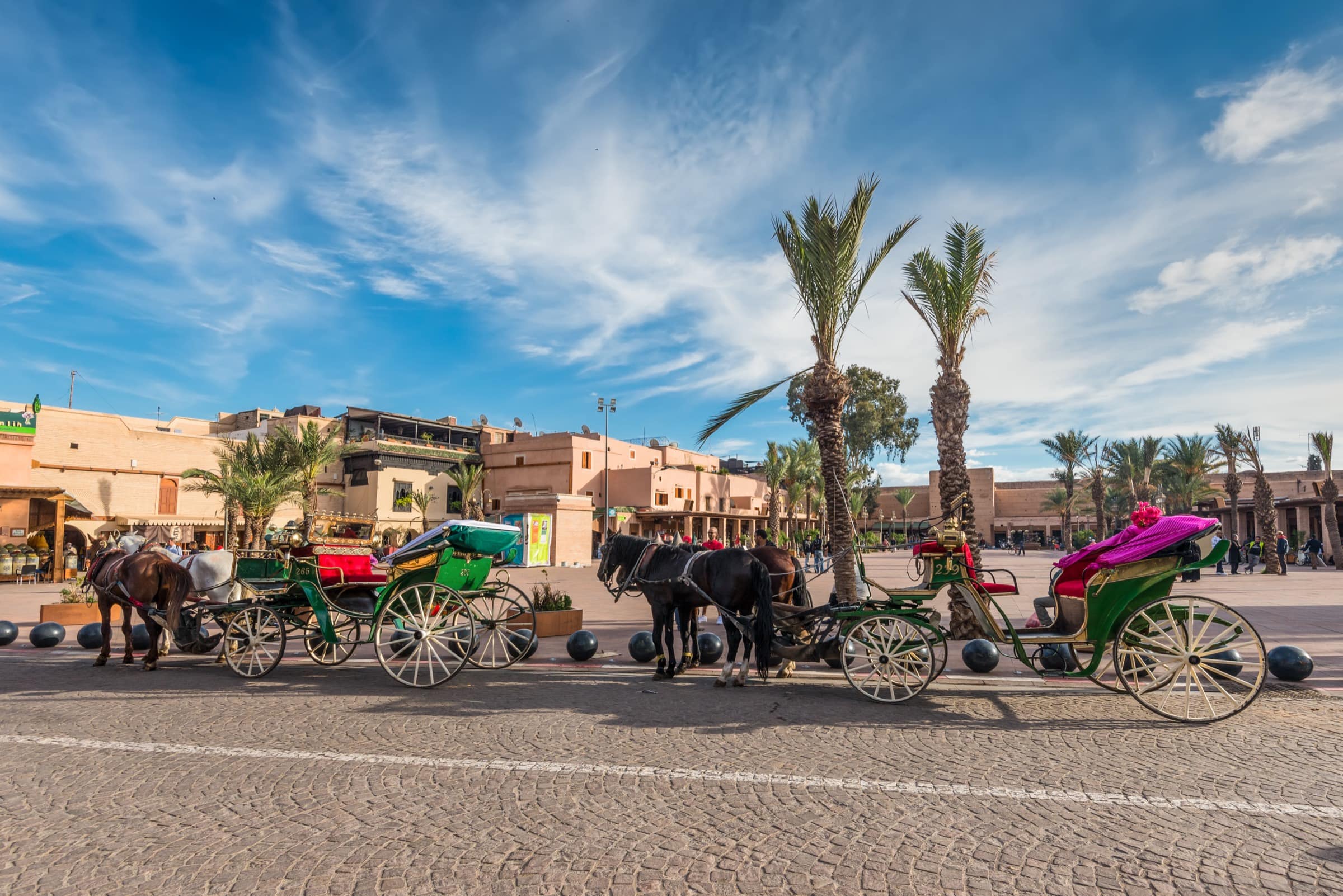
The centre of the district, lined with workshops of hammered metal lanterns. Horse-cart rank on the edge.
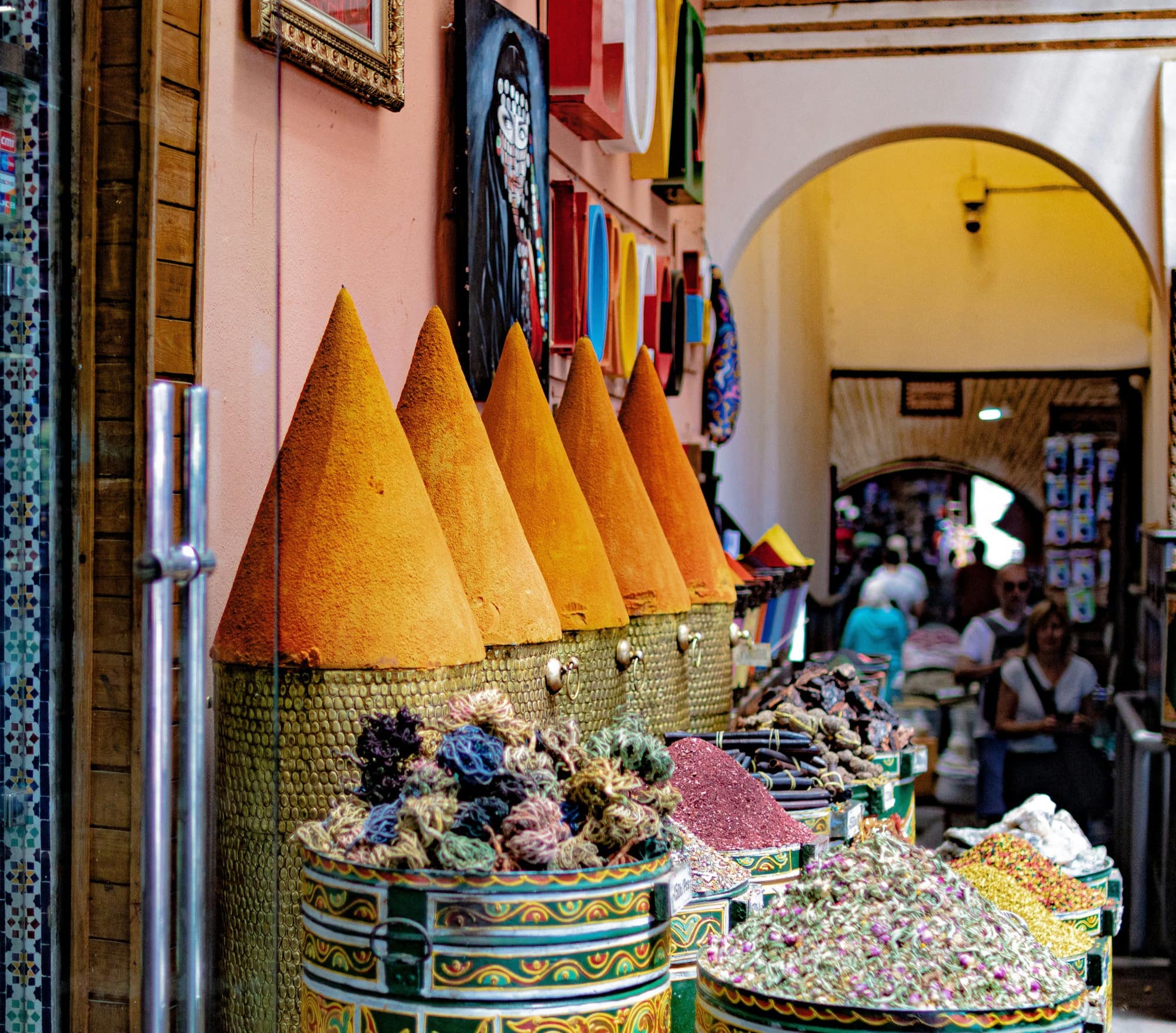
The spice market
The covered market, its pyramids of spices and its herbalists.
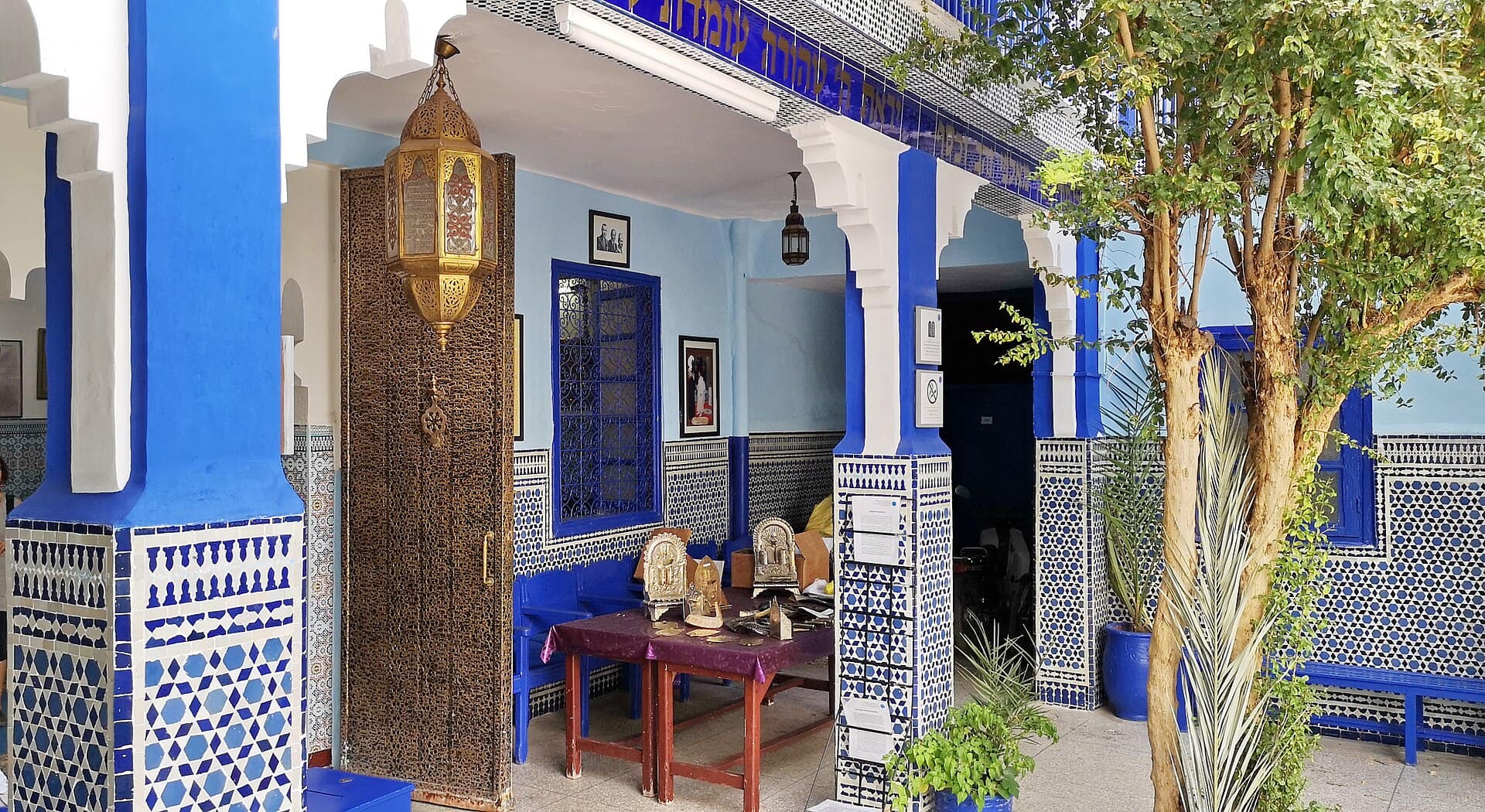
Slat al-Azama synagogue
Still in use, around a blue-and-white patio. Free entry.
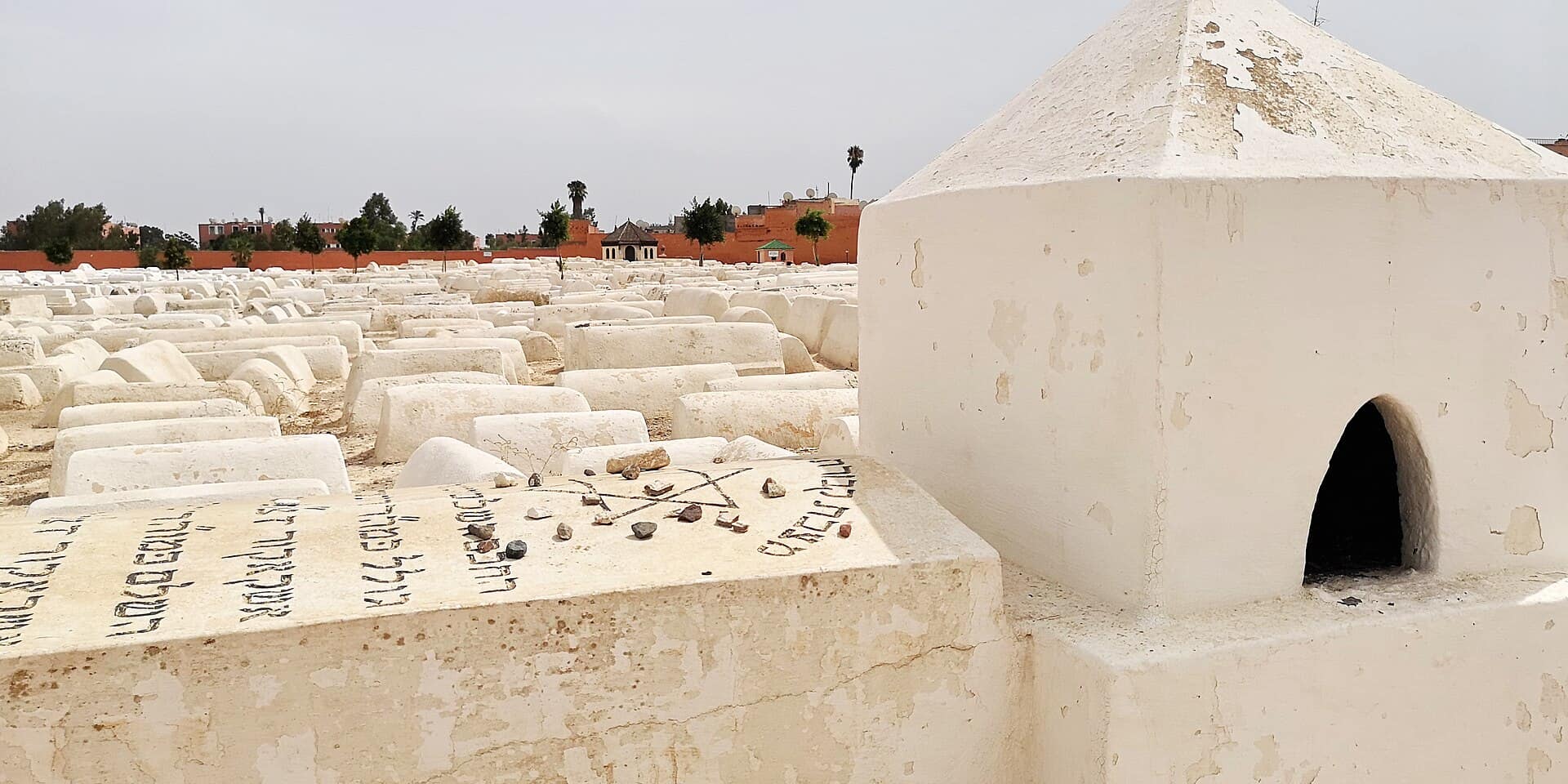
The Miâara cemetery
Thousands of tombs whitewashed with lime, strikingly peaceful.
Get your bearings
Everything is on foot, a few minutes from one point to the next.
In pictures
The best photo spots
A district that lends itself more to reportage than postcards.
Lanterns in a row
The open workshops and their metal lanterns, in warm light.
The pyramids of spices
The colours of the stalls, ask before photographing the merchants.
The blue-and-white patio
The patio of Slat al-Azama, quiet and graphic. Photography allowed.
Guided walks & experiences
Le quartier se découvre librement. Mais un guide ou un food tour en révèle l'histoire et les bonnes adresses.
Food tour: Mellah, Kasbah & Souk Semmarine
Jewish heritage of Marrakech - private tour
Booking via GetYourGuide, our ticket partner. Indicative prices; we may earn a commission, at no extra cost to you.
On the ground
Where to take a break without leaving the neighbourhood.
Visitor tips
- Come in the morning for the market: this is when the district is at its liveliest.
- Cover up and keep quiet at the synagogue, still a working place of worship.
- Bargain with a smile at the ironmongers and the spice merchants.
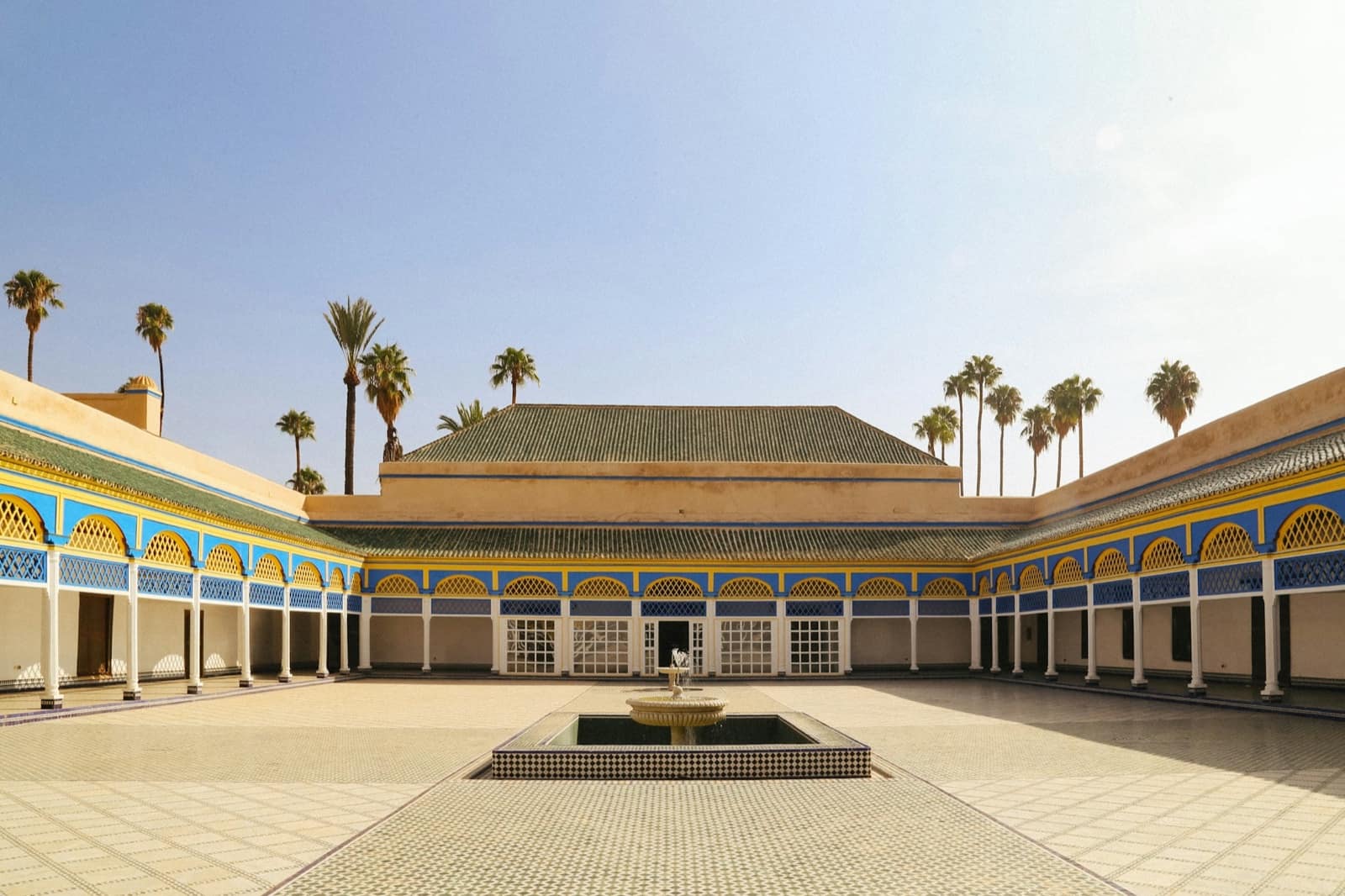
- Carry on into the Bahia Palace, on the edge of the district.