Guéliz
Marrakech's new town, born under the Protectorate: straight avenues, Art deco blocks, art galleries and wide terraces. You come for the Jardin Majorelle and the Yves Saint Laurent Museum, and to breathe out of the souks.
History & context
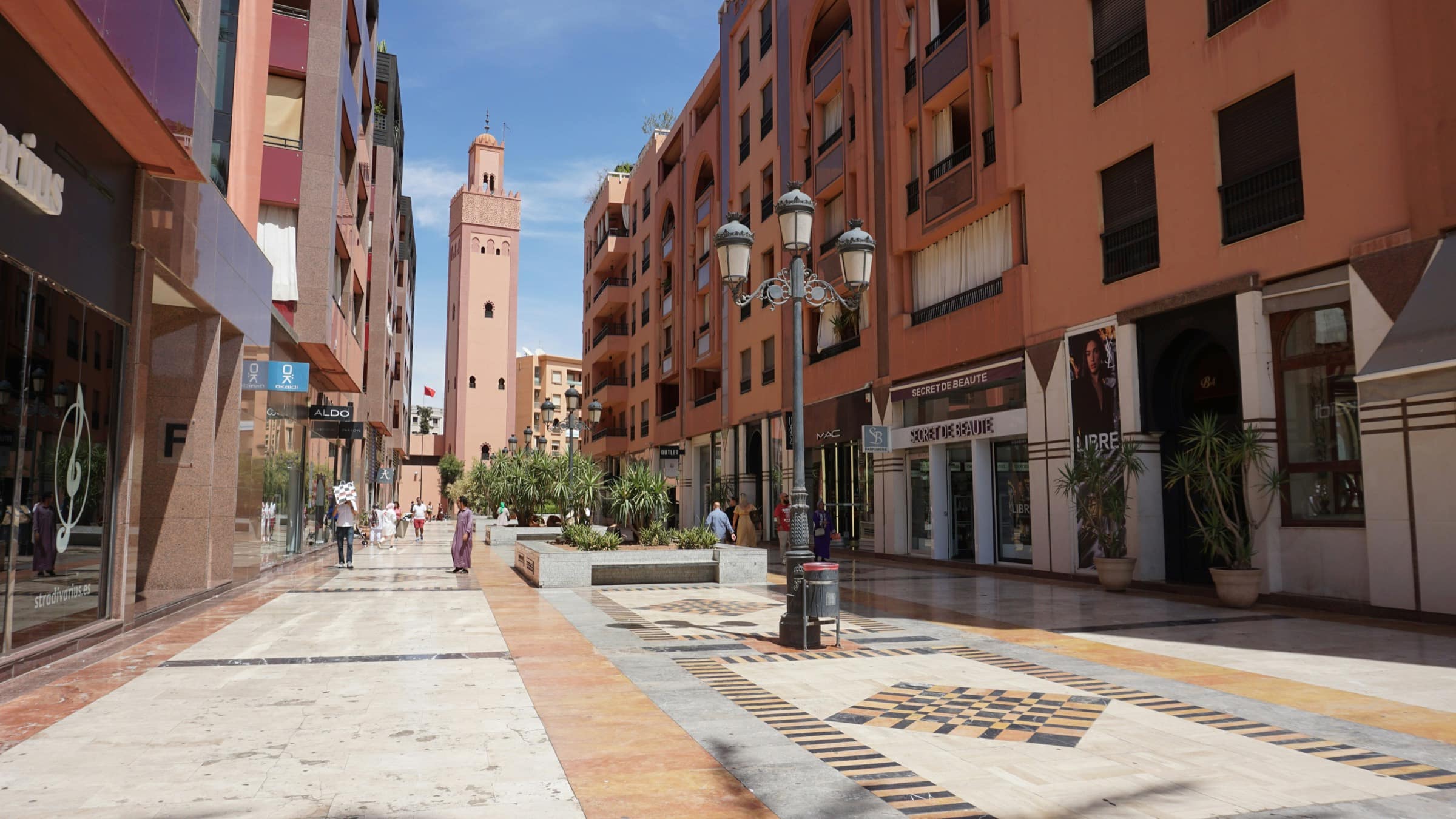
Guéliz is not a thousand years old, barely more than a hundred. When France set up its Protectorate in 1912, the architect Henri Prost drew, to the north-west of the medina, a new town: wide straight avenues, Art deco blocks, planted pavements. The district took the name of the hill and its church, the Church of the Holy Martyrs.
A century on, Guéliz has become contemporary Marrakech: art galleries along Rue de la Liberté, brasseries and terraces, designers’ shops, cinemas. This is where the city shows its present-day art, minutes from the souks.
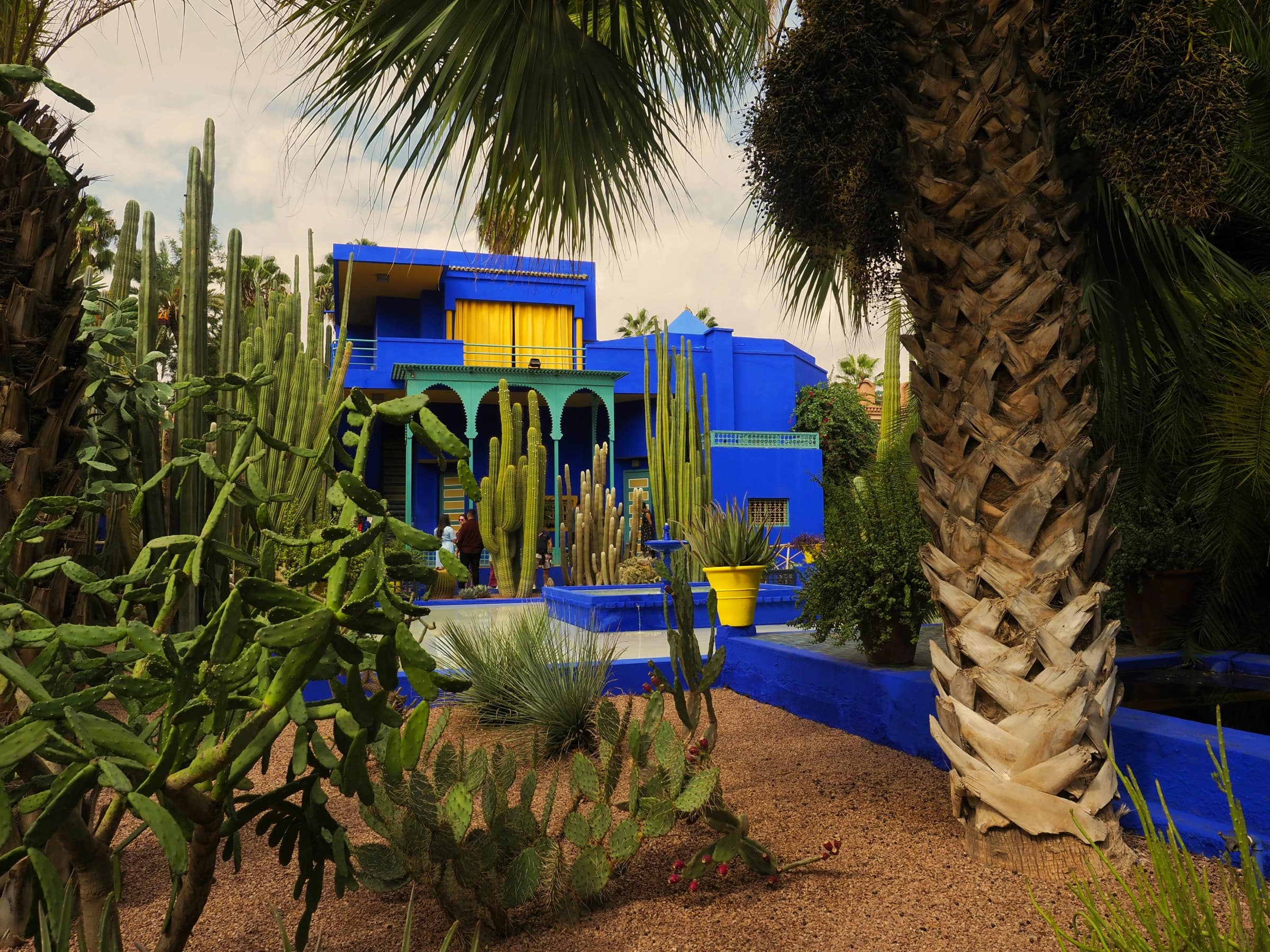
To the north, two addresses made its worldwide name: the Jardin Majorelle and its cobalt blue, and the Yves Saint Laurent Museum, its brick façade. Between them, Avenue Mohammed V runs straight down to the Koutoubia and the medina.
Guéliz is also, with Hivernage, the only real bar scene in Marrakech: Baromètre for cocktails, Kechmara for a glass on the terrace, a handful of licensed addresses where a wine list exists. It is the licensed counterpart of the dry riads of the medina next door.
The medina for the past, Guéliz for the present.
Highlights
A neighbourhood is not visited in one go: here are the stops in the order of a walk.
The Jardin Majorelle
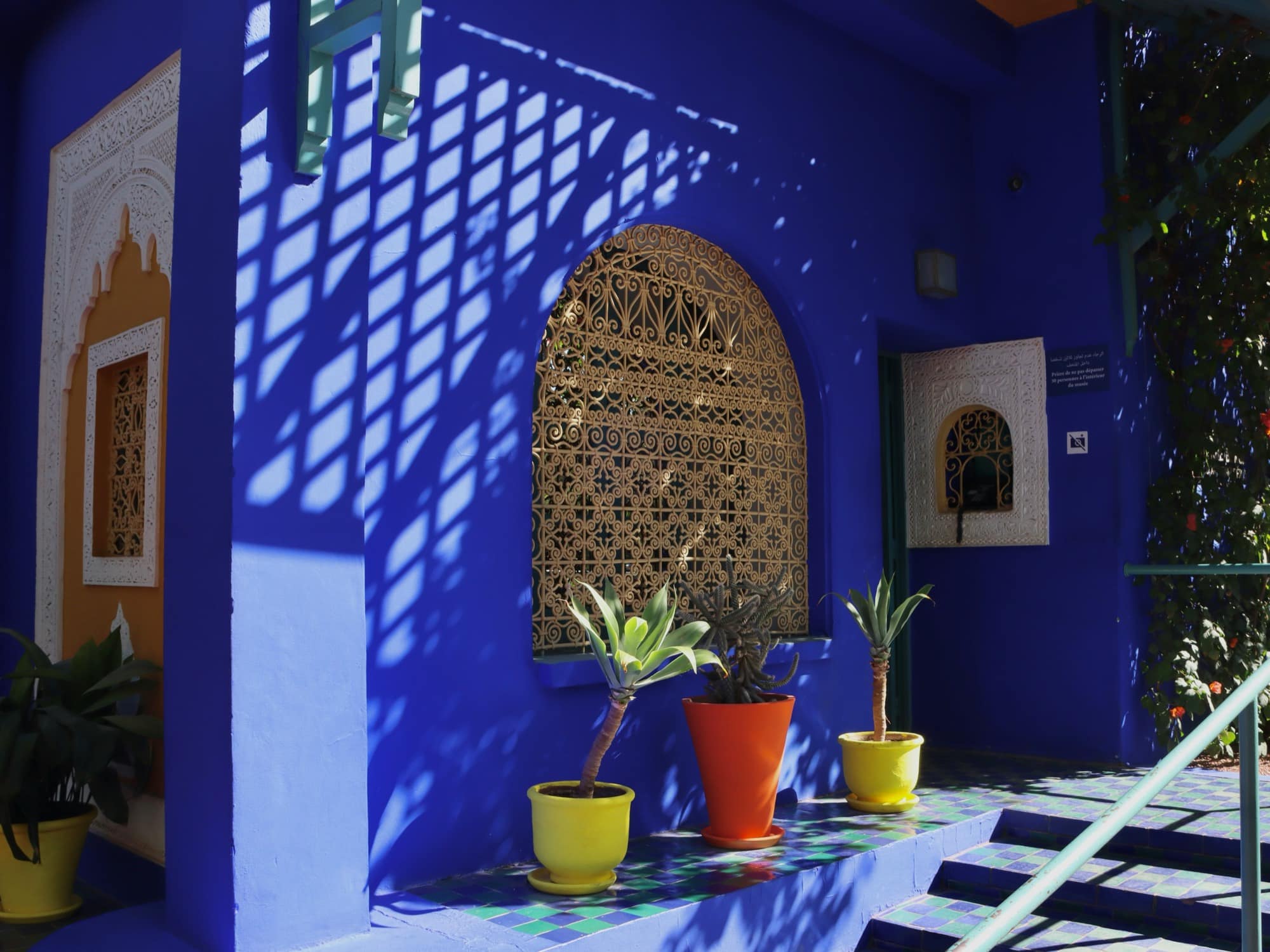
Jacques Majorelle's garden, bought by Yves Saint Laurent: bamboo, cactus and that cobalt blue that carries his name.
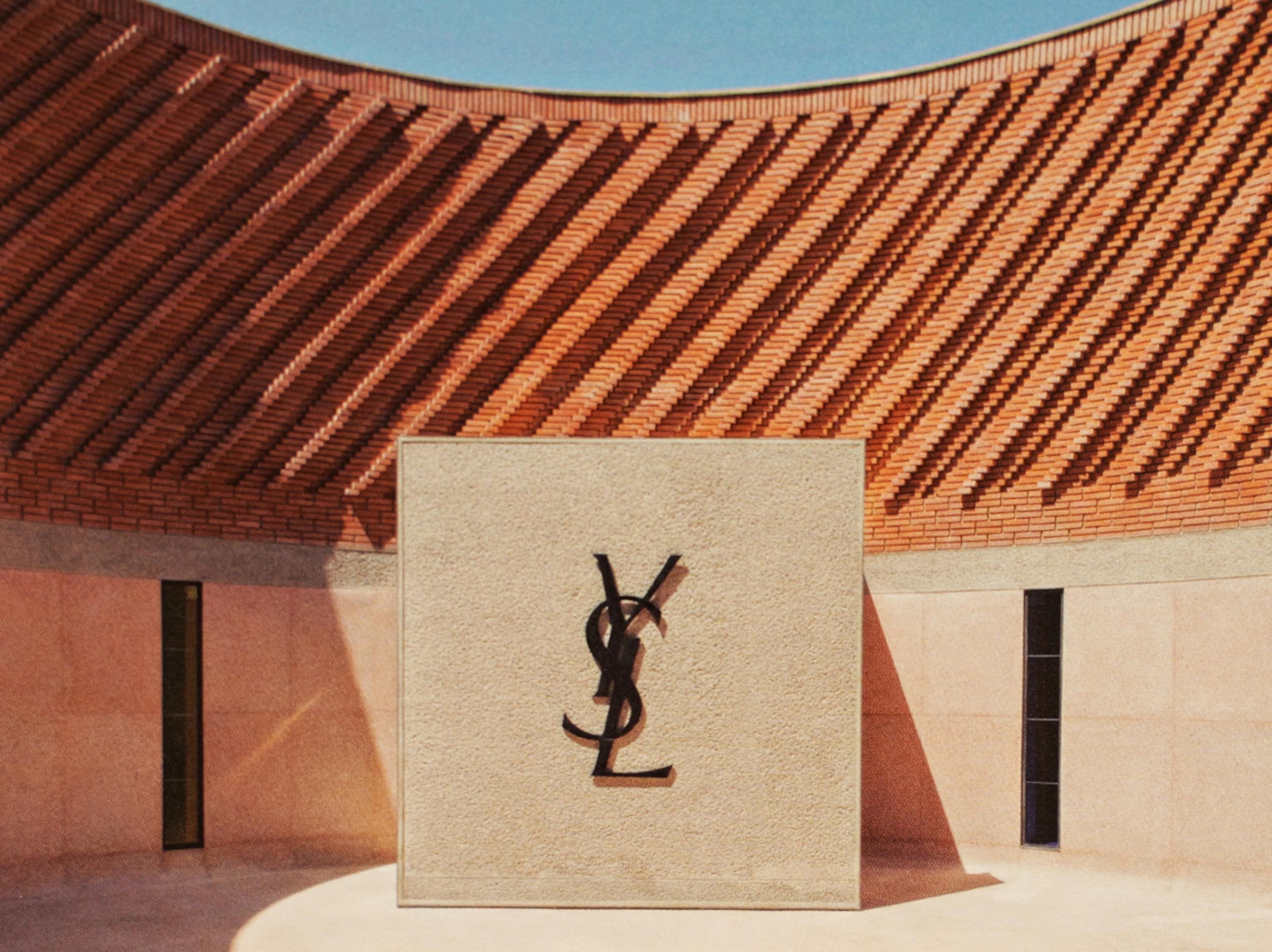
The Yves Saint Laurent Museum
A terracotta brick façade next to the Jardin Majorelle, tracing the couturier's work.
The avenues and Art deco
Henri Prost's 1910s-30s plan: wide avenues, geometric façades, ironwork and terraces.
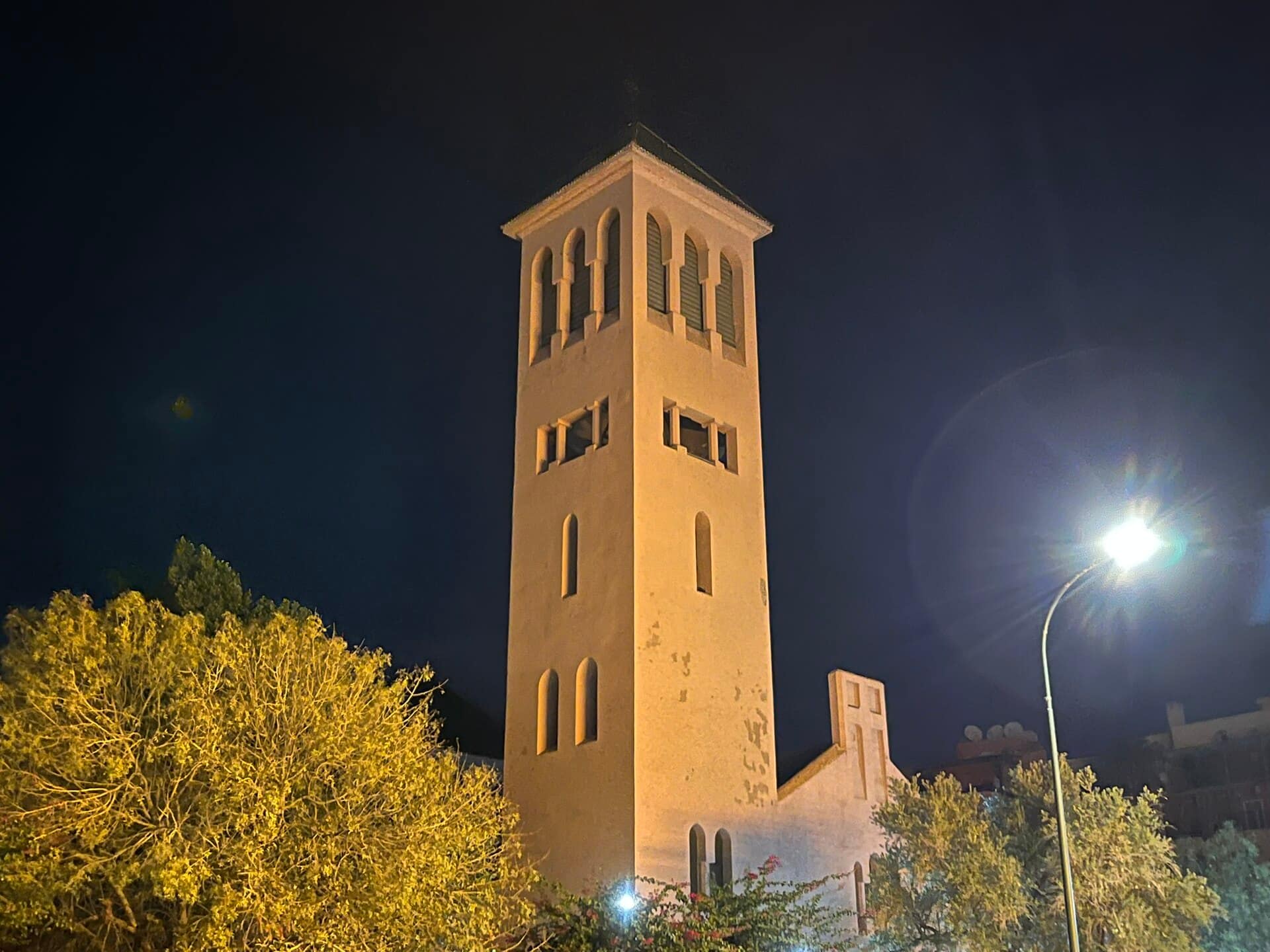
The Church of the Holy Martyrs
The new town's Catholic church (1920s-30s) and its tall campanile, a neighbourhood landmark.
Get your bearings
Everything is on foot, a few minutes from one point to the next.
In pictures
The best photo spots
Between gardens, brick and 1930s façades: Guéliz photographs differently from the medina.
Majorelle blue
The cobalt blue of the walls and pots against the green of the cactus. Come at opening to have it almost to yourself.
The brick façade
The play of terracotta bricks, and the YSL logo in the inner court.
Art deco
Geometric façades, wrought-iron balconies and 1930s signs.
Guided walks & experiences
Le quartier se découvre librement. Mais un guide ou un food tour en révèle l'histoire et les bonnes adresses.
Electric bike city tour
Cocktail tasting (mixology) and Moroccan tapas
Off-the-usual-route private sidecar
Booking via GetYourGuide, our ticket partner. Indicative prices; we may earn a commission, at no extra cost to you.
On the ground
Where to take a break without leaving the neighbourhood.
Visitor tips
- Book the Jardin Majorelle and the Yves Saint Laurent Museum in advance and go early: the queue grows fast.
- The galleries cluster around Rue de la Liberté - entry usually free.
- Guéliz comes into its own late in the day: terraces, dinner, going out.
- On foot, reckon on a quarter of an hour from Jemaa el-Fna along Avenue Mohammed V, or take a petit taxi.