Souk Cherratine
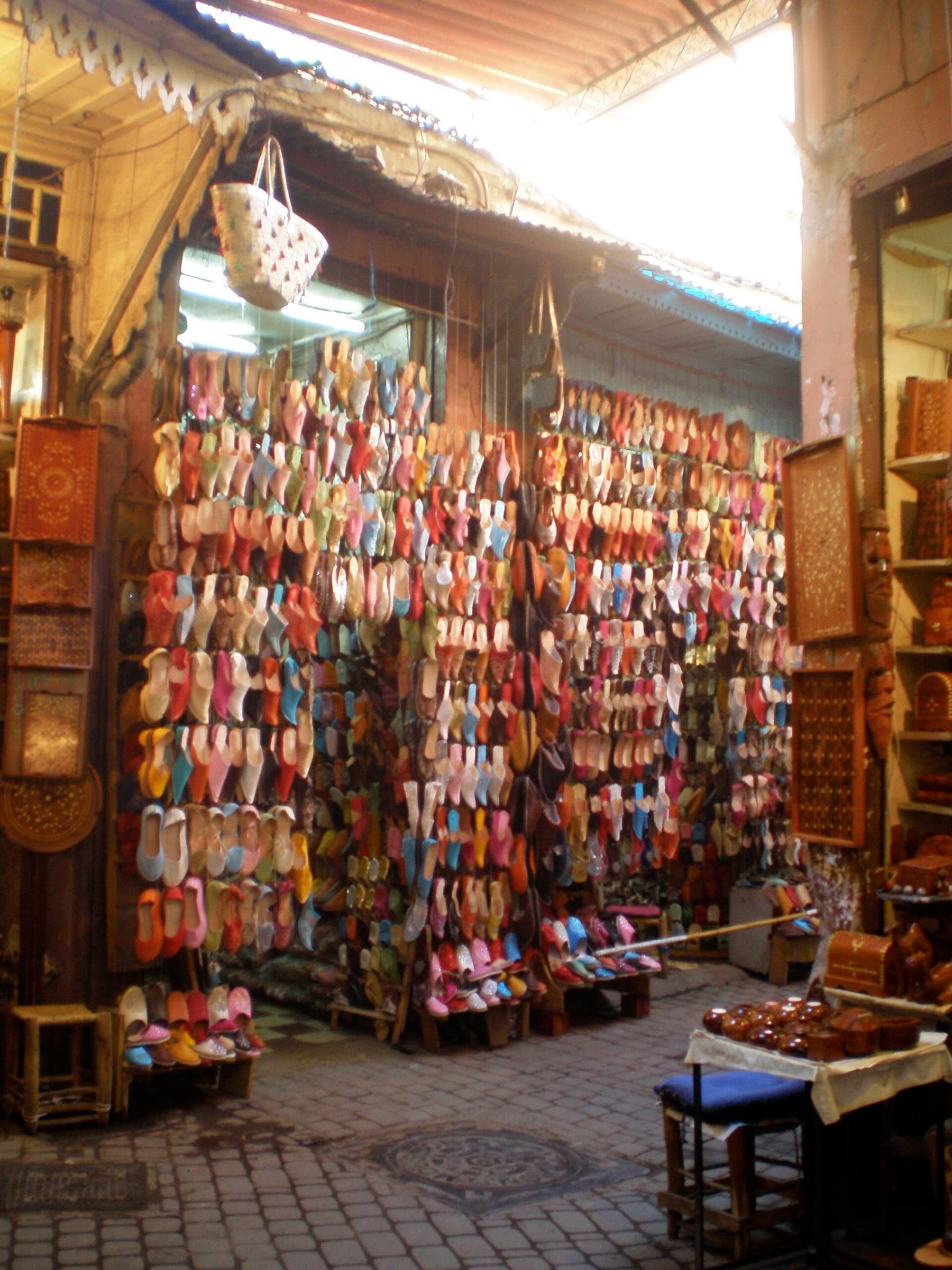
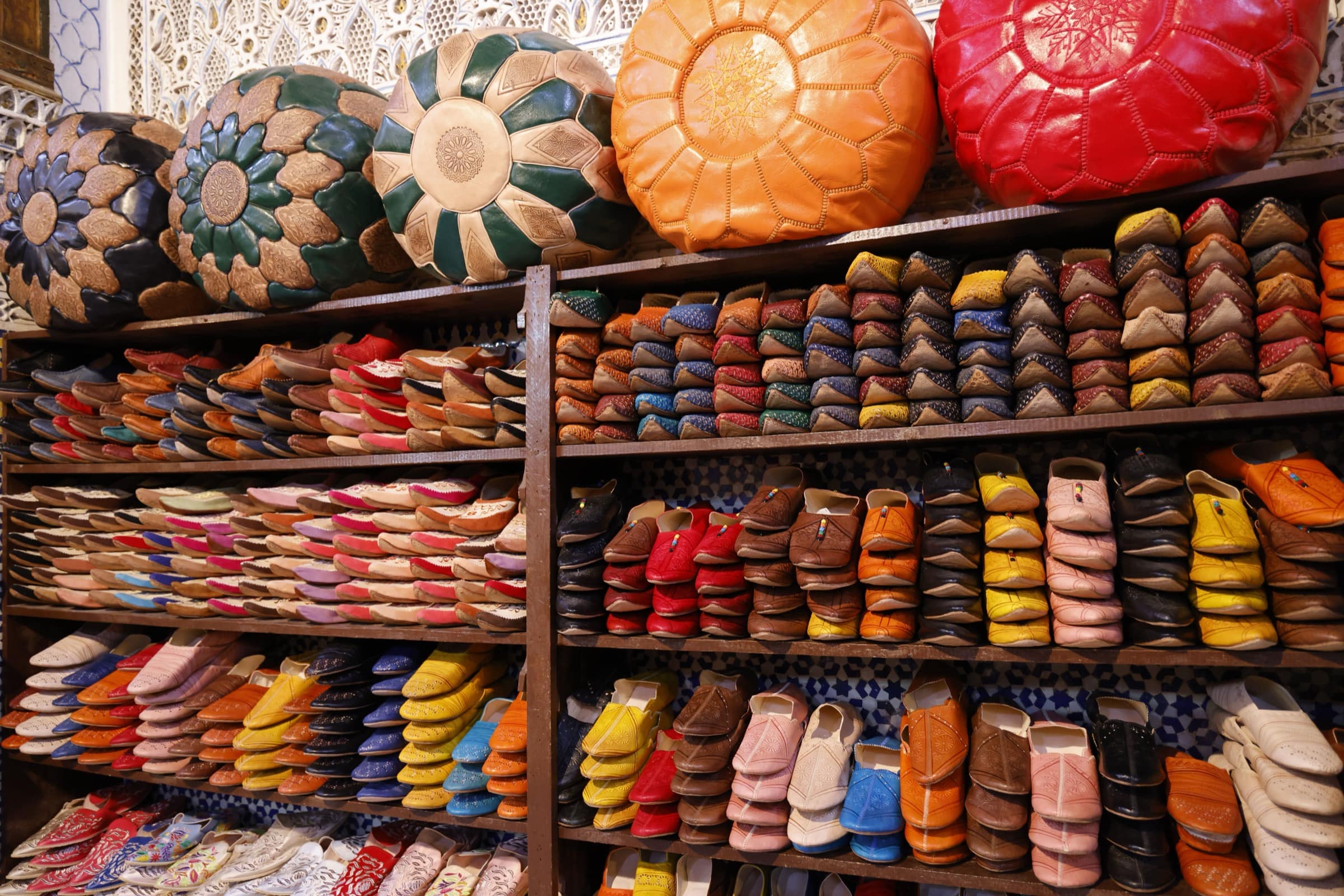
The souk where the tanners' leather becomes object: bags, belts, poufs, babouches and saddles, cut and stitched in front of the customer. Quieter and cleaner than the tanneries (no smell). A good place to buy leather while seeing who works it - as long as you bargain and check the finish.
History & context
Souk Cherratine is the worked-leather souk, downstream of the Bab Debbagh tanneries. The leather arrives here already tanned and dyed, to be cut, stitched and shaped in the shops. Bags, belts, poufs, wallets, babouches and, more traditionally, saddles and harnesses are made on site.
It is one of the liveliest trade souks, and one of the more pleasant. You buy leather while seeing who works it, without the smell of the vats. Quality varies from shop to shop - hence the point of checking the finish before you buy, and bargaining.
Where the tanners’ leather becomes bag, belt or pouf - in front of you, and without the smell.
What to see - the highlights
The makers at work
Cutting, stitching and dyeing the leather in the shop itself: you buy while watching it made.
Bags, poufs and belts
Everyday leatherwork - bags, belts, poufs, wallets - in goat and sheep leather.
The saddlery
Saddles, straps and harnesses: the traditional side of the trade, still there.
When to go
The makers are at work. That is the point of the souk.
Some shops shut for a while in early afternoon.
Covered, sheltered souk.
Visitor tips
During the day, when the makers work the leather.
Buying without checking. Look at the stitching and the smell of the leather (real leather vs. synthetic).
- This is downstream of the tanneries. You buy finished leather without the smell of the vats.
- Bargain, and check stitching, lining and suppleness before paying.
- Close to the babouche souk. Combine the two to compare.
Location & access
Inside the souk network, north of Place Rahba Kedima, towards the Ben Youssef district. On foot only. Ask for 'Cherratine'.