Safety and health in Marrakech
Is Marrakech dangerous? Short answer: no. The city is broadly safe. The annoyances are scams and pressure to buy, not violence. Here's what to know, without drama or gloss - scams, solo women, night hours, the water, emergency numbers and where to seek treatment.
Is Marrakech dangerous?
To cut the worry short: no, Marrakech isn't a dangerous city. Morocco is stable and violent crime against tourists is rare. What you actually face, especially in the medina, is commercial pressure and a handful of well-worn scams: someone will try to sell to you, guide you or charge you for a service you didn't ask for, rarely to harm you.
The reflex to cultivate is composure. A visitor who knows the classic tricks, says no clearly and keeps their belongings close has a quiet trip.
The most common scams
They're few and always the same. Knowing them defuses them:
- The unofficial guide. Someone 'shows you the way' in the medina, then demands a sometimes hefty payment. Don't follow anyone you didn't ask for.
- 'This street is closed.' A passer-by says a street, square or monument is closed, to divert you towards a shop or a tannery where they get a commission. Check for yourself.
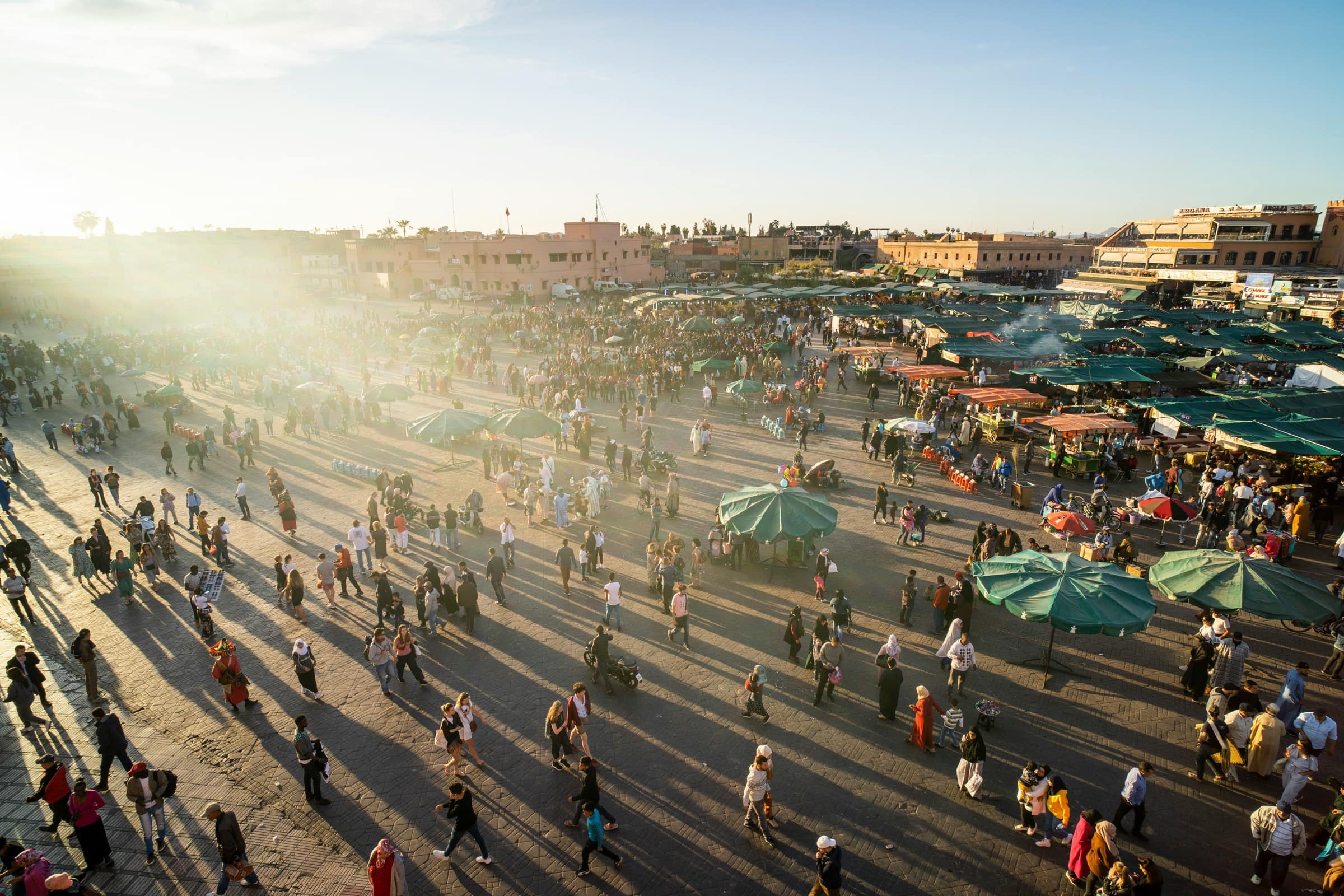
- Forced henna. Around Jemaa el-Fna, women grab your hand, apply henna and then demand payment. Keep your hands to yourself.
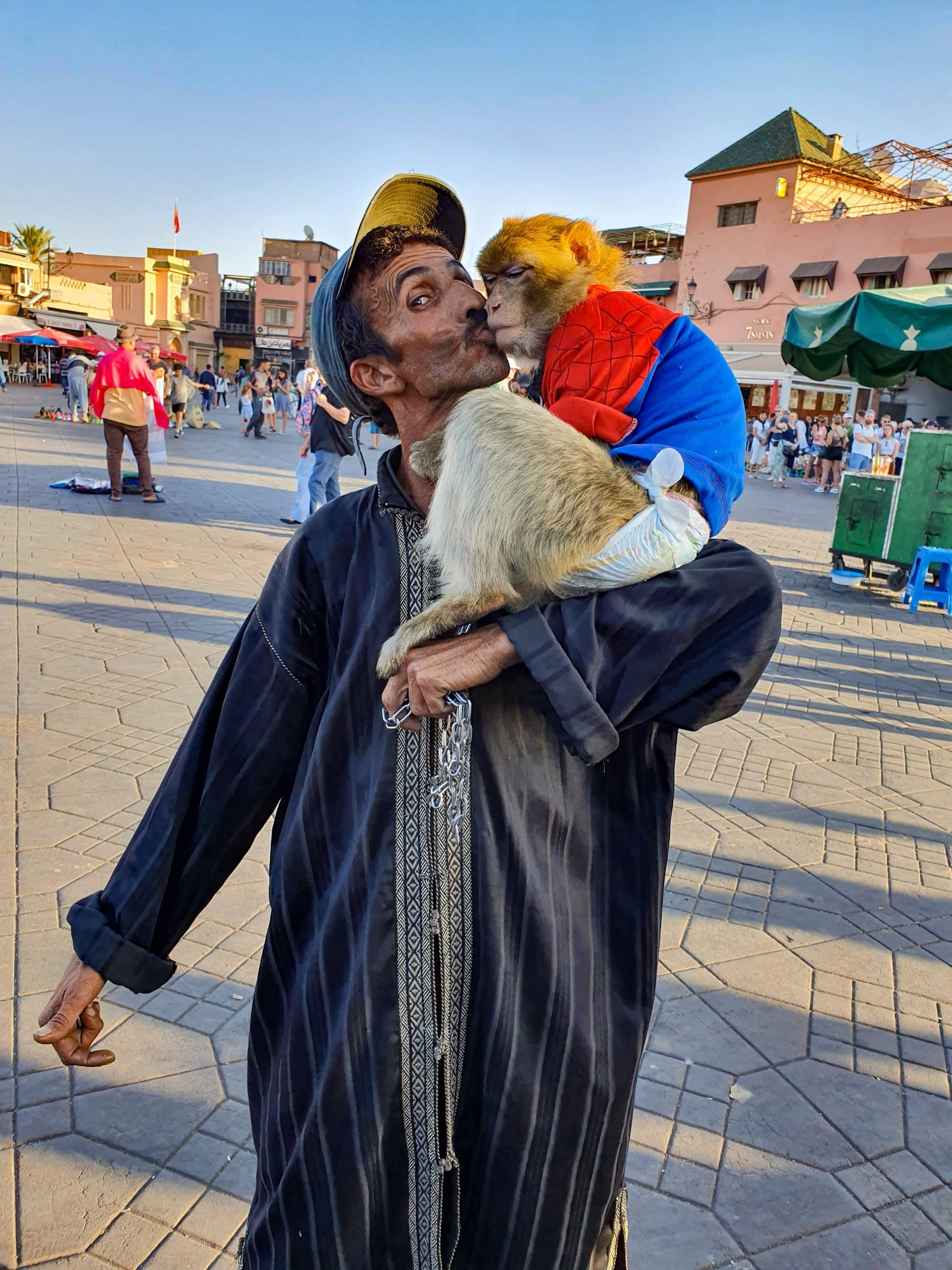
- The 'souvenir' photo. A costumed monkey or a snake is put on you, the pose is taken, then payment is demanded. Refuse before any contact.
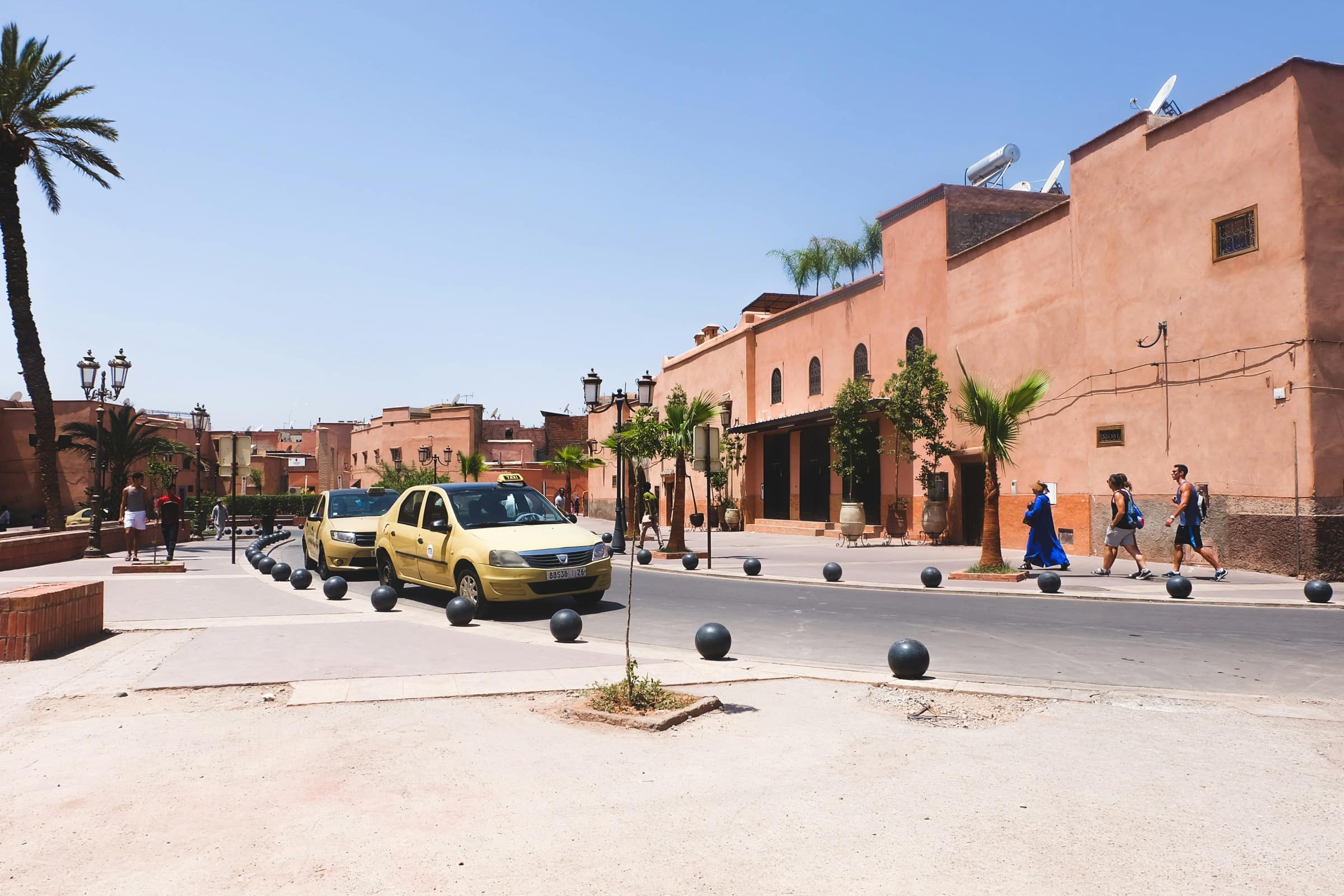
- The meter-less taxi. Inflated fare, 'broken' meter: a classic covered on our taxi page.
- The ATM DCC trick. When you withdraw, refuse the 'in your own currency' conversion on the screen - the rate is always worse than your UK card's native rate.
'La, shukran' means 'no, thank you'. Said calmly but firmly, without stopping or engaging in conversation, it defuses the great majority of approaches. A smile, a clear no, and you keep walking: the pressure almost always drops off.
Travelling solo as a woman
Marrakech is safe for solo women travellers, as long as you anticipate a real but rarely threatening annoyance: verbal harassment. Comments, whistles, insistent conversation attempts are more common in the medina alleys off the main routes, much less so in Guéliz during the day.
A few reflexes help space them out: a covering outfit for shoulders and knees, avoid very tight clothes, ignore without engaging and a firm 'La, shukran'. At night, take a taxi ordered by the riad or via an app rather than walking the empty derbs. Sunglasses and headphones also help cut things short. None of this stops you enjoying the city: it's about defusing, not barricading yourself in.
At night
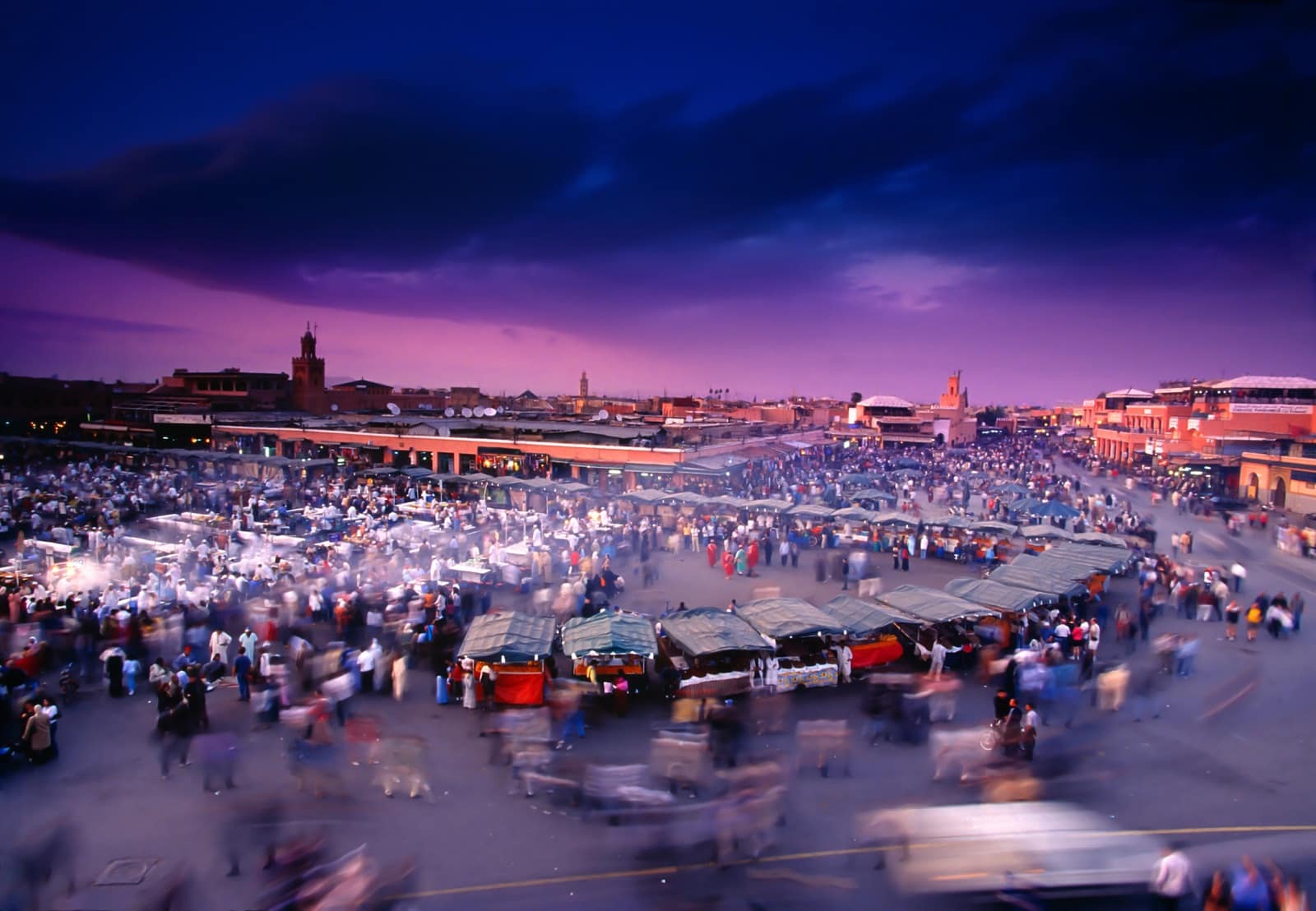
The heart of the city doesn't switch off: Jemaa el-Fna stays lively late, well-lit and busy, with no particular danger in the middle of the crowd. The contrast is in the medina alleys: past 10pm, the derbs off the main routes turn dark, quiet and empty - more a feeling of isolation than an actual danger, but unpleasant, especially alone.
The rule is simple: stay on lit and busy routes, and to reach a riad tucked in the alleys, call a taxi or take an escort rather than find your way at night. Keep your route open on your phone and your accommodation's number to hand.
Where you're most at ease
The level of pressure varies a lot between neighbourhoods. The medina concentrates the bustle, the souks and therefore the touts. It's where you keep the sharpest eye. By contrast, Guéliz and Hivernage, the modern town, are calm, airy, with avenues, cafés and very little sales pressure. Many visitors like to alternate: the buzz of the medina by day, the quiet of the new town in the evening.
Emergency numbers to save
Health: water and traveller's diarrhoea
The main health concern in Marrakech isn't serious, but it's common: traveller's diarrhoea. It's avoided mainly through the water. Never drink tap water, even to brush your teeth. Sealed bottled water only, and no ice cubes - they're often made from tap water.
In the first few days, while you settle in, avoid unpeeled raw vegetables and warm food left standing. Bring oral rehydration sachets and hand sanitiser from a UK Boots or Superdrug, and wash your hands before eating. Jemaa el-Fna street food is safe if you pick a very busy stall where turnover is fast.
If something medical goes wrong
From May to September, Marrakech regularly tops 40°C. Heat stroke and dehydration are more likely than any scam, especially for children and older visitors. Drink plenty, cover your head, dodge the sun in the hot hours (1pm-5pm) and time visits for early morning or the end of the day.
The essentials