Marrakech in winter, the light that changes everything
Through the seasons
A Tuesday in January at two in the afternoon, the sun falls almost vertically onto the square, one notch more grazing than at the same time in July. The Atlas is white to the south, the Koutoubia catches fire, the bougainvilleas still hold. Marrakech in winter has its own light, its own rhythm, its own geography. Here is what I do there and what I unlearn each year.
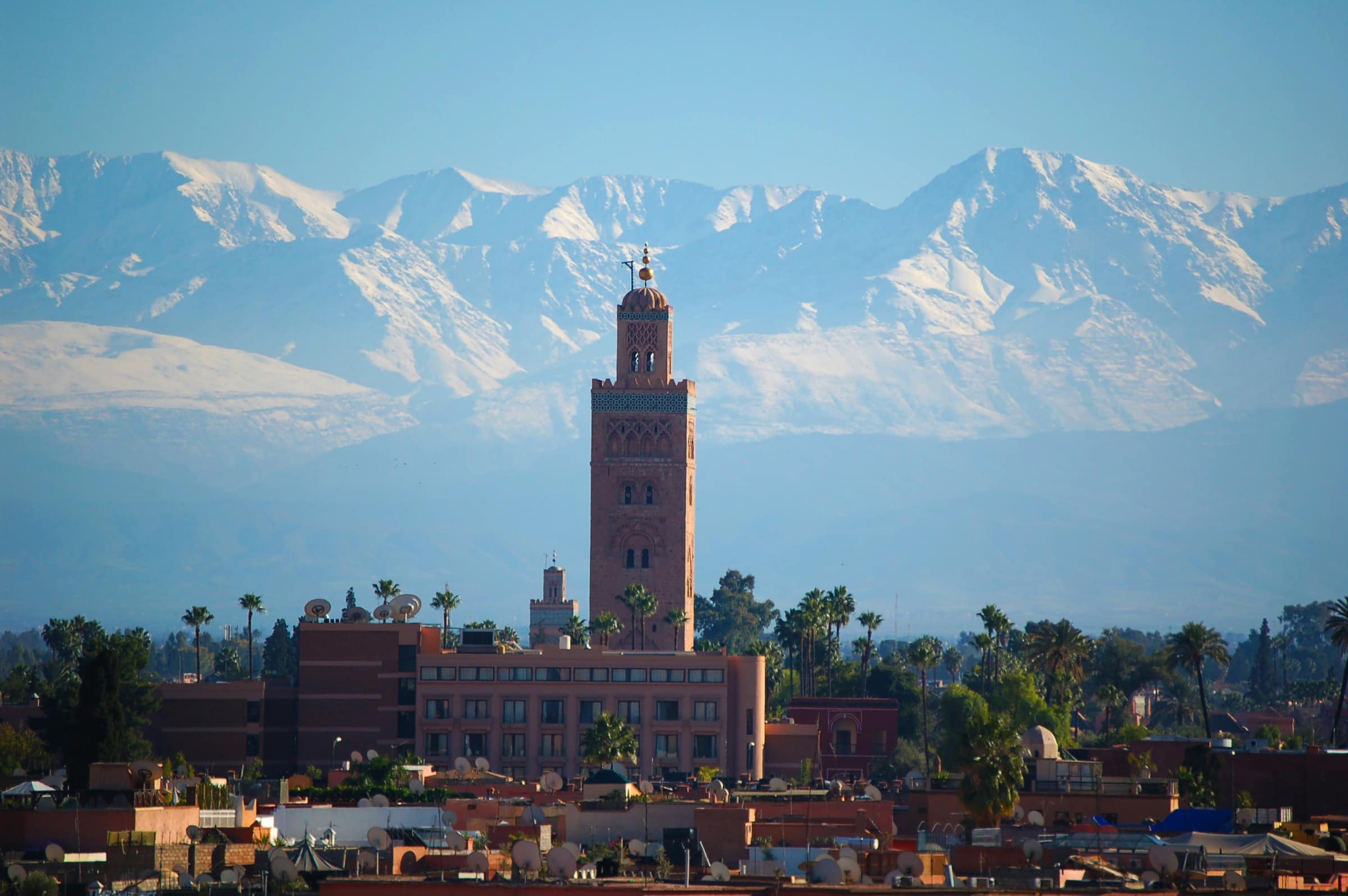
It is two in the afternoon, a Tuesday in January. On Jemaa el-Fna square, the sun falls almost vertically, one notch more grazing than at the same time in July but with an intensity that still surprises. I am wearing a pullover, jacket over my arm. At the next table, a European couple has left their coat inside. The Koutoubia catches orange fire to my right, the white line of the Atlas closes off the horizon to the south - I can count the ridges one by one. It will be 8°C in two hours and I will have put the coat back on. Marrakech in winter has a light, a rhythm and a geography of its own.
What to unlearn about Marrakech winter
Three images circulate that make you miss the season.
No, the orange trees are not in bloom in January. The fantasy of “Marrakech with orange blossom in winter” is real, but a month and a half off. In December-January, the bitter orange trees lining Mohammed VI avenue carry their fruits, not their flowers. The bitter oranges hang visibly on the trees, they end up in marmalades or in the orange-blossom distilleries around Kelâa des Sraghna and Sefrou. Bloom comes in late February-March, with its trademark scent of neroli that fills avenues and gardens - but it is nearly spring by then.
No, it is not the dry season. The Marrakchi winter concentrates almost half the yearly rainfall: 30 mm in January, 38 mm in February (the wettest month with November). Rarely more than five rainy days a month, but showers come in short intense episodes, cut ravines in the unpaved streets of the Palmeraie, fill the waterfalls of Setti Fatma and Ouzoud. After the rain, the light is at its maximum.
No, it does not snow in Marrakech. The town’s absolute cold record is -2.9°C, on 26 January 2005. Ground frost is documented occasionally on the agricultural fringe (Palmeraie, Agdal), but the town itself rarely freezes. Snow, on the other hand, falls to the south on the Atlas, never on the Haouz plain.
What is true, on the other hand: a 12 to 14°C temperature swing between first light and early afternoon, one of the best winter-sun ratios in North Africa with 7 to 8 hours of sun a day on average, and the snow-capped Atlas visible every clear morning.
The light, the real asset
Marrakech in winter is a story about light. The sun low in the sky, angled, carves ochre facades into contrasted slices that the summer zenith flattens. Riad patios are actually liveable through to two in the afternoon, before the north-wall shade eats half the basin. The Koutoubia at seven-thirty, with the south-east sun catching it slantwise, is a different painting every morning.
The spots I aim for in this light:
- The northern ramparts, between Bab Doukkala and Bab el-Khemis, at eight - the red pisé wall carves out the white Atlas at the back, spectacular backlighting
- Medina rooftops at three in the afternoon, from a rooftop terrace, when the light grazes and picks every terrace step out
- The Menara basin in late afternoon, when the bare olive grove lets the Toubkal reflection into the water
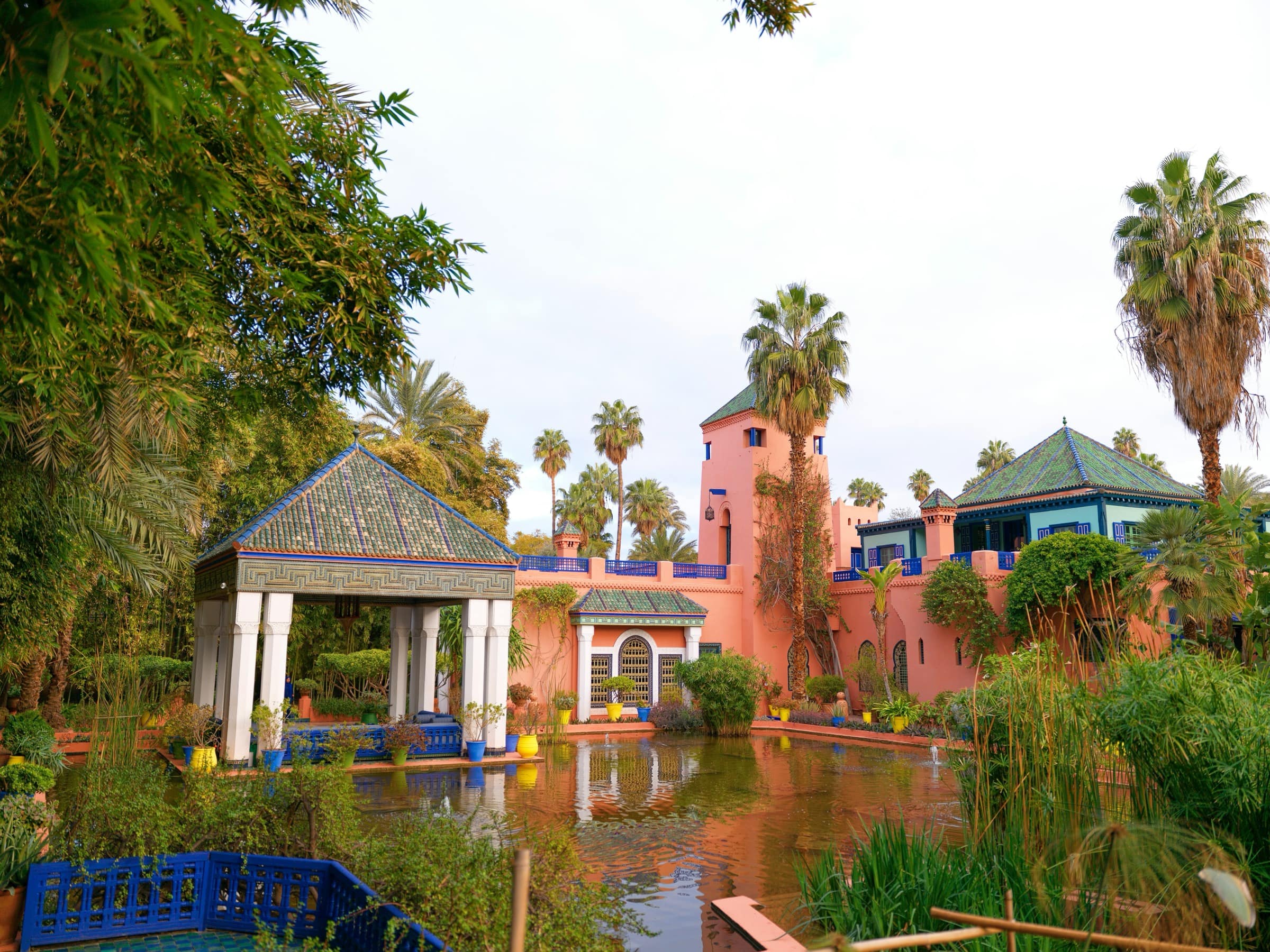
- Jardin Majorelle around ten, when the cobalt still catches the grazing light before the queue saturates the paths
To dig into these winter light windows, I laid them out in detail in Photographing Marrakech, field notes.
The white Atlas from the ramparts
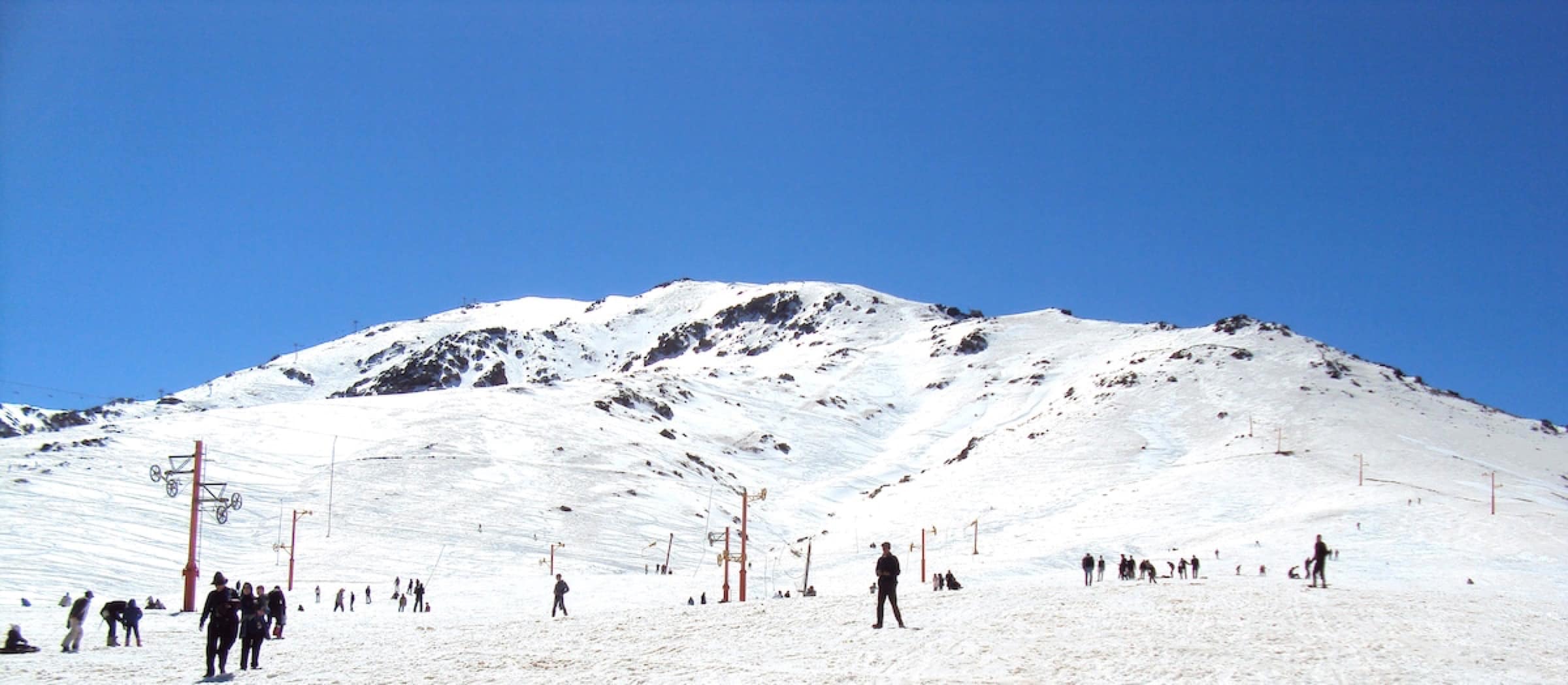
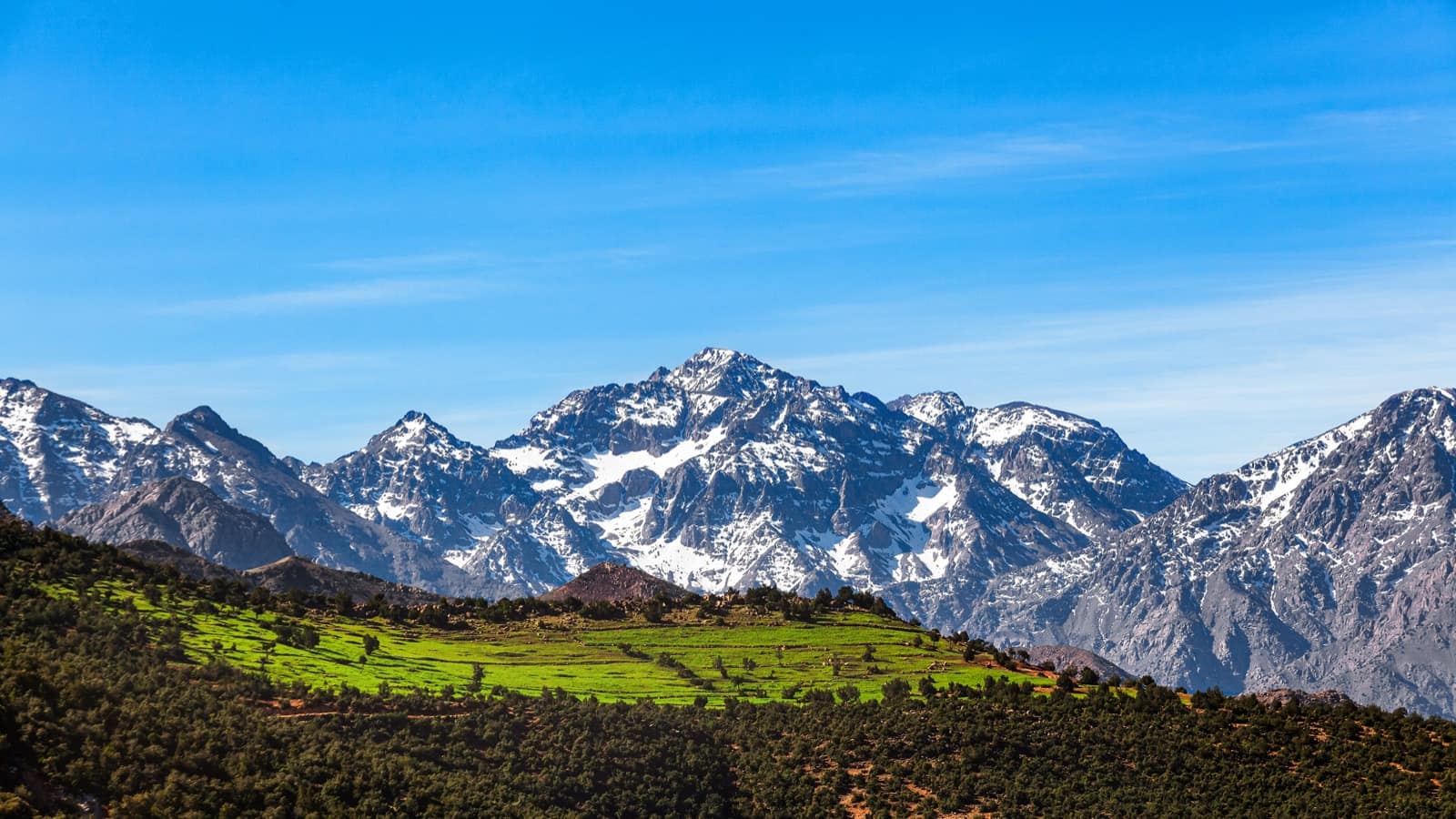
That is the second thing winter really changes: the physical presence of the mountain. Toubkal, at 4,167 metres, keeps its white cap from late November to May in an average year. From the northern ramparts or the top of the Koutoubia, I see the white ridge line less than 80 kilometres away as the crow flies. It is not a decorative postcard - the snow up there is real, it feeds the waterfalls of the day trips, it supplies the khettaras that still run at the medina fountains.
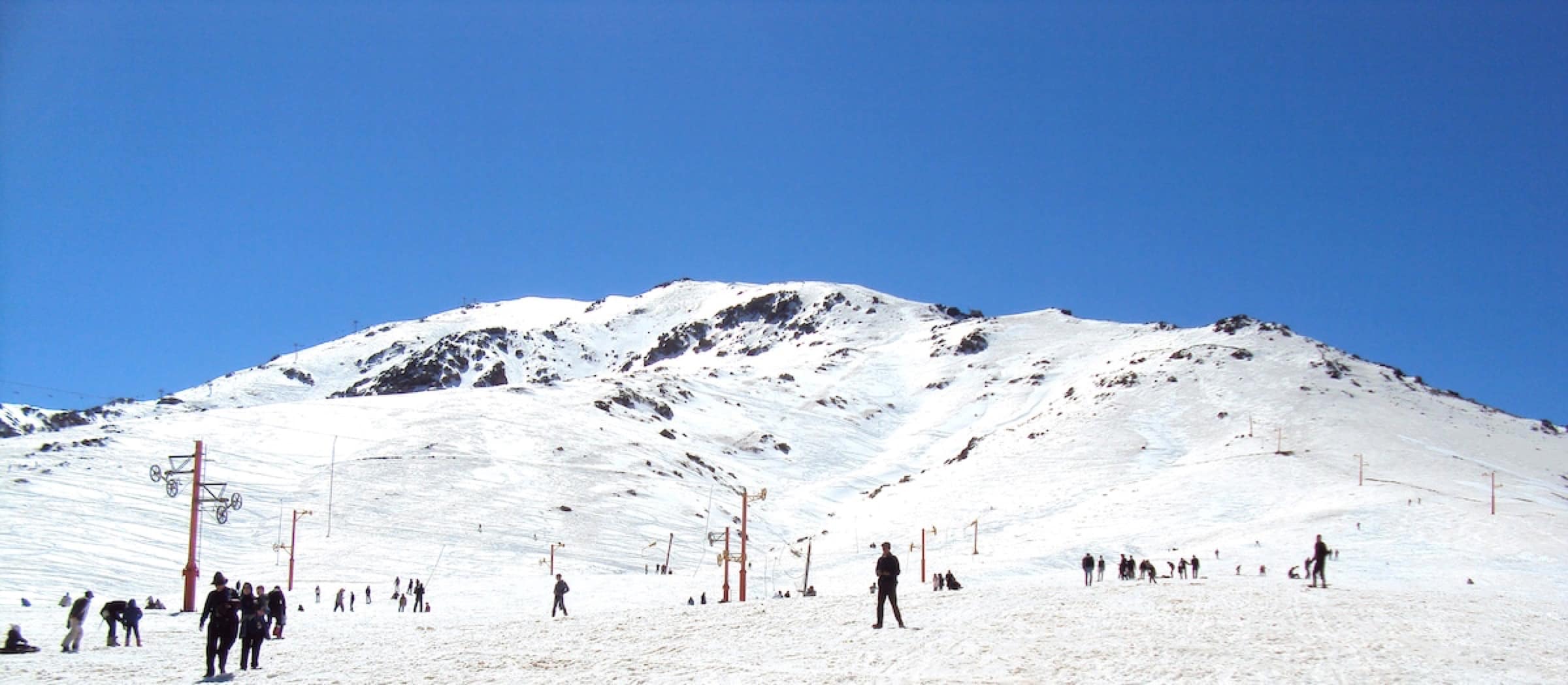
Oukaïmeden, at 78 kilometres and 1h 30m of road, is the highest ski station in Africa (2,620 m at the village, chairlift to around 3,260 m). Its usual season runs from mid-December to mid-March, but the trend has been degraded since 2018: warming and drought, late and poor 2024-2025 season. You have to check the real-time snow report before going up. With no snow, the day stays fine: hike to the djebel summit, Bronze Age rock engravings, mountain biking.
The other day trips at their best:
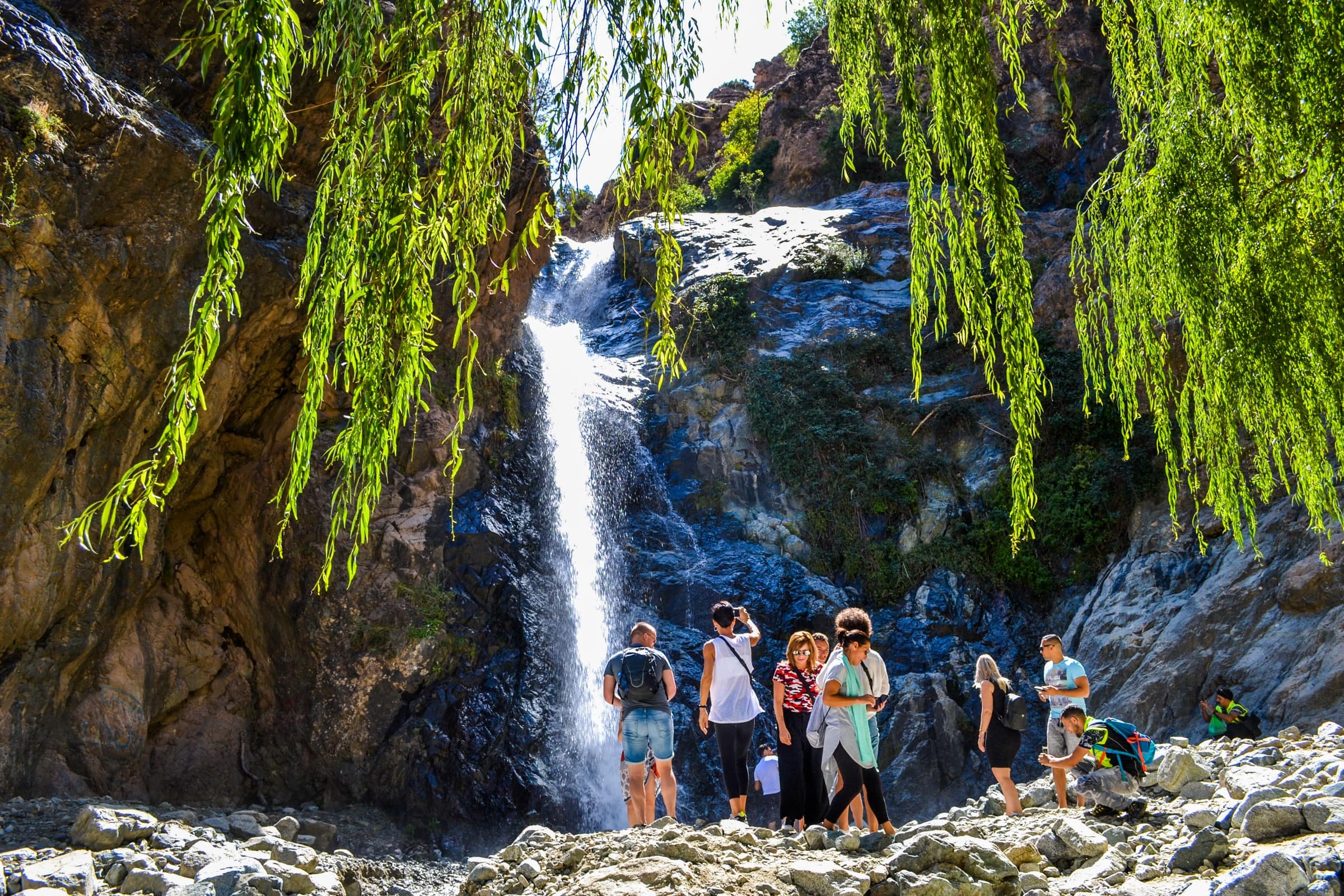
- Ourika valley, one hour south by road, Setti Fatma waterfalls at their best flow thanks to melt and winter rain.
- Ouzoud waterfalls, 2h 30m to the north-east, peak flow from December to March.
- Agafay desert, 30 minutes only, but daytime only - tented nights drop to 10°C, bivouacs are uncomfortable without heating.
A two-speed season on prices
Marrakech winter is not a uniform season on prices. You have to read it in three blocks.
Christmas and New Year (20 December - 3 January). The absolute annual peak, pricier than Easter or October. Palaces impose minimum stays of 4 to 7 nights, medina riads refuse short bookings, flights from Europe explode. Those bound by these dates have no negotiating margin.
Mid-January to mid-February. The real slack. That is the window I recommend systematically to anyone not tied to the school calendar. Medina riads down 30 to 40% on Easter. Palaces down more modestly, around 15 to 20%, because golf and long-stay clientele holds winter demand. Quiet souks, relaxed haggling, restaurant tables available without booking, except for the flagship fine-dining rooms.
Ramadan sliding through winter. The Hegira lunar calendar moves forward by about eleven days a year in the Gregorian one. Over 2025-2027 Ramadan falls in February-March and therefore overlaps the tail of the winter tourist season. From 2028 it slides into January-February, then into January alone around 2030. Concrete impact: medina restaurants often closed during the day, on the other hand a lively night mood after ftour, souks at half speed in the afternoon.
The riad: heating and shared spaces, the real trap
A fine summer riad can turn into a winter ordeal if the owner has not anticipated it.
The patio, heart of the problem. The central patio of a traditional riad is an impluvium open to the sky - that is what makes summer bearable in the medina, and it is what makes winter tough. Open, or covered with a single fixed uninsulated skylight, it stays at outside temperature. At six in the morning in January, crossing the patio in pyjamas to reach the dining room takes 5°C to your face. That is the first reflex to build in on the ground.
Shared spaces, the real indicator. The room is almost always equipped with an oil-filled radiator or a reversible split unit - the heat comes up in ten or twenty minutes. The problem is the grand reception salon, the shared dining room, the riad library: often on a mezzanine open onto the patio or under a poorly insulated skylight. A good winter riad heats those spaces, not just the bedrooms.
What I check before booking in January:
- An insulating skylight closed over the patio well (covers the patio, blocks cold-air circulation)
- Effective heating in shared spaces, not just in the rooms
- A functional fireplace in the salon (olive or eucalyptus wood), that you can light in late afternoon
- Heavy bed linen: thick duvet, throw, hot-water bottle if the place offers one
- The ability to have breakfast served in the room rather than in a cold shared dining room
One simple criterion on the phone before booking: I ask if the riad heats the shared salon and the breakfast room. The answer is telling.
What I do in winter, counter-rhythm to summer
The rhythm inversion is total compared with summer.
| Summer rhythm | Winter rhythm | Where | Detail |
|---|---|---|---|
| Flee the rooftop at midday | Rooftop in full sun 12-3pm | Nomad, Kabana, Terrasse des Épices | Perfect inversion, almost deserted in the evening |
| Hammam for acclimatisation | Hammam in real peak season | Mouassine, palaces | The body calls for heat |
| Souks at dawn or evening | Relaxed souks all morning | Sémarine, Rahba, Cherratine | Softer prices late January |
| Pool | Waterfalls at their best | Ourika, Ouzoud | Peak flow, strong light |
| Agafay tented night | Agafay day only | 30 min south | Nights at 10°C uncomfortable |
| Cool evening dinner terrace | Fireside salon | Heated riad | The real winter pleasure |
Events. The Marrakech International Marathon runs on the last Sunday of January, one of the fixed dates on the Moroccan sporting calendar. The palaces (La Mamounia, Royal Mansour, Selman) put on their Christmas and New Year receptions with gala dinner, show and fireworks - to book several months ahead. Outside the palaces, the town does not publicly celebrate Christmas: no market, no decorations in public space, this is a Muslim country. The end-of-year mood plays out indoors in riads and hotels.
Hot drinks I order. Mint tea takes a verbena addition in winter, softer at wake-up. Harira, chickpea-lentil-tomato soup, is served in every popular canteen and is worth a cold-morning breakfast, before even moving on to a msemen. Some upscale rooftops now serve seasonal mulled wines and smoked teas - a recent convention rather than a tradition, and a welcome one.
What I do systematically in winter
To take it further
- For the factual month-by-month with dated events: Marrakech in December, in January, in February.
- For the ski station listing and its alternatives: Oukaïmeden.
- For the Ourika valley and Setti Fatma: village listing.
- For the full seasonal arbitrage: Best time to visit guide.
- For the absolute seasonal counterpoint: Marrakech in summer, surviving 45°C.