The forgotten coast: Oualidia, Safi, and why nobody goes
Inspiration
Everyone leaves Marrakech heading west, towards Essaouira. Almost nobody drives north. Yet up there sits a lagoon of international importance, the capital of Moroccan oyster farming, and a town of potters breathing some of the heaviest air in the country. This coast is forgotten for good reasons and bad ones, and that mixture is what makes it worth the drive.
On the westbound road, the one to Essaouira, you pass coaches, shared taxis, French couples in hire cars. On the northbound road you pass almost nothing. Both leave the same city, and the gap in traffic between them has nothing to do with the gap in interest. It comes down to one thing: Essaouira is a destination, and the coast to the north is not. It is a corridor towards Casablanca, and nobody thinks to interrupt it.
I interrupted it in the end. What I found there looks nothing like what usually gets sold under the word coastline, and that is precisely what kept me.
Oualidia, a lagoon that works
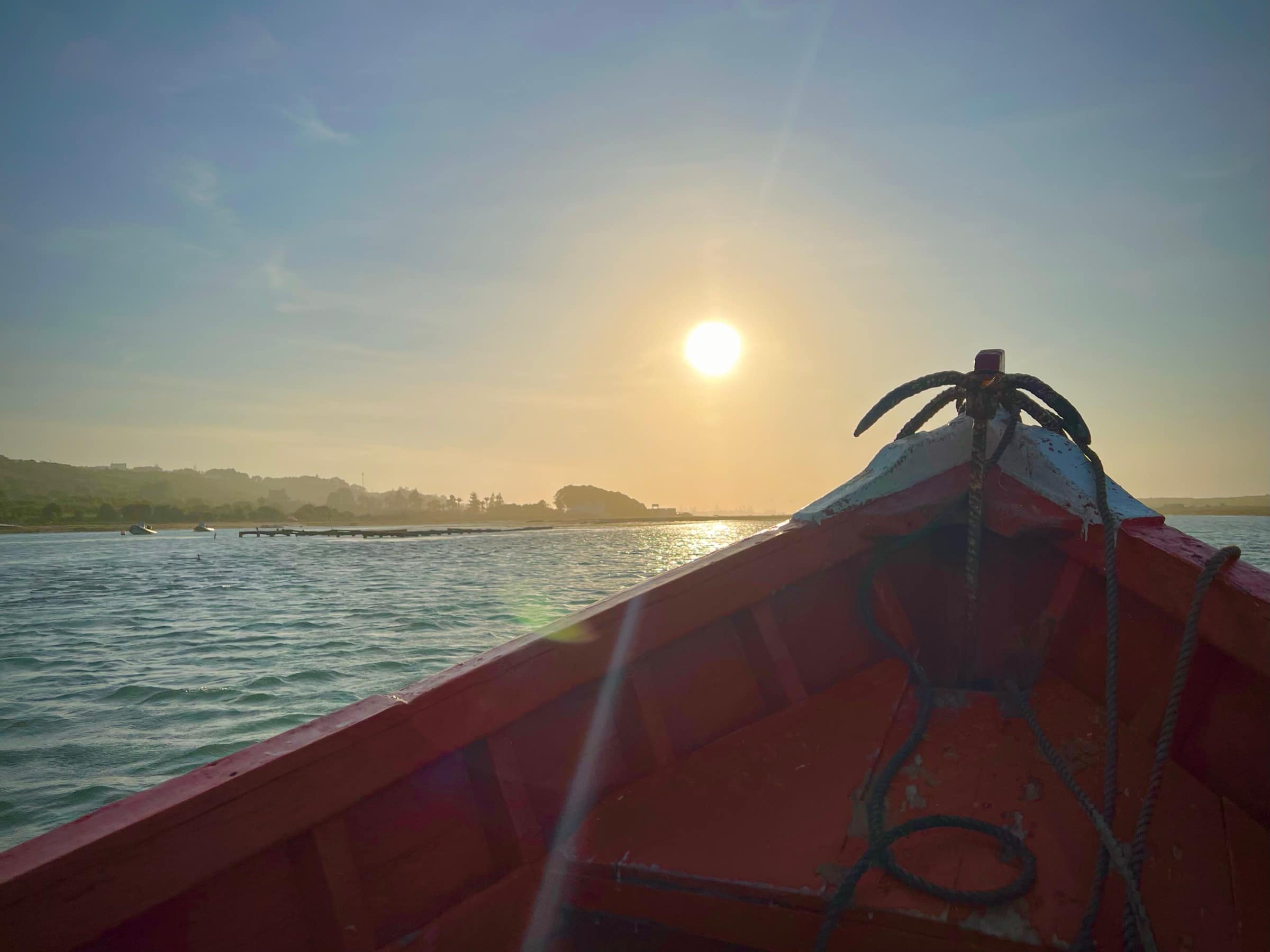
The village wraps around a lagoon closed off by a sand bar, with two channels letting the tide in. This is not scenery: it is a body of water that produces. Seven oyster farms work it, for something in the order of thirty-seven tonnes a year, supplying much of the country with oysters and clams. The tables break the surface at low tide, lined up like rows of vines laid out on water.
The place carries a status few visitors suspect. The lagoon is listed under the Ramsar Convention, and classified a site of biological and ecological interest of the first priority. One hundred and fourteen species of water birds are recorded here, averaging around fifteen thousand three hundred individuals, more than three per cent of every water bird wintering in Morocco. Flamingos are present much of the year, sometimes in their hundreds.
What strikes you, arriving from Marrakech, is the quiet. Not the touristic quiet of somewhere emptied out for the photograph: the quiet of a place where nothing in particular is happening, where families swim in flat water and boats cross at the end of the day. The lagoon is shallow and sheltered, so the water is far gentler than on the open Atlantic beaches. It is one of the few places on this coast where you can swim without fighting the surf.
The catch arrives in summer. An oyster festival is held every July or August, and Moroccan holidaymakers fill the village. The lagoon copes badly with that season, and so does the visitor. If the quiet is the point, come outside it.
Safi, and what the guidebooks leave out
An hour further south, Safi is the opposite of Oualidia: a real town, working hard and showing it.
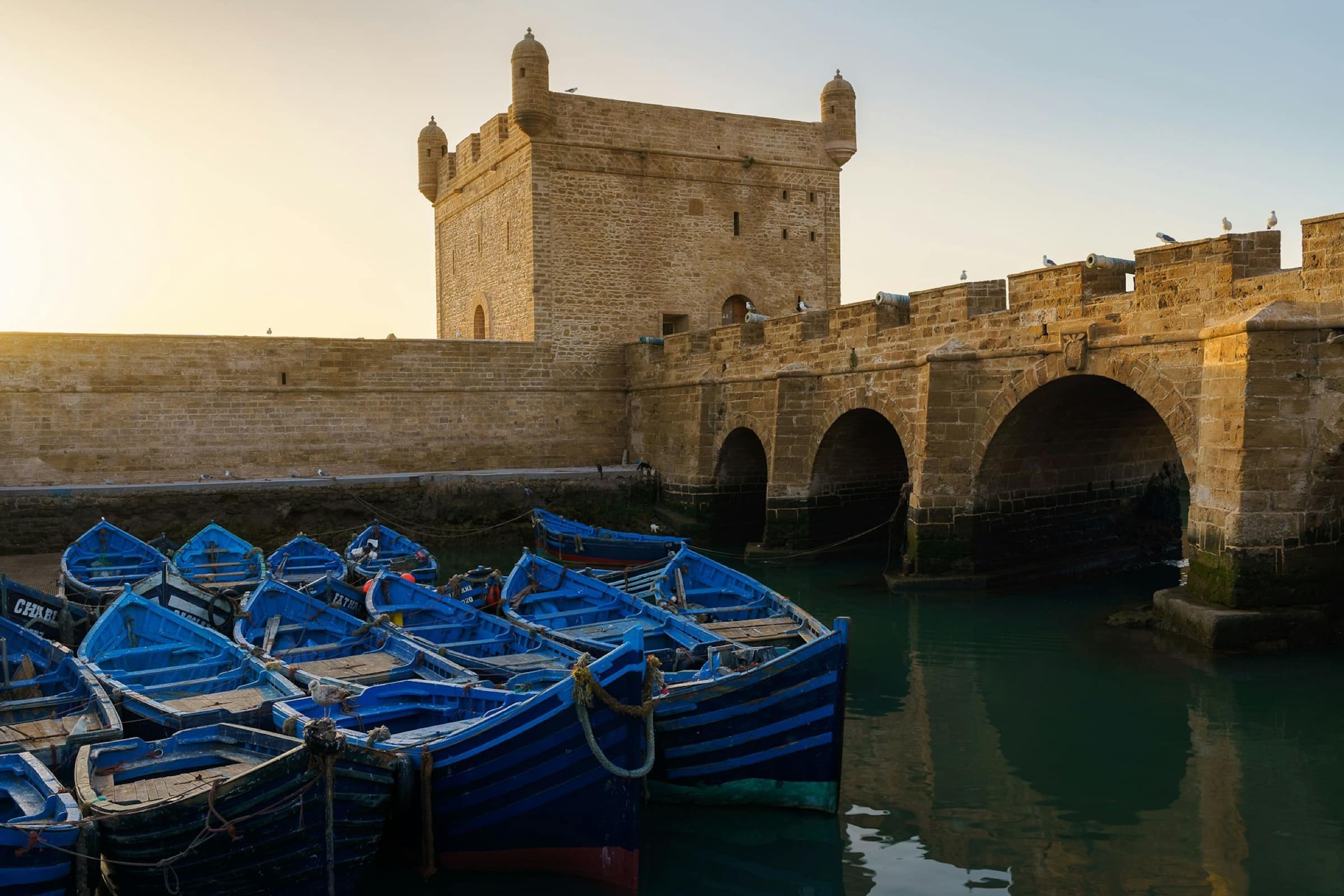
There is plenty to visit. The potters’ hill, near Bab Chaaba, has concentrated the workshops and the kilns for generations, and it is the source of a good share of the ceramics you later buy in the souks of Marrakech. The Portuguese held the town until 1541 and left the Kechla, a sixteenth-century fortress later taken over and enlarged by the sultans, along with Dar el Bahr, the castle of the sea, standing opposite the harbour. And offshore, Ras Lafaa unwinds a long, hollow right-hander that ranks among the best waves in the country.
The rest has to be said. Since 1965 Safi has hosted the OCP group’s first chemical site, processing phosphates from Gantour across Maroc Chimie and the two Maroc Phosphore units. The Mohammedia to Safi corridor carries the highest air pollution levels in the country. The sardine canneries, which made the town and employed thousands, are largely at a standstill, caught between overfishing and discharge. You walk through a town whose historic trade was damaged by the one that replaced it.
I am not setting this out to put anyone off. I am setting it out because an article selling Safi as an undiscovered gem lies by omission, and because the town is more interesting with that layer than with the varnish. The harbour smells of tide and factory, the potters work clay pulled from the surrounding land, and people live an industrial history that Moroccan tourism would rather not mention.
What this coastline is not
It is not an alternative to Essaouira, and pretending otherwise serves nobody. Essaouira has the trade winds, a listed medina and a genuine tourist infrastructure. Oualidia has a lagoon, oysters and a handful of addresses worth the journey in their own right. Safi has a history and an industry. These are three different propositions, not three versions of the same one.
Nor is it a day trip. Three hours to Safi, three and a half to Oualidia: leaving in the morning and returning at night means spending the day on the road for an hour on the ground. This coast takes two or three nights, or none at all. It works well as a break in the middle of a longer trip, or as a stop on a route towards Casablanca.
And comfort is not evenly spread. Oualidia holds few addresses, but they are far from modest: La Sultana, a five-star member of Small Luxury Hotels of the World, lines up twelve rooms above the lagoon, a spa cut into stone and an oyster bar at the end of a pier; Château Eden El Rouh holds the four-star slot on the coast road, with a pronounced wellness leaning; and Villa La Falaise covers the guesthouse end. Lower down the scale, Zina Surf House rents rooms in a family home in the village centre, ten minutes on foot from the beach, at around £35 a night. Few addresses, then, but the range runs the whole way from five-star to family home. Safi is the functional rather than pleasant one, and that is where to lower your expectations.
Who it is worth the detour for
For anyone who simply wants to swim in calm water and eat oysters looking out over the lagoon: that is the most obvious reason to come, and the least often given. For anyone who has already done Marrakech and wants a Morocco beyond the medinas and the Atlas. For birdwatchers, without reservation: few places offer that concentration at such short range. For surfers, Ras Lafaa needs no recommendation from me. And for anyone genuinely interested in craft, seeing the kilns at Safi changes how you hold the pottery you take home: you stop reading it as a souk object and start seeing it as the product of a town.
For a first trip to Morocco, though, no. There is too much elsewhere, and this coast asks you to know what you came for. It belongs to a second or third visit, once the postcard has been ticked off and you want the country behind it.
If you carry on west afterwards, Essaouira remains the easiest stop out of Marrakech and pairs well with this coast on a loop of a few days. And to make sense of what you will see in the workshops at Safi, a pottery session on the Marrakech side gives you the basic gestures before you go and watch people who have held them for thirty years.