One night in a Marrakech palace, in the middle of a riad stay
Practical tips
Three riad nights for one palace night: in Marrakech, that is the real exchange rate between the two worlds. For years I set the question the wrong way round, riad or palace for the whole trip, before working out that it was never which of the two addresses but how many nights in each. Here is what the single night buys, and the three cases where it buys nothing.
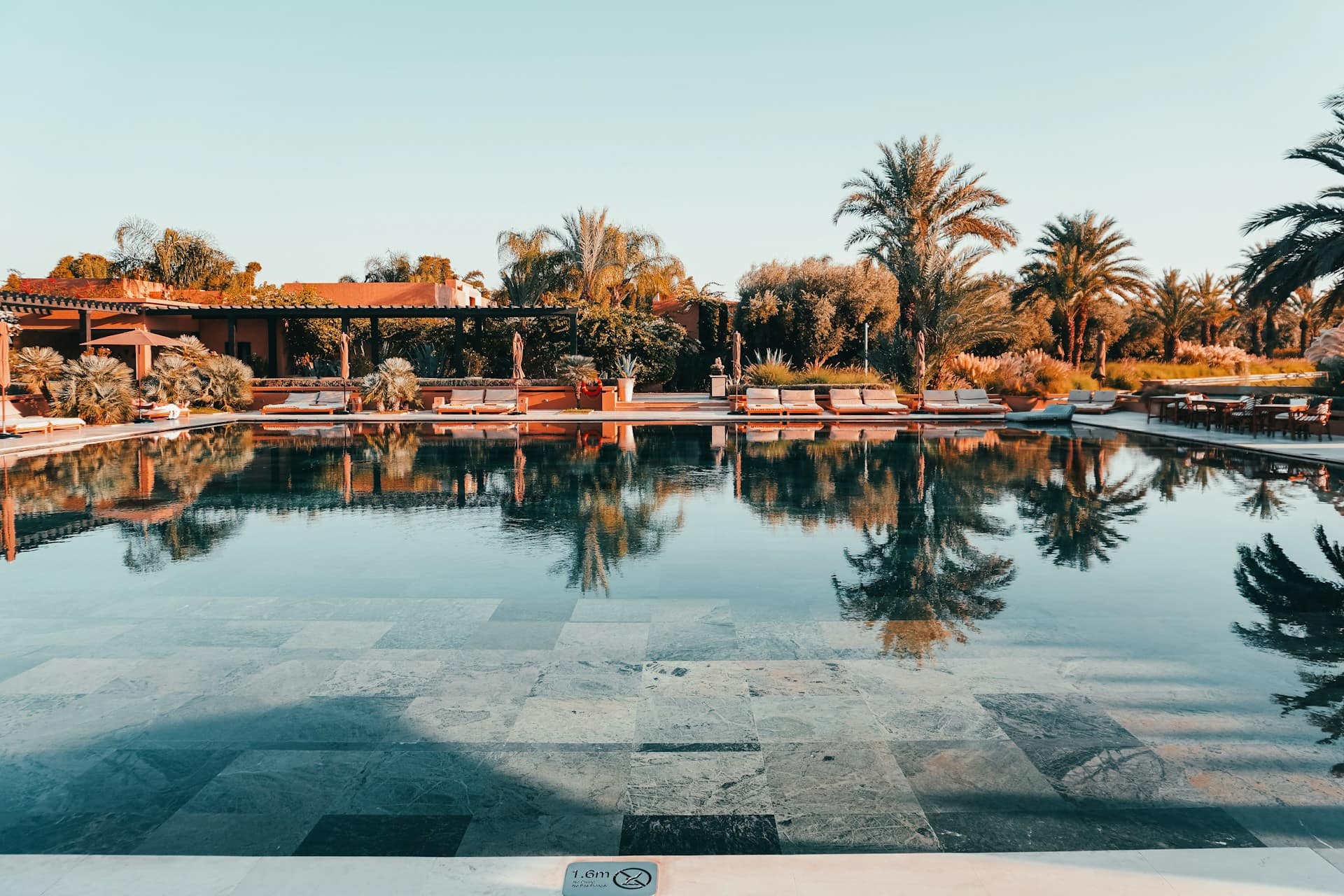
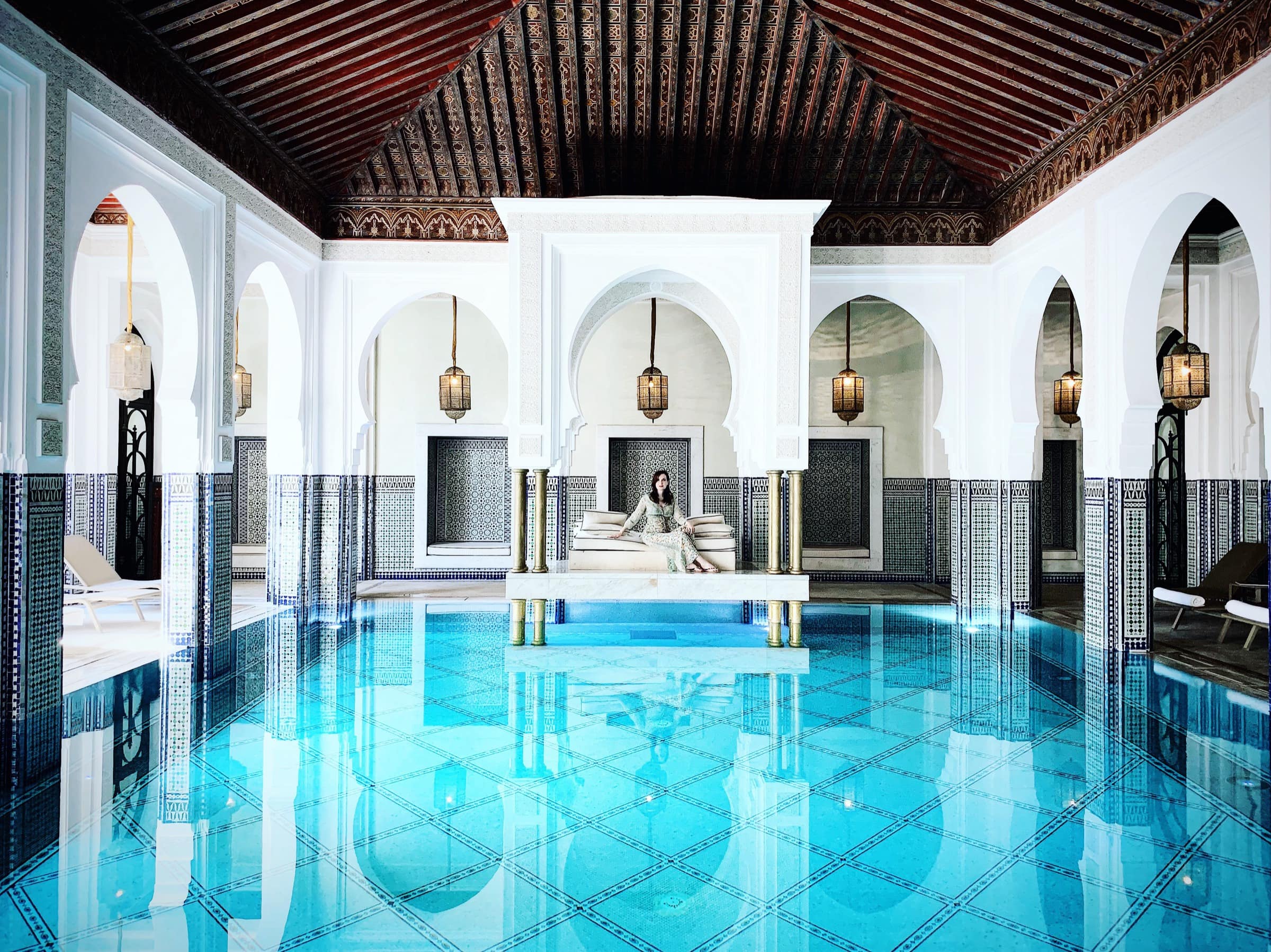
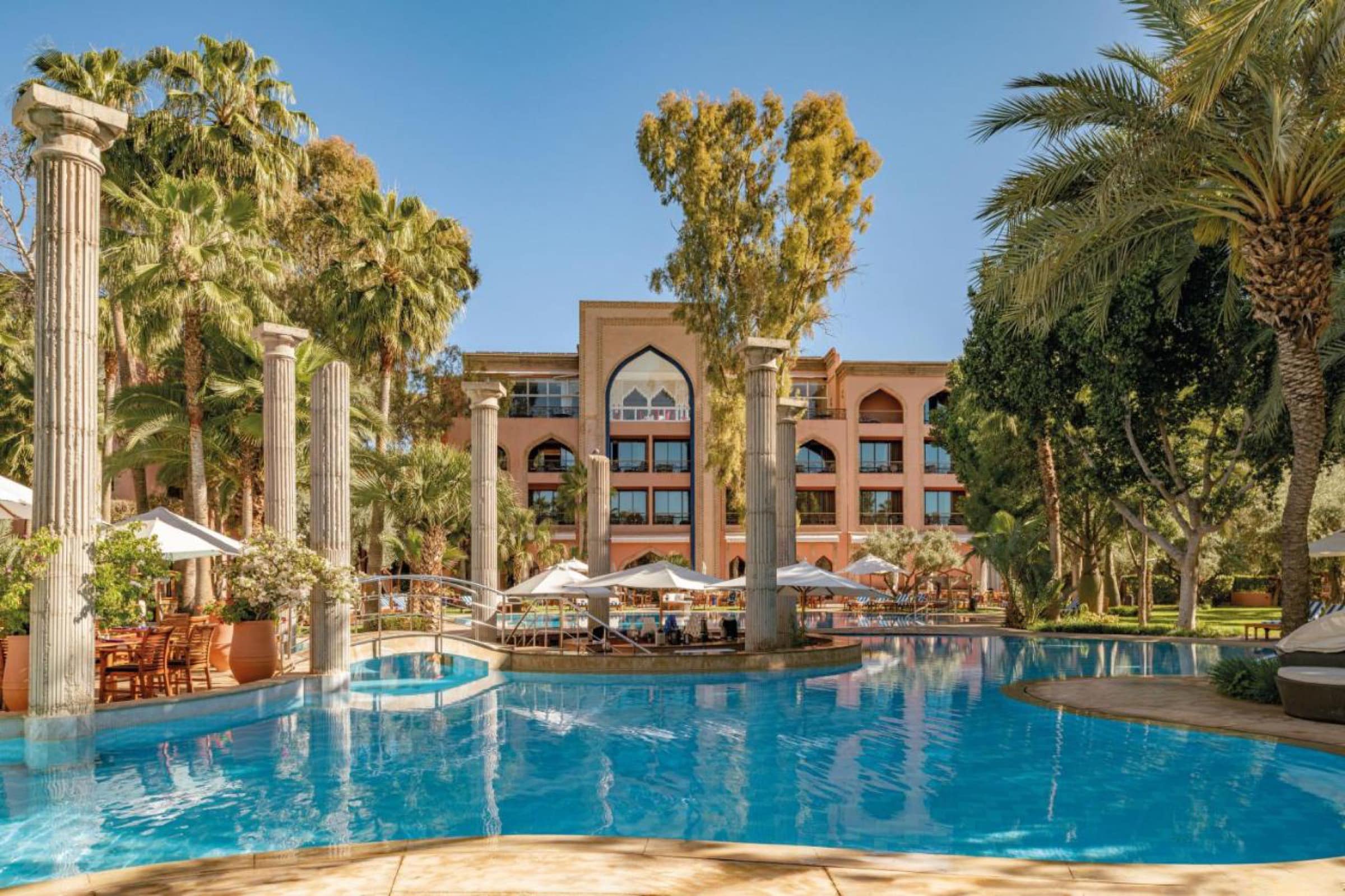
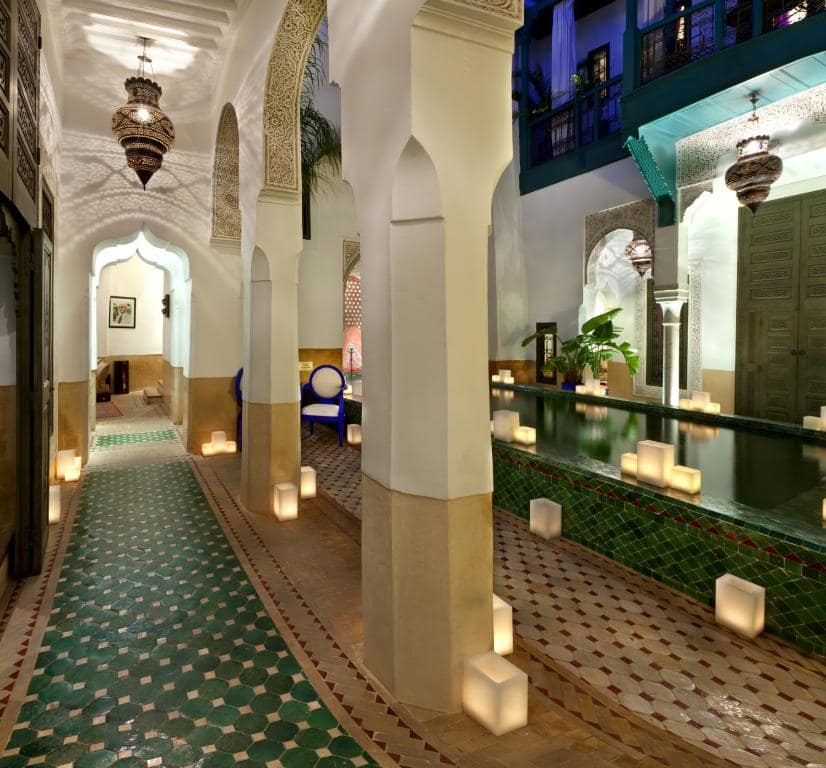
Ten past three in the afternoon, the lobby of a palace on the edge of the Palmeraie. My luggage arrives twenty minutes behind me: it finished the journey by carossa, the handcart that remains the only vehicle able to reach the door of a medina riad. The contrast sits inside those twenty minutes. On one side a courtyard four metres by six, a fountain, four rooms. On the other a pool holding the reflection of whole palm trees, and a row of loungers nobody has disturbed yet.
It took me a long time to see that these two worlds were not in competition. For years I put the question the wrong way round, riad or palace, as though the whole trip had to go one way. The useful question lies elsewhere. Not which of the two addresses, but how many nights in each.
The exchange rate: three riad nights for one palace night
The sums work out better than expected, because the legend of the Marrakech palace is pegged to its ceiling rather than its floor. A decent medina riad, with a courtyard, a handful of rooms and breakfast on the roof, sits around £70 to £75 a night. The entry level of the palace range starts near £210. Those are orders of magnitude outside high season, but the ratio holds: one palace night costs roughly three riad nights.
Put back into a real trip, it reads like this. Across a week, swapping one riad night for one palace night does not double the accommodation budget, it adds about £135 to it. Six riad nights plus one palace night against seven riad nights: the difference is the price of dinner for two at a good Guéliz table. Framed that way the choice stops being a honeymoon fantasy and becomes a budget line.
What misleads people is that the top of the range does not split. Addresses beyond £1,020 a night stay out of reach whatever the length of the trip, and a single night changes nothing there. The split stay works on entry and mid-range palaces, between £210 and £470. That is where it produces a genuine jump in experience for an absorbable premium, and nowhere else. Our selection of palaces and luxury hotels places each house on that ladder before you choose.
What the night actually buys: twenty-one hours
This is the point that cost me the most illusions. A night does not mean a day. The standard across the city’s palaces is arrival from 3pm and departure before midday. Twenty-one hours at best, and rarely at best.
What those twenty-one hours honestly hold: an afternoon by the pool, of which two good hours of usable light in summer and considerably less in winter. A dinner. A night in a bed that bears no relation to the one at the riad, and that may be what you are paying most for without saying so. An unhurried breakfast. Then the case at midday.
What they do not hold: the morning in the gardens, the one every photograph shows, pool empty and light low across the water. That morning belongs to guests staying a second night. The habit that changes everything: ask for a late checkout when you book, not on the morning you leave. Granted subject to availability, it turns twenty-one hours into twenty-five and rebalances the whole calculation.
Where to place it in the trip
At the end, almost always.
Opening with the palace wastes it. You land carrying the flight, without bearings, unable to register what is in front of you. The luxury runs as background noise. Closing with it does the exact opposite: you arrive with souk legs, having spent five days negotiating your way through lanes a metre and a half wide, and silence becomes a recognisable luxury. The contrast cannot be manufactured, it is earned by the nights before it.
One exception all the same: late arrivals. Setting your bags down in the medina at one in the morning, porter still to find and a dark lane to walk up, is no way to start a holiday. On that case alone, the comfortable night comes first.
The three cases where it is worth nothing
On the calendar peaks. Between 26 December and 3 January the mechanism locks: palaces impose minimums of four to seven nights and medina riads refuse short bookings. The split stay is simply impossible, and that is precisely the period everyone has in mind. For reading the favourable windows, our notebook on Marrakech in winter sets out the real seasonal spreads, and the one on summer explains why July and August are not the low season people assume.
On stays of three nights or fewer. Moving costs half a morning: bags on foot or by carossa to the first road a car can reach, then the gap between departure before midday and arrival at 3pm. On a short trip that half-day takes an indecent share of the time on the ground. Under four nights, stay where you are.
When what you actually want is the spa. If the real object is the hammam, the thermal circuit and the massage, the night is an expensive detour: the great houses open their facilities to outside visitors, and that is a far better calculation. We give the question a guide of its own, luxury spas in Marrakech, which compares access and day rates.
What I do now
Six nights in a medina riad, one in a palace, the last one, with a late checkout requested at booking. The riad for the city, for waking to the muezzins, for breakfast on the roof and the sense of living somewhere. The palace for the way out, once the medina has finished its work on the legs and on the nerves.
That leaves the price of that one night, the only real lever once the structure is settled. A single night books late, with no length-of-stay commitment, on a date you can shift by twenty-four hours: exactly the profile that negotiated-rate channels are built to serve, and platforms such as Promo Hotel de Luxe work this niche of short stays in high-end properties. I look at what the same room does across two or three neighbouring dates before fixing mine, and the spread is often enough to pay for the late checkout.
One last thing. Splitting the stay is not a way of getting a palace on the cheap, it is a way of not having to choose. The people who come home disappointed by their single night are almost always the ones who expected a whole holiday compressed into twenty-one hours. It will not do that. It will do something smaller and sharper: mark the end of a trip, and give the medina the relief it only has when seen from the other bank.