Marrakech during Ramadan: a different trip, not a worse one
Practical tips
"Whatever you do, don't go during Ramadan." The advice circulates so widely that it passes for common sense. It is wrong, or rather it answers the wrong question. The fasting month does not shut Marrakech down: it inverts its rhythm. The days slow, the nights turn extraordinary, and the trip you take then is a different one, neither worse nor better.
“Whatever you do, don’t go during Ramadan.” I heard it often enough to go and check. The advice is wrong, or more precisely it answers a question nobody asked.
The fasting month does not shut Marrakech down. It inverts its rhythm, which is not remotely the same thing.
What the month actually changes
The day slows. Monuments, museums and gardens stay open, but many bring their closing forward into mid-afternoon so that staff get home in time. Shops in the medina and in Gueliz open normally in the morning, often pull the shutters down in the late afternoon, then reopen after the fast breaks and trade late into the evening.
The centre of gravity shifts, and sharply: what used to happen in the afternoon happens in the morning, and what used to happen in the evening happens at night.
The hour before the fast breaks is worth living through at least once. The city empties all at once. The streets clear, the taxis vanish, the traffic turns absurd for twenty minutes and then stops altogether. It is one of the rare moments when a city of a million people falls silent, and it is striking.
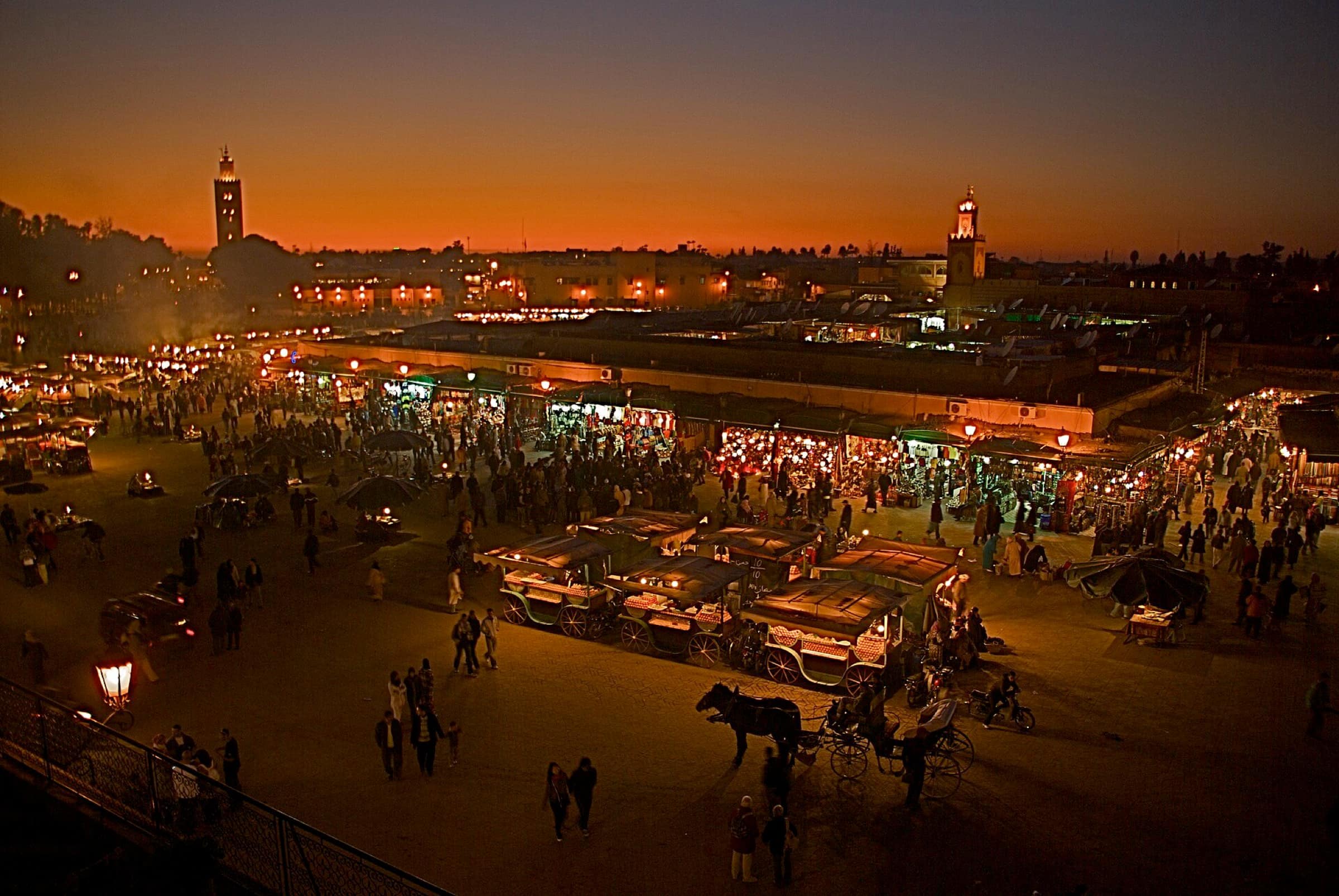
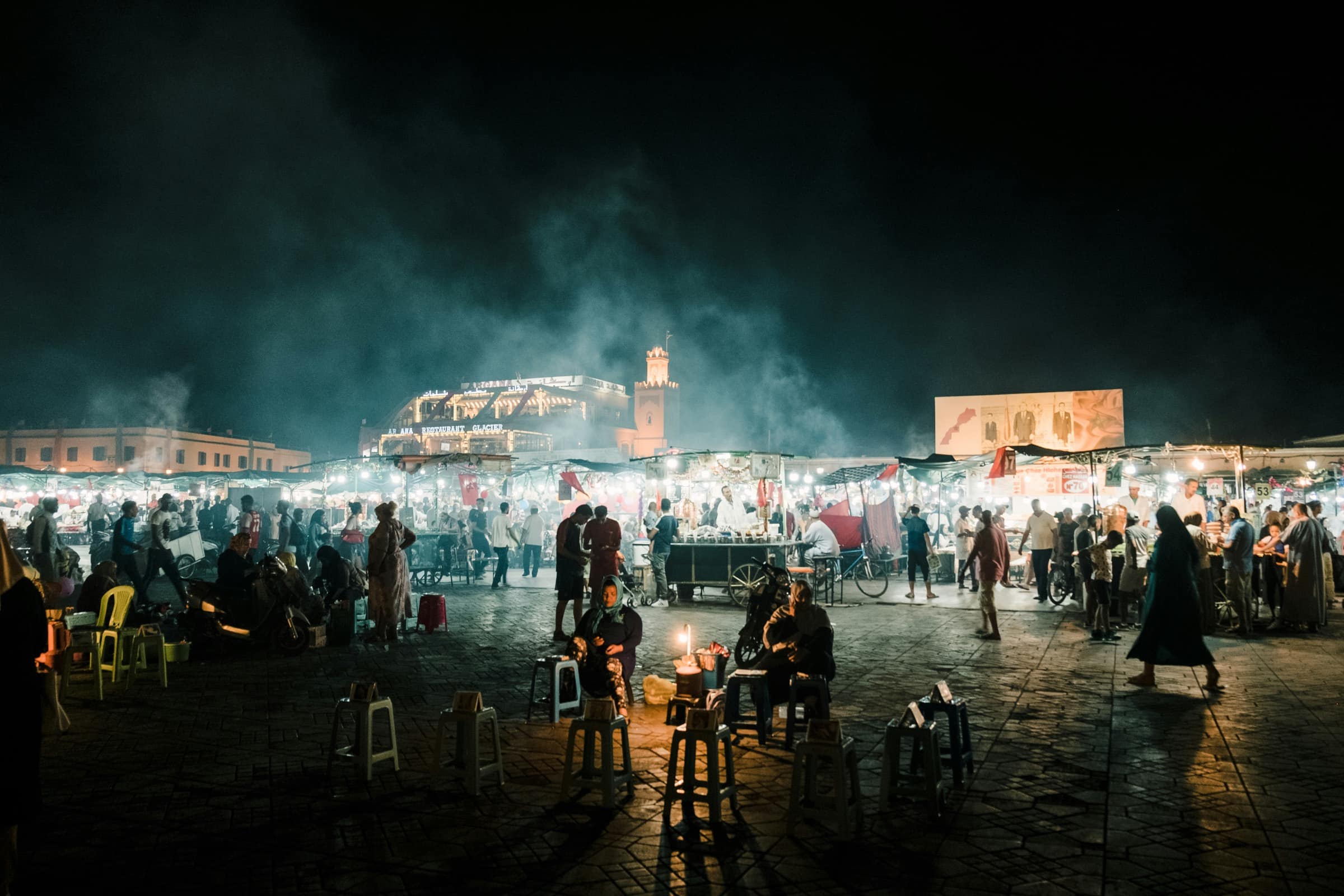
Then everything restarts. Tables fill, stalls light up, Jemaa el-Fna and the souks reach a density the rest of the year never sees at those hours. Ramadan nights in a medina are the real reason to come at this time.
The meal that reopens the day, the ftour, is codified and looks much the same from one household to the next: harira, dates, chebakia with honey and cinnamon, pressed orange juice, hard-boiled eggs, dairy. It is not a dinner, it is a breaking, often followed by a proper meal later in the evening. Many riads and hotels serve it to their guests, which is the simplest way to taste it without inviting yourself into a family moment. Knowing this also avoids a classic scheduling error: booking a restaurant table for 7pm during Ramadan means arriving in the middle of the only thing the kitchen is thinking about.
The detail nobody mentions
Morocco runs on GMT+1 all year. During Ramadan the country reverts to GMT, meaning it moves back an hour for the duration of the month before returning to its usual time afterwards.
That sounds trivial and is not. The gap with home changes during your stay. Opening hours, appointments, transfers and above all flights are quoted in a local time that is not the one used the rest of the year. Always check the local time shown by the airline rather than converting in your head, particularly if your stay straddles the start or the end of the month.
What you gain, what you lose
Both columns need setting out honestly, or this becomes a sales pitch.
What you lose is service comfort. Hours are shortened, some addresses close, access to alcohol narrows considerably. And the staff are fasting: by late afternoon, after ten or twelve hours without drinking, patience and energy are not at their usual level. That is not a lapse in professionalism, it is physiology, and a customer’s ordinary demands become misplaced at that point in the day.
What you gain sits elsewhere. Near-empty mornings on sites that are usually saturated. A city living at a rhythm no ordinary visitor sees. A hospitality that intensifies rather than withdraws, because the month is also one of sharing, and an invitation to break the fast comes more often than you would expect. If you get one, accept it.
How to go about it
Schedule the sightseeing for the morning, without exception. Book evening tables, because demand concentrates into a few hours. Eat and drink sitting down rather than walking, which is the one real rule of manners for the month. Keep one evening entirely free for the hours after the ftour, in the medina, with no plan at all.
And arrive knowing that service will not be that of an ordinary month. That is the only frame of mind that matters: coming during Ramadan and expecting normal operation guarantees disappointment, while the same trip, taken for what it is, leaves memories the other months do not give.