Water in Marrakech: what the visitor does not see
Stories & notebooks
Marrakech keeps up appearances better than any city I know. Pools, gardens, basins, palms: nothing tells you this is a semi-arid plain coming out of six years of drought. That apparent abundance is not a lie. It is a feat of engineering several centuries old, now under constraint. Here is what is going on beneath your feet.
You fly in over an ochre plain, you land, and twenty minutes later you are driving past gardens, basins, palms and swimming pools. The switch is so abrupt that nobody notices it. Marrakech keeps up appearances better than any city I know.
That abundance is not a piece of tourist scenery. It is far older than tourism, and far more fragile.
A city built on an underground network
Marrakech has no river. What made it possible is a technique: the khettaras, underground galleries that tap the water table upstream, at the foot of the High Atlas, and carry the water down to the city by gravity. The water travels below ground, so it does not evaporate on the way. That is the whole difference between an open channel across a plain at forty-five degrees and a system that arrives.
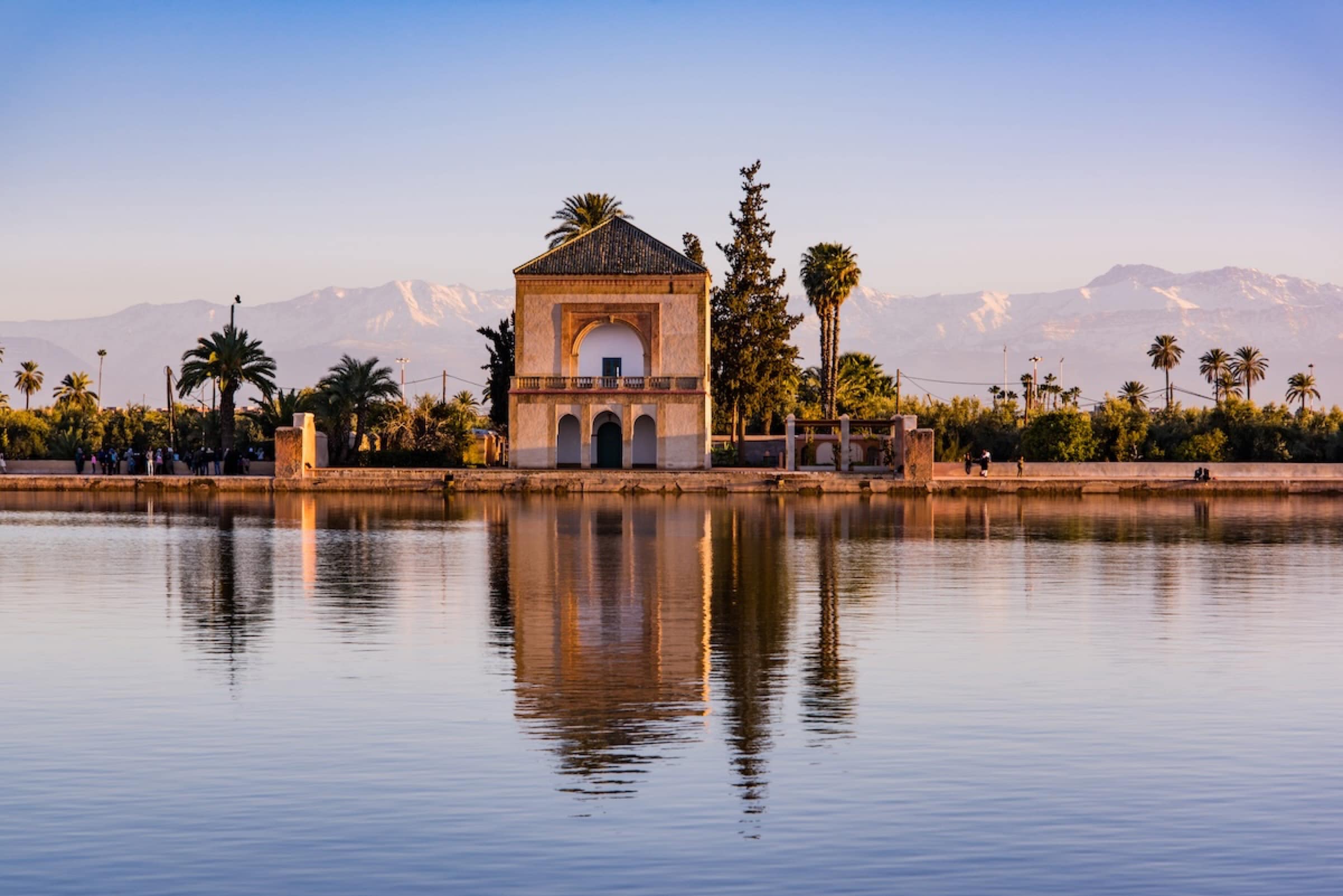
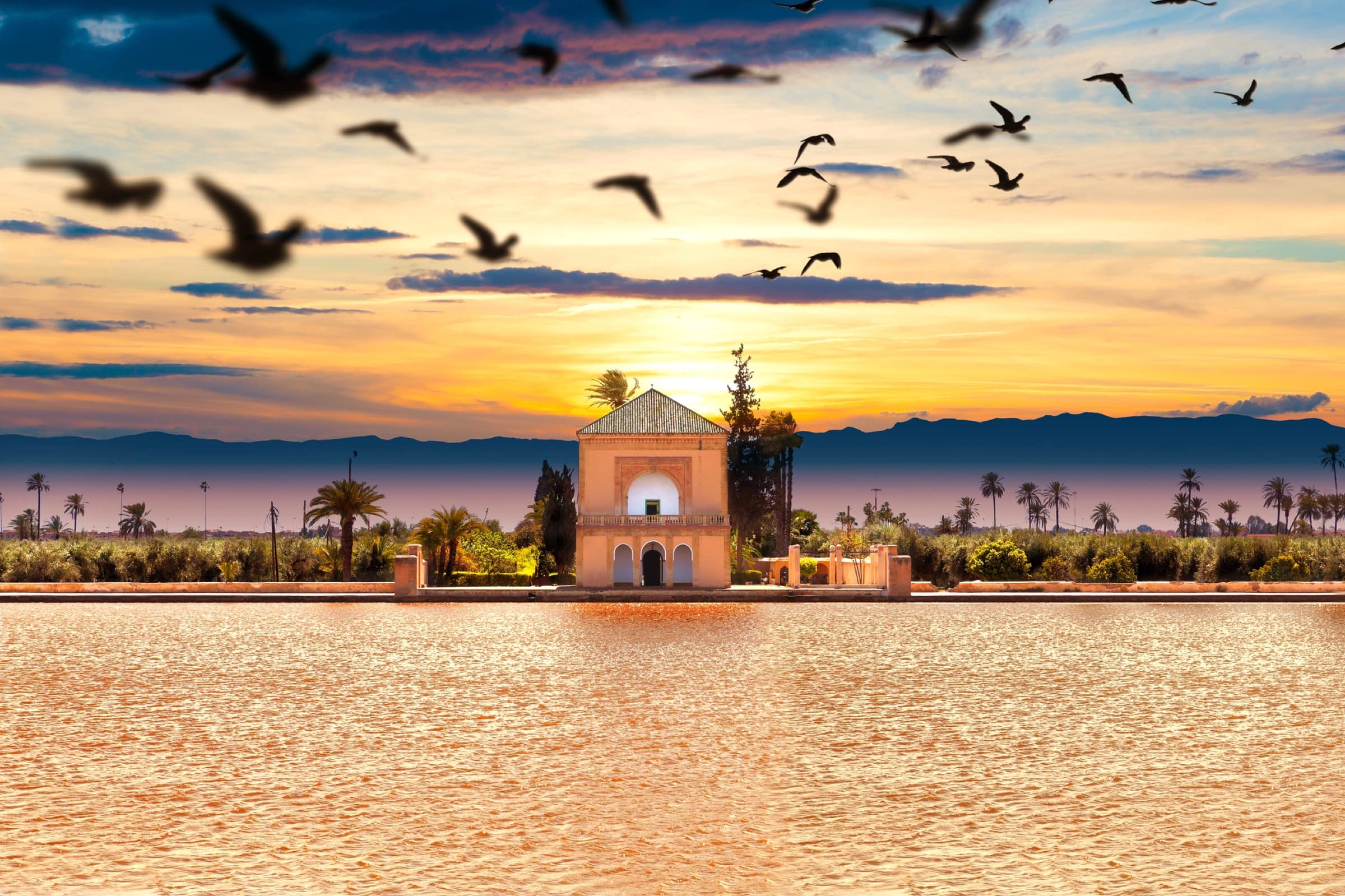
That network fed large reservoirs. The one at the Menara gardens is its most visible survivor: the basin everyone photographs is a piece of hydraulic infrastructure, not an ornament. The city’s historic gardens are irrigation works that happened to turn out beautiful.
Much of the network is out of service today, replaced by boreholes and modern supply. But the logic holds: this city is a demonstration of what you can do with water fetched from a long way off.
What six years of drought changed
Morocco is coming out of a long run. Six consecutive years of rainfall deficit, with everything that implies for a country whose agriculture carries real weight.
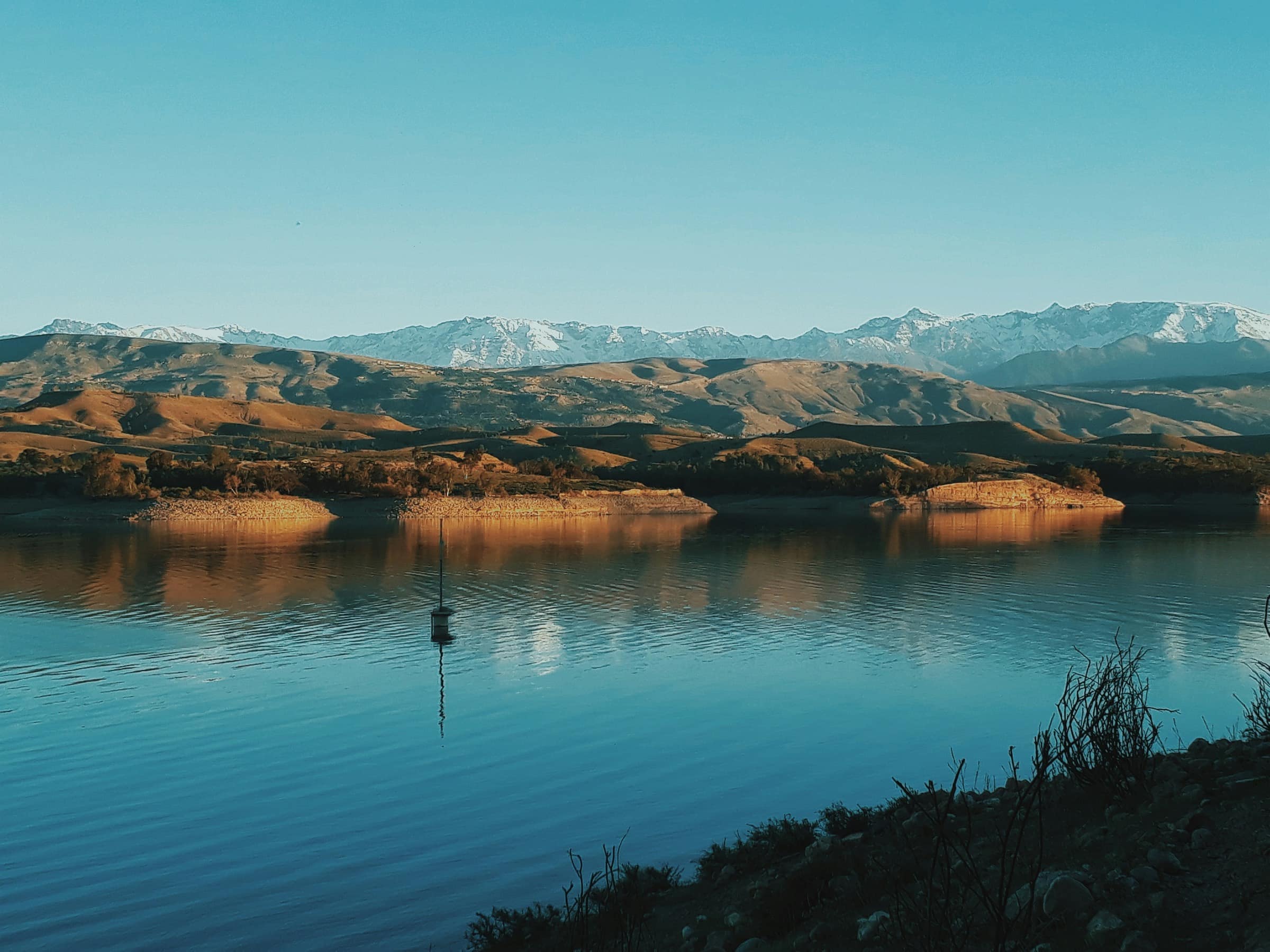
The figures from early 2026 are better. Dams across the Marrakech-Safi region sat at around sixty-nine per cent of capacity in January, well up on the previous year. The Lalla Takerkoust dam, the closest to the city, climbed from roughly twenty per cent in August 2025 to thirty-four per cent in January 2026.
Read those numbers for what they are. They rise in winter, they fall in summer, and one good season does not clear an entrenched deficit. If you go out to Lalla Takerkoust in late summer and the lake looks low, that is not a disappointment: it is the normal state of the water at that time of year, and you can read it straight off the exposed banks.
What Marrakech measured at home
Faced with the shortage flagged in 2022, the prefecture issued a governmental order, number 238 of 26 January 2022, whose article 3 requires public and semi-public institutions to audit their water use and draw up an efficiency plan. This was not a statement of intent: an audit of the prefecture’s hundred largest consumers followed, run by the Tensift Hydraulic Basin Agency with RADEEMA and funded by the Regional Council to the tune of six million dirhams.
The sample tells you what was looked at: forty administrations, twenty mosques, ten hotels, ten upper schools, ten lower schools, five hospitals, five health centres, plus a handful of sports facilities and markets.
Within that sample, hotels come top with thirty-seven per cent of drinking water consumption, ahead of hospitals at twenty-one per cent and sports facilities at nine.
That figure needs reading for what it is, or it will be made to say anything at all. It covers the prefecture’s hundred largest meters, selected precisely because they use a lot. A hotel topping a ranking of heavy consumers is no scandal: it is a large building open year-round, with kitchens, a laundry and often a pool. This is not “hotels drink thirty-seven per cent of Marrakech”, it is “among the large facilities the city chose to measure, hospitality is the biggest single item”. Which is exactly why it was measured: that is where the savings are easiest to find.
The audit duly found them. Its conclusions are strikingly concrete: sealing leaks, meters on wells, timers on pumps, pressure limiters, drip irrigation, better use of the treated water bought back from RADEEMA. Nothing spectacular, a great deal of efficiency.
Alongside this, measures have been taken city by city across Morocco at prefecture level: a ban on watering golf courses and green spaces with drinking water, pool refills limited to once a year, hammams closed three days a week in several cities. Since these are prefecture decisions and they move with the state of the resource, the applicable list is checked on the ground. And the work continues: since May 2024 the city has been working with German development cooperation on rationalising and recycling urban water, six million euros over three years shared with Tangier.
What you can do, and what is only theatre
A single traveller does not move the water balance of a region, and touristic guilt-tripping is a genre I find tiresome. What the audits show is not that visitors are the problem, but that large facilities are where the savings sit, and that somebody went looking for them.
What is true is simpler. Ordinary habits do the job: short showers, towels you do not have replaced daily, no complaint when an address explains it has cut something back. A filter bottle or large containers rather than small ones, because across a week for two the plastic becomes absurd.
Above all, do not demand the invisible. A hammam shut on a given day, a yellowed fairway, a half-filled basin are not lapses in service. They are measures doing exactly what is asked of them. Treating them as a shortfall means asking the city to hide its constraint from you, and that is the one visitor habit that genuinely costs something here.
The rest fits in a sentence. This city shows you basins and palm trees because people went to fetch the water from very far away, a very long time ago, and are still doing it. It looks different once you know.