Marrakech in a wheelchair: the obstacle is not the one you expect
Practical tips
People picture the medina as an impassable maze and give up on the trip on the strength of that image. It is wrong. Marrakech is flat, its lanes are wider than those of most Moroccan medinas, and the main square crosses without difficulty. The obstacles are real, but they are not where you expect them.
The image that puts people off is always the same: a maze of narrow lanes, steps and crowds where a wheelchair has no business being. Plenty of people give up on Marrakech on the strength of that picture.
It is inaccurate, and it is worth setting out why.
One thing up front: this is not a testimony. I do not use a wheelchair. It is a survey, put together for readers to whom the question genuinely applies, and who deserve better than the silence the industry leaves around it.
The obstacle is not the one you expect
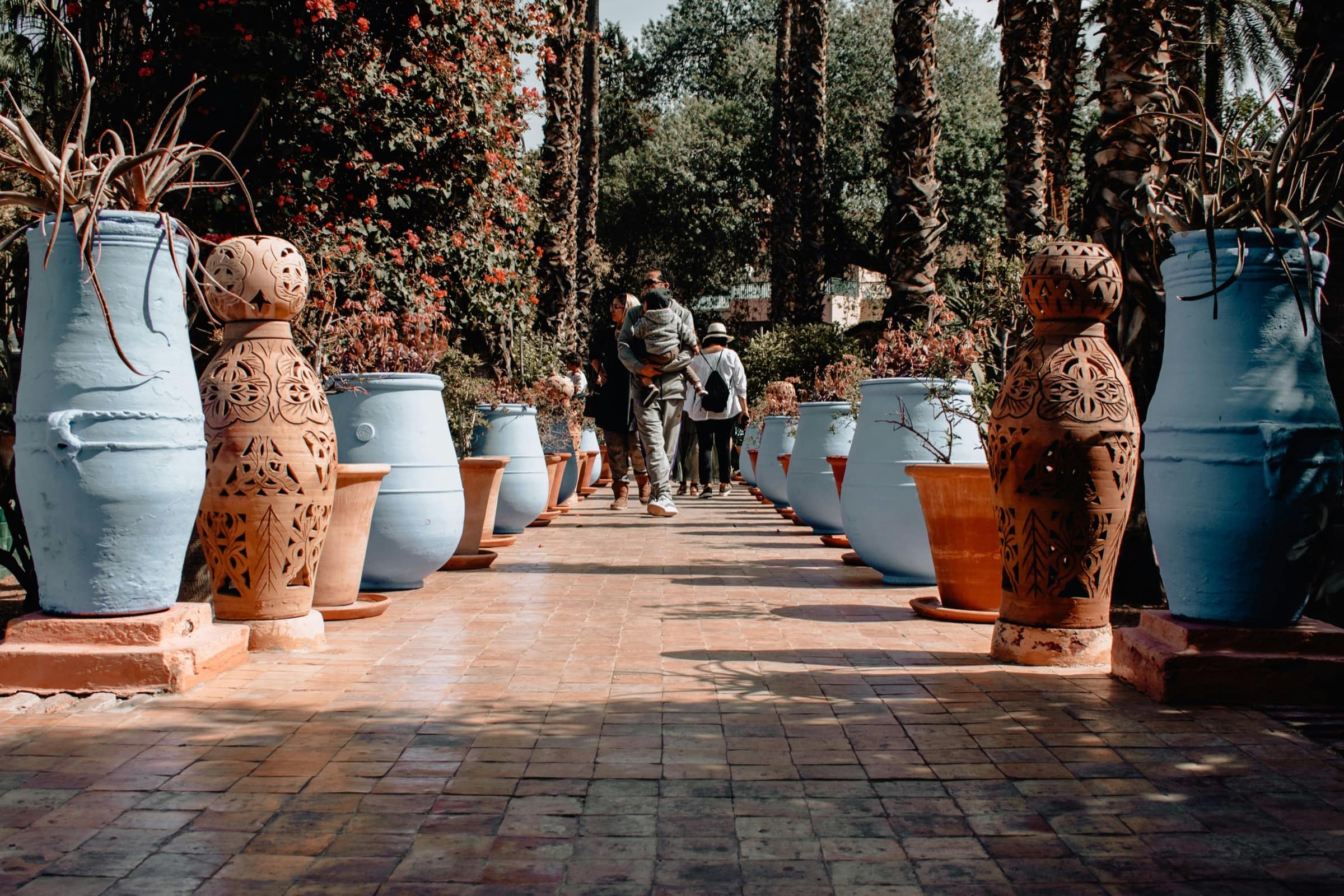
Marrakech is flat. That is the starting point, and it changes everything. Fes is built across a hillside, with sloping and stepped lanes; Marrakech spreads over a plain with no notable gradient. Its lanes are also, broadly, wider than those of other Moroccan medinas.
The main square crosses without difficulty. So do the principal souk arteries: the surface is uneven in places, but the width is there.
Topography, in other words, the major obstacle in so many old cities, is not the problem here. What blocks lies elsewhere, and it is more mundane.
What actually blocks
The real wall is thresholds. Almost every shop in the medina has a step at the door, and the interior is often too tight to manoeuvre. So you move through the souk without being able to enter what you can see, which is a limitation of a particular kind: the setting is accessible, the trade is not.
Then come the scooters, threading through everywhere, fast and without warning. They are a nuisance for everyone and a genuine hazard when you cannot step aside; going about accompanied is not an excessive precaution. Then the kerbs, which are not dropped at crossings, making the new town paradoxically more restrictive than the medina along certain routes.
That leaves the bus network, which is best treated as non-existent: old stock, no low floor, no lift. Journeys have to be built another way, and that is the real additional cost line of the trip.
What is accessible, site by site
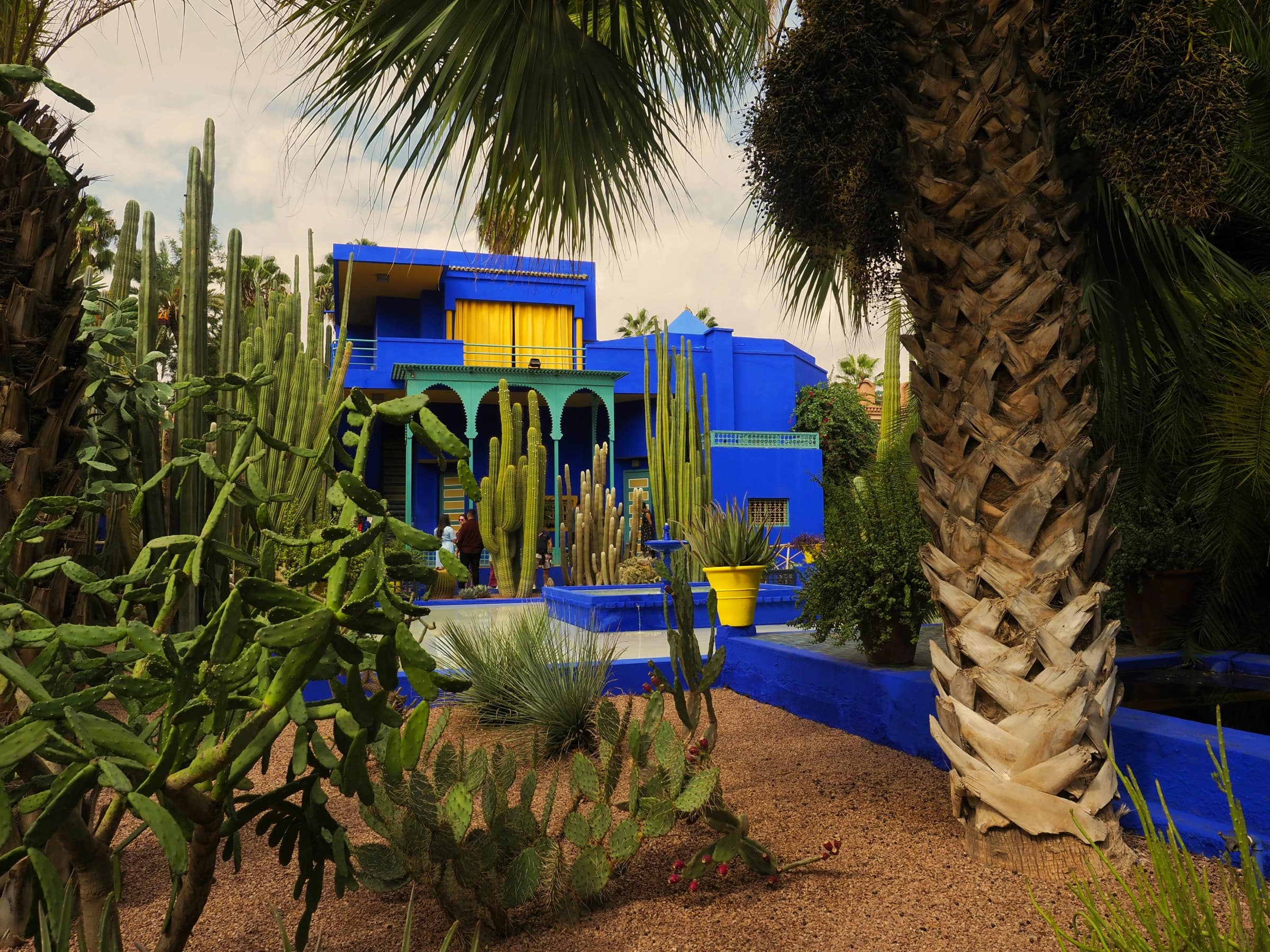
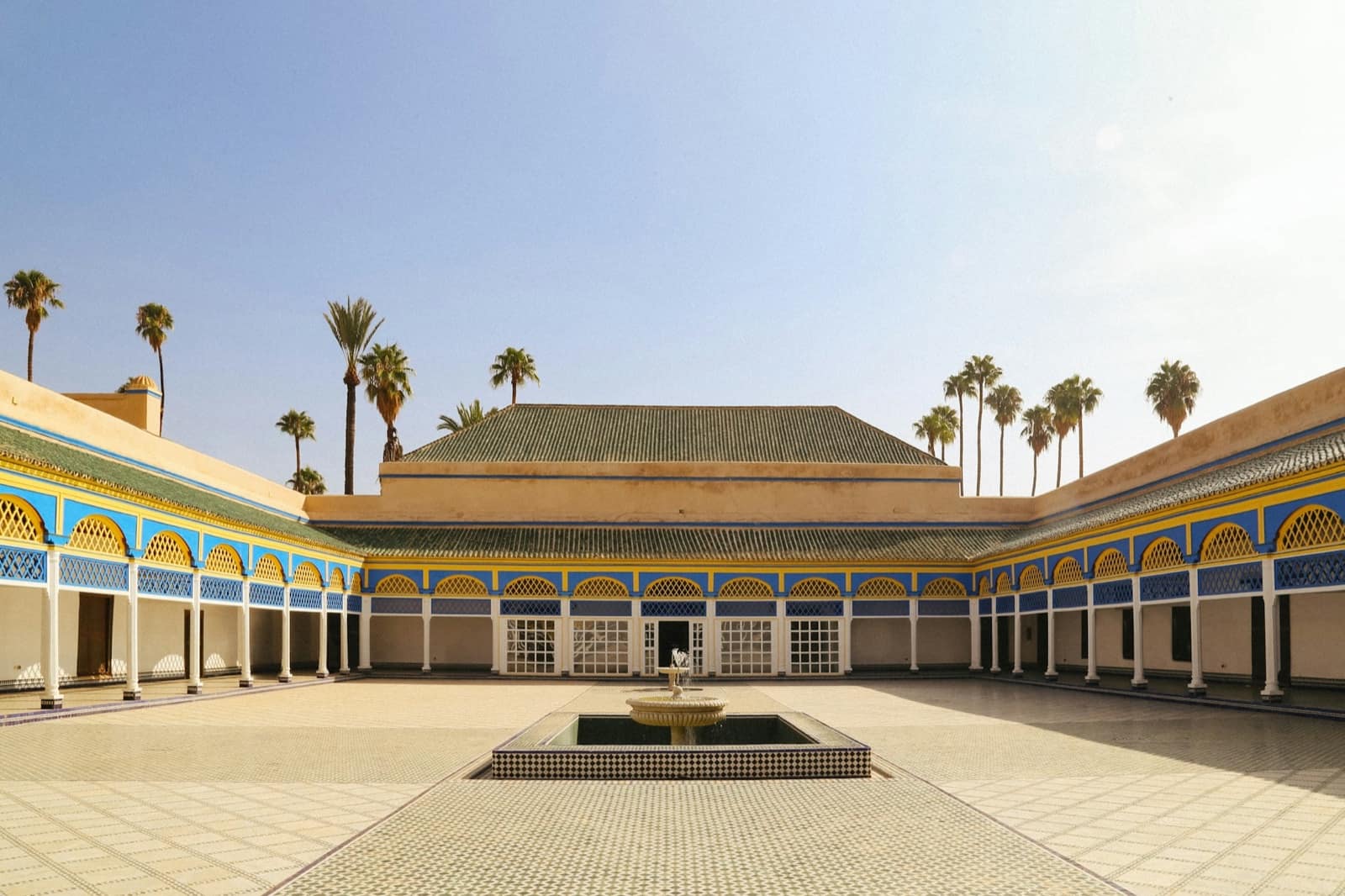
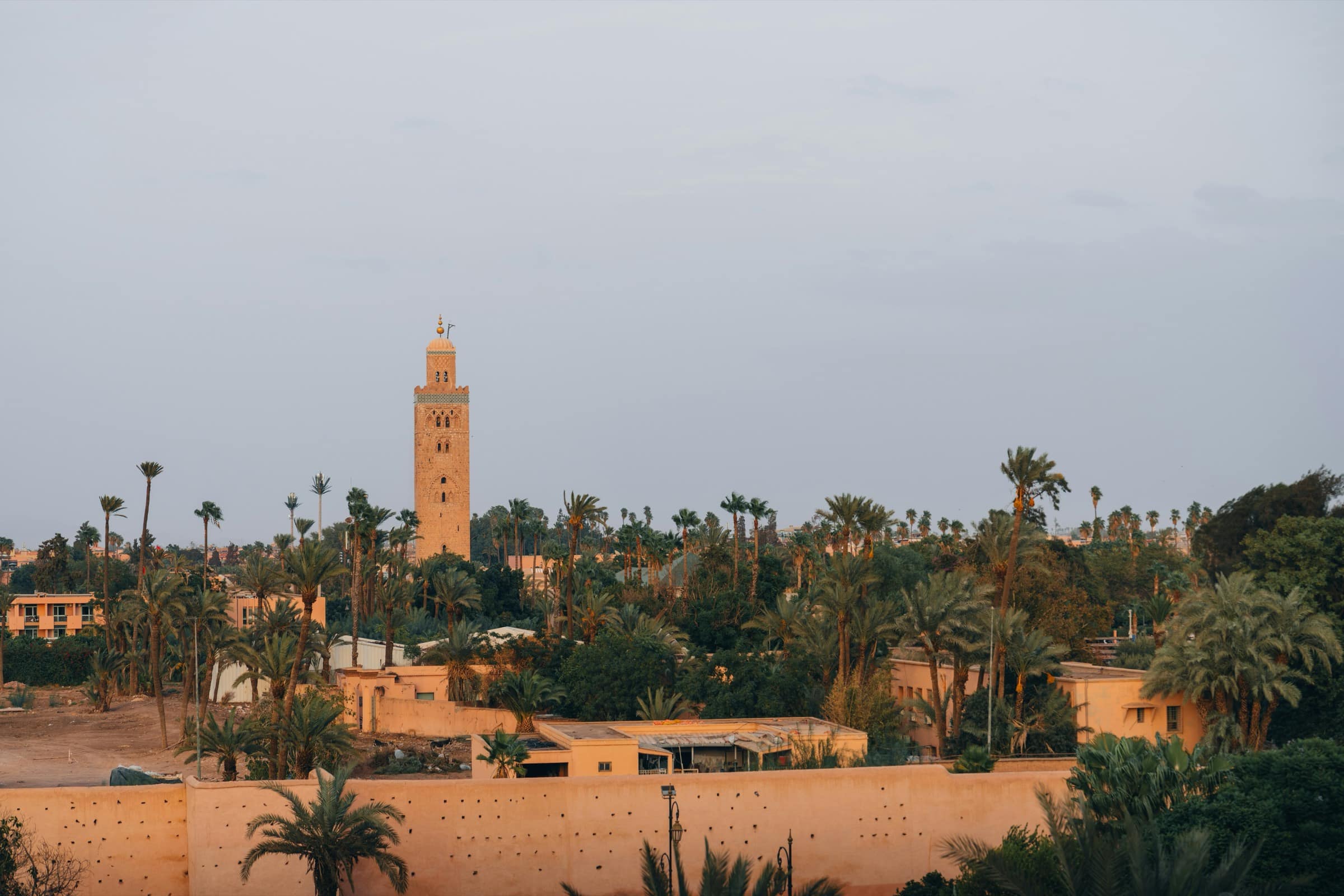
Visitable in a wheelchair: Jemaa el-Fna, the Koutoubia, the Bahia Palace, the El Badi Palace, the Saadian Tombs, the Menara gardens and the Majorelle garden.
Majorelle is the best equipped in the city, with a continuous tarmac route allowing the full circuit. And the piece of information nobody passes on: admission is free for the wheelchair user and their companion.
The Ben Youssef Madrasa, by contrast, is not accessible.
One qualification to carry into the palaces: accessible there usually means most of it can be seen, not all of it. Old thresholds and the odd step remain, and it is better to arrive knowing that than to discover it on site.
Staying and getting around
Two addresses position themselves explicitly for this. Riad Tarzout, in the heart of the medina, has welcomed guests with reduced mobility since 2007. Handioasis, fifteen to twenty minutes by car to the south on the Ourika road, was designed from the outset around wheelchair use.
In both cases the advice holds for any address: confirm the specifics that matter to you before booking. Door width, turning circle in the room, roll-in shower, and above all whether there is a step at the entrance to the property, which cancels out everything else.
For getting about, the company Handi Medic operates an adapted vehicle and arranges stays in several Moroccan cities. Day to day, a grand taxi with a driver used to the routine, retained by the day rather than by the trip, remains the most flexible arrangement.
What it adds up to
A trip that works, easier than its reputation on the ground, harder than elsewhere on the logistics. The medina can be covered, the major sites can be seen, and it is retail and public transport that stay shut.
That is not nothing, and I am not going to claim it amounts to the same experience. But between “Marrakech is impassable” and the reality there is the width of an entire trip, and a great many people give up on the first proposition without ever seeing the second.