Getting lost in the medina: why GPS fails, and what works
Practical tips
The blue dot crosses a wall, hesitates, then sets off in the opposite direction. In the Marrakech medina GPS is not really wrong: it is doing what it can with two-metre lanes walled in to five. What follows explains why it gives up, what replaces it, and why the person stepping in to help will cost you more than you think.
The blue dot crosses a wall. It hesitates, settles thirty metres away in a courtyard you are not standing in, then sets off the other way. You look up: the lane is two metres wide, the walls run five or six, and there is no sign anywhere.
This is not a fault. It is what a phone does in an urban fabric the technology cannot read.
Why it gives up
Two causes compound, and it is worth separating them because they call for different responses.
The first is physical. Satellite signal reaches the bottom of a narrow walled corridor poorly: few direct paths, many bounces off the facades. The phone computes its position from distances lengthened by those reflections, and places itself somewhere else. Hence the drift, and the dot passing through buildings.
The second is cartographic. The medina holds more than four hundred derbs. Many are incomplete in the map databases, badly connected to one another, or drawn when they are in fact private, covered or bricked up. Route calculation will send you down passages that exist only on screen. Add the signage: many lanes carry no plate at all, those that do are often in Arabic only, sometimes painted over, faded, or pointing ambiguously.
Turn-by-turn guidance, in other words, has no means of working here. Neither the position nor the network of paths can be trusted.
What works instead
The most valuable move happens before you leave: download the area offline, covering it generously, from Bab Doukkala down to Bab Agnaou, from the ramparts near the Koutoubia across to the Mellah. An offline map does not fix the drift, but it gives you a base map with no network, and above all it allows the cross-check: you read a name off a wall, you find it on screen, you reposition yourself by hand. That movement is what gets you out, never the blue arrow.
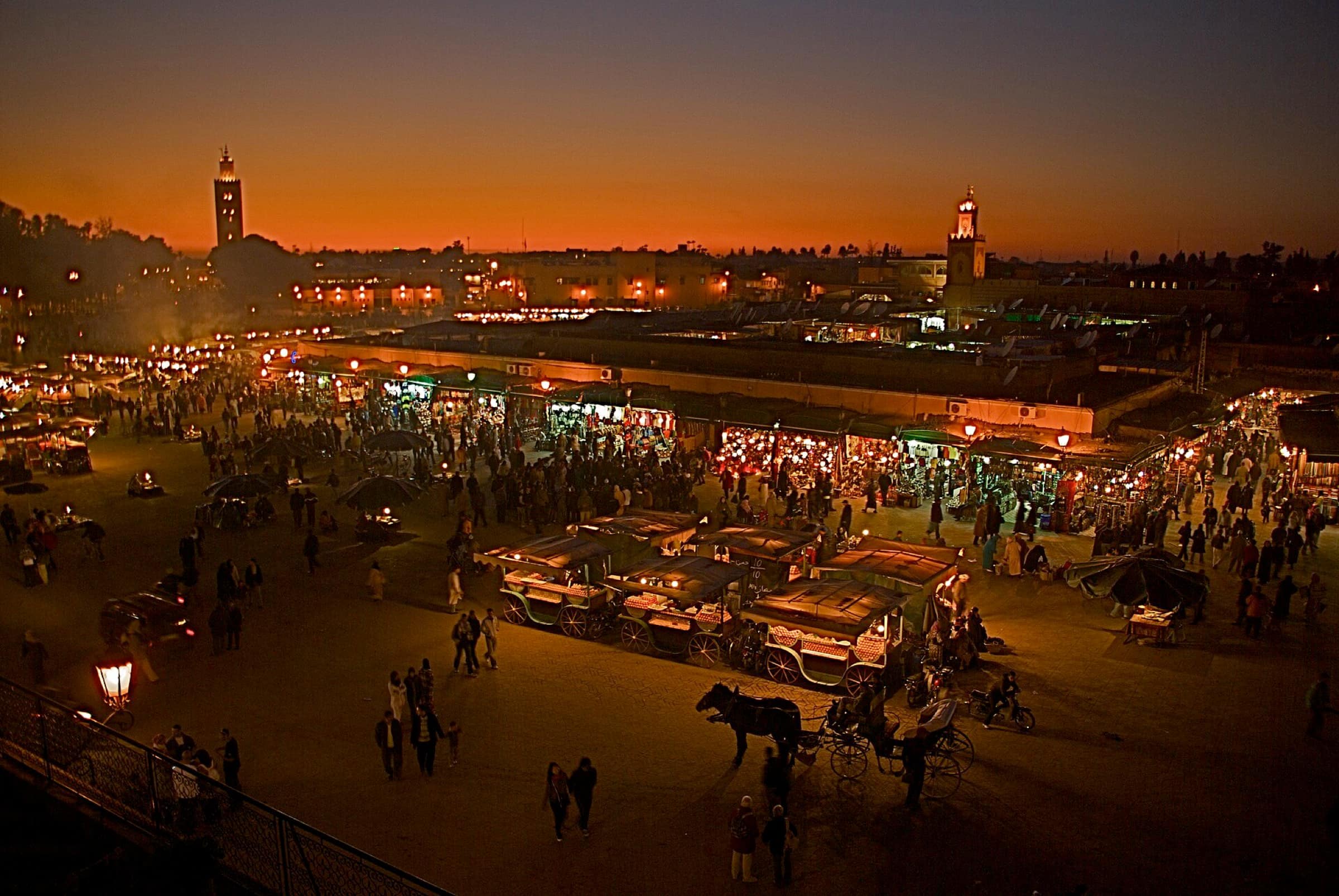
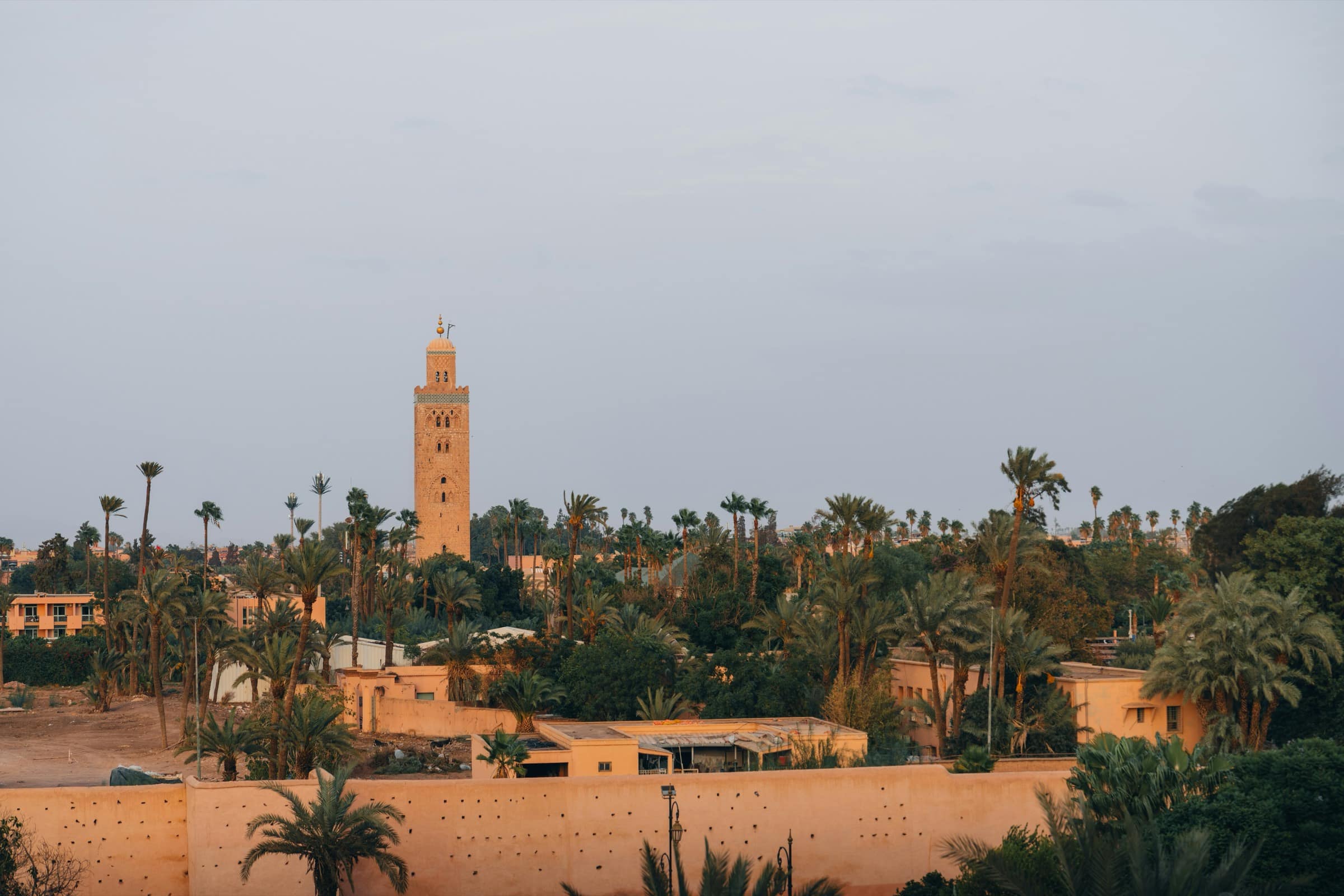
On the ground, three landmarks do the work. The Koutoubia minaret, seventy metres and the tallest structure in the city, is visible from almost everywhere: spot it and you know where west is, and it is the only fixed point that holds across the whole medina. Then sound, because from the southern half, walking towards the hum brings you to Jemaa el-Fna in ten to fifteen minutes, and once on the square you are plugged back into everything else. Then the gates, the babs, punctuating the ramparts and always offering the nearest way out.
That leaves the most effective reflex and the least used: go up. A café terrace, a mint tea, two minutes looking across the roofs, and the city becomes readable at a stroke. You set off again with a bearing rather than a direction.
The person who comes to help
You have stopped, phone in hand, visibly lost. Someone approaches and offers to show you the way, or the workshop, or the tannery.
It pays to be precise about the cost, because the usual account misses the point. Working as a guide without accreditation is the usurpation of a regulated profession, carrying three months to two years in prison, settled in practice with a fine that gets paid before the person returns to circulation. The tourist brigade makes arrests regularly. All of that is true and concerns you only indirectly.
The real cost is economic. These escorts impose a commission on shopkeepers for every purchase you make in their shop. The shopkeeper folds it into the price he quotes you. So you are not paying a tip at the end of a walk: you are paying a surcharge on everything you buy during it, without ever seeing it. That is the underlying reason to decline, well ahead of irritation or suspicion.
Declining is short: a flat no thank you, no explanation, no negotiation, and you keep walking. The gesture that attracts offers is stopping in the middle of the street with a phone in your hand. If you are genuinely lost, step inside. A proper shop, a pharmacy, a café: the person behind a counter has nothing to gain from walking you anywhere, and will point you right in thirty seconds.
The opposite has to be said too, or we manufacture paranoia. The great majority of people who speak to you in the medina have no agenda whatsoever, and leaving Marrakech having treated every one of them as a tout would be a sad way to travel.
Getting lost is still the best use of it
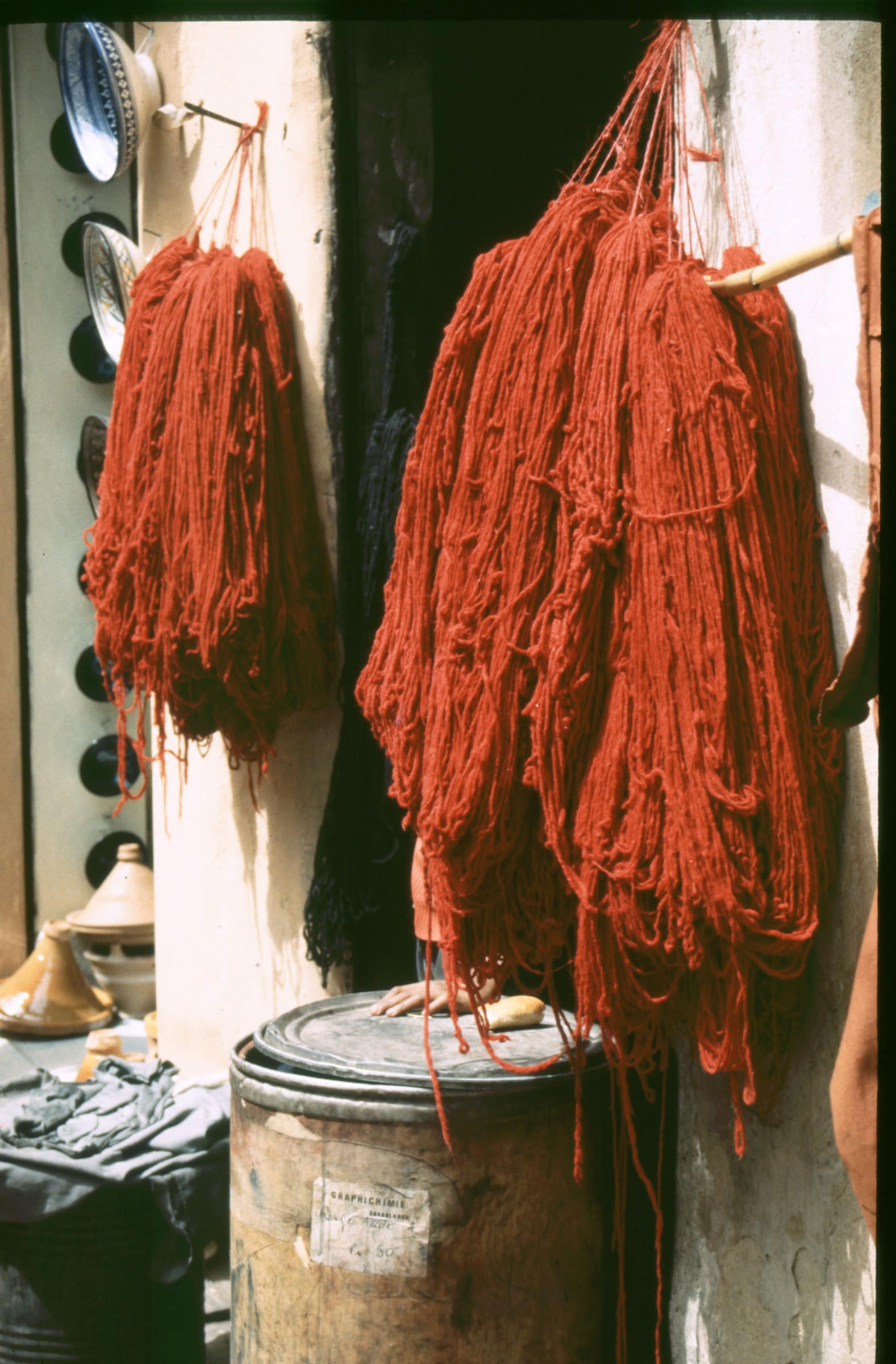
Everything above serves to keep you found when it matters: an appointment, a walk back at night, a suitcase to drag. The rest of the time, wandering is exactly what this city is built for: the dyers’ souk is not something you find by looking for it.
The medina is small. It is ringed by ramparts, and from any point inside you are under twenty minutes from a gate. You never truly get lost here. You only lose the thread of your itinerary, which is a different thing, and has never done anyone any harm.