The Walls of Marrakech
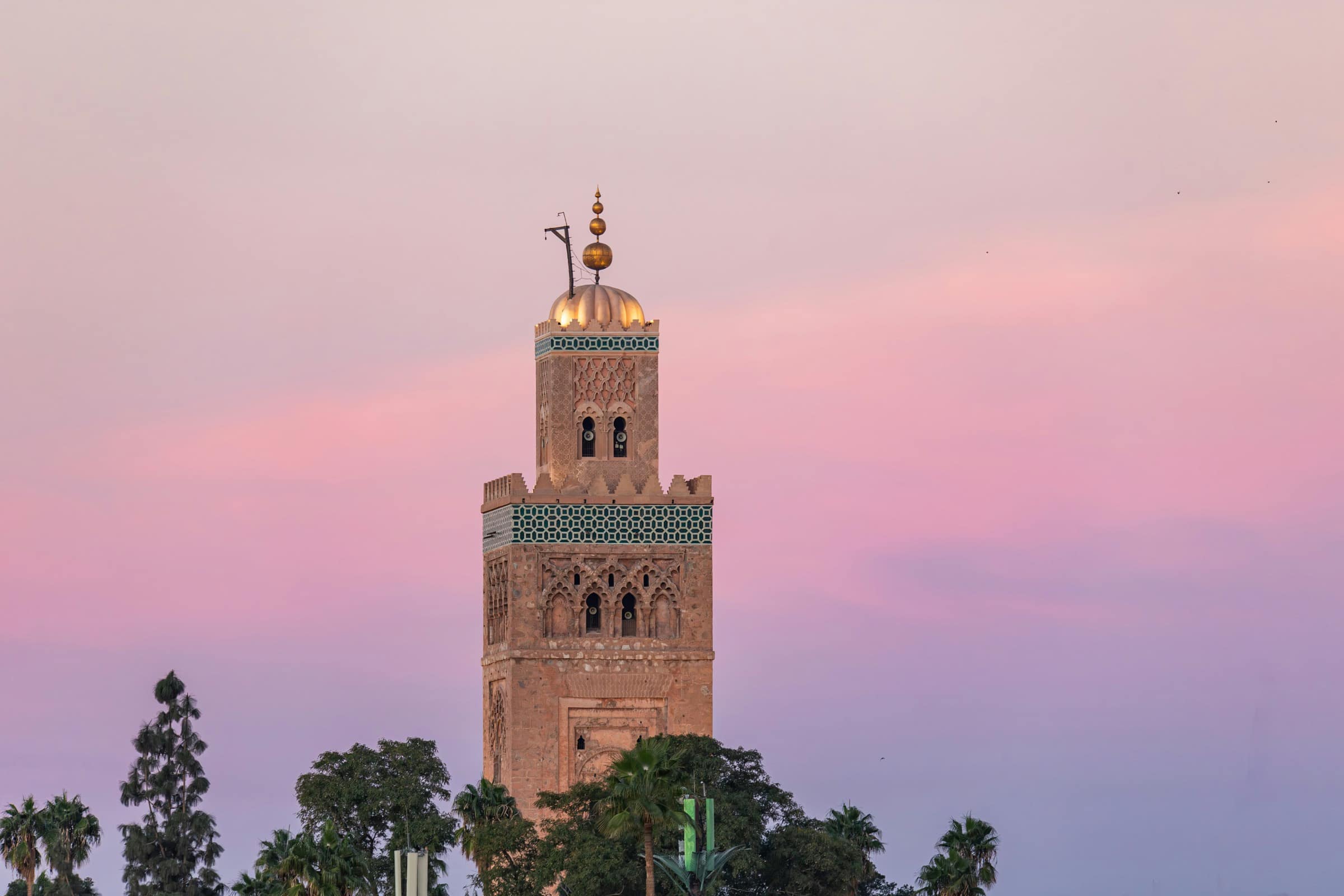
The walls are not a visit. They are a walk. Kilometres of pisé that shift colour with the day and still hold the medina inside their walls. At sunset, the stone turns rose-ochre. That is the moment, on foot or by horse-cart.
History & context
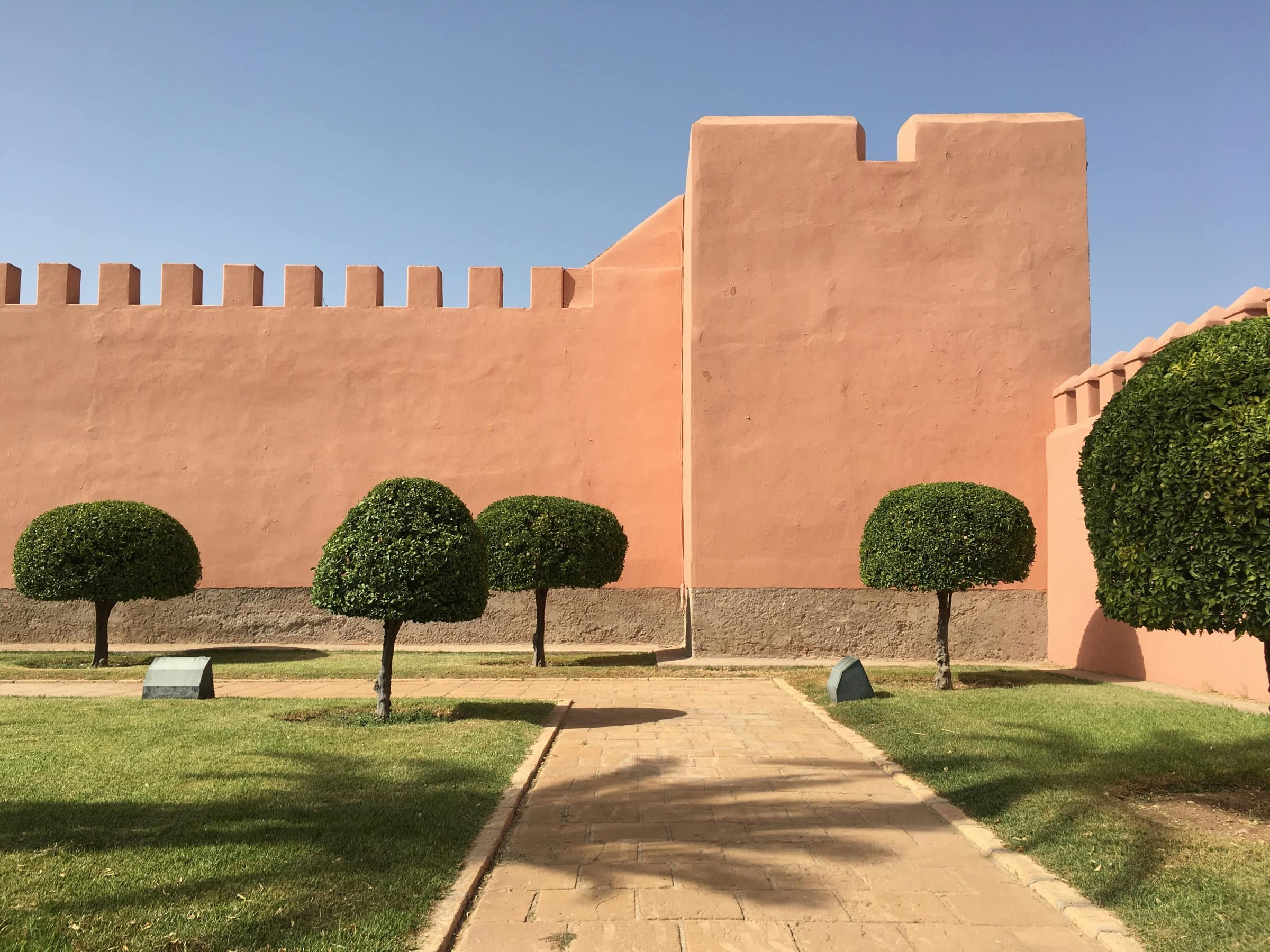
The walls were born of the fear of a siege. Around 1126, the Almoravid sultan Ali ben Youssef had Marrakech ringed. It was then the capital of a threatened empire. The main work was carried out fast: pisé walls, that ochre earth beaten in casings, mixed with lime and gravel, which gives the city its colour.
The enclosure runs several kilometres, punctuated by square towers spaced a few dozen metres apart and pierced by gates. The dynasties that followed extended it. The Almohads laid out a royal Kasbah in the south, with its own wall and its state gate, Bab Agnaou. The Saadians and then the Alaouites restored and extended.
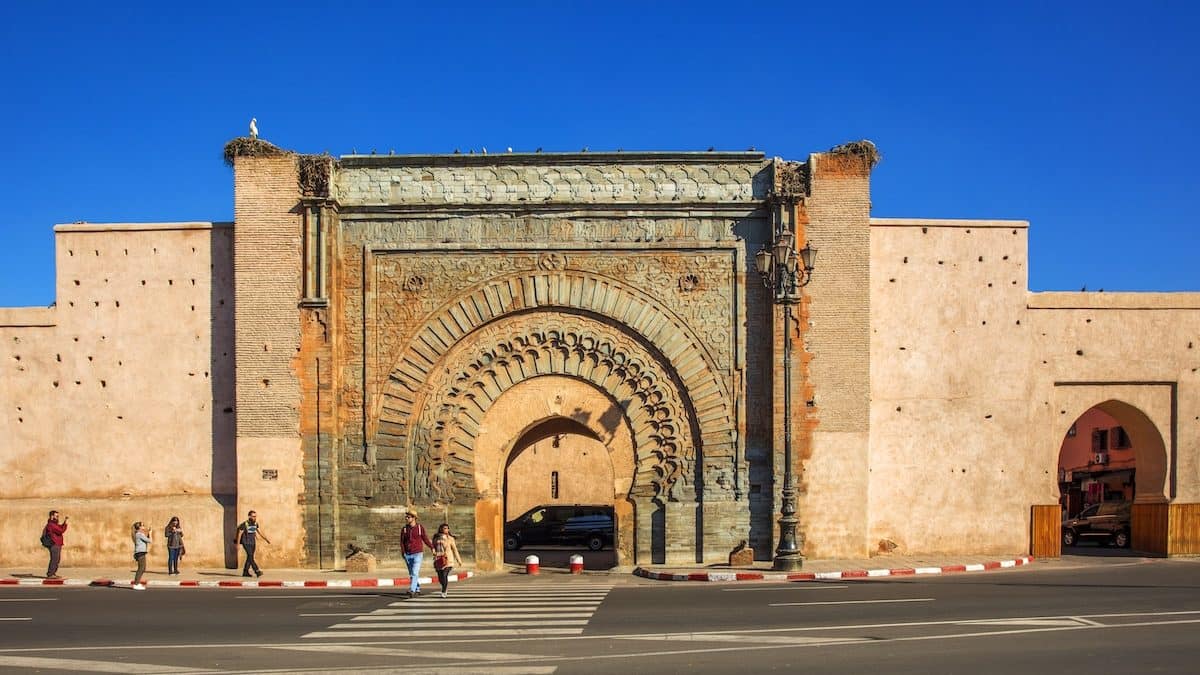
Each gate tells its neighbourhood’s story. Bab el-Khemis owes its name to the Thursday market, Bab Debbagh to the neighbouring tanneries, Bab Doukkala to the tribe and the region people came in from. Today, the walls still hold the medina, listed by UNESCO World Heritage since 1985. You walk along them more than you visit them. They are everywhere.
Bab Doukkala earns a detour against the grain. Crossed early in the morning, it opens onto a working-class neighbourhood: msemen sellers, a café terrace, a fruit market. No souvenir shops, no touts.
The only Marrakech visit you make without going into anything.
What to see - the highlights
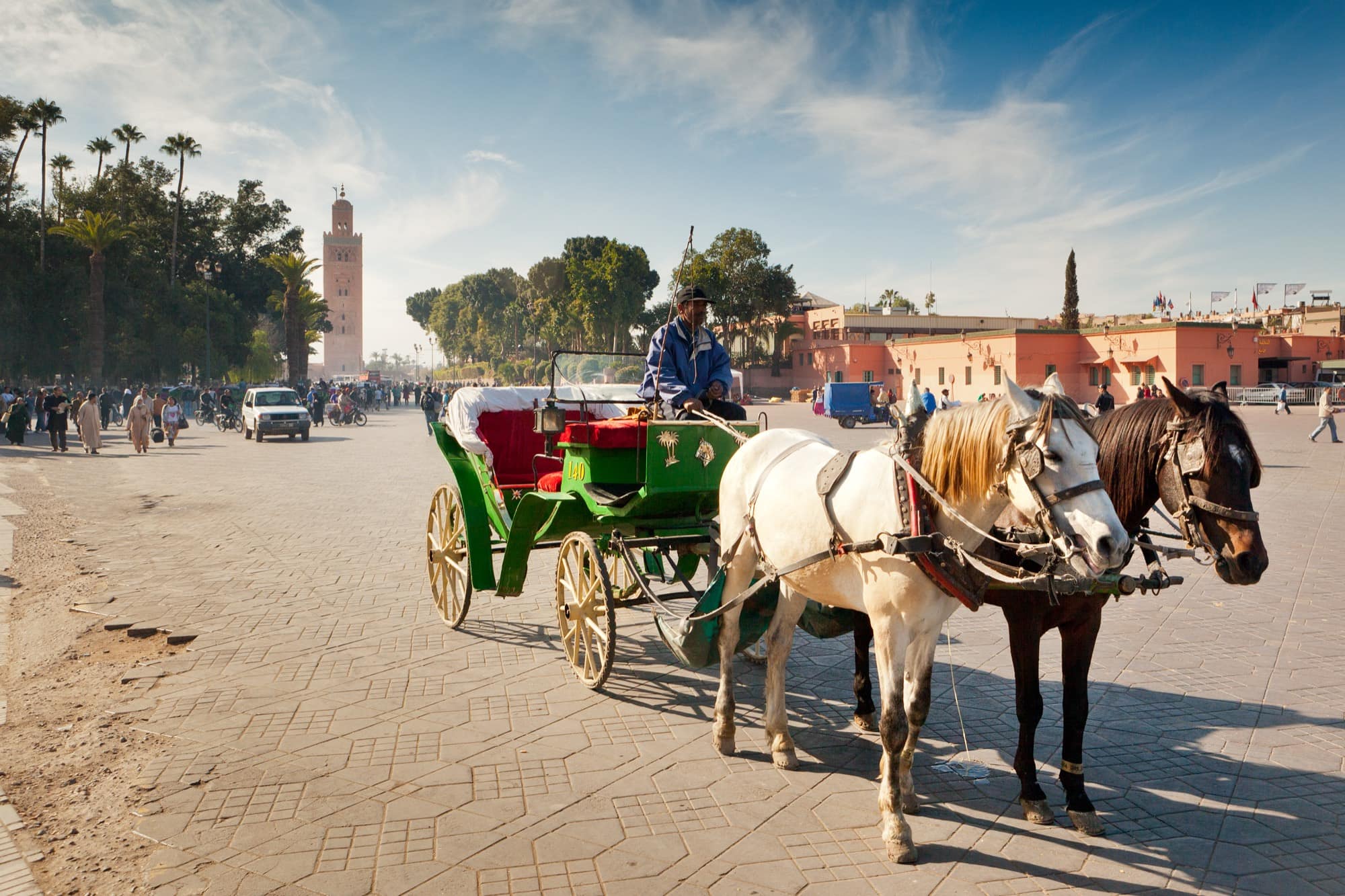
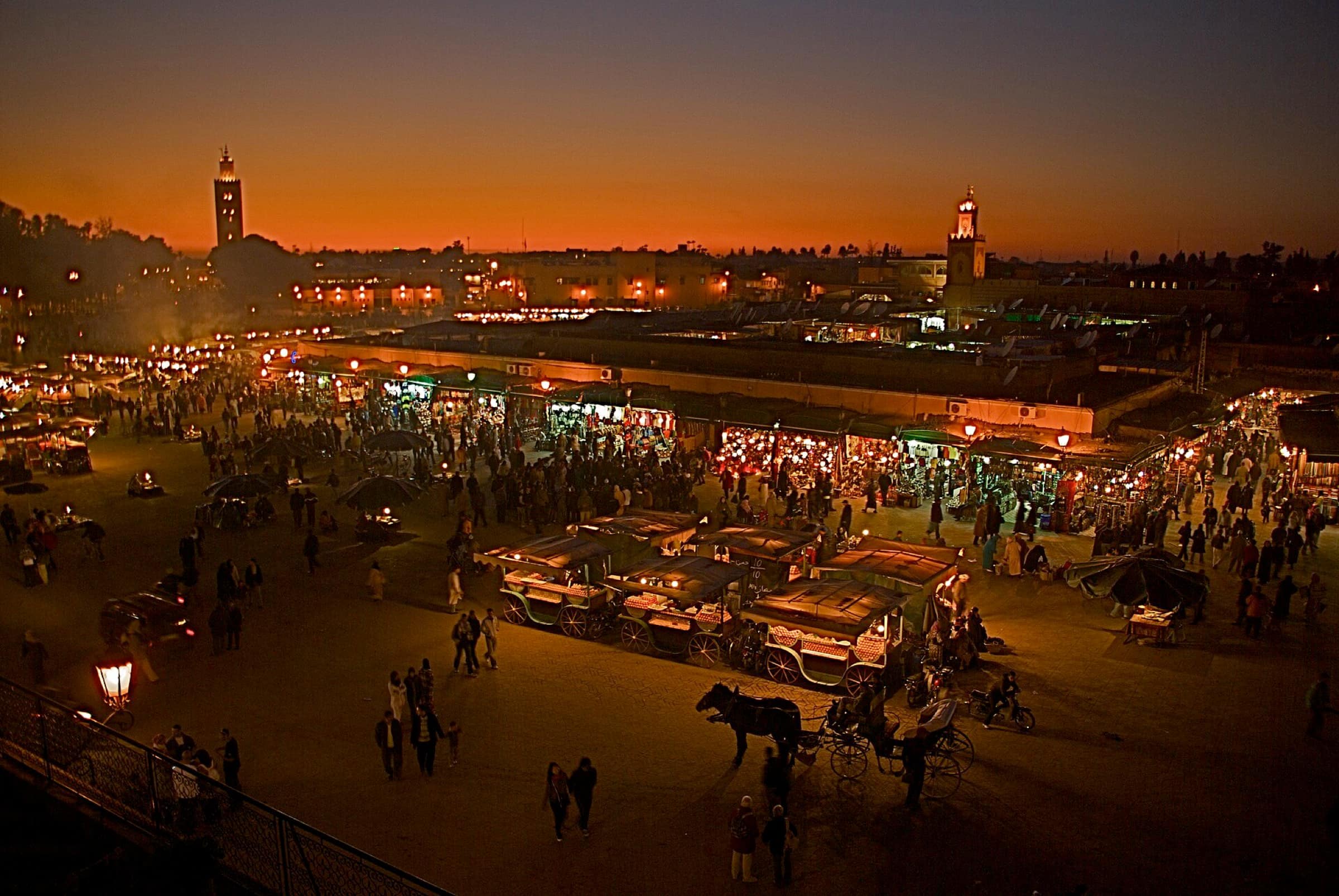
The horse-cart tour
The classic way to cover a long stretch of walls without effort. Departure between Jemaa el-Fna and the Koutoubia. Fix the price before you get in.
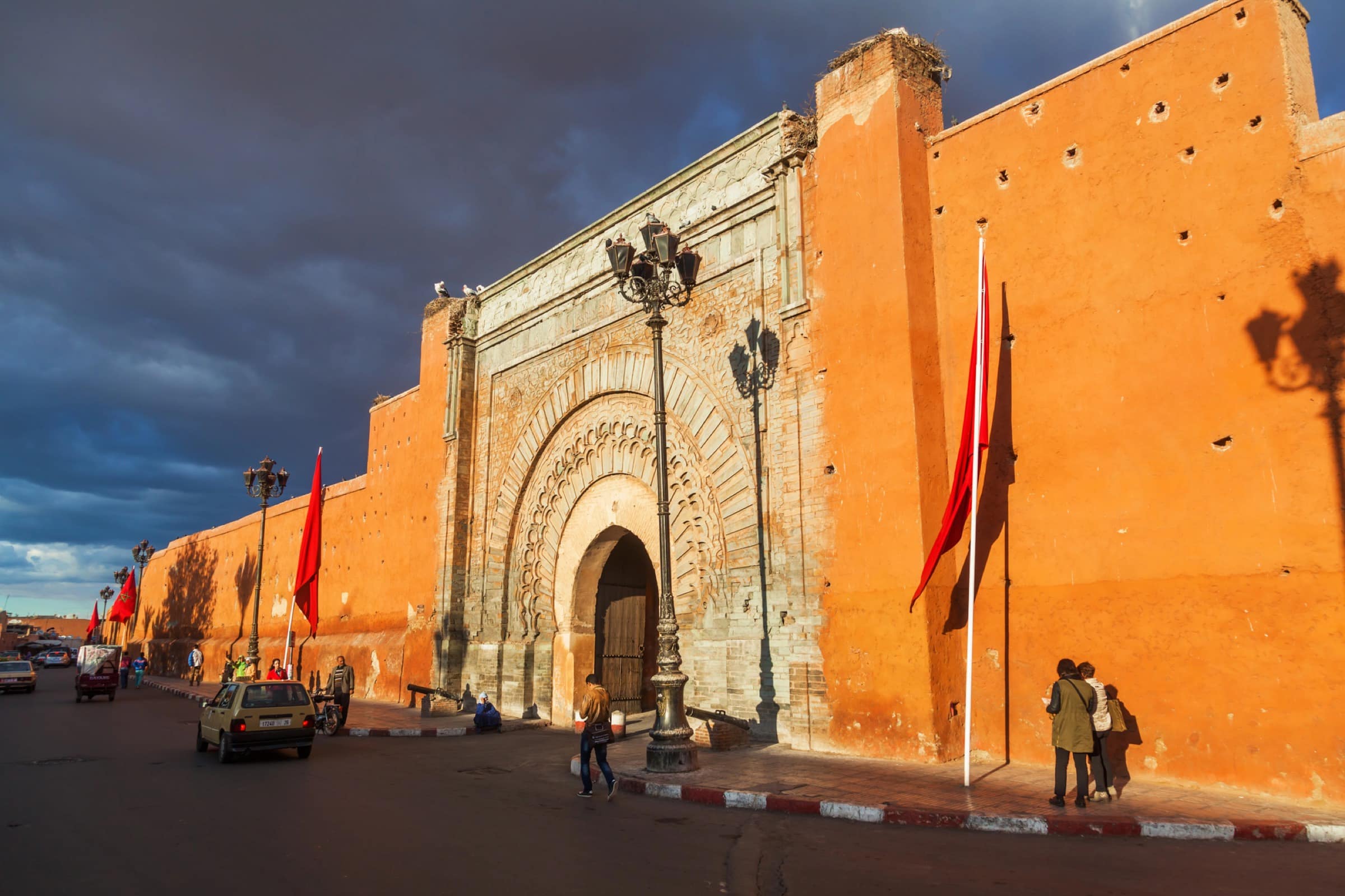
The monumental gates
Bab Agnaou the carved, Bab Doukkala, Bab el-Khemis and its market, Bab Debbagh near the tanneries. Each gate has its neighbourhood and its story.
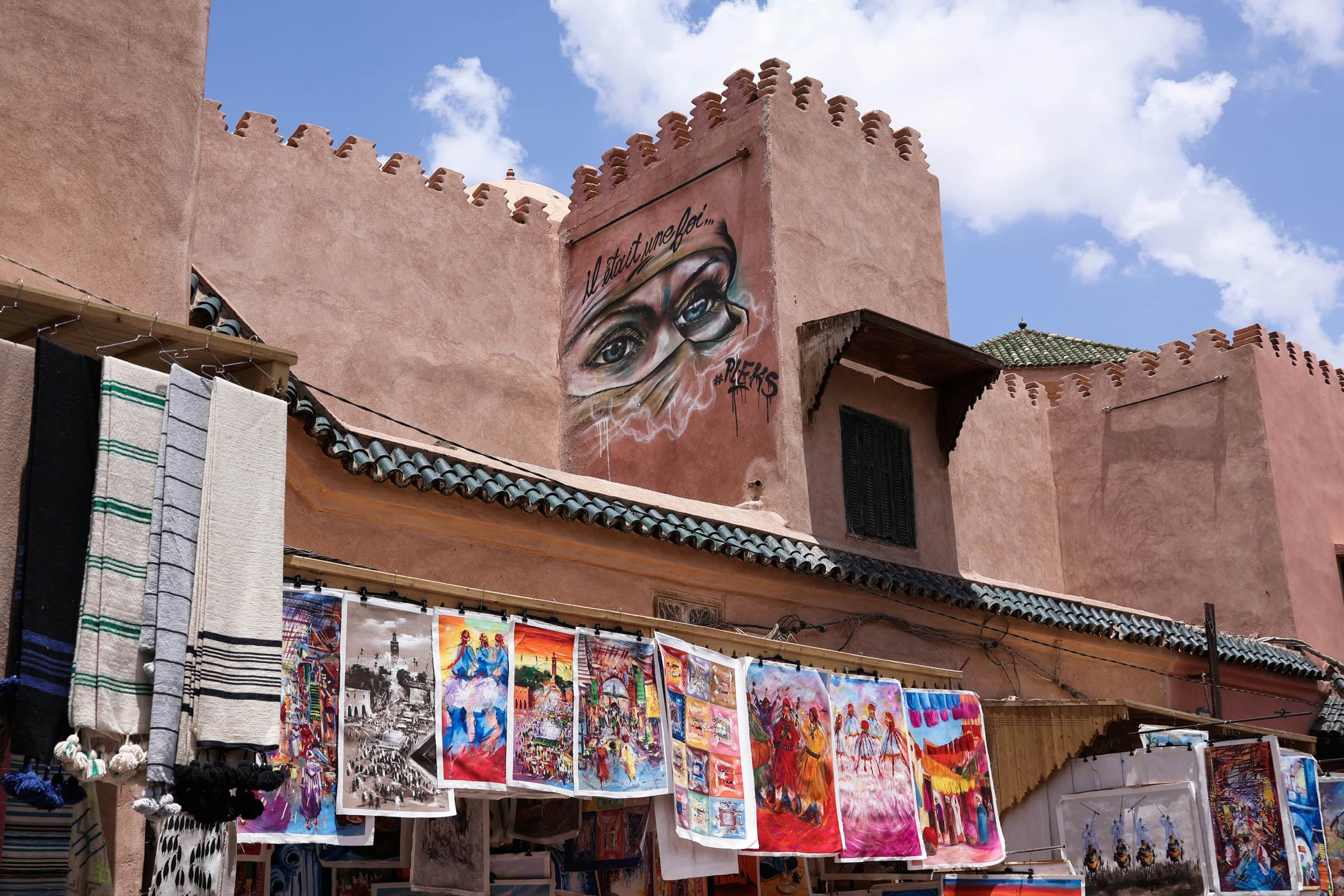
Shops leaning on the walls
In places, merchants and workshops back onto the wall. The contrast of the pisé and the life of the medina.
Gallery
The best photo spots
Where to point the camera, and when the light is at its best.
The pisé at sunset
Frame a long stretch of wall when the light rakes the rose earth. The palms give the scale.
The gate in its wall
Step back to catch the opening and the thickness of the rampart in a single frame.
Visitor tips
Late afternoon and sunset, when the pisé takes its colour. On foot for the detail of the gates, by horse-cart for the long stretches.
Getting into a horse-cart without agreeing the price and the route. Rates vary a lot, and a surcharge often applies at night.
- Reckon on around £13 to £17 for a half-hour horse-cart ride along the walls. Agree the price before you get in.
- The horse-cart ranks sit between Jemaa el-Fna and the Koutoubia.
- For traffic, watch out around the big gates (Bab Doukkala, Bab Agnaou) when crossing or photographing.
Location & access
The walls ring the medina all the way around. The most reachable stretches are in the south, on the Kasbah side (Bab Agnaou, Bab er-Robb), in the north (Bab Doukkala, Bab el-Khemis) and in the east (Bab Debbagh, near the tanneries). Everything starts from Jemaa el-Fna and the Koutoubia, in the middle.