Fes and Marrakech, two imperial cities that answer each other
Inspiration
Fes and Marrakech are not the same civilisation talking. One is Idrisid, scholarly, partitioned by trade. The other is Almoravid-Almohad-Saadian, extroverted, open to the Atlas and the sub-Saharan world. Combining the two means adding a layer to your reading of Morocco. Here is how I link them.
It is 7.40am at Fes station. I finished a mint tea on the platform, my bag at my feet. The Al Atlas to Casablanca comes in in a minute. Three nights in Fes behind me, four ahead in Marrakech. The trip really plays out in that contrast, between two imperial cities that do not share the same history, the same civilisation, the same view of the traveller. Here is how I link them and why I always do both.
Two cities that do not share the same civilisation
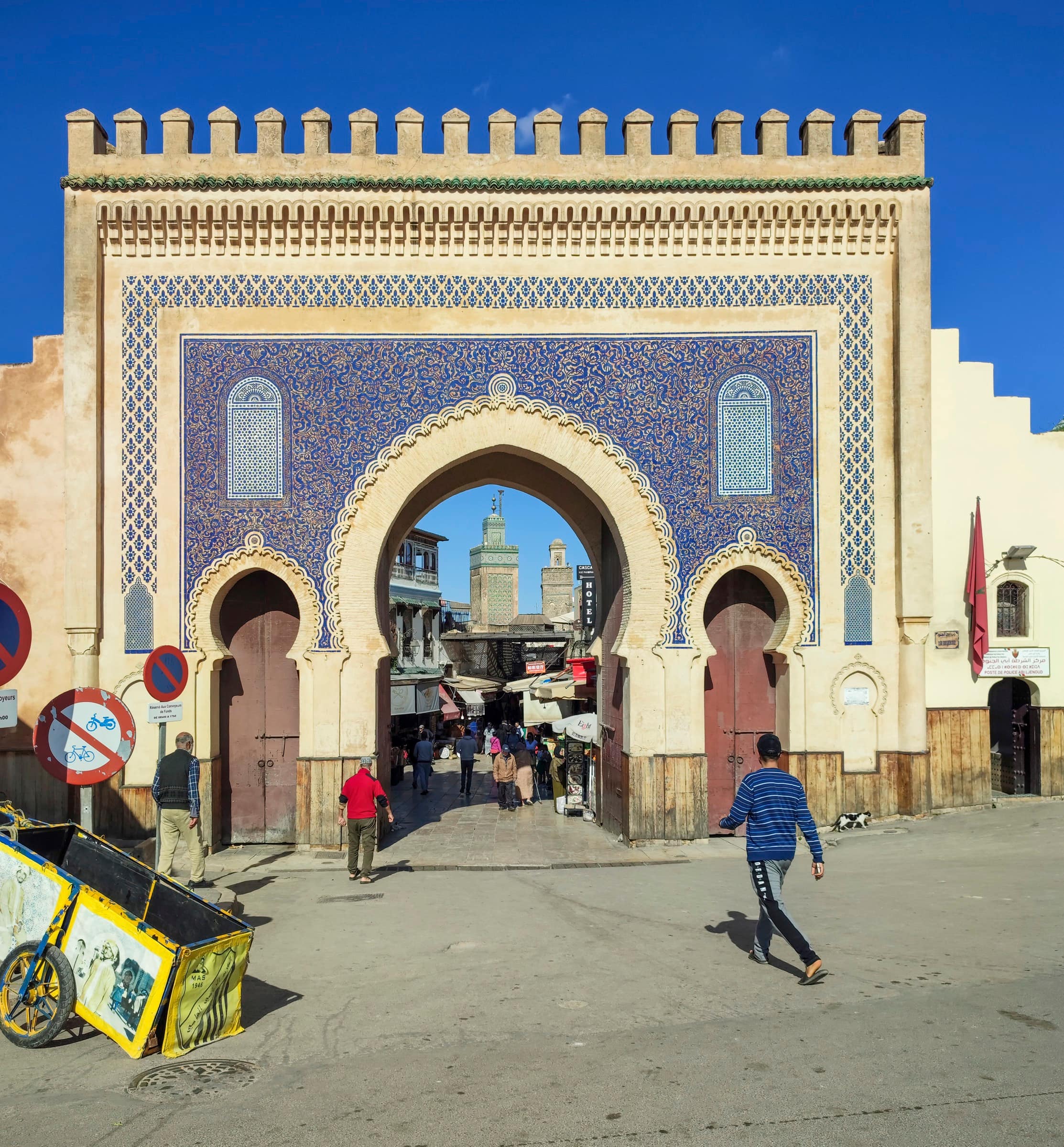
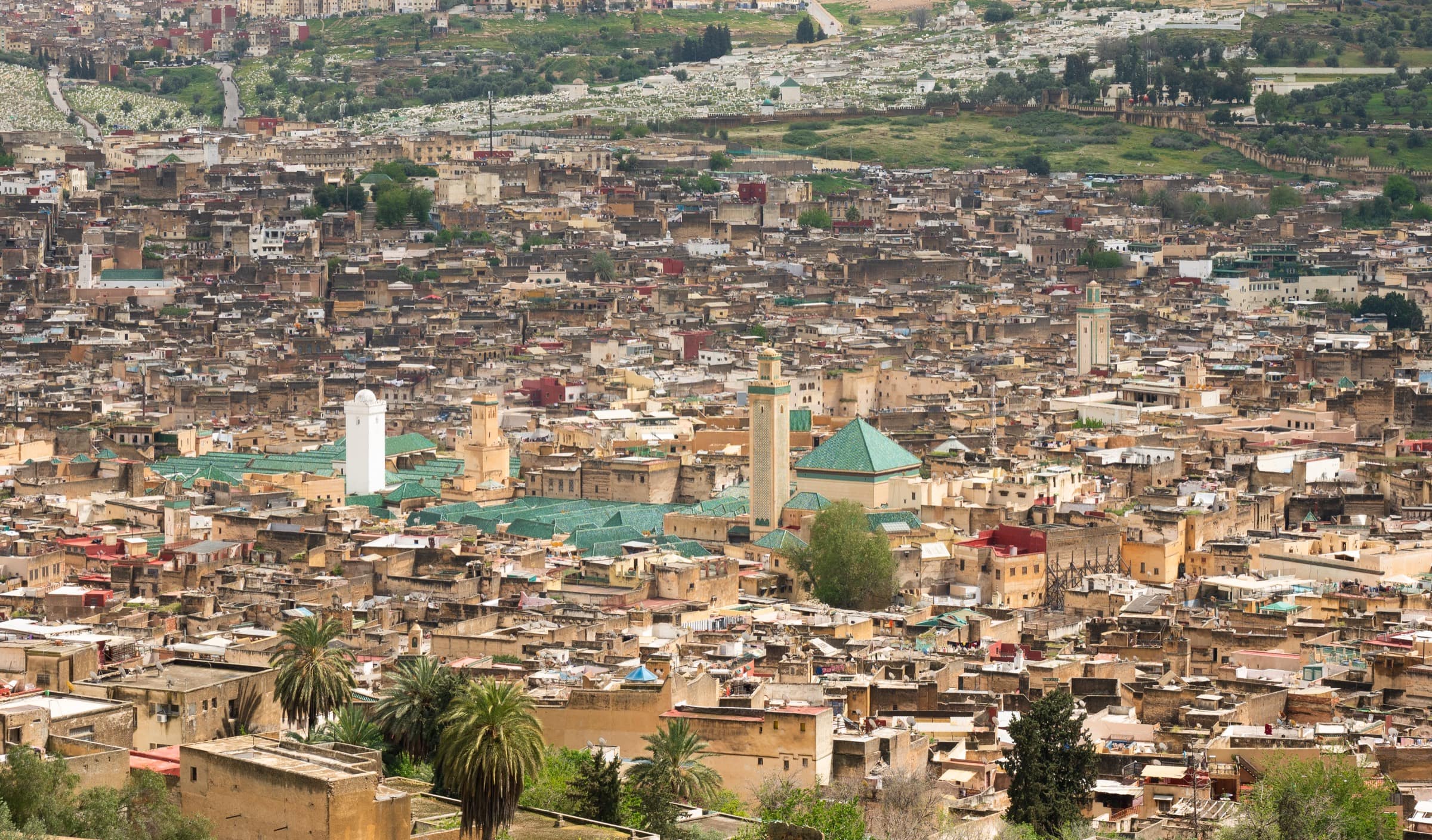
Fes was founded by the Idrisids. Tradition credits its birth to Idris II around 808-809, but coins struck in Fes predating his reign suggest a first settlement as early as 789 under Idris I. In 818, Idris II takes in eight thousand Andalusian refugee families, joined later by Kairouanese: the two river banks become the two souls of the medina. In 859, Fatima al-Fihriya founds the Al Quaraouiyine university, recognised by UNESCO and Guinness as the oldest still-operating university in the world. The Fes el-Bali medina, listed as world heritage since 1981, holds close to 9,000 alleys and spreads over some 280 hectares. It is one of the largest pedestrian urban zones still inhabited in the world.
Marrakech is a capital of the South. Almoravid (1070, under Youssef ibn Tachfin), Almohad, Saadian. It looks at the Atlas, the Draa valley, the caravans coming up from Timbuktu. Cosmopolitan by nature, trading by vocation, it mixes from the outset what Fes separates.
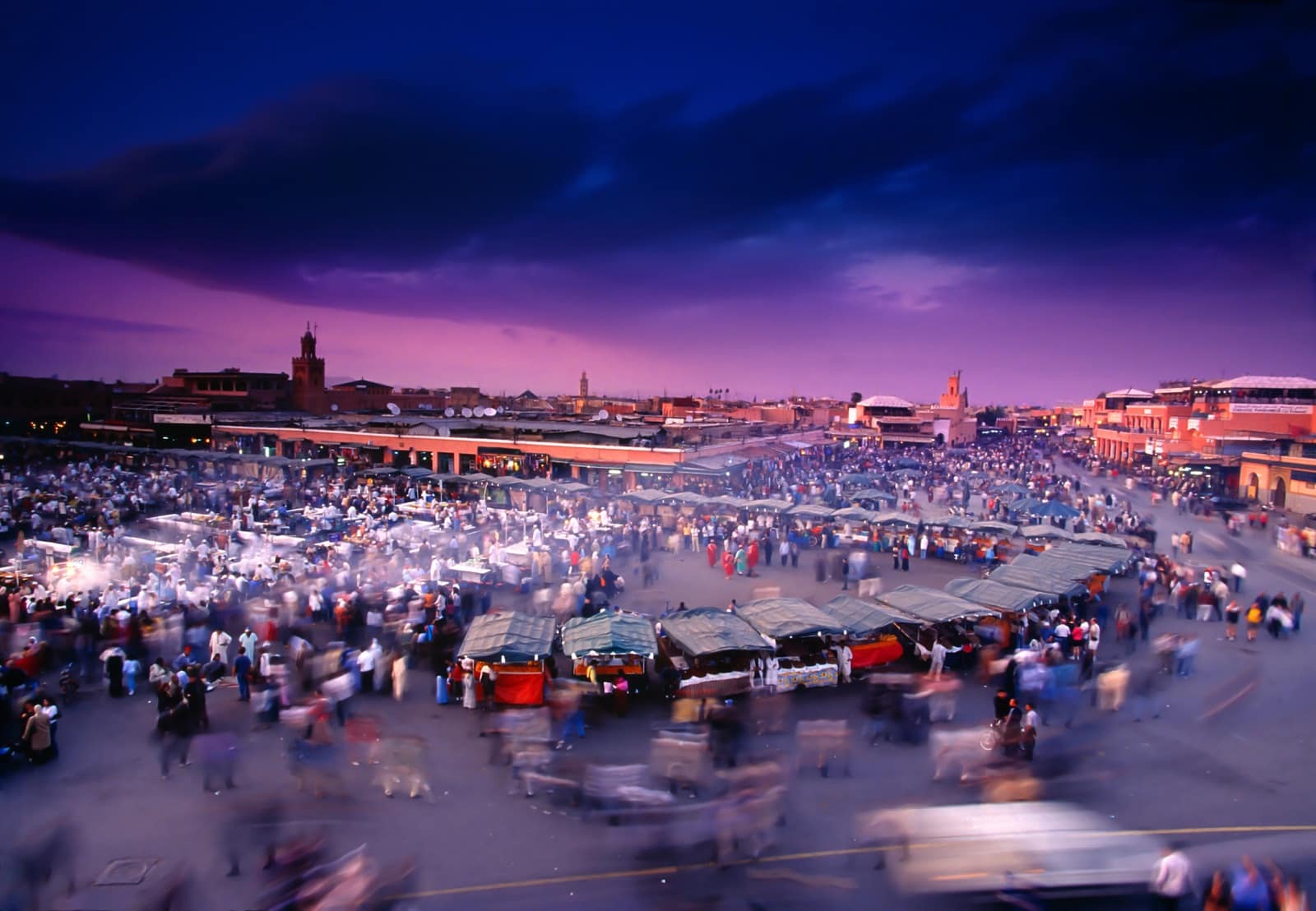
Not the same civilisation talking. Fes is introspective, scholarly, partitioned by trade. Every guild stays physically confined to its quarter: souk Attarine for spices, Nejjarine for wood, Chouara for leather. Marrakech is extroverted, festive, mixed. Its souks blur the genres, Jemaa el-Fna concentrates everything: storytellers, gnaoua, restaurateurs, calèches, handlers. Fes has Al Quaraouiyine, Marrakech has the Koutoubia. One is a classroom, the other is a square.
What the contrast really changes
| Angle | Fes | Marrakech |
|---|---|---|
| Spatial marker | ~9,400 alleys, no main axis | Jemaa el-Fna centre, souks in a horseshoe |
| Craft | Partitioned by guild | Mixed, staged for the visitor |
| Riads | Austere, dark cedar, deep patios | Bright, coloured tadelakt, more generous |
| Street mood | Traditional, religious, less alcohol | Cosmopolitan, festive, more tolerant on the tourist side |
| January climate | 3.8°C min / 16.2°C max | 6°C min / 19°C max |
| Signature cuisine | Savoury pastilla, harira, mkhamer tagine | Marrakchi tanjia, mechoui, fruit tagines |
| Average prices | Around 15 to 25% cheaper | Medina rates loaded, new town closer to Fes |
Riads. In Fes, the patios are often deeper, the brown cedar carpentry absorbs the light, the shared dining room stays cool even in summer. In Marrakech, the coloured tadelakt and the more generous gardens give brighter spaces, more “lived-in” on the leisure side. Two aesthetics of the same word.
Cuisine. The savoury chicken-almond-cinnamon pastilla is Fassi at heart. I find it in Marrakech, but it does not have its stripes there. The mkhamer tagine, slow gentle cooking, is very present in Fes. Marrakech leans towards a more “Berber-Atlas” cooking: tanjia (meat cooked in the hammam oven), mechoui, tagines with prunes and almonds. Nothing stops you finding pastilla in Marrakech, but the Fes one has a depth you cannot fake.
Climate. Fes in January means a heavy coat in the evening in the riad, patchy heating and a painful temperature swing. Marrakech in January means a pullover during the day, a jacket at dinner, a much clearer sky. For anyone who fears the cold, the order of the stay counts.
The rule to own: Fes calls for a day of adjustment
Marrakech reads fast. Jemaa el-Fna concentrates the town’s energy in one point, I know where I am within the first half-hour. The souks articulate around the square, the medina reads with a map. Fes disarms first. The Fassi labyrinth has no main axis. The alleys cross with no obvious logic, no visible central marker. On the first day in Fes, I lost an hour every time I stepped out. A Fassi medina guide for the first few hours is a real service: official ONMT rate around 250 to 350 dirhams (£20 to £28) for the half-day.
That argument dictates the order of the stay. I systematically recommend: Marrakech first (3 to 4 nights), desert circuit (3 to 4 days), Fes at the end (2 to 3 nights). I arrive at Fes broken in to the Moroccan setting, I tame the labyrinth with room to spare and the return flight from Fes-Saïss goes directly to most European hubs. The reverse order works, it just loses the accumulation effect.
Getting from one to the other: the train
Fes - Casa Voyageurs in 3h 55m, connection, Casa Voyageurs - Marrakech in 2h 39m. Around 6h 30m door to door with the station wait, a bit more if the train runs late. Indicative fare between 280 and 500 dirhams (£22 to £40) depending on class. It is the honest solution for a traveller wanting to do both cities by train.
Al Boraq, the Moroccan high-speed train, has been running at 320 km/h since November 2018, between Tangier and Kénitra. It does not yet serve Fes. Its Kénitra-Marrakech extension was officially launched in April 2025: 430 kilometres of works, around 53 billion dirhams, commissioning not before 2029-2030. For a stay now, I compose with the classic train.
Bus, plane, car: what I do not do
The CTM direct bus Fes-Marrakech exists (departures 9am and 8pm, around 150 dirhams / £12, 9 to 10 hours trip). It is doable but long, no particular scenic interest. Flying has no direct link: all connections go via Casablanca, with a door-to-door time that does not really beat the train. Driving via A2-A7 through Rabat-Casa runs 530 kilometres, 5h 30m to 6h 30m excluding stops. Useful if I want to stop at Meknès, Volubilis, Chefchaouen along the way, otherwise the train stays more honest.
What Fes has taught me about Marrakech
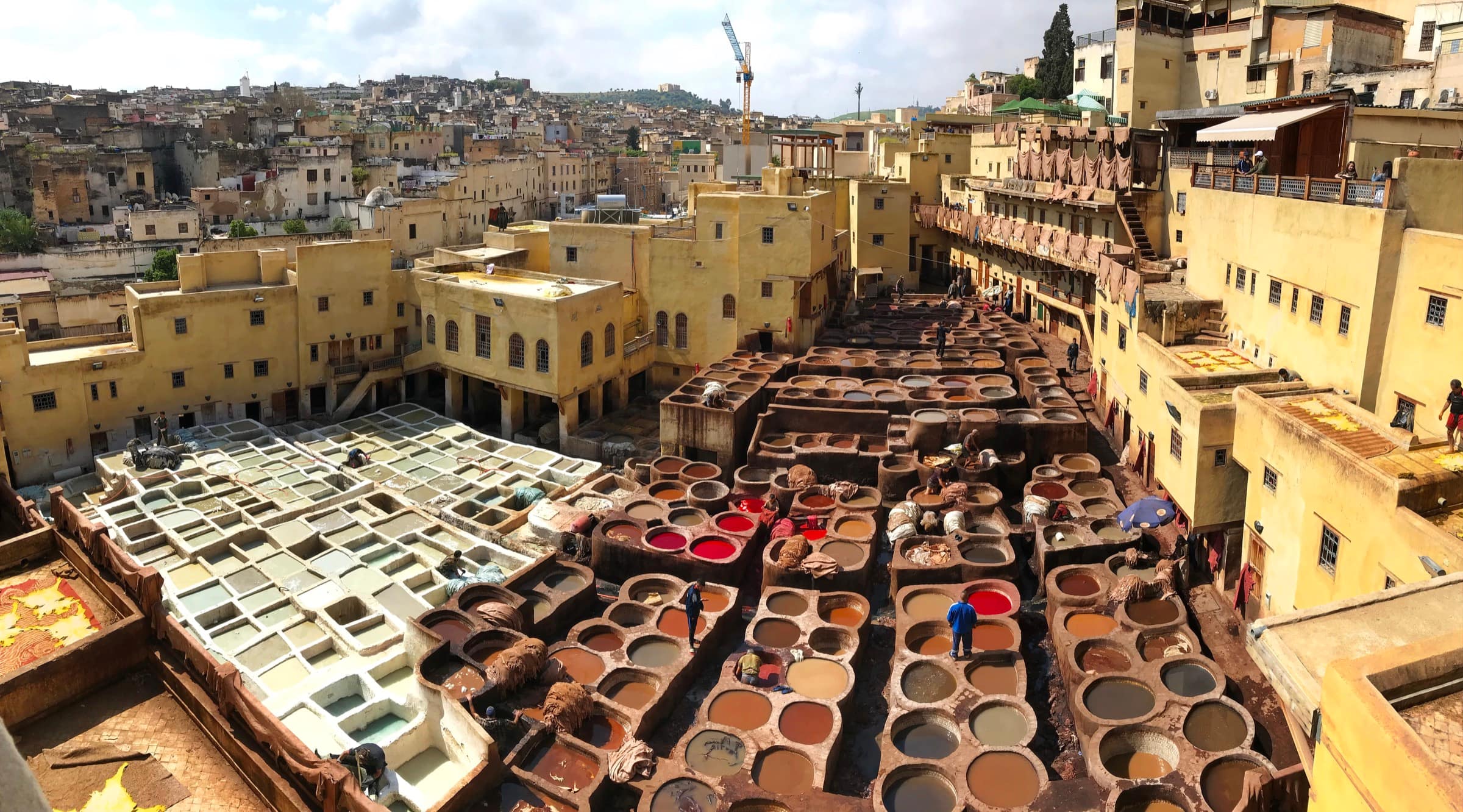
Here is the strongest argument for combining the two, stronger than the aesthetic comparison. Fes is the source of most of the crafts you find in Marrakech downstream of the chain. The zellige that dresses Marrakchi patios often comes from Fassi workshops. The embroidery of the high-end home linen is Fassi. Worked leather, brass items, book binding. Marrakech stages, Fes makes. Seeing the raw material where it is made, before finding it staged in Marrakech, changes the reading of both. I leave the Sebbaghine souk or the Marrakchi carpet souk with an eye that asks two questions of every object: where was it made, by what gesture?
Honest precautions for this combo
- Alcohol. Fes in the medina, nearly impossible. New town, a few hotels and a handful of bars. Marrakech in the medina, several licensed riads and rooftops. Guéliz-Hivernage, an ample offer. Adjust the expectations of travellers who “have an aperitif”.
- Photo Fes medina. Locals are noticeably less tolerant than in Marrakech of frontal photos, particularly in residential areas off the tourist circuit. Ask, or shoot three-quarters, at a distance.
- Ramadan in Fes. More religious town: very slow daytime rhythm, medina restaurants closed until iftar, quiet mood. For a first trip to Morocco, better skip Ramadan in Fes - unless I come precisely for it.
- Winter in Fes. It really is cold in the evening in the riad (heating often minimal). Bring a thick fleece, a scarf, warm sleepwear. In Marrakech, it is mild from eleven in the morning.
- Medina guide. Strongly recommended in Fes on day 1. In Marrakech, you manage without from day 2.
Five reflexes to combine Fes and Marrakech
Another journey: the grand tour through the desert
There is a radically different way to link the two cities, and it is one of Morocco’s great journeys: the Marrakech > Merzouga > Fes southern circuit, by private 4x4 or shared minibus. It is no longer a transfer but a stay in itself, one to add to the medina days.
Count at least 4 days and 3 nights to breathe (the 3 days 2 nights format is sold everywhere but chains stages of 8 to 10 hours of road every day). Canonical itinerary:
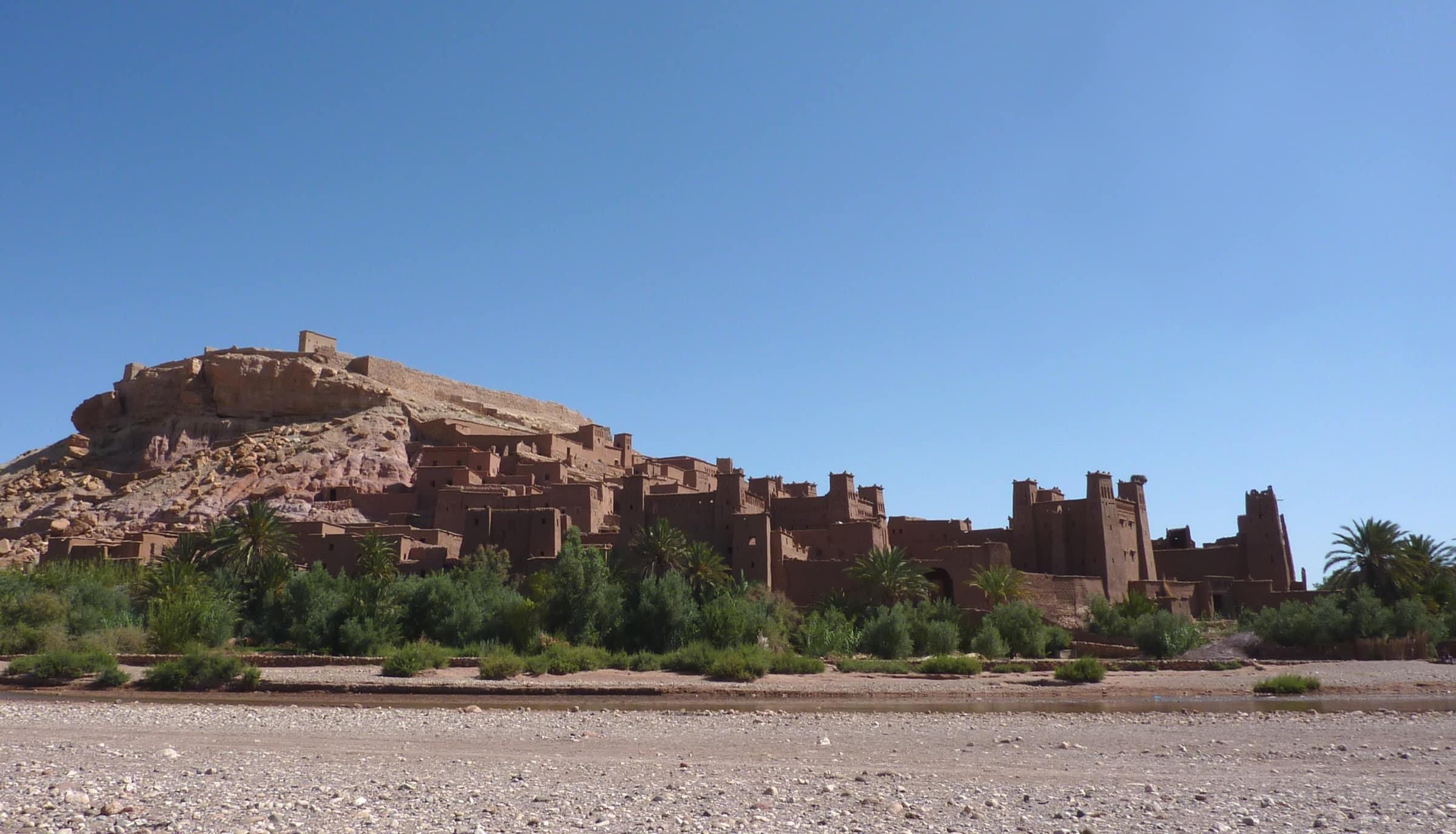
- D1 - Marrakech → Tichka pass (2,260 metres, N9) → Aït-Ben-Haddou (UNESCO ksar) → Ouarzazate → Dadès gorges (night)
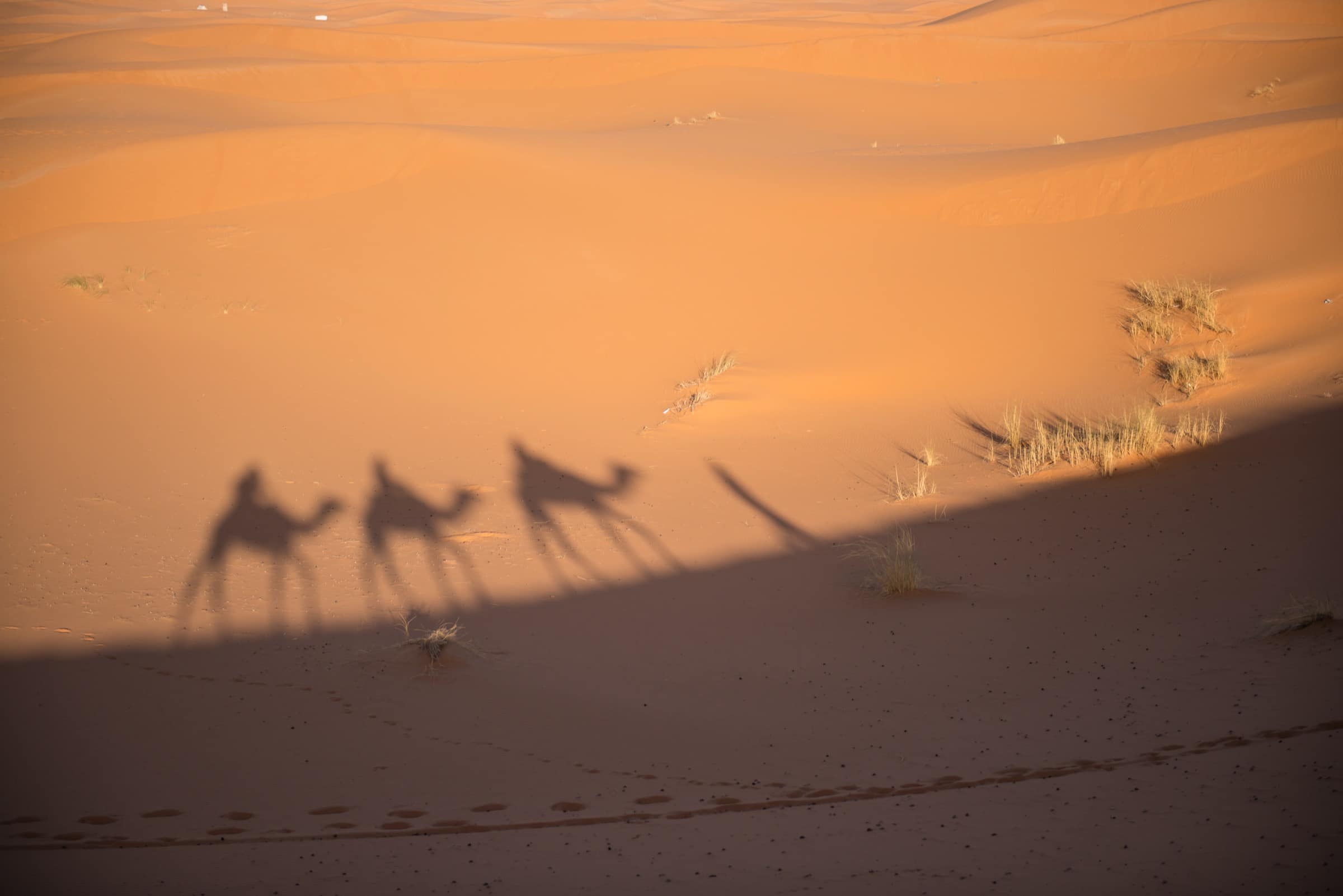
- D2 - Dadès → Todra gorges → Erfoud → Merzouga and the erg Chebbi (22 km long, dunes up to 150 metres), sunset on camelback, Berber bivouac in the dunes
- D3 - sunrise on the dunes → Rissani → Midelt → Ifrane → late arrival in Fes
The Tichka pass is the sensitive point in winter: closed occasionally in bad weather from November to March, to check the evening before departure. Indicative price for a comfortable 3-day private circuit: around £480 to £570 per person. Standard group format: £130 to £215. High-end: £780 to £1,040. Many tour operators fight over this market. I have sorted through them and kept the six solid offers in both directions (Marrakech → Fes and Fes → Marrakech) in our Marrakech - Merzouga - Fes circuit listing.
To take it further
- To book a private 4x4 or minibus circuit with detailed stages and a curated GYG selection: Marrakech - Merzouga - Fes circuit.
- For the flagship stage of the southern circuit: Merzouga, erg Chebbi.
- For the UNESCO stop on the Marrakech-Ouarzazate road: Aït-Ben-Haddou.
- For a shorter desert alternative (two days, Draa valley): Zagora.
- For the mountain angle on this journey, eight summits of Morocco including Bou Naceur and Bou Iblane (reachable from Fes): Summits of Morocco.
- To arrive in Marrakech in January, winter context: Marrakech in winter, the light that changes everything.